Basiran
For nearly a decade, Alfie Allen was synonymous with the complex, tragic, and often infuriating figure of Theon Greyjoy in HBO’s Game of Thrones. His performance was a masterclass in moral ambiguity, earning him an Emmy nomination for Outstanding Supporting Actor in 2019 and cementing his reputation as one of the most versatile character actors of his generation. However, in 2026, Allen has successfully shed the lingering shadow of the Iron Islands, delivering a performance so chillingly detached that it has firmly established him as the centerpiece of Paramount+’s latest critical darling, Girl Taken.
Based on Hollie Overton’s gripping novel Baby Doll, the six-episode series has rapidly emerged as a frontrunner for the best television of the year. While the psychological thriller genre is often crowded with predictable procedural tropes, Girl Taken distinguishes itself through a taut, masterly approach to suspense, prioritizing emotional resonance over cheap narrative gimmicks.
The Premise: A Departure from the Procedural Norm
At its core, Girl Taken is an exploration of the ripple effects of a singular, horrific act. The narrative follows the disappearance of 17-year-old Lily (played by Tallulah Evans), who vanishes without a trace on her final day of secondary school. The inciting incident is simple, yet devastating: Lily, a bright student with a promising future, fails to return home.
Unlike many shows in this genre that rely on a "whodunnit" mystery to sustain audience engagement, Girl Taken makes the bold choice to reveal the perpetrator immediately. We are introduced to Mr. Hansen, played by Allen, an English teacher who ostensibly serves as a mentor to the twins, Lily and her sister, Abby (Delphi Evans). By removing the mystery of identity, the series shifts its focus from "who" to the far more harrowing "why" and "what comes next."
The show avoids the typical red herrings that often plague abduction dramas. Instead, it invites the audience to observe the fracturing of a family and the failure of the institutions meant to protect the vulnerable. The series is less a hunt for a kidnapper and more a post-mortem on trauma, survivor’s guilt, and the slow, agonizing process of seeking justice in an indifferent system.
A Chronology of a Nightmare
The narrative tension of Girl Taken is built on a foundation of domestic normalcy that is systematically dismantled.

- The Catalyst: The series opens on the twins’ final day of school. Abby, having shared her university acceptance letter with Mr. Hansen, finds herself in a minor disagreement with her sister. This seemingly mundane sibling squabble becomes the anchor of Abby’s later guilt, as she waits until the following day to report Lily’s disappearance.
- The Revelation: In the early episodes, the viewer is granted a terrifying insight into the mind of Rick Hansen. Unlike the "mastermind" villains of typical thrillers, Hansen is depicted as a man who preys on children not for some complex, grandiose reason, but because he is a predator who believes he can.
- The Investigation: As the local police and community descend into a state of panic, suspicion is cast wide. Lily’s boyfriend, Wes (Levi Brown), becomes a prime target for public vitriol, highlighting the community’s desperation to pin the tragedy on someone—anyone—who fits their narrow perceptions of guilt.
- The Aftermath: The latter half of the series transitions into a study of the justice system’s shortcomings. It examines how victims are treated, how families are silenced, and how the trauma of a kidnapping can permanently alter the trajectory of everyone involved.
Character Analysis: Alfie Allen’s Chilling Performance
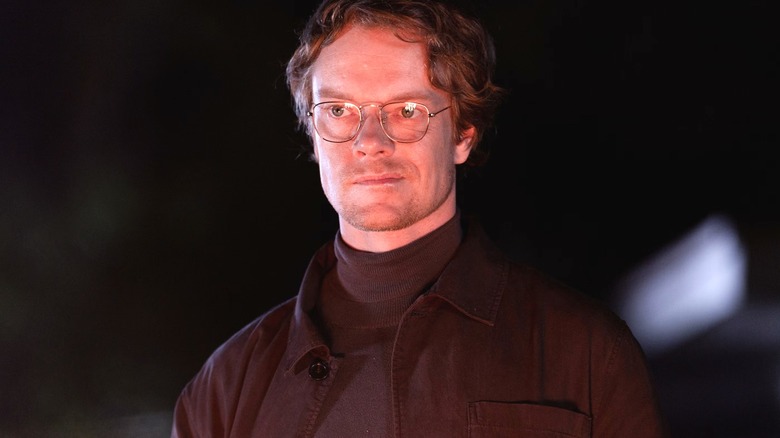
Alfie Allen’s portrayal of Rick Hansen is a significant departure from his previous work. While Iosef in John Wick was petulant and villainous, and Theon Greyjoy was deeply conflicted, Hansen is different. He is terrifying precisely because of his banality. He masquerades as a protective, intellectual authority figure, utilizing the trust inherent in the teacher-student relationship to isolate his prey.
Allen opts for a visceral, restrained performance. There are no mustache-twirling villainous monologues here. Instead, his performance is defined by a predatory stillness. He captures the essence of a man who views his actions with a horrifying, detached logic. This performance is the engine that drives the show’s suspense, making the audience feel constantly unsafe whenever he occupies the frame.
Elevating the Source Material
Hollie Overton’s Baby Doll was lauded for its pace and psychological depth, but the Paramount+ adaptation manages to elevate the source material by expanding the world around the twins. By granting agency and complexity to the supporting cast—specifically the mother and the twin sister, Abby—the show creates a broader emotional landscape.
The series succeeds in creating "meatier" layers to the narrative. In the novel, the internal monologue of the protagonist is key; in the show, that internal experience is translated into visual and auditory tension. The showrunners have clearly studied the "British anthology" style of thriller, such as the critically acclaimed The Missing, which mastered the art of making a twisty, devastating premise feel grounded and inevitable.
Implications: The Failure of the Justice System
Beyond the immediate horror of the kidnapping, Girl Taken acts as a critique of societal structures. The series delves into the ineptitude of the justice system, questioning why individuals like Hansen are able to operate in plain sight for so long.
It highlights the uncomfortable reality that society often prioritizes the comfort of the status quo over the safety of its most vulnerable members. By focusing on the "morally reprehensible nature of the act" rather than the mystery of the perpetrator, the show forces the audience to confront uncomfortable questions: Who are we protecting? Why do we allow predators to hide behind the facade of professional authority? And how can a community recover when the systems of justice have failed them?
The show does not offer easy answers. While there is a sense of hope that emerges in the final episodes, it is earned through significant anguish and the heavy burden of collective guilt. It suggests that recovery is not a destination, but a lifelong process of reconciling with a reality that has been permanently altered.
Production and Reception
Since its debut on Paramount+, Girl Taken has been praised by critics for its taut, mastery over suspense. The direction, which leans heavily into high-contrast lighting and tight framing, mirrors the claustrophobia felt by the characters. The decision to cast real-life sisters Tallulah and Delphi Evans adds an authentic, unsettling chemistry to the portrayal of the twins, making the stakes feel deeply personal.
The show’s success is a testament to the current trend of "prestige thrillers" that prioritize character psychology over action. By investing in the slow burn, the production team has ensured that when the inevitable confrontations occur, they carry the weight of six episodes of built-up dread.
Conclusion: A New Benchmark for Thrillers
As we look at the landscape of television in 2026, Girl Taken stands out as a triumph of storytelling. It proves that even within the well-trodden ground of the abduction thriller, there is room for nuance, social commentary, and profoundly affecting performances.
Alfie Allen’s turn as Rick Hansen will likely be remembered as one of the most effective portrayals of a predator in modern television. By moving away from the archetypes of the "mastermind" and leaning into the chilling reality of the "everyday" monster, the show achieves a level of authenticity that is rare in the genre. For those seeking a series that is as intellectually stimulating as it is suspenseful, Girl Taken is not just recommended—it is essential viewing. It is a haunting, beautifully crafted piece of television that reminds us that the most terrifying monsters are often the ones who teach our children, live in our neighborhoods, and hide in plain sight.


 Layla Zulfa
 Ammar Sabilarrohman