Lina Irawan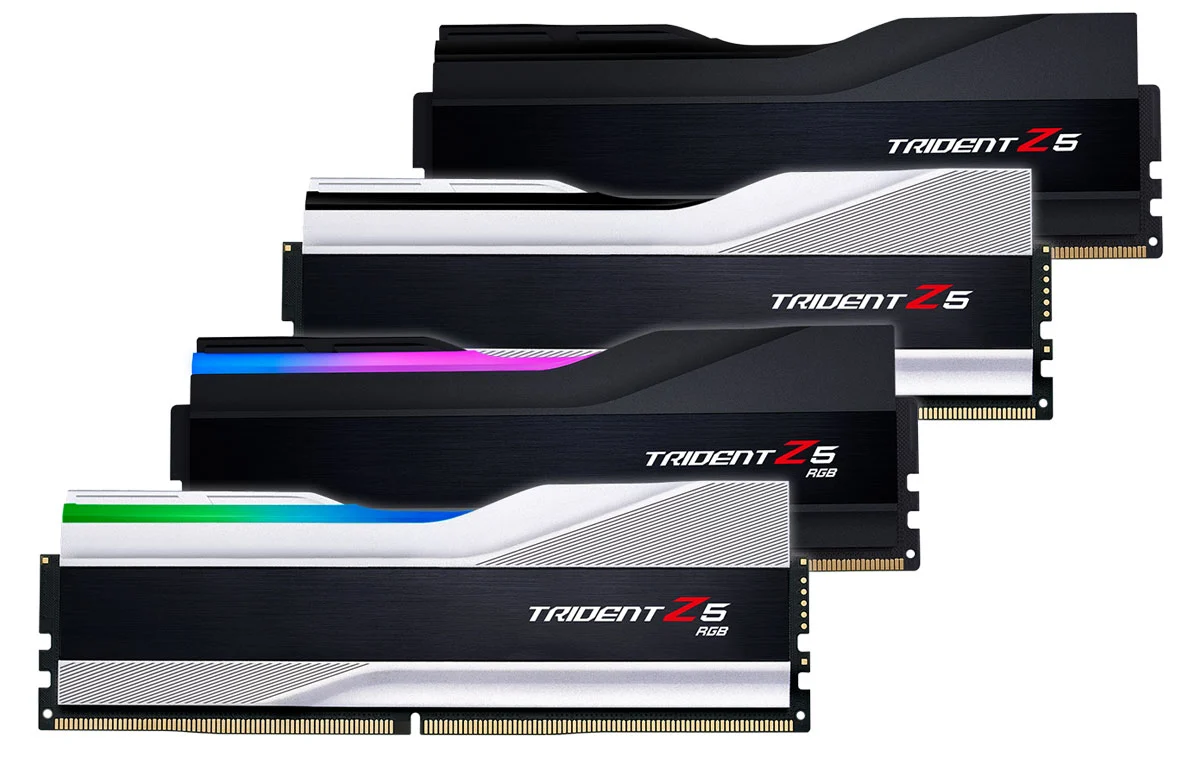
As the computing industry stands on the precipice of a generational shift in memory technology, the race to define the upper echelons of performance has officially intensified. With consumer desktop platforms finally poised to embrace the DDR5 standard, hardware manufacturers are locked in a high-stakes competition to capture the enthusiast market. While initial whispers from industry giants like Corsair teased the potential of DDR5-6400, G.Skill has decisively seized the spotlight, announcing its flagship Trident Z5 memory kits, which push the boundaries of speed and latency to unprecedented levels.
Main Facts: The New Pinnacle of Memory Performance
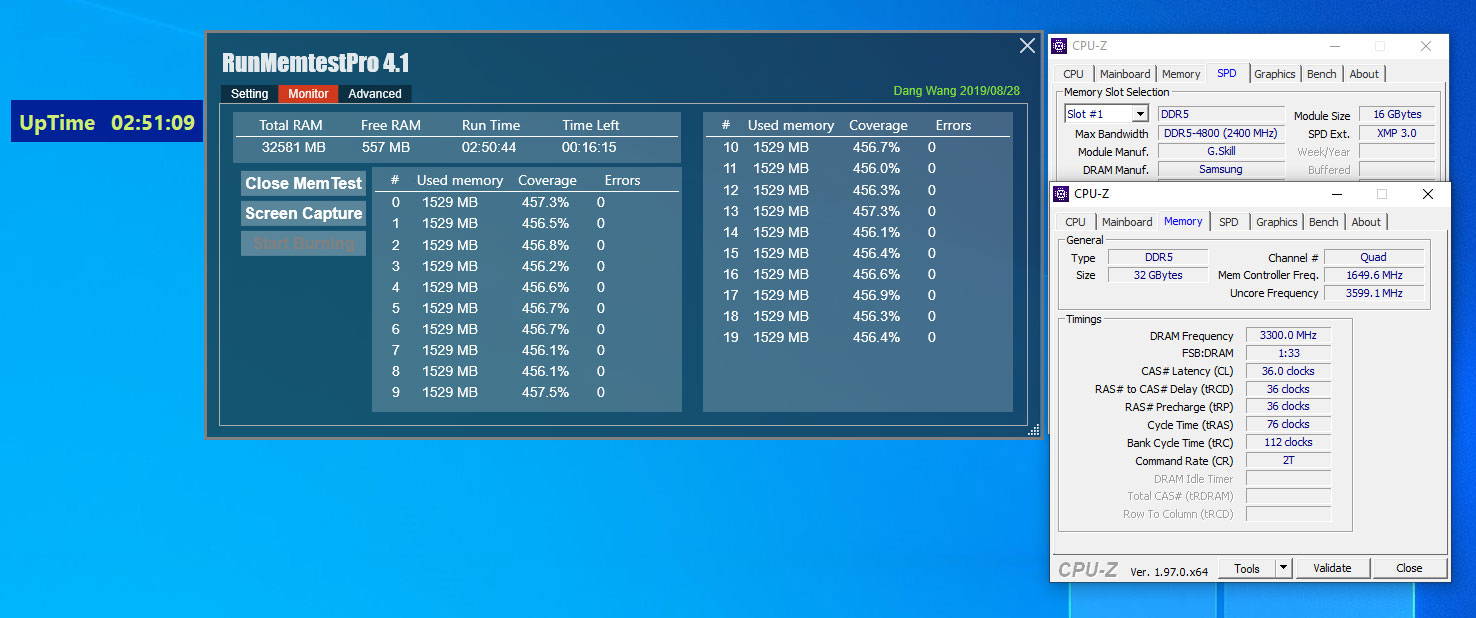
The announcement from G.Skill introduces the Trident Z5 32GB (2x16GB) memory kits, a product suite that aims to redefine the expectations for the new DDR5 architecture. The headline specification—an incredible DDR5-6600 MT/s (MegaTransfers per second)—is complemented by remarkably tight timings of CL36-36-36-76.
In an industry where the standard baseline for initial DDR5 releases often hovers around CL40-40-40, G.Skill’s ability to achieve such low latency at higher frequencies represents a significant engineering achievement. By validating these speeds, G.Skill is positioning its Trident Z5 line not merely as a successor to DDR4, but as an elite performance tier designed for the most demanding workloads, including high-end gaming, professional content creation, and extreme overclocking.
Chronology: The Road to DDR5-6600
The journey toward this announcement did not happen in a vacuum. The transition from DDR4 to DDR5 has been a multi-year effort involving JEDEC standardizations, silicon design improvements, and rigorous testing cycles.
- May 2021: The industry first began to take notice of the impending shift when Corsair publicly teased its upcoming DDR5-6400 RAM sticks. This signaled to the market that the "DDR5 era" was no longer a distant roadmap item but a tangible consumer reality.
- Late Summer 2021: As motherboard manufacturers began leaking information regarding Z690 chipsets and LGA 1700 sockets, memory vendors accelerated their binning processes. The focus shifted from merely hitting higher bandwidth to maintaining system stability at those extreme speeds.
- October 2021: G.Skill officially disrupted the competitive landscape by bypassing the anticipated 6400MT/s ceiling. By announcing the Trident Z5 6600MT/s kits, they effectively moved the goalposts, forcing competitors to scramble to match both the frequency and the aggressive CAS latency of their new modules.
Supporting Data: Engineering the Trident Z5
The secret behind G.Skill’s performance claims lies in a time-tested methodology. Like its predecessors in the high-performance memory market, G.Skill utilizes top-tier, hand-selected Samsung DDR5 Integrated Circuits (ICs). The process is laborious: the company takes large batches of silicon and engages in a rigorous binning process—a systematic evaluation where memory chips are tested to identify which ones can maintain stability under extreme voltage and frequency conditions.
Only the chips that pass these stringent parameters are selected for the Trident Z5 kits. This "matched set" approach ensures that each 32GB (2x16GB) kit offers the consistency required for stable overclocking. While the theoretical bandwidth of DDR5 is double that of DDR4, the real-world performance is heavily dictated by latency. By maintaining a CL36 rating at 6600MHz, G.Skill ensures that the latency penalty—often associated with higher frequency memory—is minimized, resulting in a more responsive system architecture.
Design and Aesthetics
Beyond the raw performance, G.Skill is addressing the needs of the modern PC builder. The Trident Z5 family is being split into two distinct aesthetic categories:
- The Standard Trident Z5: Featuring a sleek, minimalist piano-black top bar, designed for users who prefer an understated, professional look.
- The Trident Z5 RGB: Equipped with a translucent light bar, this version is optimized for smooth, customizable lighting effects, integrating seamlessly with the addressable RGB ecosystems found in modern high-end builds.
Official Responses and Strategic Positioning
G.Skill’s communication strategy surrounding this launch has been clear: they aim to own the "performance enthusiast" segment of the market. By explicitly contrasting their CL36 timings against the industry-standard CL40, they are attempting to educate consumers on the importance of "latency-per-clock" in a DDR5 world.
While the company has remained tight-lipped regarding the specific voltage requirements to achieve these speeds, it is widely understood that these kits will leverage the new power management integrated circuit (PMIC) features of the DDR5 standard. This allows for better voltage regulation directly on the memory module, a departure from the motherboard-centric regulation of the DDR4 era. Industry analysts suggest that this shift is a primary driver in how G.Skill was able to push frequencies to 6600MT/s while maintaining stability.
Implications for the Consumer Market
The release of the Trident Z5 6600MT/s kits carries several significant implications for the PC hardware ecosystem:
1. The Cost of Being First
The most immediate concern for potential adopters is the price. Industry projections suggest that DDR5 modules will carry a premium of 30% to 50% over comparable DDR4 capacities at launch. When factoring in the "binned for performance" nature of the G.Skill Trident Z5 line, early adopters should expect to pay a substantial "early adopter tax."
2. Platform Compatibility
These modules are designed to thrive on the latest generation of desktop platforms. However, the performance of the Trident Z5 will be heavily dependent on the motherboard’s trace layout and the quality of the BIOS memory training. Users looking to utilize these speeds will need to ensure they pair these kits with high-end Z690 or equivalent enthusiast-grade motherboards that have been optimized for high-frequency signal integrity.
3. The Future of Overclocking
G.Skill’s announcement marks a turning point in the community-driven aspect of PC building. With DDR5, the manual overclocking process changes. Between the new XMP 3.0 profiles and the on-module PMIC, the overhead for enthusiast tinkering is larger than ever. The Trident Z5 serves as a canvas for these users, providing a stable foundation from which they can potentially push frequencies even higher than the rated 6600MT/s.
4. A Shift in Market Hierarchy
By leapfrogging the initial 6400MT/s expectations, G.Skill has effectively placed pressure on other memory giants like Kingston, Crucial, and TeamGroup. We can expect an aggressive response in the coming months, with a potential surge in "DDR5-6800" or even "DDR5-7000" announcements as these manufacturers seek to regain the performance crown.
Conclusion
The announcement of the G.Skill Trident Z5 DDR5-6600 memory kit is more than just a speed boost; it is a statement of intent. As the industry moves into the DDR5 era, the distinction between "standard" memory and "performance" memory is being drawn in bold lines. While the average user may not immediately require the headroom offered by 6600MT/s, the enthusiast market now has a new benchmark to chase.
For now, the community waits with bated breath for pricing and official retail availability. As the first desktop platforms supporting DDR5 begin to reach the hands of reviewers and consumers alike, the Trident Z5 will undoubtedly be at the center of the debate regarding what is truly possible in the new generation of computing. Whether you are a gamer looking for that extra frame-rate advantage, or an overclocker seeking the ultimate validation of your hardware, G.Skill has provided a compelling vision of what the future of memory holds. The race to the top of the performance charts has officially begun, and for the moment, the lead belongs to G.Skill.

 Lina Hope
 Muslim