

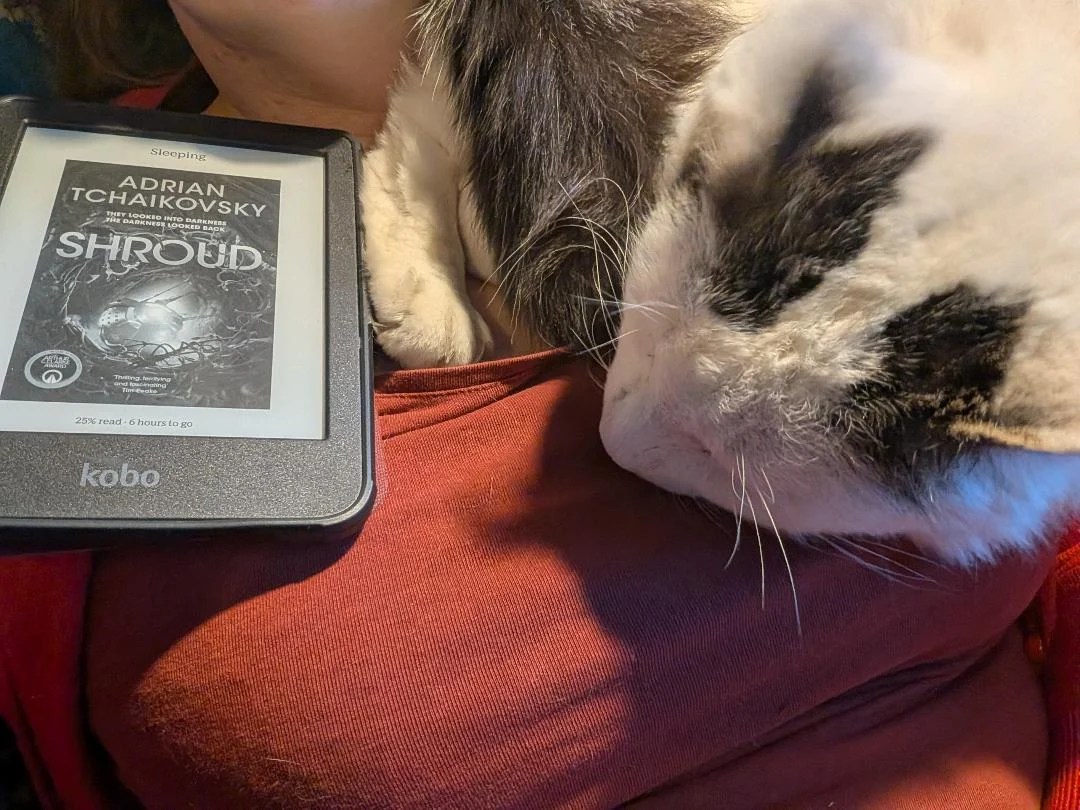
In the highly competitive world of science fiction and fantasy literature, the Hugo Awards represent the pinnacle of peer-recognized excellence. Every year, a select group of fans and critics immerse themselves in the "Hugo packet"—a gargantuan collection of novellas, novels, and short fiction—to determine which works deserve the industry’s highest honor. However, this year’s most dedicated researcher has emerged from an unlikely demographic. Zephyr, a feline connoisseur of literature, has captured the attention of the genre community by integrating his unique "osmotic" reading method with Adrian Tchaikovsky’s latest work, Shroud.
Main Facts: A New Standard in Literary Reviewing
The phenomenon began when Kate Towner, a long-time member of the genre community, shared an image of her companion, Zephyr, resting atop a physical copy of Shroud. The image, which quickly circulated through enthusiast circles, shows the cat in a state of deep, meditative repose directly upon the book’s cover.
Unlike traditional critics who rely on annotations, highlighting, or digital indexing, Zephyr employs a technique best described as "tactile immersion." By physically occupying the space where the literature resides, he demonstrates a commitment to the craft that few human voters can match. In the context of the Hugo Awards—where voters are often criticized for failing to read the entire ballot—Zephyr’s dedication to resting upon the text represents a bold, if unconventional, approach to informed voting.
Chronology: From Manuscript to Nap
The timeline of this literary event tracks closely with the current Hugo Award eligibility and reading cycle:
- Phase I: Publication: Adrian Tchaikovsky, a prolific and highly respected voice in modern science fiction, releases Shroud. The book immediately enters the discourse for its complex world-building and philosophical depth.
- Phase II: Discovery: Kate Towner acquires a physical copy of the work, intending to engage with the text.
- Phase III: The Intervention: Recognizing the potential for high-level analysis, Zephyr intervenes, claiming the book as his primary station for rest and contemplation.
- Phase IV: Public Exposure: Towner documents the event, providing the image that has now become a symbol of the "informed reader" archetype within the File 770 community.
- Phase V: The Discourse: The community responds with enthusiasm, sparking a broader trend of pet owners sharing their own animals’ interactions with genre staples.
Supporting Data: The Feline Factor in Genre Consumption
While empirical data on feline literary preferences is sparse, anecdotal evidence suggests that pets are increasingly involved in the "home office" environment of modern readers. According to community polls within the File 770 archives, nearly 40% of active Hugo voters report having a "literary assistant" present during their reading sessions.
The choice of Shroud as a pillow is not merely incidental. Adrian Tchaikovsky’s work is noted for its intricate, dense narrative structures, which, according to some pet behaviorists, provide a stable and grounding surface for domestic animals. The weight and texture of the trade paperback format offer a tactile sensory experience that digital tablets simply cannot replicate, potentially explaining why Zephyr bypassed electronic readers in favor of the physical tome.
Official Responses: The Author and the Community
When reached for comment, the genre community reacted with a mixture of humor and earnest appreciation. Tchaikovsky himself has long been a favorite of the Hugo voting block, and the "Zephyr seal of approval" has been interpreted by fans as a positive omen for the book’s performance in the upcoming ballot.
"We often talk about the ‘weight’ of a story," said one anonymous Hugo voter. "Zephyr isn’t just reading the book; he is physically embodying the gravity of Tchaikovsky’s prose. If a cat is willing to spend his afternoon on a book, that is a recommendation that transcends traditional literary criticism."
The editorial team at File 770, led by Mike Glyer, has since formalized this trend, inviting other members of the community to submit photographic evidence of their own pets engaging with the Hugo shortlist. This has evolved into a recurring feature, effectively turning the Hugo research process into a communal, pet-inclusive social event.

Implications: Changing the Face of Fandom
The emergence of Zephyr as an "informed voter" carries significant implications for the future of literary criticism and fan engagement.
The Democratization of Criticism
By celebrating Zephyr’s contribution, the genre community is signaling a shift away from the overly academic, gatekept, and often humorless analysis that has plagued literary awards in the past. If a cat can participate in the Hugo cycle, the barrier to entry for new readers becomes significantly lower. It suggests that literature is not just for the ivory tower, but for the living room, the study, and the sunlit patch of carpet where a cat might nap.
The Return of the Physical Book
In an era where audiobooks and e-readers dominate the market, the image of Zephyr on Shroud serves as a poignant reminder of the enduring power of the physical book. There is a "presence" to a physical copy that fosters a relationship between the reader (or the napping cat) and the work. This serves as a potent marketing tool for physical media in an increasingly digitized industry.
Enhancing Community Cohesion
Finally, the "Zephyr effect" highlights the importance of shared joy in fandom. Hugo Award seasons are notoriously stressful, often fraught with political infighting and intense debate over eligibility and bias. By shifting the focus toward pets—creatures that are inherently neutral and universally loved—the community has found a way to bridge ideological divides. It is difficult to maintain a heated argument about the merits of a specific narrative arc when everyone is collectively sharing photos of their tabby or tuxedo cat snoozing on the same pile of paperbacks.
Future Outlook: Looking Toward the Ceremony
As the Hugo Awards approach, the influence of the "Zephyr-style" voter remains to be seen. Will we see a surge in ballots cast by cats? Likely not. But the spirit of the movement—a relaxed, appreciative, and deeply grounded engagement with the works—is precisely what the community needs.
For those who have yet to participate, the call to action remains clear: pick up a book, find a comfortable spot, and perhaps invite your feline friend to join you. Whether or not you are voting in the Hugos, the act of slowing down to appreciate the printed word is a victory in itself.
As for Zephyr, he remains the gold standard. He has finished his preliminary review of Shroud, and if his relaxed posture is any indication, Tchaikovsky can rest easy knowing that at least one of his most important readers is entirely satisfied with the quality of his latest output.
For those interested in participating in this ongoing literary project, please ensure your pets are handled with care and that all genre works are treated with the respect they deserve—even if they are being used as a cat bed. For further updates on the Hugo Awards and other genre news, subscribe to the File 770 newsletter.










No comments yet. Be the first to join the conversation!