Pevita Pearce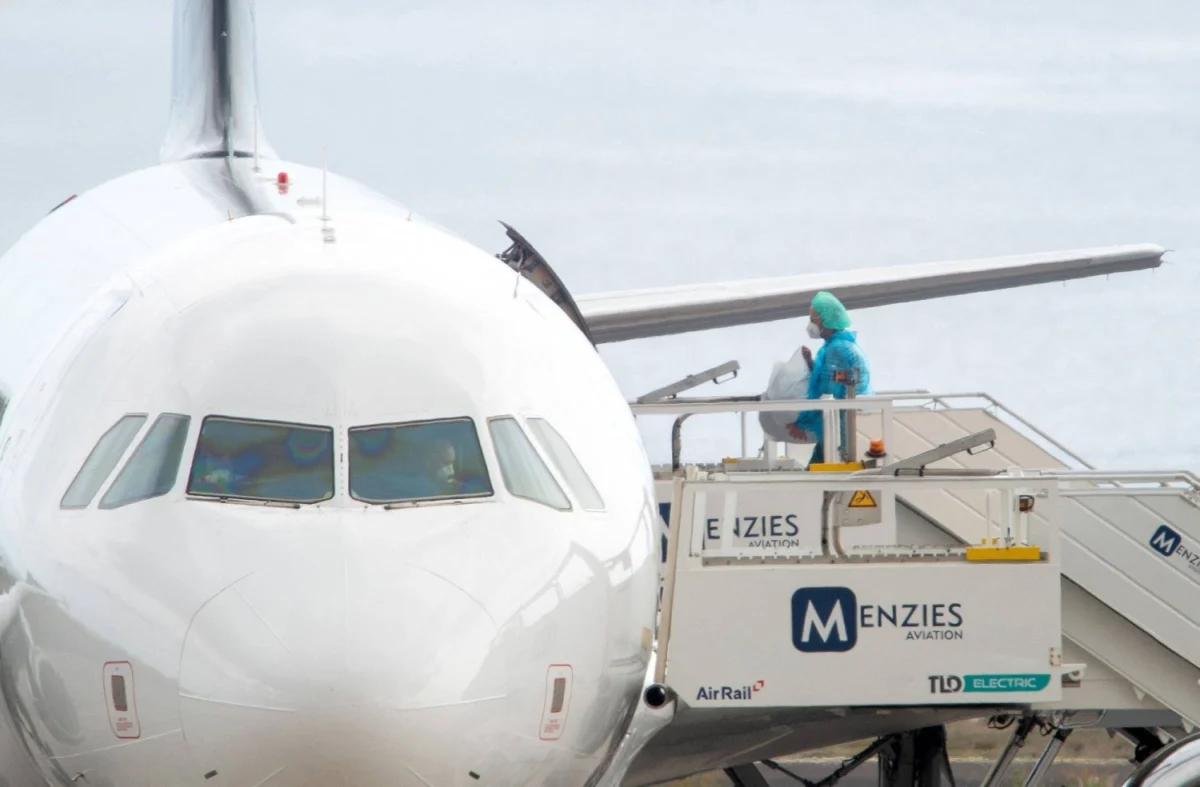
TENERIFE, Spain — A harrowing maritime crisis reached a critical juncture this Sunday as emergency medical teams and aviation authorities finalized a massive, complex repatriation operation. Passengers and crew members of the Dutch-flagged expedition vessel MV Hondius have been evacuated from the Canary Islands after a devastating outbreak of hantavirus turned a luxury cruise into a site of medical emergency and mourning.
The operation, which spanned several hours at Tenerife Sur-Reina Sofia Airport, saw 94 individuals—many visibly shaken and wearing protective medical gear—board specially chartered flights bound for their home countries, including the United Kingdom, Germany, and the Netherlands. The exodus marks the beginning of the end for a voyage that began in hope but concluded in tragedy.
The Human Toll: A Fatal Outbreak at Sea
The MV Hondius, known for its expedition-style voyages, found itself at the center of an international health alert after a series of mysterious illnesses began to manifest among passengers and crew. Health officials have confirmed the deaths of three individuals: a Dutch married couple and a German woman.
The presence of hantavirus, a rare but lethal zoonotic pathogen, has sent shockwaves through the global cruise industry and public health sectors. Unlike respiratory viruses that spread via person-to-person contact, hantavirus is primarily transmitted through contact with the urine, droppings, or saliva of infected rodents. The transmission route onboard the vessel remains a primary focus of ongoing epidemiological investigations.
For the survivors, the journey has been one of profound trauma. Many passengers described a sudden shift from the tranquility of the open ocean to a state of clinical isolation once the initial cases were identified. The arrival in Tenerife was not a return to normalcy, but rather a transition to high-level quarantine protocols and medical observation.
Chronology of the Crisis
The timeline of the MV Hondius disaster highlights the speed at which a contained health risk can escalate in a confined maritime environment.
- Mid-April: The MV Hondius departs from Argentina, a region where specific strains of hantavirus are considered endemic. It is believed that the initial exposure occurred shortly before or during the ship’s departure.
- Late April: The first symptoms appear among the crew and passengers. Initially dismissed as seasonal flu or standard travel-related fatigue, the severity of the respiratory symptoms quickly raised alarm among the ship’s medical staff.
- Early May: The captain of the MV Hondius alerts Spanish maritime authorities as the vessel approaches the Canary Islands. The decision is made to divert to Tenerife to facilitate emergency medical intervention and evacuation.
- May 9–10: The ship docks under strict quarantine. Spanish health authorities establish a biological containment zone at the port. Medical professionals wearing full Personal Protective Equipment (PPE) begin assessing the occupants.
- May 11 (Sunday): The large-scale repatriation effort commences. Under the watchful eyes of Spanish civil guards and international health officials, 94 passengers are processed for departure. The remaining crew and those requiring intensive medical monitoring remain in Tenerife.
The Nature of the Threat: Understanding Hantavirus
Hantavirus Pulmonary Syndrome (HPS) is a severe respiratory disease that can be fatal in 30% to 50% of cases. The lack of a specific vaccine or targeted antiviral treatment makes the containment of an outbreak particularly difficult.
Why is this outbreak so concerning?
The medical community is currently examining how the virus reached a maritime environment. Epidemiologists suggest that rodents may have boarded the ship during its stay in South America. If those rodents were carriers of the virus, their waste could have contaminated the ship’s ventilation systems or food storage areas, leading to widespread aerosolized exposure.
“Hantavirus is not typically a cruise-ship concern,” says Dr. Elena Rodriguez, a consultant in tropical medicine. “It is a disease of terrestrial interaction. Finding a cluster of this magnitude on a vessel is highly anomalous and suggests a very specific, sustained exposure event within the ship’s infrastructure.”
Medical professionals on the ground in Tenerife have been administering supportive care, which primarily involves mechanical ventilation and oxygen therapy to assist those whose lungs have been compromised by the virus.

Official Responses and Diplomatic Coordination
The coordination of the evacuation involved a multi-national effort, requiring intense collaboration between the Dutch ship owners, Spanish health authorities, and the respective embassies of the repatriated passengers.
The Role of Spanish Authorities
The government of the Canary Islands has been praised for its rapid response. By transforming the airport logistics and hospital wards into specialized containment zones, they prevented a wider community outbreak. "Our primary concern was the safety of the local population while ensuring the dignity and health of the passengers," a representative from the Canary Islands Health Department stated during a press briefing on Sunday.
International Cooperation
The Dutch Foreign Ministry has issued a statement expressing condolences to the families of the deceased and confirming that they are working closely with the vessel’s operators to understand the cause of the outbreak. Similarly, German and British authorities have mobilized medical support teams to meet the returning flights, ensuring that all passengers enter a period of supervised monitoring upon arrival in their home countries.
Implications for the Cruise Industry
The MV Hondius incident is likely to serve as a catalyst for a fundamental overhaul of maritime health safety protocols. Currently, cruise industry standards are heavily focused on gastrointestinal viruses (like Norovirus) and respiratory illnesses (like COVID-19). Hantavirus, however, introduces a new variable: environmental sanitation regarding pest control.
Future Protocols
Industry analysts suggest that we should expect several immediate changes:
- Stricter Zoonotic Screening: More rigorous pest control inspections for vessels operating in or near endemic zones.
- Enhanced Ventilation Audits: Increased reliance on HEPA filtration and air quality management to prevent the spread of aerosolized contaminants.
- Expanded Medical Stockpiles: Cruise lines will likely be required to maintain broader medical supplies, even for "rare" diseases, to handle emergency scenarios where traditional medical help is days away.
The economic fallout is also expected to be significant. The reputation of expedition cruising—a niche market that prides itself on access to remote, untouched locations—may suffer as travelers weigh the risks of venturing into ecologically sensitive areas where such pathogens reside.
Moving Forward: The Road to Recovery
As the planes touched down in London, Frankfurt, and Amsterdam, the ordeal for the passengers of the MV Hondius shifted from the high seas to the quiet, clinical reality of recovery and investigation. The three lives lost in this tragedy remain a somber reminder of the vulnerabilities inherent in global travel.
For the maritime industry, the focus must now shift to the forensic investigation of the ship itself. Until the exact point of contamination is identified and eradicated, the MV Hondius will remain a vessel under a dark cloud.
The international community awaits the final report from the Spanish health authorities, which is expected to provide definitive answers regarding the source of the virus. Until then, the incident stands as a chilling case study in the intersection of nature, travel, and the fragile state of human health in a globalized world.
This article is based on reporting from the Canary Islands and international health updates. For those seeking further information on hantavirus or travel health advisories, please consult your local health authority or the World Health Organization.


 Neng Nana
 Asro
Asro