Ali Ikhwan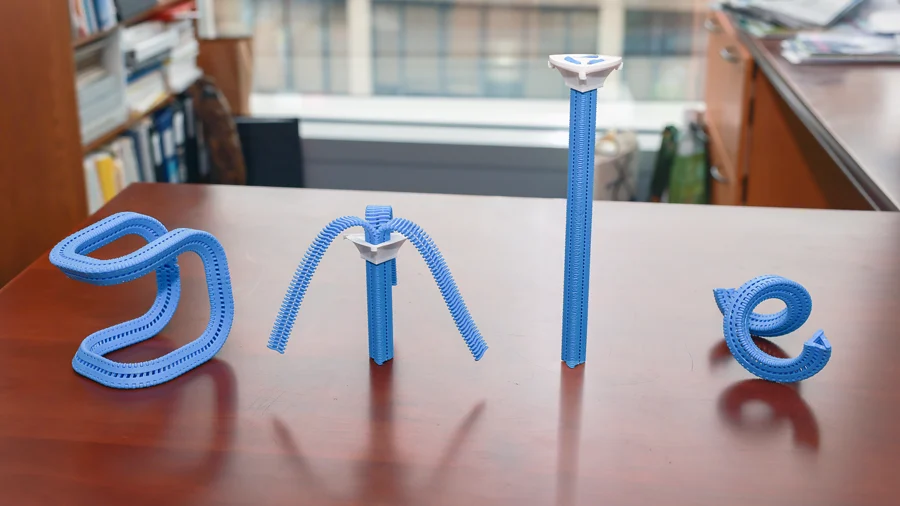
In the realm of structural engineering and robotics, designers have long faced a persistent "Goldilocks" dilemma: how to create a mechanism that is flexible enough to adapt to complex environments yet rigid enough to bear significant structural loads. For decades, these two properties were considered mutually exclusive. Soft robotics offered agility but lacked the skeletal strength to manipulate objects or support weight, while rigid systems provided structural integrity at the cost of mobility.
However, a breakthrough from the Massachusetts Institute of Technology’s (MIT) Computer Science and Artificial Intelligence Laboratory (CSAIL) promises to dissolve this dichotomy. Researchers have unveiled the "Y-Zipper," a revolutionary three-sided fastening mechanism that allows 3D-printed, floppy structures to transform into rigid, load-bearing pillars in a matter of seconds. By applying the fundamental geometric principles of triangular stability to a modular, reconfigurable framework, the MIT team has opened new horizons for everything from rapidly deployable emergency shelters to advanced, adaptive medical devices and space-faring robotics.
The Mechanics of Rigidity: How the Y-Zipper Works
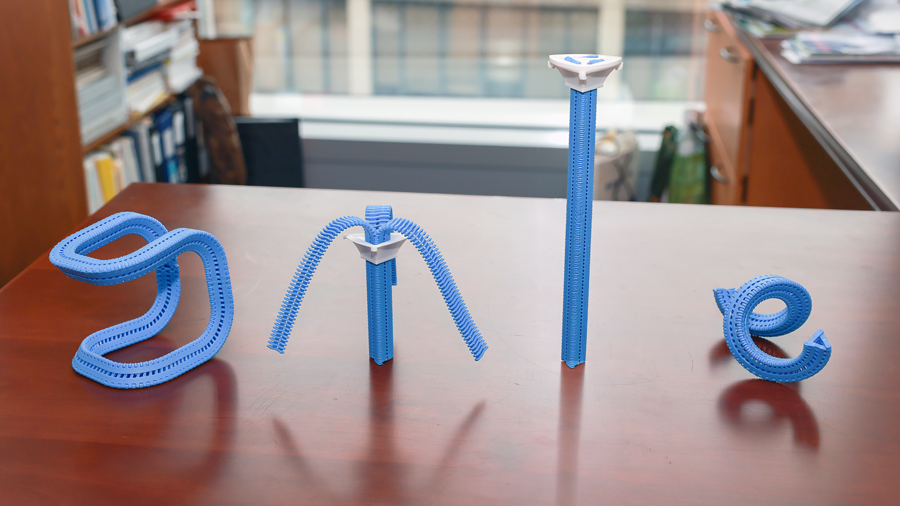
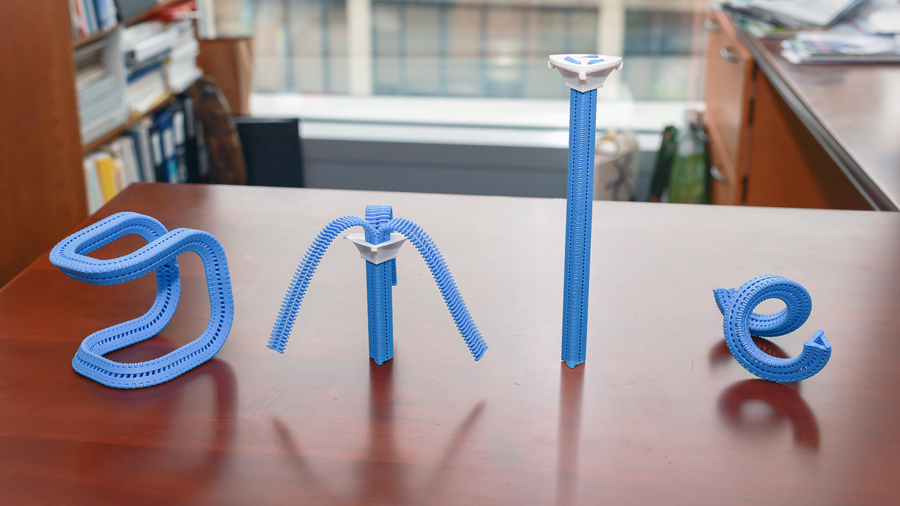
The innovation lies in its departure from traditional two-dimensional fastening. Standard zippers, familiar to anyone who has worn a jacket, function by locking two flat surfaces together along a single seam. The Y-Zipper, by contrast, operates in three dimensions. It utilizes a custom slider to interlock three distinct flexible arms into a singular, rigid triangular tube.
When the Y-Zipper is in its "open" state, the three arms function as independent, floppy tentacles. They are capable of twisting, bending, and curling around obstacles or through tight spaces—a necessity for soft robotic locomotion. However, when the slider is activated, it forces these arms together. As they interlock, they form a closed-loop triangular prism.
The brilliance of this design is rooted in basic structural engineering: the triangle. Because triangles are geometrically rigid, they resist the deformation, torsion, and buckling that plague flat or rectangular structures. By zipping the arms into this configuration, the mechanism effectively transforms from a soft, compliant material into a stiff, load-bearing beam on demand.
A Chronology of the Development
The development of the Y-Zipper was a multi-stage process that involved material science, mechanical engineering, and iterative prototyping.
- Conceptualization (Early Research): The team began by identifying the limitations of current reconfigurable systems, which often rely on complex hinges or heavy motor assemblies that add unnecessary bulk.
- Material Evaluation: Researchers experimented with various 3D-printing filaments. They found that PLA (polylactic acid) offered high structural rigidity, making it ideal for the "beam" state, while TPU (thermoplastic polyurethane) allowed for superior flexibility in the "open" state.
- Prototyping and Testing (Mid-2023): The lab created several iterations of the Y-Zipper, refining the slider mechanism to ensure smooth operation. During this phase, they discovered that the elastic nature of the material was a benefit rather than a hindrance, as it allowed the structure to distribute mechanical stress evenly across the assembly rather than concentrating it at a single point of failure.
- Durability Trials (Late 2023): The team subjected the mechanism to rigorous cycle testing, confirming that the Y-Zipper could survive approximately 18,000 cycles of opening and closing before experiencing mechanical fatigue.
- Public Unveiling (April 2024): The research was officially presented at the Association for Computing Machinery (ACM) Conference on Human Factors in Computing Systems (CHI), where it was detailed in the paper, "Y-Zipper: 3D Printing Flexible–Rigid Transition Mechanism for Rapid and Reversible Assembly."
Supporting Data and Technical Performance
The efficiency gains demonstrated by the MIT team are significant. In a demonstration involving the assembly of a tent-like structure, the researchers compared the traditional manual setup—which took roughly six minutes—with the Y-Zipper assembly. With the new mechanism, the time required to lock the frame into a rigid, load-bearing shape dropped to just one minute and 20 seconds. This represents a nearly 80% increase in efficiency, suggesting that the technology could be a game-changer for disaster relief, where time-to-shelter is a critical metric.
The load-bearing capacity of the Y-Zipper is equally impressive. Because the assembly creates a closed-loop cross-section, the structure can withstand axial loads that would cause standard 3D-printed strips to buckle instantly. The elasticity of the polymers used ensures that the structure can handle "snap-fits" without shattering, a common failure point for brittle 3D-printed components.
Implications for Future Engineering
The potential applications for the Y-Zipper technology are vast, spanning across multiple industries:
1. Adaptive Robotics
One of the most promising applications is in the field of robotics. The researchers demonstrated a quadrupedal robot capable of changing the height and stiffness of its legs on the fly. By actuating the zipper mechanism with small motors, the robot can transition from a low-profile, flexible gait—useful for squeezing under low-clearance obstacles—to a rigid, high-stiffness stance for traversing uneven or rocky terrain. This "tunable stiffness" is the holy grail for field robotics, as it allows machines to function efficiently in unpredictable, real-world environments.
2. Medical and Rehabilitative Devices
The team’s work on a wrist-cast prototype illustrates the potential for "active" medical wearables. A patient could wear a flexible, comfortable brace during the day, which would allow for natural movement. When rest or immobilization is required, the integrated Y-Zipper could be engaged to lock the cast into a rigid, protective configuration. This offers a level of patient comfort that traditional, rigid plaster or fiberglass casts simply cannot match.
3. Aerospace and Space Exploration
The ability to pack a large, rigid structure into a compact, flexible form is a requirement for space exploration. Deployable spacecraft structures, such as solar arrays, antennas, or even modular habitat components, must survive the launch phase in a small volume and then expand into large, rigid shapes. The Y-Zipper offers a lightweight, motor-driven solution that could allow future robots to grab rock samples or assemble complex apparatuses on the lunar or Martian surface without the need for heavy, complex fasteners.
4. Dynamic Architecture and Art
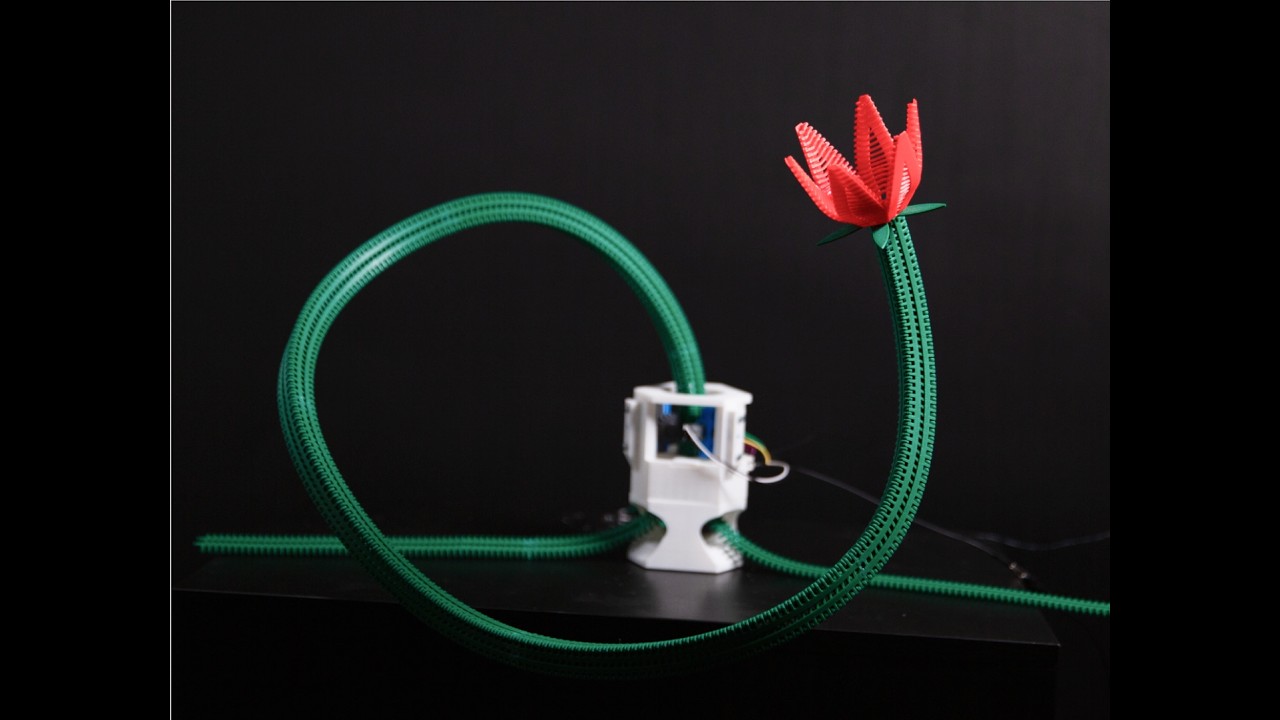
Beyond utilitarian functions, the Y-Zipper provides a new medium for kinetic art. The "mechanical flower" prototype, which blooms via the vertical zipping of its structural elements, demonstrates how this technology could be used to create large-scale, adaptive architecture that changes its form based on light conditions, crowd density, or weather.
Expert Perspectives and Future Outlook
While the initial prototypes are limited by the properties of current 3D-printing materials, the research team is optimistic about the future of the technology. The current reliance on PLA and TPU is merely a proof of concept. The researchers noted that future iterations could incorporate metallic elements or high-performance carbon-fiber-reinforced polymers, which would allow the mechanism to scale to much larger sizes, potentially reaching the scale required for temporary bridges or modular building construction.
Furthermore, the integration of intelligent control systems could allow the Y-Zipper to operate autonomously. By coupling the mechanism with sensors, a robot could detect a change in the environment—such as a slope in the ground or a change in wind load—and automatically adjust its own structural stiffness to compensate.
The CHI conference presentation emphasized that the Y-Zipper is not just a structural component, but a "transition mechanism." It represents a shift in thinking from "static" hardware to "dynamic" hardware. In the past, if a tool was not rigid enough, you added more material; if it was not flexible enough, you added hinges. The Y-Zipper renders these trade-offs obsolete by embedding the ability to change state directly into the geometry of the object itself.
Conclusion
The work coming out of MIT CSAIL serves as a powerful reminder of how basic geometry—specifically the triangle—can be reinterpreted through the lens of modern manufacturing. By rethinking the zipper, the researchers have unlocked a way to bridge the gap between the soft, biological world and the hard, mechanical world.
As we move toward a future defined by autonomous robotics, space exploration, and responsive infrastructure, the Y-Zipper stands out as a foundational technology. It provides a simple, scalable, and highly efficient answer to the complex question of how we can build structures that are both adaptable and strong. Whether it is a robot leg that can stiffen to climb a mountain or a medical cast that can soften for the user’s comfort, the Y-Zipper is poised to reshape our relationship with the objects around us, turning the static, rigid world into one that can bend, adapt, and snap into place at a moment’s notice.

 Iffa Jayyana
 Muslim