Pevita Pearce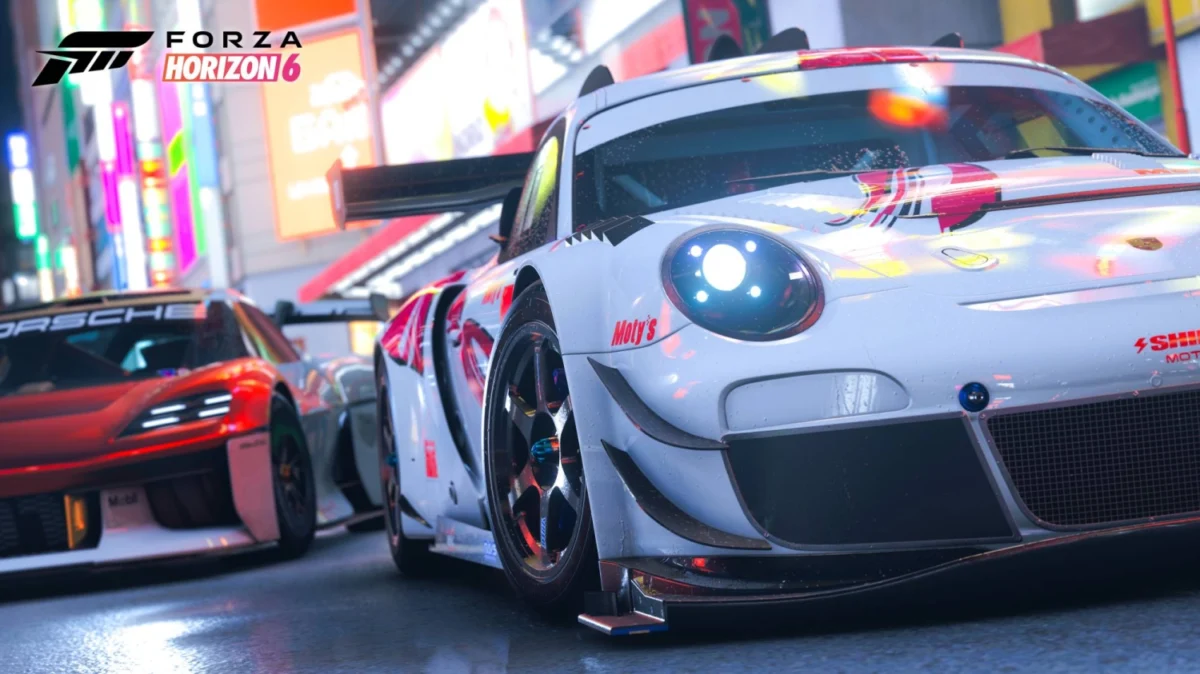
By Editorial Staff
For years, the global gaming industry looked toward Japan as a fountain of inspiration, yet it remained a territory frequently explored only by domestic developers. That paradigm has shifted decisively. Following a banner year in 2025 that saw foreign studios successfully transplant their flagship franchises into the Japanese landscape, the trend has reached a new, high-octane milestone. On May 19, Playground Games will officially launch Forza Horizon 6, a title that trades the deserts of Mexico for the neon-soaked streets and winding mountain passes of Japan.
The move marks more than just a change of scenery; it represents a significant pivot in how Western developers perceive the cultural and geographic nuances of the archipelago. As Forza Horizon 6 prepares to join the ranks of recent titles that have successfully navigated this cultural transition, it is worth examining how Japan has become the most coveted "open world" in modern gaming.
A Chronology of the Japanese Pivot
The influx of foreign-developed titles set in Japan was not a singular event, but rather a tidal wave that gathered strength throughout 2025.
The Hokkaido Expansion (October 2025)
The momentum arguably began in earnest with the release of Sucker Punch Productions’ Ghost of Yotei. Building on the critical and commercial success of Ghost of Tsushima, the studio opted to move away from the lush, feudal coastlines of the south to the harsh, untamed wilderness of Hokkaido in the early 17th century. By grounding the narrative in the rugged geography of the north, Sucker Punch proved that a "foreign" studio could handle Japanese history with a level of reverence that resonated even with local audiences.
The Assassin’s Creed Odyssey (March 2026)
Perhaps the most anticipated move in recent gaming history, Ubisoft Quebec’s Assassin’s Creed Shadows finally arrived in March. For over a decade, fans had petitioned the developer to bring the series to the Sengoku period. When it finally arrived, the result was a sprawling, detail-oriented depiction of Kyoto and its surrounding provinces. Despite the immense pressure of living up to years of fan speculation, the game managed to capture the duality of the era: the brutality of the samurai class against the serene, aesthetic beauty of Japanese architecture and nature.
The Horror Shift (September 2025)
The trend even crossed into the horror genre, traditionally the domain of Western-coded scares. Konami, in partnership with NeoBards, released Silent Hill f. By shifting the franchise from its iconic, small-town American roots to rural Japan in the 1960s, the developers proved that the "Silent Hill" brand of psychological terror could be effectively translated into a setting defined by Japanese folklore and the distinct architectural melancholy of the post-war Showa era.
Forza Horizon 6: The Ultimate Driving Simulator Meets Japanese Car Culture
Now, Playground Games is set to redefine the racing genre with Forza Horizon 6. Unlike the narrative-heavy RPGs that preceded it, Forza relies on the intersection of geography and subculture. Japan is widely considered the spiritual home of modern automotive culture, from the midnight drift scenes of the Hakone Turnpike to the hyper-modern, complex urban interchanges of Tokyo and Osaka.
"We aren’t just building a map; we are building an homage," says a representative from the development team. "When you drive through the streets of our version of Tokyo, you aren’t just seeing buildings. You are seeing the culmination of decades of JDM (Japanese Domestic Market) history, the lighting of the Shinjuku district, and the precise, rhythmic flow of the mountain passes."
The game’s aesthetic direction is described as "hyper-stylized realism." Rather than a flat, 1:1 recreation, Playground Games has utilized advanced photogrammetry to ensure that the "feel" of Japan—the way the humidity hangs in the air during a rainstorm, or the specific glow of a vending machine at 3:00 AM—is present.

Supporting Data: Why Now?
The data suggests that the "Japan boom" is not merely a creative whim but a calculated business decision. According to recent market analysis, interest in Japanese media—from anime and tourism to culinary exports—has reached an all-time high globally.
- Tourism Correlation: Gaming industry analysts note a direct correlation between the release of high-profile, Japan-set games and a spike in tourism to the specific regions featured. After the release of Ghost of Yotei, local tourism boards in Hokkaido reported an increase in interest from international travelers.
- Technical Feasibility: Advances in procedural generation and lighting engines (such as the latest iterations of Unreal and proprietary in-house engines) now allow developers to recreate the density of Japanese urban centers, which were previously too technically taxing to render in a seamless open-world format.
- Audience Demographics: Surveys indicate that Gen Z and Millennial gamers—the primary demographic for the Forza and Assassin’s Creed franchises—show a significantly higher affinity for Japanese aesthetics compared to previous generations, driven largely by the global accessibility of Japanese pop culture via streaming platforms.
Official Responses and Industry Sentiment
The reception from the Japanese gaming community has been cautiously optimistic. Historically, Japanese gamers have been protective of their history and cultural identity when handled by Western studios. However, the recent success of Ghost of Yotei has bridged this gap.
"There was a fear that foreign studios would lean into stereotypes," says Kenji Sato, a veteran game analyst based in Tokyo. "But what we’ve seen over the last eighteen months is a shift toward deep research. These studios are consulting with historians, architects, and local consultants. They are realizing that if they want to capture the Japanese market, they have to treat the setting with the same level of importance as they do the gameplay mechanics."
Playground Games has emphasized that their approach to Forza Horizon 6 involves extensive collaboration with Japanese automotive enthusiasts and cultural historians to ensure that the "style" they are chasing is authentic.
The Implications: What Does This Mean for the Future?
The migration of major franchises to Japan signals a fundamental shift in the "Global Games" landscape. We are moving away from the era of "generic Western settings" toward a model of "culturally specific exploration."
1. The Death of the Generic Map
The success of these titles suggests that players are tired of generic, European-inspired fantasy or American-inspired urban sprawl. They want settings with "character." Japan, with its unique blend of ancient tradition and futuristic infrastructure, provides a visual and emotional diversity that few other countries can match.
2. Higher Standards for Cultural Representation
Because these games are now being released in an age of instantaneous global feedback, developers are under unprecedented scrutiny. The "Japan-set" game of 2026 cannot afford to be superficial. This pressure is driving a new standard of quality, where environmental storytelling is as important as the combat or driving physics.
3. The Opening of the Japanese Market
By successfully integrating Japan into their global flagship titles, Western developers are effectively making their products more palatable to the Japanese domestic audience—a market that has traditionally been difficult for Western studios to penetrate. If Forza Horizon 6 manages to capture the nuance of the local car scene, it could become one of the highest-selling Western games in Japanese history.
Conclusion
As we look toward the May 19 launch of Forza Horizon 6, it is clear that the industry’s fascination with Japan is not a trend that will fade by year’s end. It is a fundamental evolution of the medium. By blending high-fidelity technology with the rich, storied landscapes of Japan, developers are creating experiences that are as much about "traveling" as they are about "playing."
The race is no longer just about who has the fastest car or the sharpest blade; it is about who can best capture the soul of a setting that has fascinated the world for centuries. As the starting flag drops on Forza Horizon 6, the rest of the industry will be watching closely to see if Japan remains the ultimate playground for the world’s biggest developers.


 Neng Nana
 Asro
Asro