


TOKYO, Japan – The roar of finely-tuned engines echoes across digital renditions of Japan’s bustling metropolises and serene countrysides as Forza Horizon 6, the latest iteration in Playground Games’ acclaimed open-world racing series, hits the asphalt. In an industry often demanding relentless innovation, Forza Horizon 6 opts for a different path, steadfastly clinging to the winning formula that has cemented its predecessors as genre titans. The game, set against the breathtaking backdrop of a meticulously crafted Japan, promises familiar thrills and unparalleled automotive escapism, yet sparks a conversation about the delicate balance between satisfying fan expectations and pushing creative boundaries.
The Unwavering Course: Main Facts
Forza Horizon 6 arrives with the considerable weight of expectation, following a lineage of critically and commercially successful titles. Developed by Playground Games and published by Xbox Game Studios, the game plants its roots in a vibrant, sprawling digital recreation of Japan, encompassing the neon-soaked urban sprawl of Tokyo and its contrasting, picturesque rural environs. This choice of locale is a significant departure from previous settings like Mexico, the UK, Australia, and the US, offering a fresh aesthetic while retaining the core gameplay loop fans have come to adore.
At its heart, Forza Horizon 6 remains an expansive car-collecting driving game rather than a hardcore racing simulator. Players are invited to amass an enviable garage of vehicles, from everyday commuters to hypercars and vintage classics, and unleash them across an open world brimming with activities. The game’s progression systems, including the familiar Festival Wristband tiers and the new "Discover Japan" track, guide players through an ever-unfolding tapestry of races, challenges, and scenic drives. Visual fidelity receives a significant boost with advanced graphics, including ray tracing, promising an unparalleled level of immersion. Despite its new setting and iterative enhancements, the overarching sentiment from early impressions suggests a dedication to the established Forza Horizon identity, prioritizing broad appeal and accessible fun over radical reinvention.
A Journey Through Japan: Chronology of the Horizon Festival
The player’s initiation into Forza Horizon 6 is a masterclass in establishing tone and immediate engagement, a hallmark of the series. From the moment the game launches, it confidently asserts its identity. The opening song choice, a curated track designed to encapsulate the festival’s high-energy, celebratory atmosphere, immediately draws players in. This musical overture is seamlessly paired with the iconic main menu, featuring dynamic, looping shots of aspirational automobiles and the convivial crowds surrounding them – a visual signature that has become synonymous with the franchise and instantly comforting to veterans.
Upon selecting "play," players are thrust directly into the action. The game’s introductory sequence serves as a grand tour, a curated showcase that whisks players through a snapshot of the diverse Japanese landscape. This initial drive acts as a primer, subtly introducing the player to the geographical breadth of the new setting, oscillating between the tight, illuminated streets of downtown Tokyo and the winding, verdant paths of its surrounding rural areas. This carefully choreographed segment culminates in the establishment of the Horizon Festival’s core competitive structure, swiftly followed by the pivotal moment of acquiring the player’s inaugural vehicle.
From this point, the game’s world gradually unfurls, echoing the methodical unlocking seen in its predecessors. While the majority of the expansive map is technically accessible from the outset, true progression and access to higher-tier events are governed by a novel "Wristband system." This system, effectively a progress bar, demands players earn points by participating in "Qualifiers" – a diverse array of races and events that push them towards the next Wristband tier. Winning is the most lucrative path to points, but even podium finishes contribute significantly in the early stages. Complementing these structured events are "PR Stunts" – a familiar staple comprising speed traps, drift zones, and destructible XP boards – offering supplementary points and additional avenues for free-roaming engagement. As players ascend through the tiers, the demands for faster, more powerful vehicles naturally escalate, fostering the series’ characteristic cycle of car acquisition and customization.
Running in parallel to the Wristband progression is the "Discover Japan" track. This distinct system shifts focus from pure competitive racing to a more explorative, narrative-driven experience. Its primary objective is to immerse players in Japan’s ten unique regions, introducing a cast of thinly sketched but enthusiastic characters who act as guides. These characters facilitate unique activities designed to highlight the world’s beauty and diversity, ranging from food delivery challenges to testing newly restored classic cars, and even convoy tours through stunning locales. "Discover Japan" often eschews the intense competitive pressure of traditional races, instead offering relaxed drives where the emphasis is on soaking in the atmosphere and enjoying the journey, reinforcing the game’s core identity as a driving rather than strictly racing experience.
Under the Hood: Supporting Data and Mechanics
Forza Horizon 6‘s foundation is built upon a well-established blueprint, evident in its numerous activities and underlying mechanics. The distinction between a "car-collecting driving game" and a "racing game" is crucial here. Players rarely feel compelled to meticulously learn circuit intricacies or spend hours fine-tuning their vehicles for a specific race. The game’s design leans heavily on accessibility. Should a race prove challenging, players are provided multiple avenues to overcome it: adjusting AI difficulty, purchasing a more powerful vehicle, or downloading community-created tunes (a feature that, while not always universally available pre-launch, is a cornerstone of the full experience). This "throw money at the problem" approach underscores the game’s commitment to reducing friction and keeping players engaged in the broader festival experience.
The game’s activities, while plentiful, largely remain within the predictable framework established by previous Horizon titles. However, "Discover Japan" serves as a fertile ground for more unique and engaging encounters. It is within this parallel progression track that players encounter activities like the challenging Touge races – requiring precision driving on narrow mountain passes – and the exhilarating street races, which offer a grittier, more illicit feel compared to the official festival events.
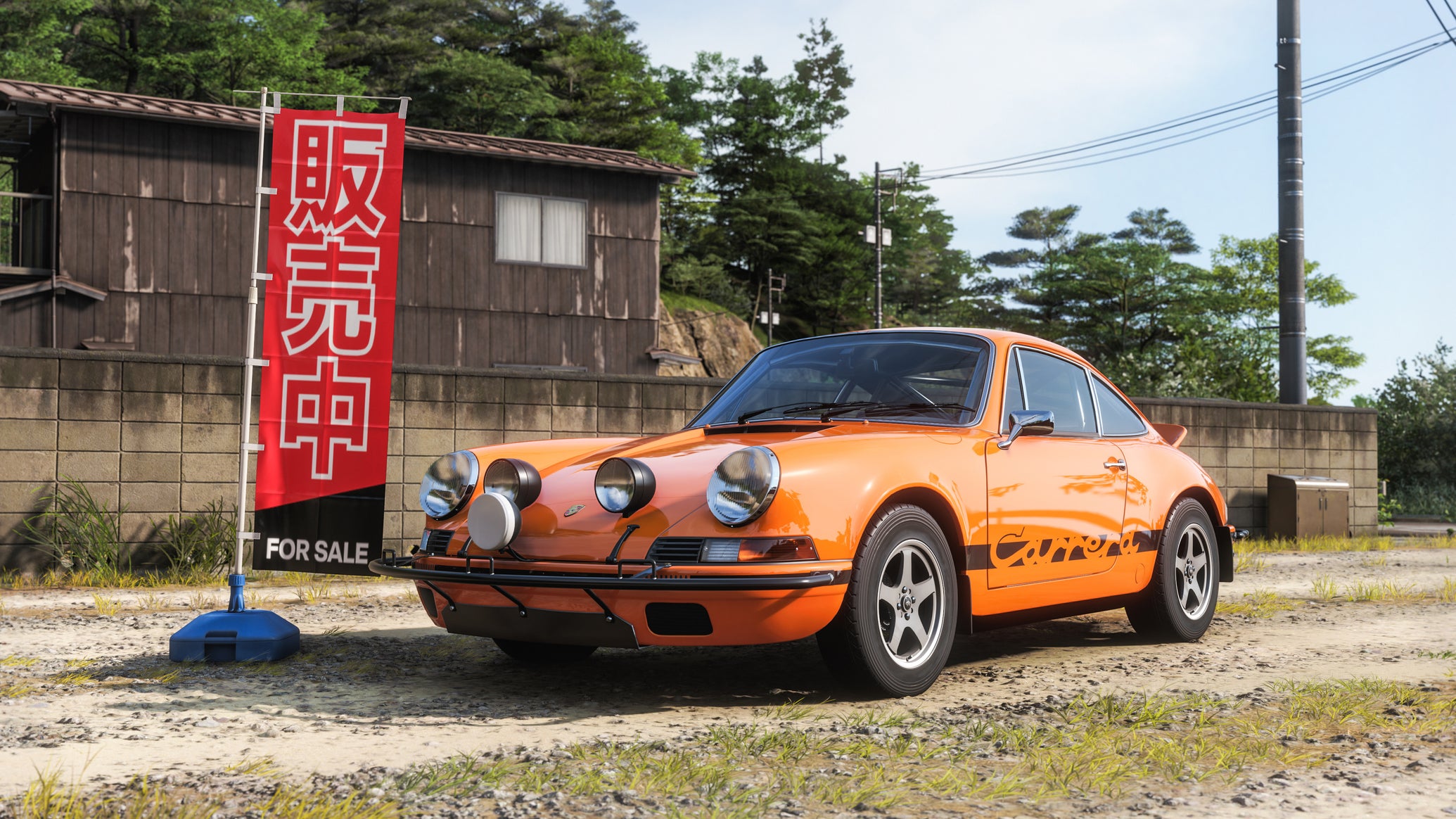
A particularly clever evolution is seen in the series’ long-standing "Barn Finds." Historically, players would stumble upon rumors of abandoned classic cars, with a map radius guiding them to hidden sheds. Forza Horizon 6 introduces "Treasure Cars" within the "Discover Japan" framework. Here, players are presented with a photograph of a car, often with specific monuments or landmarks in the background. The challenge lies in deciphering the photo’s location and angle to pinpoint the car’s whereabouts. While functionally similar to Barn Finds, the Treasure Car system adds a layer of visual puzzle-solving that some players found more engaging and often easier to locate than the deeply concealed barns of previous games, which frequently required extensive off-road exploration through dense foliage.

One standout new addition to the activity roster is "Horizon Rush" events. These races diverge significantly from typical Horizon fare, taking place on makeshift, obstacle-course-like circuits characterized by sharp corners and often ambiguous pathfinding. Horizon Rush demands a level of precision and car control rarely seen elsewhere in the game, largely because the vehicles are pre-determined, forcing players to adapt to specific handling characteristics. These timed challenges genuinely push players to understand their car’s physics and become a refreshing deviation from the more forgiving nature of other events.
Technologically, Forza Horizon 6 leverages modern hardware to create a visually stunning experience. The implementation of ray tracing is a key highlight, bringing the world to life with unprecedented fidelity. Reflections, lighting, and shadows are rendered with a realism that, particularly in natural environments rich with foliage, can momentarily trick the eye into believing it’s witnessing a real-world photograph. This graphical prowess extends to the overall environmental design, making the exploration of Japan’s diverse biomes a constant visual treat.
Accessibility, a growing focus across the gaming industry, is well-represented in Forza Horizon 6. While many options cater to specific needs, one universally beneficial feature is the proximity radar. This 360-degree radar provides visual cues when other cars are approaching, proving invaluable for situational awareness, especially during competitive races or when engaging in more "unsportsmanlike" tactics like blocking opponents. Its customizable nature ensures it can be tweaked to suit a wide range of player preferences, enhancing the driving experience, particularly for those who prefer a first-person perspective.
However, the game doesn’t entirely shed some long-standing frustrations. The AI behavior, for instance, can be remarkably inconsistent. Players might find themselves effortlessly dominating races in one instance, only to encounter seemingly superhuman opponents in the next, who adhere to the racing line with unerring precision and speed. This unpredictability in AI difficulty, shifting from aggressive "rammers" to world-class competitors on a whim, ironically becomes a significant source of the game’s challenge. Similarly, the rubber-banding effect, where trailing AI cars magically catch up or leading ones become impossibly fast, persists, often making the early or late stages of a race feel predetermined rather than skill-based.
The Developer’s Vision: Official Responses (Inferred Design Philosophy)
While the article does not contain direct quotes from Playground Games or Xbox Game Studios, Forza Horizon 6‘s design choices strongly infer a clear development philosophy. The team appears committed to an iterative approach, refining an already successful formula rather than risking radical departures. This strategy is likely rooted in a desire to maintain the series’ broad appeal, a critical factor for a franchise that has become a flagship title for the Xbox ecosystem and a perennial draw for Xbox Game Pass subscribers.

The focus on an accessible, car-collecting driving experience over a pure racing simulator suggests an understanding of the diverse player base. Playground Games seems to prioritize the fantasy of driving exotic cars in beautiful locales, making that fantasy attainable for players of all skill levels. The inclusion of robust difficulty options, community tuning, and the "money-solves-problems" approach to progression speaks to a design ethos that values player enjoyment and continuous engagement above all else.
The careful onboarding process, where menus and activities gradually unlock, is another testament to this philosophy. It prevents new or returning players from being overwhelmed by the sheer volume of content, gently guiding them through the festival’s intricacies. This "leading by the hand" approach ensures that even long-time fans, who may have had a significant gap between Horizon releases, can comfortably re-acclimatize to the game’s expansive offerings.
Furthermore, the emphasis on visual fidelity, particularly with ray tracing, highlights the developers’ commitment to pushing technical boundaries within the confines of their established gameplay loop. The goal is to create the most immersive and stunning open world possible, reinforcing the escapist fantasy at the core of the Horizon experience. The detailed recreation of Japan, from its urban canyons to its serene cherry blossom groves, is a massive undertaking that underscores their dedication to world-building.
The development team also seems acutely aware of the series’ legacy. Features like Barn Finds (evolved into Treasure Cars) are not discarded but reimagined, demonstrating a respect for tradition while attempting subtle innovation. The introduction of Horizon Rush events, which demand a different kind of skill and precision, shows a willingness to experiment with new activity types, albeit within the familiar Horizon framework. Overall, the inferred "official response" is one of confident iteration: trust the formula, polish the experience, expand the world, and continue to deliver the ultimate automotive playground for the masses.
The Road Ahead: Implications for the Franchise and Genre
The steadfast approach of Forza Horizon 6 carries significant implications for both the franchise and the broader open-world racing genre. For Forza Horizon, it solidifies its position as the undisputed king of accessible, open-world automotive escapism. By largely refusing to diminish its edge or alienate its core audience, Playground Games reinforces the brand identity. This consistency is a double-edged sword: it guarantees satisfaction for fans who crave more of what they love, but it may leave those yearning for bolder innovation or a more challenging, sim-oriented experience wanting.

In an era where many long-running series grapple with the pressure to constantly reinvent themselves, Forza Horizon 6‘s decision to "stay the course" could be seen as a strategic triumph. It demonstrates that a highly polished, content-rich iteration of a proven formula can still resonate deeply with a vast player base. This approach also positions Forza Horizon as a strong counterpoint to titles like Need for Speed Unbound, which have actively sought to redefine their identity and cater to a more specific, often edgier, demographic. While Need for Speed explores niche appeal and stylistic innovation, Forza Horizon continues to cast the widest net possible.
The game’s significant presence on Xbox Game Pass also has broader implications. As a day-one Game Pass title, Forza Horizon 6 is immediately accessible to millions, further cementing its status as a platform-defining exclusive. This model encourages broader experimentation by players who might not otherwise purchase a full-price game, solidifying the game’s role as a vital component of Microsoft’s subscription strategy. The constant influx of new players, coupled with a steady stream of post-launch content, ensures the festival remains vibrant and active for years to come.
Looking to the future, Forza Horizon 6 sets a precedent. It suggests that the franchise’s trajectory will likely remain one of incremental evolution rather than revolutionary overhaul. Future entries will probably continue to offer new breathtaking locales, expand the car roster, introduce clever twists on existing activities, and push graphical boundaries, all while maintaining the core philosophy of accessible, joyous open-world driving. For the racing genre, Forza Horizon 6 reinforces the viability and popularity of the "arcade-adjacent" open-world model, potentially influencing other developers to prioritize broad appeal and expansive content over niche simulation.
Ultimately, Forza Horizon 6 is a game that knows exactly what it is and whom it serves. It offers an unparalleled platform for players to live out their automotive fantasies, collecting dream cars and driving them through stunning, real-world-inspired landscapes. While it may not provide the "edge" or "rewarding friction" sought by those desiring a more demanding or innovative experience, its commitment to delivering a polished, expansive, and universally enjoyable open-world driving festival ensures its place as a genre benchmark. The twists and turns of the road ahead for the Forza Horizon series may be familiar, but they are consistently breathtaking.
Reviewed on PC, code provided by publisher.











No comments yet. Be the first to join the conversation!