

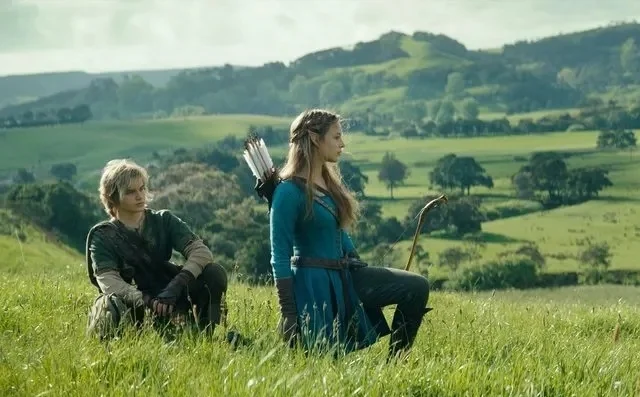
In a surprising departure from the industry-standard practice of delaying high-profile blockbusters, Nintendo has officially announced that the highly anticipated live-action adaptation of The Legend of Zelda will arrive in theaters sooner than originally scheduled. Shigeru Miyamoto, the legendary creator of the franchise, confirmed via the official Nintendo social media channels that the film, previously slated for a May 7, 2027, debut, will now premiere worldwide on April 30, 2027.
This unexpected acceleration marks a significant milestone for the gaming giant as it continues its aggressive expansion into the cinematic landscape. Following the monumental success of 2023’s The Super Mario Bros. Movie and the recent positive reception of The Super Mario Galaxy Movie, the pressure on Nintendo to translate its most storied intellectual properties into film has reached a fever pitch. With The Legend of Zelda, however, the stakes are fundamentally different, marking the company’s first return to live-action feature filmmaking in over three decades.
The Evolution of Nintendo’s Cinematic Strategy
For years, Nintendo maintained a famously protective stance over its library of characters, largely shying away from Hollywood after the notorious 1993 live-action Super Mario Bros. disaster. That film, which deviated sharply from the source material in both tone and visual aesthetic, became a cautionary tale for the industry, serving as a primary reason for Nintendo’s long-standing reluctance to engage with major film studios.
The transition to modern cinema began with Illumination’s CG-animated Super Mario Bros. Movie. By focusing on animation, Nintendo was able to maintain rigorous control over visual fidelity, ensuring that the vibrant, colorful aesthetic of the games was preserved in a medium that felt like a natural extension of the gaming experience. The success of this model provided the blueprint for The Super Mario Galaxy Movie, cementing Nintendo’s confidence in its ability to curate cinematic adaptations.
However, The Legend of Zelda represents a monumental shift in strategy. Unlike the whimsical, platforming nature of Mario, Zelda carries a sense of gravitas, high fantasy, and complex world-building that is notoriously difficult to capture in a live-action format. The move to bring Zelda to life in reality rather than via digital animation signals that Nintendo feels ready to challenge the "video game movie curse" once and for all.
A Chronology of the Production
The development of the Zelda film has been a meticulously managed process, punctuated by strategic reveals that have kept fans in a state of constant anticipation.
- Early Development (Late 2023–2024): Following the global dominance of the Mario franchise, rumors regarding a Zelda adaptation began to solidify into concrete reports. Nintendo emphasized that quality and fidelity to the source material would take precedence over release windows.
- Casting Revelation (November 2025): Nintendo officially confirmed the lead roles, announcing Bo Bragason as Princess Zelda and Benjamin Evan Ainsworth as Link. Miyamoto shared photos from the set, noting that filming had commenced in "lush, natural settings," a nod to the iconic landscapes of Hyrule.
- The Original Schedule: During initial investor briefings, the studio set a target release window for early 2027, eventually narrowing it down to May 7, 2027.
- The Shift (May 2026): Miyamoto took to X (formerly Twitter) to announce that the production schedule had been optimized, resulting in the new premiere date of April 30, 2027.
The decision to move the date up by one week is not merely a tactical calendar adjustment; it is a statement of confidence. In an era where projects like Avengers or Avatar often face multi-month delays due to VFX bottlenecks, Nintendo’s ability to pull forward a production suggests that the integration between the director’s vision and the technical teams has been remarkably efficient.
Strategic Timing: The Golden Week Factor
Industry analysts have pointed to a compelling reason for the April 30 release date: Japan’s "Golden Week." This annual period, which begins in late April and runs through the first week of May, is one of the most lucrative times for the theatrical exhibition industry in Japan. By hitting screens on April 30—the Friday preceding the holiday—Nintendo ensures that the film captures the full force of the holiday momentum.
Given that the release is being framed as a "worldwide theatrical release," this move suggests that Nintendo is aiming for a global opening weekend that capitalizes on the spring break period in both Asian and Western markets. If the film is to achieve the same cultural saturation as Mario, it must maximize its box office intake during the first ten days of its run. Positioning Zelda at the start of Golden Week provides a massive, built-in audience base, allowing the film to gain critical momentum before the summer blockbuster season kicks off in earnest.
The Burden of History: Why Zelda is Different
The 1993 Super Mario Bros. movie failed because it lacked a cohesive identity. It tried to ground a high-fantasy, surrealist game world in a gritty, industrial, dystopian reality that resonated with neither fans of the game nor general moviegoers.
For the upcoming Zelda film, the creative team faces the challenge of "The Hero’s Journey." The Legend of Zelda is defined by its silence—Link is a protagonist who rarely speaks, relying on the player to project themselves into his role. Adapting this for a live-action film requires a delicate balance. The production team must find a way to make Link a compelling, active lead character without stripping away the stoic mystery that defines the character in the games.
By choosing actors like Bragason and Ainsworth, Nintendo appears to be prioritizing character-driven performances over star-power gimmicks. The set photos released in late 2025 indicated a production design that leans into practical effects and real-world geography, suggesting that the team is aiming for a "fantasy epic" tone similar to The Lord of the Rings or The Chronicles of Narnia, rather than the hyper-stylized look of modern superhero films.
Official Stance and Future Implications
Miyamoto’s official statement—"The team is working hard to deliver the film to everyone as soon as possible"—speaks to a culture of perfectionism. While the date has moved up, the language used by Nintendo confirms that they are not cutting corners. Instead, the move is an expression of the production’s internal velocity.
If The Legend of Zelda succeeds in 2027, it will effectively prove that Nintendo is no longer a gaming company that occasionally dabbles in film, but a multimedia powerhouse. Success here could open the door for a myriad of other Nintendo properties to move into the live-action space, potentially including Metroid (which has long been rumored for a cinematic adaptation) or even a Fire Emblem political epic.
The shift of one week might seem minor to a casual observer, but for the film industry, it is a significant indicator of production health. As fans prepare for April 30, 2027, the focus now turns to the first full-length trailer. When it finally drops, it will be the ultimate litmus test: can the world of Hyrule, in all its green fields and ancient ruins, truly exist outside of a television screen? If the current production pace is any indication, Nintendo is betting that the answer is a resounding "yes."
For now, the audience waits, with the knowledge that the legend arrives a week sooner than expected. The journey to Hyrule is officially ahead of schedule.












No comments yet. Be the first to join the conversation!