

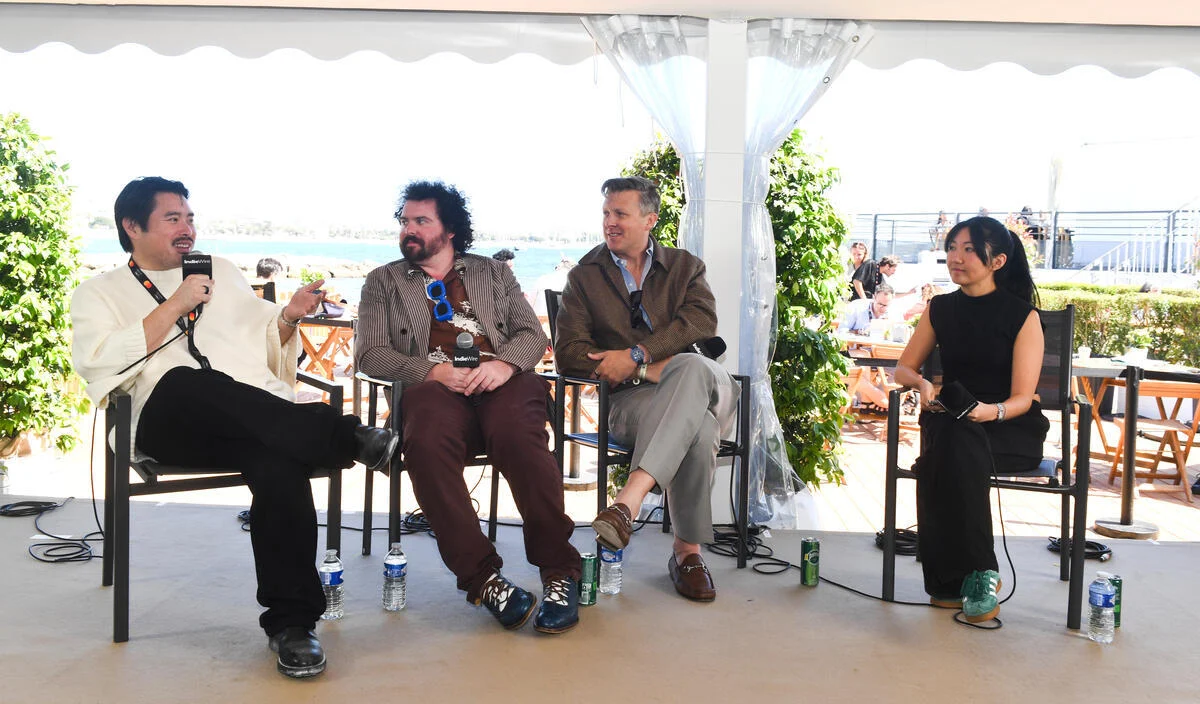
At the 79th annual Cannes Film Festival, the intersection of art and commerce took center stage not just in the screening rooms, but in the halls of The American Pavilion. In a collaborative effort between IndieWire and The American Pavilion, industry leaders gathered for a series of panels aimed at dissecting the complex machinery of 2026 filmmaking.
The highlight of these discussions was the "Local to Global Storytelling" panel, sponsored by the Asian and Pacific Islander non-profit Gold House. The event served as a masterclass for filmmakers and producers on the precarious art of securing funding and distribution for stories that are culturally specific yet intended for a global marketplace.
The Financial Architecture of Cultural Cinema
The panel, moderated by Gold House Chief Brand Officer and co-founder Christine Yi, featured a triad of industry experts: director Bao Nguyen, The Dazey Phase founder Jake Casey, and Manifest Pictures founder Zach Glueck. Together, they navigated the reality of the "Hollywood system," where the bridge between a local story and a global audience is often built with the bricks of genre, marketing potential, and the "logline" test.
The Power of Genre as a Trojan Horse
For Zach Glueck, the conversation starts and ends with marketability. In an industry increasingly wary of mid-budget risk, Glueck argues that genre serves as the ultimate vehicle for culturally specific narratives.
"The investors that I’m dealing with are largely coming to me saying, ‘What can you sell this for?’" Glueck explained during the panel. "A lot of times, genre is one of the ways that you can really make sure that very specific storytelling is able to reach the broadest group of people possible."
Glueck’s philosophy centers on the idea of the "imagined trailer." If a producer can fit a culturally niche story into the framework of a thriller, an action film, or a horror movie, they provide distributors with a roadmap for sales. "If you’re telling a very specific and intimate story, but you’re putting it in the framework of a thriller… you have those familiar beats that somebody who’s reading it can then imagine a trailer," he noted.
Authenticity vs. Reverse Engineering
While Glueck focused on the tactical, business-to-business reality of sales, Jake Casey of The Dazey Phase introduced a necessary counterpoint regarding the artistic soul of a film.

"I love the audience, and I think the audience will respond to authenticity always," Casey stated. He cautioned against the modern trend of "reverse engineering" stories to fit perceived audience metrics, suggesting that such calculated approaches often result in films that feel synthetic. "The more that we try to reverse engineer it to find that audience, the less organic it feels to me. I think if I can approach it as a very specific lens of person and understand that, I think it makes a better movie."
The Art of the "Trojan Horse" Pitch
Director Bao Nguyen, whose work ranges from high-profile documentaries about global sensations like BTS to intimate, culturally specific narrative shorts, offered a bridge between these two schools of thought. Nguyen’s strategy relies on the "Trojan Horse" method: using a widely recognizable "shiny object" or a digestible, universal logline to hook the industry, only to deliver a deeply personal and culturally complex narrative once the film is in production.
"My last film was about BTS, so that’s a very big, shiny object," Nguyen shared. "But within that story, you have themes and things that are more intimate to the actual subjects and to the community, that you don’t have to always make the most broad strokes when you’re approaching the film."
Nguyen highlighted his short film, The Dream is a Snail, currently competing for the Short Palme d’Or. The film, a Vietnamese production, could easily be dismissed as "local" by short-sighted investors. However, by framing it through the lens of a universally understood struggle—the artistic journey of a young actor—and referencing the recognizable stylistic influence of Yorgos Lanthimos, Nguyen has successfully packaged a specific cultural experience for a global festival audience.
Chronology of the Discussion: Mapping the Path to Greenlight
- Defining the Scope: The panel opened with a definition of the current economic climate in Hollywood. The consensus was that while streamers have changed distribution, the fundamental challenge of "selling the vision" remains identical.
- The Investor’s Mandate: Glueck broke down the "backing into investment" model, where the final sales price to a distributor is determined before the film is even fully conceptualized.
- Genre as a Universal Language: The panelists engaged in a robust debate regarding whether genre dilutes cultural specificity or elevates it. The conclusion was that genre acts as a common language, lowering the barrier to entry for international audiences.
- The "Humanity" Constraint: Casey’s intervention underscored that regardless of the genre, if the human element—the "authentic artistic impulse"—is missing, the film will fail to find a lasting audience.
- Closing the Loop: The session concluded with a look at how festivals like Cannes act as the final validation point, turning "local" stories into global cultural currency.
Implications for the Future of Independent Film
The implications of this panel extend far beyond the Cannes press room. As the film industry continues to grapple with the "globalization of content," creators are finding themselves in a position where they must be both auteur and entrepreneur.
The Rise of Cultural Ecosystems
The presence of Gold House as a sponsor is not merely symbolic. Organizations like Gold House are creating a new form of "cultural infrastructure." By providing investment vehicles, accelerators, and marketing support, they are effectively lowering the cost of entry for creators who might otherwise be sidelined by traditional Hollywood risk-aversion.
The Shifting Definition of "Global"
The panel suggests a shift in how we define a "global film." It is no longer about stripping a story of its cultural markers to make it "neutral." Instead, it is about identifying the universal human beats—the "thriller" pacing, the "romance" stakes—that allow a specific story to be understood globally without losing its unique flavor.

Supporting Data: Why "Local" is the New "Global"
While the panel focused on creative strategy, the underlying data supports their claims. The success of international hits in the last decade—from South Korea’s Parasite to various regional horror films—shows that audiences are hungrier than ever for authentic, non-Western perspectives, provided they are accessible through strong narrative craft.
The "genre-as-trojan-horse" strategy is empirically backed by the rise of foreign-language content on major streaming platforms. Data indicates that when content is marketed using familiar genre signifiers (thriller, mystery, horror), completion rates for non-English content soar.
Conclusion: A New Blueprint for Creators
The dialogue at The American Pavilion serves as a crucial reminder: the gap between a local story and a global audience is not a canyon, but a bridge. By understanding the business needs of the distributor—the need for a clear hook, a recognizable genre, and a universal theme—filmmakers can secure the resources they need to tell stories that are unapologetically authentic.
As Bao Nguyen so eloquently put it, the goal is to create a film that feels "universal" from the outside, but remains "unique and authentic" once the lights go down and the viewer is finally inside the world the filmmaker has built. For the next generation of storytellers, the path forward is clear: master the business, protect the art, and never underestimate the audience’s capacity for the specific.
For those looking to catch the full conversation, the recording of the panel is available on the IndieWire website, offering further insight into the strategies used by these industry leaders to navigate the evolving landscape of 2026 cinema.











No comments yet. Be the first to join the conversation!