In the tapestry of Marvel Comics history, few dichotomies are as compelling, volatile, and enduring as the friction between the friendly neighborhood wall-crawler and the relentless vigilante of New York’s underworld. This July, Marvel is set to bridge the gap between past and present with the release of Punisher vs. Spider-Man #1, a high-stakes limited series that promises to peel back the layers of the duo’s earliest, most contentious encounters.
With the creative powerhouse of writer Dan Abnett—famed for his definitive work on Punisher: Year One—and the fresh, kinetic aesthetic of newcomer artist Matteo Della Fonte, this project aims to re-examine what happens when an unstoppable force of moral absolutism meets an immovable object of heroic responsibility.
The Core Conflict: A Study in Contrasts
At its heart, the conflict between Frank Castle and Peter Parker has always been more than a simple brawl; it is a fundamental disagreement on the nature of justice. Spider-Man represents the classic heroic archetype: the belief that every life is worth saving, that even the most depraved criminals deserve a chance at redemption through the judicial system, and that the cost of vigilantism is a slippery slope toward moral decay.
Conversely, The Punisher views the streets of New York as a terminal patient in need of emergency surgery—an amputation of the malignant elements that threaten the innocent. For Castle, the law is not just broken; it is an accomplice to the carnage he witnesses daily. When these two philosophies intersect, the result is rarely a team-up. Instead, it is a high-octane collision of ethics, tactics, and physical might.

In this new series, the tension is exacerbated by a mysterious figure from Castle’s past. This individual, currently in dire need of assistance, acts as the unwilling catalyst that forces the two vigilantes to operate in proximity. The central question for readers is not whether they will fight, but whether they can suppress their mutual loathing long enough to survive the night.
Chronological Context: Returning to the Early Days
The narrative framework of this series centers on a "walk down memory lane," specifically targeting the formative years of these characters. By revisiting their initial meetings, Abnett is positioning this series as a "missing chapter" in the Marvel canon.
For decades, the dynamic between the two has evolved from outright hostility to a complex, begrudging respect, colored by years of shared trauma and disparate missions. By grounding the narrative in the past, the creative team has the opportunity to explore the specific catalysts that cemented their worldviews.
Key Evolutionary Markers:
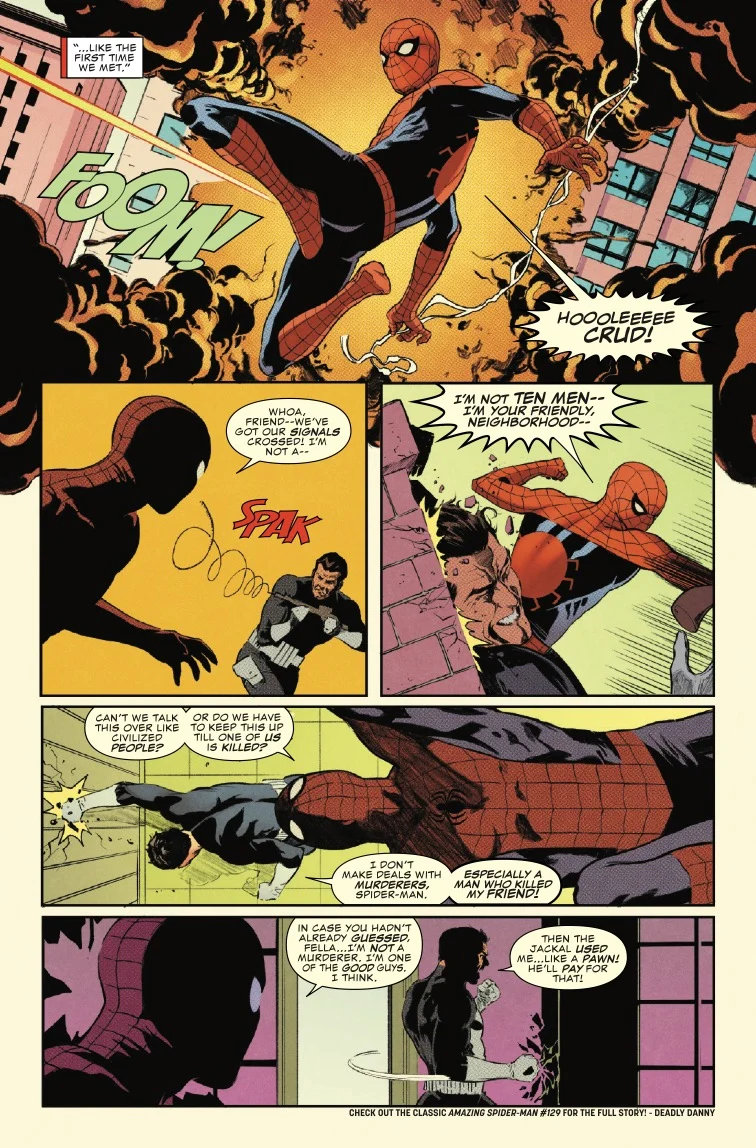
- The Early Friction: During their initial encounters in the 1970s and 80s, the Punisher was frequently used as a foil to test the limits of Spider-Man’s pacifism. These stories established the recurring theme of the "heroic burden."
- The Psychological Toll: As the years progressed, the writers shifted from treating the Punisher as a villain to treating him as a tragic, albeit monstrous, anti-hero. This shift added layers to their interactions, as Spider-Man began to see the man behind the skull, even while condemning his methods.
- The Modern Integration: In current continuity, the two have existed in a state of uneasy stalemate. This upcoming series serves to remind readers why that stalemate was so difficult to reach in the first place.
Creative Pedigree: The Team Behind the Trigger
Marvel’s decision to pair Dan Abnett with Matteo Della Fonte is a strategic masterstroke. Abnett’s pedigree with the character of Frank Castle is well-documented; his previous work on Punisher: Year One remains a benchmark for character-driven, gritty realism. He possesses a unique ability to write the Punisher not just as a machine of war, but as a man haunted by the static noise of his own grief.

On the visual side, Matteo Della Fonte is being touted as the industry’s next breakout talent. The preview art—characterized by sharp, angular shadows and a color palette that emphasizes the claustrophobic neon of New York City—suggests an approach that honors the noir roots of the Punisher while maintaining the dynamic, fluid action synonymous with Spider-Man. With Rachelle Rosenberg providing colors that contrast the cold, metallic blues of Castle’s world against the vibrant, punchy reds of Spidey’s suit, the aesthetic tension will be as palpable as the narrative conflict.
Official Data and Publication Details
As Marvel prepares for the July 15, 2026, release, the publisher has provided the following technical specifications for the inaugural issue:
- Punisher vs. Spider-Man #1
- Writer: Dan Abnett
- Lead Artist: Matteo Della Fonte
- Colorist: Rachelle Rosenberg
- Cover Artists: Jonas Scharf and Alex Guimarães
- Format: 32-page standard comic book issue
- Street Date: July 15, 2026
The decision to limit the page count to 32 pages per issue suggests a tightly paced, action-heavy narrative. Readers can expect minimal filler and maximum impact, as the story seems designed to move at a relentless pace, mirroring the high-stakes nature of the characters involved.
Implications: The Future of the Vigilante Archetype
The release of this title comes at an interesting time for the Marvel Universe. Following recent events in the wider Marvel continuity, the public perception of vigilantism is a recurring theme. By focusing on the seminal clash between the two most famous vigilantes in the city, Marvel is effectively holding a mirror up to its own history.

The "Moral Compass" Problem
The implications for Spider-Man are significant. Peter Parker’s brand of justice is inherently tied to his guilt over Uncle Ben’s death—a moment where he learned that "with great power comes great responsibility." The Punisher, however, represents a different kind of power: the power to end the cycle of violence through terminal force. Every time Spider-Man encounters the Punisher, he is forced to justify his own existence. If he lets the Punisher walk, he is complicit; if he stops the Punisher, he allows the criminal to live to kill again.
Marketing and Audience Engagement
From a publishing standpoint, this series serves to bridge the gap between "Legacy" fans—those who grew up with the classic Amazing Spider-Man vs. The Punisher encounters—and newer readers who may only know these characters through film and television adaptations. The pairing of a high-profile writer like Abnett with a fresh visual voice like Della Fonte indicates that Marvel views this as a "must-read" event that could redefine how these two characters are perceived for the next decade.
Conclusion: A Must-Watch Dynamic
The prospect of a new series focusing on the interplay between the Punisher and Spider-Man is, in many ways, the ultimate test of the Marvel Universe’s moral elasticity. Can a world that houses the altruistic, web-slinging wall-crawler truly accommodate a man who operates under a banner of blood and retribution?
As we look toward the July 2026 release, the promotional materials—particularly the striking cover art by Jonas Scharf—suggest that we are in for a visceral, high-tension experience. Whether the duo finds common ground or ends up at each other’s throats, one thing is certain: New York City is not big enough for both of them, yet they are perpetually destined to share its shadows.

For fans of character-driven drama and high-octane action, Punisher vs. Spider-Man is poised to be one of the most significant titles of the year. It promises to be a masterclass in conflict, reminding us why these two iconic figures remain the most essential symbols of the chaotic, beautiful, and dangerous landscape that is the Marvel Universe. Mark your calendars for July 15, 2026, as the "Memory Pain" begins, and the two most notorious names in the city prepare to define the true cost of justice.