In the wake of the ongoing seismic shifts within the comic book industry—marked most notably by the long-term decline and restructuring of Diamond Comic Distributors’ once-unrivaled monopoly—the landscape for independent publishers has become a precarious minefield. For years, small-to-mid-sized creators have struggled to bridge the gap between production and shelf space. Today, that narrative takes a decisive turn with the formal launch of the Indie Comic Alliance (ICA), a collaborative initiative designed to consolidate distribution, printing, and logistics for a new generation of independent voices.
The Genesis of the Alliance: Solving the Distribution Crisis
The comic book industry has been in a state of flux since the "Diamond implosion" redefined how retailers procure stock. With the disappearance of a single, centralized hub, the burden fell on individual publishers to negotiate complex deals with multiple regional distributors or pivot entirely to direct-to-consumer models. This fragmentation, while opening the door for innovation, created a daunting barrier for smaller entities lacking the infrastructure to compete with the industry’s "Big Two" (Marvel and DC).
The Indie Comic Alliance, spearheaded by Christopher Reda of Critical Entertainment and Thomas Cho of STS & Associates, represents a tactical response to this instability. By pooling resources, the ICA aims to leverage collective bargaining power to secure favorable terms for printing, warehousing, and shipping. The goal is simple yet ambitious: to provide a streamlined, professional pipeline that ensures indie titles reach local comic book shops (LCBS) and brick-and-mortar bookstores with the same reliability as major publishing houses.
Founding Members and the Collective Strategy
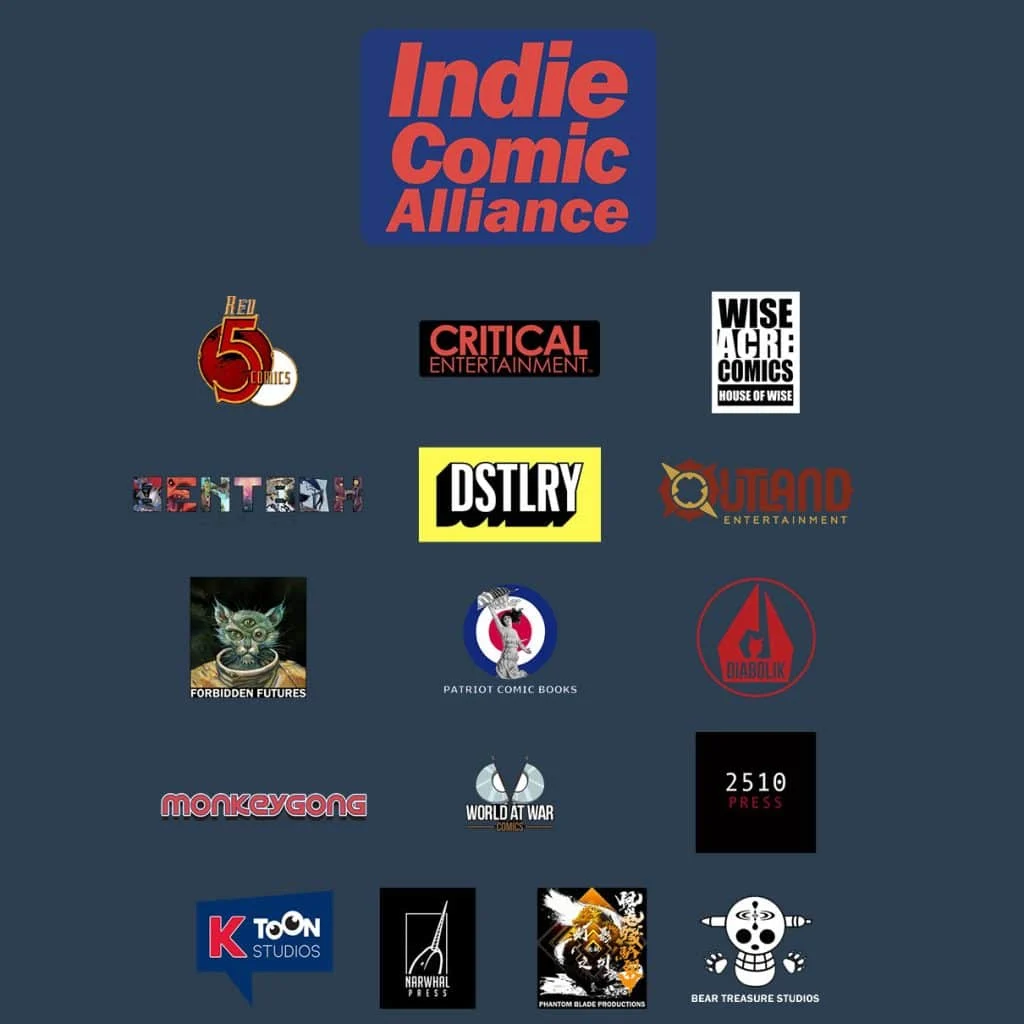
The inaugural roster of the Indie Comic Alliance is a diverse mix of established indie stalwarts and rising creative outfits. The sixteen founding publishers are:
- Critical Entertainment
- DSTLRY
- Red 5 Comics
- Wise Acre Comics
- Outland Entertainment
- BentBox Comics
- Forbidden Futures
- Patriot Comic Books
- Diabolik
- 2510 Press
- World at War Comics
- Monkeygong
- Bear Treasure Studios
- K-Toon Studios
- Phantom Blade Productions
- Narwhal Press
The inclusion of DSTLRY is particularly noteworthy. As one of the most prominent independent publishers currently operating, their presence in the alliance signals a significant shift in market strategy. DSTLRY currently maintains an exclusive distribution arrangement with Penguin Random House (PRH) Comics. Industry analysts are already speculating that the ICA move may be a precursor to a transition away from, or an expansion beyond, that exclusivity, suggesting that the alliance is positioning itself to be a heavyweight player in the market rather than a niche collective.
Chronology of the Launch
The path to the ICA’s official launch has been marked by careful logistical planning aimed at avoiding the pitfalls that have plagued previous independent distribution startups.
- July 2026: The official announcement of the formation of the Indie Comic Alliance.
- October 2026: The critical window for retail solicitations. This is when the market will see the first concrete look at how the ICA intends to format its catalogs and incentivize retailer orders.
- January 20, 2027: The anticipated "Day One" for the first wave of retail releases.
A cornerstone of the ICA’s strategy is the implementation of "Indie Comic Book Day," a designated retail event occurring on the third Wednesday of each month. By anchoring the release schedule to a recurring day, the Alliance hopes to build consumer habit—transforming the "hunt" for indie comics from a disorganized search into a predictable, monthly event for comic shop patrons.
The Mechanics of Distribution
While the Alliance acts as a collective, the underlying mechanics rely on existing infrastructure. Many of the participating publishers will funnel their titles through the Critical Entertainment label. By doing so, they gain access to the established networks of Universal Distribution and Philbo Distribution.
This "label-based" distribution model is a clever workaround for the difficulties of scaling. Instead of each of the sixteen publishers negotiating individual accounts with distributors, the ICA acts as a conduit. This significantly lowers the barrier to entry for the smaller presses, providing them with the professional sheen and logistics of a larger company while allowing them to maintain their editorial autonomy.
Implications for the Direct Market
The emergence of the ICA raises fundamental questions about the future of the "Direct Market." For decades, the system was optimized to support the massive volume of the major publishers. The ICA represents a pivot toward a more decentralized, yet organized, alternative.
1. Competitive Advantage
By offering "affordable printing, shipping, and storage," the ICA is directly addressing the biggest line items on an indie publisher’s balance sheet. If successful, the Alliance could effectively lower the price of entry for high-quality, professional-grade printing, allowing smaller creators to compete visually with the high-production values of the mainstream publishers.
2. The Retailer Perspective
Retailers have long complained about the "noise" in the direct market—too many titles, inconsistent shipping, and lack of visibility for non-mainstream books. The ICA’s pledge to provide a "destination" for retailers to find fresh indie content could streamline the ordering process. By grouping these sixteen publishers under a recognizable banner, retailers can manage their inventory more efficiently, potentially reducing the risk associated with "unknown" indie titles.
3. Challenging the Exclusivity Norm
The inclusion of publishers who already have existing, and in some cases exclusive, deals with larger distributors indicates a growing dissatisfaction with the current status quo. If the ICA proves that it can generate higher sell-through rates for indie titles, it could trigger a wider migration of talent and publishers away from the traditional legacy distribution models.
Supporting Data and Industry Context
The "implosion of Diamond," as referenced in the announcement, refers to the post-pandemic restructuring that saw Diamond lose its exclusive grip on the market, leading to the rise of competitors like Lunar Distribution and the entry of PRH into the direct market. However, even with these new players, the "long tail" of independent publishing remained underserved.
According to market trends observed over the last three years, independent comic book sales have seen a resurgence, driven largely by crowdfunding campaigns and social media-driven marketing. Yet, the transition from a successful Kickstarter campaign to a physical presence on a comic shop shelf remains the most significant "valley of death" for creators. The ICA is positioning itself to be the bridge across that valley. By centralizing the solicitation process in October 2026, the Alliance is effectively creating a new "catalog culture," forcing retailers to view these sixteen publishers not as outliers, but as a cohesive, monthly commitment.
Official Statements and Future Outlook
In their press release, the founders emphasized that the ICA is not just a logistics firm, but a community. "The Indie Comic Alliance is a Collective of Independent Comic Book Publishers focused on offering original comics in local retailer stores and making independent publishing thrive," the organization stated.
The emphasis on "making independent publishing thrive" is an explicit rejection of the "survival of the fittest" mentality that has characterized recent years. By providing a platform for discovery, the ICA is banking on the idea that there is an untapped market for original stories that aren’t tied to the decades-old continuity of the superhero giants.
As we look toward the January 2027 launch, the industry will be watching closely to see if the ICA can maintain its momentum. The success of this model depends on three variables:
- Retailer Adoption: Will shop owners actually reserve shelf space for the "Indie Comic Book Day" releases?
- Logistical Efficiency: Can the alliance manage the printing and shipping of sixteen distinct publishers without bottlenecking?
- Content Quality: Will the stories provided by these sixteen publishers capture the imagination of a consumer base that has become increasingly selective?
If the Indie Comic Alliance succeeds, it could serve as the blueprint for a new era of comics—one where the diversity of the medium is finally matched by the stability of its distribution. For now, the creators behind the sixteen founding publishers have set the stage for a high-stakes debut that promises to change the conversation about what it means to be an "independent" comic book creator in the late 2020s.
Fans and retailers alike are encouraged to monitor the Alliance’s progress through their official channels on X, Instagram, and their primary website, as the October solicitation window will undoubtedly be the first major test of this ambitious new venture. As the industry moves toward 2027, the ICA stands as a bold assertion that the future of comics is not just in the past, but in the hands of those willing to build their own infrastructure.