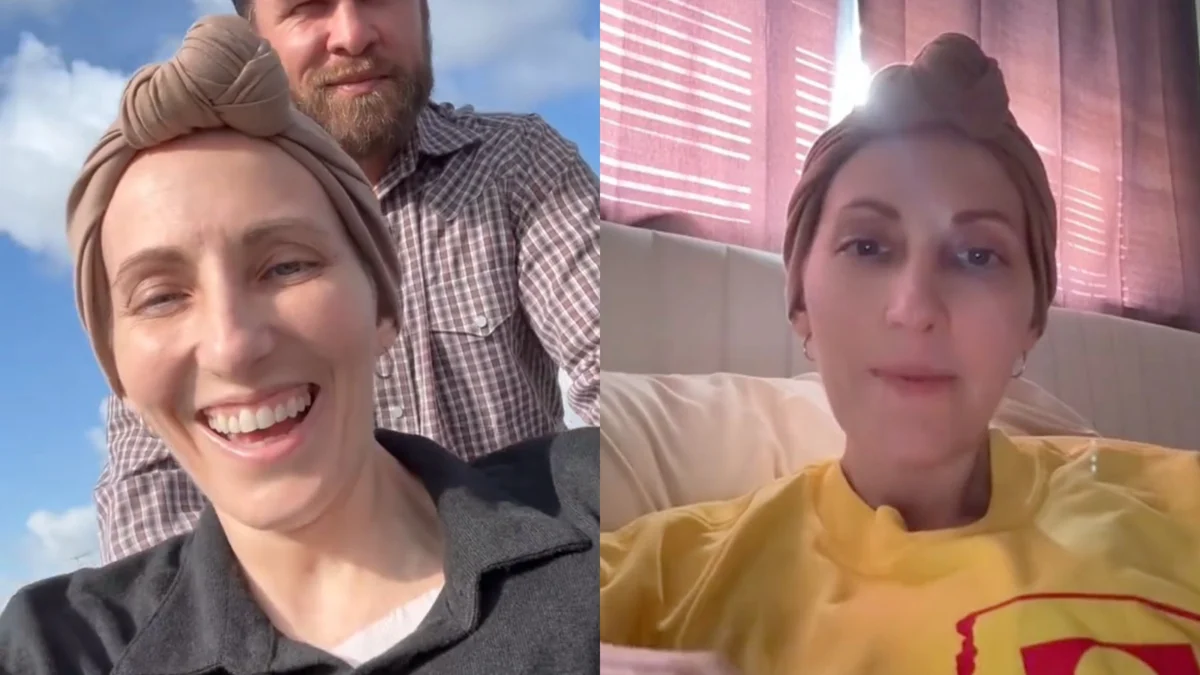
The digital landscape has long served as a repository for human experience, but few have utilized it with the poignant, unflinching vulnerability of Andree Greig Baudoin. Known to her thousands of followers as "Andreethegirl," the 39-year-old Louisiana resident spent the final chapters of her life documenting a harrowing battle with metastatic cancer. Her journey, which began as a private project for her children, evolved into a public testament of resilience, eventually culminating in a final, prerecorded message shared with her community following her passing on August 22 at Calcutta House by Hospice of Acadiana in Lafayette.
Baudoin’s story is not merely one of illness; it is a profound exploration of the intersection between modern technology and the timeless human experience of mortality. By inviting strangers into the most intimate moments of her decline, she transformed her social media presence into a space of communal grief and profound life affirmation.
The Chronology of a Courageous Journey
Andree Greig Baudoin’s journey on TikTok was never intended to be a spectacle. In her final message, she clarified that her initial motivation was purely maternal. She sought to create a living archive—a digital "time capsule"—that her children could access long after she was gone, allowing them to hear her voice, see her expressions, and understand the woman she was beyond the role of a mother.
As her health declined, however, the platform became something more: a lifeline.
- Early Documentation: Baudoin began posting updates early in her diagnosis, sharing the mundane and the miraculous as she navigated complex treatment regimens.
- The Search for Healing: Her pursuit of recovery was exhaustive. She traveled extensively, seeking alternative therapies in Mexico, adhering to rigorous specialized diets, and experimenting with various medications that pushed her body to its limits.
- The Clinical Trial Hurdles: In the months leading up to her death, Baudoin’s narrative turned toward the frustrations of the healthcare system. She spoke openly about her attempts to join a clinical trial, a pursuit she believed she was qualified for. Her subsequent rejection fueled a critique of the accessibility and bureaucratic complexities of advanced cancer treatment.
- The Rapid Decline: Baudoin’s condition shifted from manageable to critical with alarming speed. She transitioned from exploring clinical options to acknowledging the limitations of modern medicine.
- Final Arrangements: Recognizing the end was near, she made the difficult decision to leave her family home, opting for the Calcutta House hospice facility. Her reasoning was deeply symbolic: she wanted her home to remain a "place of life" for her husband and children, rather than a place of loss.
- August 22, 2024: Baudoin passed away, leaving behind a community that had been prepared for her departure by her own pre-recorded final words.
The Weight of the Digital Diary: A Community’s Impact
When Baudoin launched her TikTok account, she could not have anticipated the outpouring of support that would follow. In her final video, she addressed her "TikTok family" with a mixture of gratitude and surprise. "This TikTok account has become my diary," she noted. "It has become my way to let things out. It has become something I turned to first."
The impact of her honesty was measurable in the thousands of comments, prayers, and words of encouragement she received daily. For many, Baudoin’s transparency regarding the reality of terminal illness—the physical pain, the emotional toll on the family, and the existential weight of facing one’s end at 39—provided a rare look into a topic often sanitized by society.
She thanked her followers not only for their support during the "good" days but for standing by her during what she described as "all of the crazy things." This community became an unexpected pillar of her support system, proving that, in the digital age, empathy can traverse the boundaries of screens and geography.
The Reality of Terminal Care and the Healthcare System
Baudoin’s experience with the medical establishment was a recurring theme in her content. Her public struggle to access clinical trials serves as a sobering data point in the broader conversation regarding healthcare equity and patient advocacy.
Her critique of the healthcare system was not borne of bitterness, but of a desire for clarity. When she was told that the cancer had progressed to a point where no further intervention was viable, she pivoted toward palliative care with a pragmatic grace.
Her choice of hospice care at Calcutta House reflects a growing trend among terminal patients who prioritize the sanctity of their family homes. By choosing to transition to an inpatient facility, she exercised agency over the environment of her final moments, ensuring that her children’s last memories of their home would not be tethered to the trauma of her passing.
Reflections on Mortality: A Final Message to the Living
The most heart-wrenching aspect of Baudoin’s final video was her candid assessment of what she would miss. At 39, she was acutely aware of the milestones she would be denied. She spoke of her husband with deep affection, mourning the loss of the future they had planned together. She spoke of her children, acknowledging the pain of missing their future weddings and the opportunity to meet her grandchildren.
Despite this, her message was not one of despair, but of instruction. She urged her followers to adopt a philosophy of gratitude. Her parting words were a plea to the healthy:
"My biggest, biggest wish is that you don’t take your health and what’s in front of you for granted. Enjoy the day in front of you."
Her passing serves as a stark reminder of the fragility of human existence. In an era of constant distraction, Baudoin’s final request was for her audience to "be present"—to stop scrolling and start living.
Implications for Digital Legacy and Online Communities
The passing of Andree Greig Baudoin raises significant questions about the role of social media in the end-of-life process.
The Ethics of Public Dying
Baudoin’s story highlights the benefits of public documentation. For the terminal patient, social media can provide a sense of purpose, a venue for legacy-building, and an outlet for processing grief. However, it also brings the burden of constant scrutiny. Baudoin navigated this with grace, but her experience underscores the need for digital platforms to consider how they support users undergoing such profound life transitions.
The New "Memory Archive"
Many users now look to social media to preserve their identity for future generations. As seen with Baudoin, these accounts serve as digital memoirs. This shift necessitates a conversation about "digital estate planning"—how platforms should manage the accounts of the deceased and how families can access these digital legacies after a death.
The Role of Influencers in Health Advocacy
Baudoin’s journey highlights the power of the "patient-influencer." By sharing the details of her treatments and her struggle with clinical trial access, she brought visibility to the systemic challenges faced by cancer patients. Her advocacy, though unintentional at the start, became a vital part of her contribution to the world.
Conclusion
Andree Greig Baudoin’s life was defined by a courage that resonated far beyond the confines of her community in Lafayette, Louisiana. She turned a terrifying diagnosis into a vessel for love, honesty, and wisdom. As her TikTok family continues to process her death, the legacy she leaves behind is not just a collection of videos, but a call to action.
In the end, Baudoin’s final message was a simple, yet profound, reminder: "Thank you for all that you’ve done for me. I love you all so much. Bye."
Through her life and her death, she taught us that while we cannot control the duration of our days, we can choose the quality of our impact. She leaves behind a digital footprint that will continue to serve as a beacon of empathy and a testament to the enduring power of the human spirit in the face of the inevitable. As she hoped, may her followers honor her memory by enjoying the day in front of them—fully, gratefully, and without reservation.