

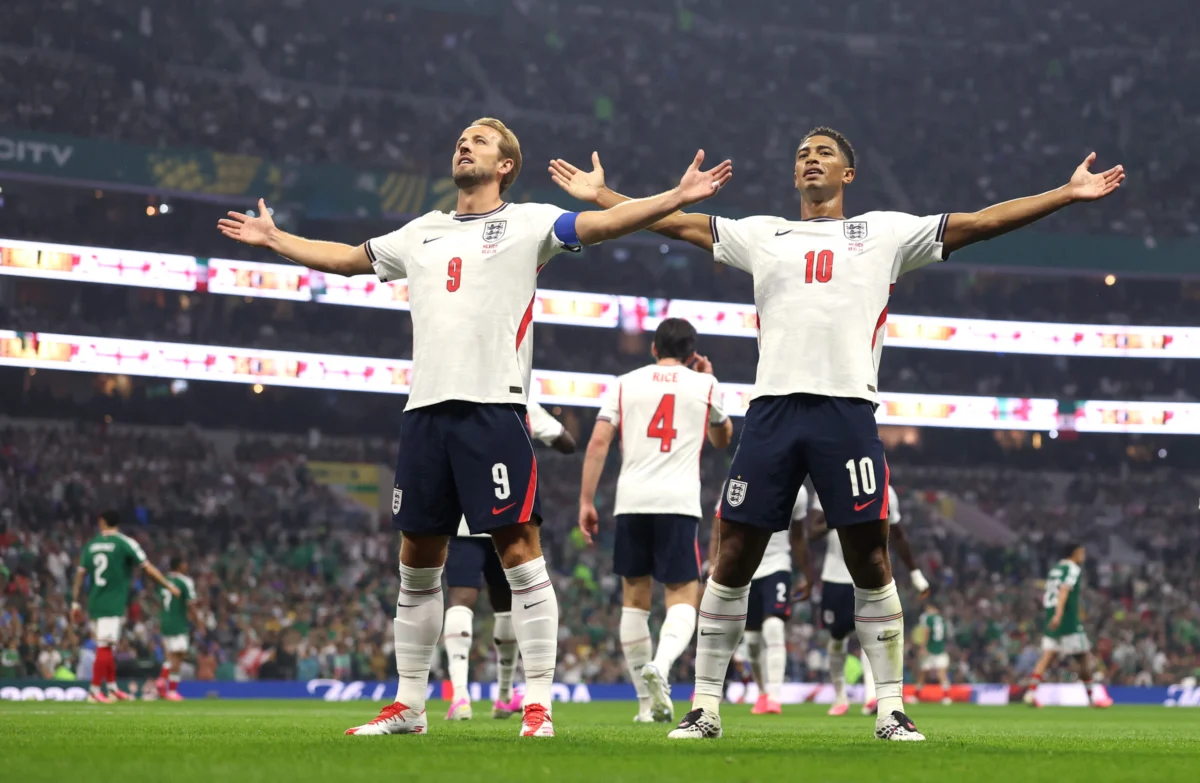
The 2026 World Cup has officially transcended the boundaries of traditional sports broadcasting. In a match that will be remembered as much for its tactical drama as its unprecedented cultural footprint, England’s pulsating 3-2 victory over tournament co-hosts Mexico at the iconic Estadio Azteca has shattered records to become the most-watched soccer telecast in U.S. Spanish-language history.
As the dust settles on a match that pushed both teams to their absolute limits, the preliminary data provided by Telemundo indicates a seismic shift in how American audiences consume the global game. With a staggering total audience of 23.1 million viewers, the match has eclipsed the previous benchmark—Mexico’s recent clash against Ecuador, which garnered 18.9 million viewers—cementing its place in the annals of sports media.
A Chronology of Chaos: How the Drama Unfolded
The spectacle began under a cloud of uncertainty. Mother Nature intervened with severe thunderstorms, causing a significant delay that tested the patience of both the capacity crowd at the Azteca and the millions watching from home. However, the wait only served to amplify the anticipation, and once the whistle finally blew, the match delivered on every promise of "World Cup classic" status.
England seized the early momentum, silencing the fervent home support with a tactical masterclass orchestrated by Jude Bellingham. The English superstar notched two clinical goals in the first half, putting the Three Lions firmly in the driver’s seat. Just as the momentum seemed entirely with the visitors, Mexico’s Julián Quiñones found the back of the net before the halftime whistle, reigniting the hope of the home crowd and setting the stage for a second-half showdown.
The narrative took a turn toward the cinematic in the second half. England’s Jarrell Quansah was dismissed for a clumsy challenge, leaving his team to navigate the final half-hour with only ten men. The pressure on the English defensive line was suffocating, yet their resolve proved unbreakable.
The game’s turning point came shortly after the red card. A lightning-fast counter-attack saw winger Anthony Gordon burst into the Mexican penalty area. In his desperate attempt to recover, the Mexican goalkeeper collided with Gordon, resulting in a penalty kick. Captain Harry Kane stepped up, coolly converting from the spot to restore England’s two-goal cushion.
The final minutes were a microcosm of the beautiful game’s capacity for agony and ecstasy. After conceding a penalty of his own—which Raúl Jiménez converted—Harry Kane and the English defense were forced into a desperate, backs-to-the-wall effort. Mexico poured forward, dominating possession and pinning England inside their own half, but the Three Lions held firm, securing a 3-2 victory that will be analyzed for years to come.
The Data Behind the Dominance
The record-breaking viewership is not merely a product of the match’s intensity; it is a testament to the robust, multi-platform strategy employed by NBCUniversal and Telemundo.
According to official figures, the 23.1 million total audience includes linear television viewership and streaming data via Peacock. The linear television component alone was a massive success, drawing 9.4 million viewers in the P2+ demographic across the three-hour broadcast. This linear figure surpasses the 8.7 million who tuned in for the Mexico-Ecuador match, confirming that traditional television remains a powerhouse for live event consumption.
Furthermore, the digital footprint of the game was equally historic. Telemundo reported a 13 million preliminary average minute audience for the streaming broadcast. This metric highlights the transition of the World Cup from a television-first experience to a ubiquitous digital event, with Peacock emerging as a critical infrastructure component for the future of sports broadcasting in the United States.

A Broader Context: The Telemundo Phenomenon
This historic performance is not an isolated incident but the culmination of a broader trend of growth for Telemundo throughout the 2026 tournament. The network has consistently seen massive engagement, including Mexico’s previous group-stage game against Korea, which pulled in 7.2 million viewers.
Joaquín Duro, Executive Vice President of Sports and Head of Streaming at NBCUniversal Telemundo Enterprises, attributes this success to a fundamental evolution in production philosophy. In a recent interview with Deadline, Duro noted that the network has moved beyond traditional commentary to create an immersive, cinematic experience.
"We’ve created this way of producing games that is getting people excited, regardless of who plays," Duro stated. "The pitches are amazing. The stadiums are filled. It’s just like a movie."
This "cinematic" approach—emphasizing high-fidelity audio, dynamic camera angles, and deep-dive narrative storytelling—has clearly resonated with a diverse American audience that transcends language barriers. The ability to bridge the gap between casual viewers and die-hard football fanatics has turned Telemundo into the go-to destination for the most significant moments of the 2026 World Cup.
Implications for Future Broadcasting
The success of this match carries significant implications for the future of sports media. As the lines between linear broadcasting and digital streaming continue to blur, the strategy of leveraging sister platforms like Peacock to capture both the traditional and cord-cutting demographics is no longer optional—it is essential.
Moreover, the sheer scale of the audience for a match between a European giant and a host nation indicates that the U.S. market for international soccer is deeper and more passionate than ever before. With record-shattering numbers being posted by both English-language outlets (as seen in the USMNT-Bosnia clash) and Spanish-language leaders like Telemundo, the 2026 World Cup is rapidly becoming the most-viewed sporting event in American history.
However, the tournament is not without its controversies. As noted in recent reports, the political and administrative landscape surrounding the tournament remains volatile. From debates over player eligibility—such as the high-profile appeal involving a USMNT star—to the intersection of global sport and high-level politics, the 2026 World Cup is a complex tapestry of competition, commerce, and culture.
Conclusion: A Tournament for the Ages
As the 2026 World Cup enters its final stages, the England-Mexico clash stands as a landmark moment. It demonstrated that even in an era of fragmented media consumption, live sports retain a unique power to unify millions of people in a single moment of shared experience.
For the broadcasters, the challenge now lies in sustaining this momentum. If the remainder of the tournament continues to deliver the same level of drama on the pitch and technical innovation in the booth, the records set at the Azteca may be short-lived. But for now, the 23.1 million who witnessed England’s heroic stand against the odds have been part of a historic chapter in television history—a testament to the enduring, global appeal of the World Cup.
As the world looks toward the final, one thing is certain: the appetite for elite soccer in the United States has been permanently transformed, and the industry is scrambling to keep pace with an audience that demands, and expects, nothing less than a cinematic spectacle.










