Asro
Asro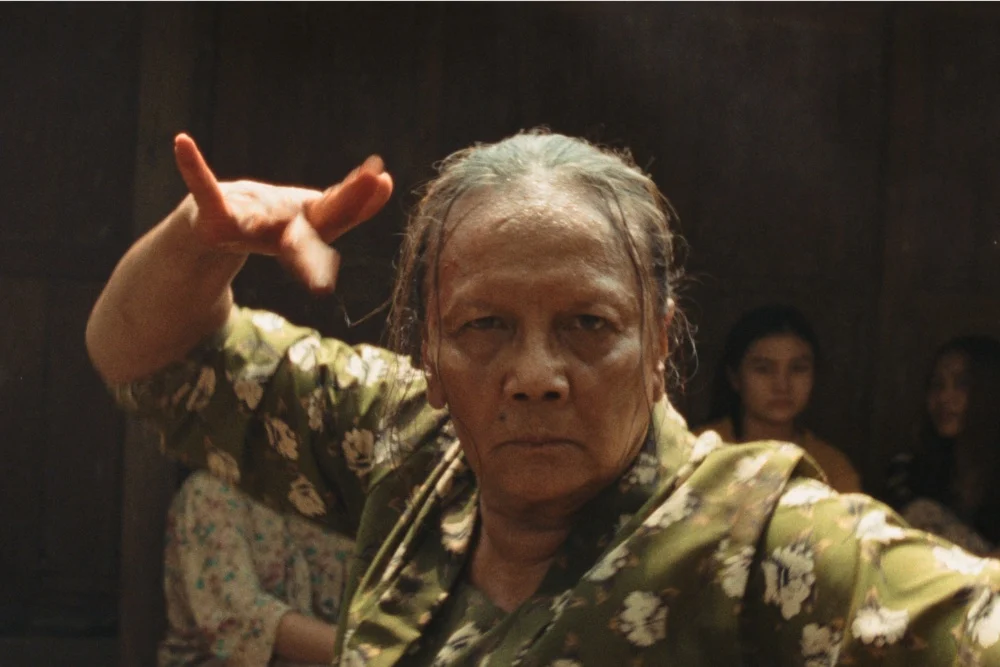
In the landscape of contemporary Southeast Asian cinema, few directors possess the raw, observational intimacy of Eddie Cahyono. With his latest feature, Ibuku, Cahyono has once again turned his lens toward the fringes of Indonesian society, crafting a narrative that is as politically charged as it is deeply personal. As the film gears up for its world premiere at the prestigious Busan International Film Festival—where it has been selected for the competitive New Currents-style programming—the project has secured a significant champion: Hong Kong-based boutique sales house Asian Shadows.
The acquisition of international sales rights by Asian Shadows signals high industry expectations for the film, which explores the harrowing intersection of migrant labor, domestic trauma, and the enduring strength of maternal love.
The Narrative Core: A Journey Across Borders
Ibuku (Indonesian for "My Mother") anchors its emotional weight in the performance of Indonesian cinema legend Christine Hakim. She portrays Sumiati, a woman in her 60s living in self-imposed isolation within a remote Javanese village. Sumiati’s life has been defined by the tragedy of her husband’s suicide, an event that rendered her a social pariah in her conservative community.
The film’s central conflict is triggered by the plight of her daughter, Sri, played by Ayushita Nugraha. Having fled an arranged marriage and an abusive domestic environment in Indonesia, Sri sought a better life as a migrant worker abroad. However, the promise of economic stability turned into a nightmare in Saudi Arabia, where she now faces execution for killing a man who attempted to assault her.
The narrative follows Sumiati’s desperate, breathless race against time. Aided by the village chief, Djatmiko—portrayed by the veteran Landung Simatupang—Sumiati must navigate the labyrinthine corridors of bureaucracy, seeking out journalists and government officials to secure the funds and political leverage necessary to see her daughter one last time before her sentence is carried out. It is a story of systemic neglect, where the burden of survival falls on those with the fewest resources.
A Chronology of Artistic Development
The genesis of Ibuku dates back to Cahyono’s extensive research into the realities of Indonesian migrant workers. For years, the director has been fascinated by the socioeconomic exodus that sees thousands of Indonesians—predominantly women—leave their rural homes to work in urban centers or foreign nations to escape crushing poverty.
Cahyono, whose career has been defined by a commitment to the "left-behind" demographic, began developing the script as a companion piece to his earlier works. The film was brought to life through a collaborative international effort. Production is spearheaded by Indonesia’s ANP Talenta Media, under the leadership of Tika Bravani—marking her debut as a feature producer—and Japan’s Knockonwood Inc., helmed by Shin Yamaguchi.
The project gained significant creative momentum with the involvement of Asian Shadows executives Isabelle Glachant and Li Xiaorong, who joined as creative producers. With Cahyono serving as an executive producer via his own banner, Memorieslight Pictures, the film represents a pan-Asian cooperative model. The decision to shoot the film on 16mm film stock is a deliberate aesthetic choice by Cahyono, designed to capture a tactile, grainy realism that mirrors the grit and sorrow of Sumiati’s journey.
Supporting Data: The Indonesian Migrant Crisis
While Ibuku is a work of fiction, its foundation is built upon the stark reality of Indonesian migrant labor. According to data from the Indonesian Migrant Workers Protection Agency, millions of Indonesians operate as domestic workers in the Middle East and East Asia. Many of these workers face severe legal vulnerabilities, particularly when confronted with allegations of violence against their employers.
The film addresses the "social cost" of these migrations. When mothers like Sumiati lose their children to the machinery of global labor markets, the trauma ripples through the village infrastructure. By focusing on the mother left behind, Cahyono highlights a demographic often ignored in political discourse: the aging, rural poor who bear the psychological consequences of their family members’ departures.
Cahyono’s previous success, Siti (2014), served as a proof-of-concept for this specific brand of social realism. That film, which garnered multiple National Indonesian Awards and international acclaim at the Singapore and Shanghai film festivals, established Cahyono as a director capable of transforming local hardship into universal art. Ibuku is expected to build upon this legacy, offering a more mature, refined look at the same themes.
Official Responses and Industry Reception
The industry buzz surrounding Ibuku has been notably positive, particularly regarding the casting. Maria Ruggieri, Head of Sales and Acquisitions at Asian Shadows, was effusive in her praise for the film’s emotional resonance.
"‘Ibuku’ is a poetic and touching portrait of a mother through the timeless eyes of her own daughter," Ruggieri stated following the deal announcement. "We are proud to bring such a profound, human story to the attention of the international audience. The film possesses a rare ability to bridge the gap between specific cultural trauma and universal empathy."
The cast itself represents a "who’s who" of Indonesian talent. Christine Hakim, whose career spans five decades, brings a gravity to the role of Sumiati that is expected to anchor the film’s festival run. Known to global audiences for her roles in Eat Pray Love and HBO’s The Last of Us, as well as her iconic turn in Tjoet Nja’ Dhien, Hakim is widely considered the doyenne of Indonesian acting.
Ayushita Nugraha and Landung Simatupang, both highly decorated actors known for their work in What They Don’t Talk About When They Talk About Love and Gie respectively, provide the necessary friction to balance Hakim’s performance. The synergy between these performers is being touted by the production team as the film’s most powerful asset.
Implications for Asian Cinema
The selection of Ibuku for the Busan International Film Festival’s competition is not merely a win for the production team; it is a signal of the increasing prominence of Indonesian cinema on the global stage. Asian Shadows, a company that has championed auteur-driven films like Mouly Surya’s Marlina the Murderer in Four Acts and Garin Nugroho’s Memories of My Body, has effectively staked its reputation on Cahyono’s vision.
The implications of this film are twofold. First, it brings the issue of the legal rights of Indonesian migrant workers to an international platform, forcing a dialogue on the human rights violations that often occur behind closed doors. Second, it reaffirms the importance of boutique sales houses in the current streaming-dominated market. By prioritizing high-quality, mid-budget, auteur-driven cinema, companies like Asian Shadows ensure that films that might otherwise be overlooked by mass-market distributors find a home in the international arthouse circuit.
As the Busan International Film Festival approaches, all eyes will be on Ibuku. For Eddie Cahyono, the film represents the culmination of years of research and artistic maturation. For the audience, it promises to be an unflinching look at the cost of survival and the lengths to which a mother will go to save the child she once sent away. In a world increasingly defined by migration and displacement, Ibuku serves as a haunting, necessary reminder of the people who remain, waiting for news that may never come.


 Nana Wu
 Layla Zulfa