Ali Ikhwan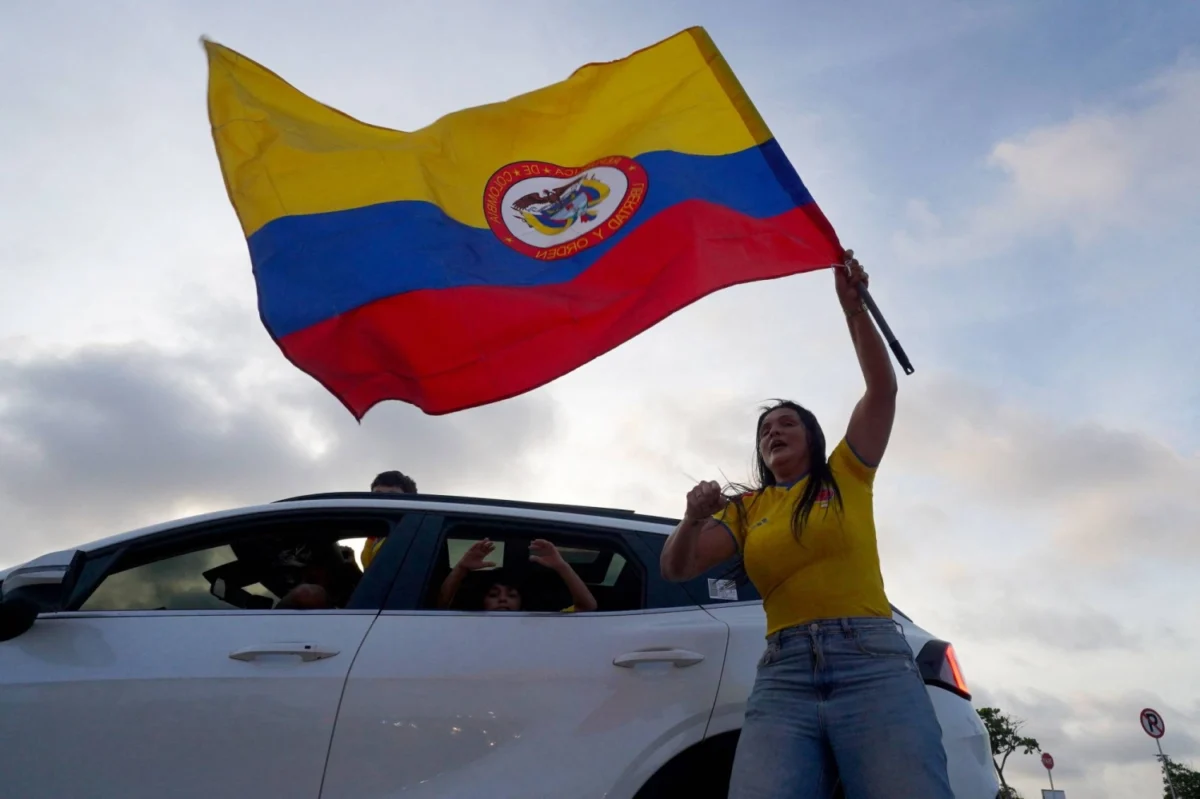
BOGOTÁ — Colombia stood on the precipice of a seismic political shift on Sunday as early returns from the presidential runoff election placed conservative attorney and political outsider Abelardo de la Espriella in the lead. The results, reflecting a deeply fractured electorate, suggest a potential pivot away from the leftist movement championed by outgoing President Gustavo Petro and a move toward a closer strategic alignment with the administration of U.S. President Donald Trump.
As of Sunday evening, with 65% of polling stations reporting, the National Electoral Authority confirmed that De la Espriella had secured 50.6% of the vote. His opponent, leftist Senator Iván Cepeda—the designated successor to Petro’s ideological vision—trailed with 47.8%. While the final tally remains subject to the arrival of ballots from rural and remote regions, the current trajectory points toward a decisive mandate for a conservative overhaul of the South American nation’s domestic and foreign policy.
The Main Facts: A Battle for the Soul of Colombia
The election represents one of the most polarized moments in Colombia’s modern democratic history. At its core, the contest is a referendum on the "Total Peace" agenda, the economic philosophy of the Petro years, and the country’s role in an increasingly volatile geopolitical landscape.
Abelardo de la Espriella, a prominent lawyer and dual U.S.-Colombian citizen, has campaigned on a platform that mirrors the "America First" rhetoric of his ally, Donald Trump. His proposed policies include the construction of "mega-prisons" modeled after El Salvador’s controversial security infrastructure, an aggressive military stance against cocaine-trafficking militias—including the potential for aerial strikes—and a complete reversal of the current administration’s restrictions on oil exploration and hydraulic fracturing (fracking).
Conversely, Iván Cepeda, a veteran legislator and the son of a slain communist leader, has fought to preserve the social progress of the Petro era. Cepeda’s platform focuses on land redistribution, tax increases for the wealthiest citizens, and a continued commitment to the negotiated peace processes with various armed groups.
Chronology of a Campaign: From March Primaries to the Runoff
The path to this Sunday’s vote began with the pivotal congressional elections in March. At that time, the Pacto Histórico (Historic Pact) coalition, led by Petro and Cepeda, established itself as the dominant force in the legislature, securing 25 of the 108 seats in the Senate. This legislative victory gave the left a formidable base from which to govern, yet it also galvanized a disparate and previously uncoordinated conservative opposition.
- March: Congressional elections confirm the strength of the Pacto Histórico, prompting a frantic search within the conservative bloc for a candidate capable of consolidating the anti-Petro vote.
- April: Abelardo de la Espriella emerges as a dark-horse contender. Leveraging his high profile as a television commentator and lawyer, he taps into deep-seated voter dissatisfaction with inflation and rising security concerns.
- May: The first round of presidential voting leaves the nation split. The campaign descends into intense legal disputes, notably surrounding De la Espriella’s appropriation of the national football team’s jersey as a campaign symbol—a move that critics argued was an abuse of national identity but that supporters cheered as a rallying cry for "patria."
- June: The final week of the campaign is marked by a series of high-stakes debates. Trump issues a public endorsement of De la Espriella, promising "total support" for a Colombian government under his leadership, fundamentally altering the diplomatic stakes of the election.
Supporting Data: Economic Anxiety and Fiscal Realities
The election is being scrutinized by international markets and regional business leaders who view the current economic trajectory of South America’s third-largest economy with alarm. Colombia is currently grappling with a triad of economic stressors: widening fiscal deficits, a notable slowdown in GDP growth, and persistent inflationary pressures that have eroded the purchasing power of the middle class.
Comparative Economic Platforms
| Policy Area | Abelardo de la Espriella (Conservative) | Iván Cepeda (Leftist/Pacto Histórico) |
|---|---|---|
| Energy Policy | Expand exploration; promote fracking. | Phase out fossil fuels; green energy transition. |
| Taxation | Lower corporate taxes to stimulate growth. | Increase taxes on the wealthy/landowners. |
| Fiscal Stance | Rigid fiscal discipline; central bank autonomy. | Prioritize social spending; reform central bank oversight. |
| Security | Hard-line; mega-prisons; militarized response. | "Total Peace"; negotiated settlements. |
Investors have expressed a clear preference for De la Espriella, viewing his platform as more likely to stabilize the peso and protect the independence of the Banco de la República. Conversely, supporters of Cepeda, particularly among low-income populations and Indigenous communities, argue that the "market-friendly" approach has historically failed to address the systemic inequality that keeps millions of Colombians in poverty.
Official Responses and Diplomatic Implications
The international reaction to the election results has been swift. Washington’s interest in the outcome is particularly acute. The Biden administration has maintained a policy of engagement with Petro, but the prospect of a De la Espriella presidency represents a return to a more traditional, securitized bilateral relationship.
A spokesperson for the Trump camp in the United States noted that a victory for the conservative lawyer would signify a "re-alignment of the democratic front in the Western Hemisphere." By contrast, the current U.S. State Department has remained largely neutral, though officials have privately expressed concerns about the potential for human rights challenges should De la Espriella proceed with his plans for mass incarceration and aggressive military intervention against drug cartels.
Within Colombia, the atmosphere remains tense. Cepeda’s campaign has raised concerns regarding the integrity of the vote count, though electoral authorities have insisted the process remains transparent. "We are committed to the democratic process," said the head of the electoral council in a brief press conference Sunday night. "The will of the people will be respected, regardless of the final margin."
Implications: A New Era for Bogotá?
Should De la Espriella maintain his lead, his inauguration on August 7 will mark a dramatic departure from the Petro administration. The implications are three-fold:
1. Domestic Security and Justice
The promise to build El Salvador-style mega-prisons suggests a shift toward punitive justice. Human rights organizations have warned that such a strategy could lead to a degradation of prison conditions and an increase in civil liberties violations. However, for a population weary of daily crime reports, the promise of "order" remains a potent political weapon.
2. Regional Geopolitics
Colombia has long been the primary U.S. partner in South America. Under Petro, the country often sought a middle ground, occasionally diverging from U.S. priorities in Venezuela and beyond. A De la Espriella victory would likely restore Colombia as the cornerstone of U.S. regional policy, potentially escalating tensions with other leftist governments in the region, such as those in Brazil or Chile.
3. The Future of the "Total Peace" Plan
The "Total Peace" strategy, which sought to bring non-state armed groups into the fold of the state, now faces an existential threat. If the state pivots toward the "bombing of camps" approach proposed by the conservative candidate, the hope for a negotiated end to decades of civil conflict may be replaced by a return to the intense, localized violence that characterized the early 2000s.
The Road Ahead
As the final ballots are counted, the nation waits in a state of suspended animation. Whether the result validates the grassroots mobilization of the Pacto Histórico or the conservative, security-focused platform of De la Espriella, one thing is certain: the winner will inherit a deeply polarized nation, a fragile economy, and a set of challenges that will define the trajectory of Colombia for the next four years.
For now, the eyes of the continent remain fixed on Bogotá. The final results are expected in the early hours of Monday, and with them, the beginning of a new, uncertain chapter in Colombian history.


 Neng Nana
 Asro
Asro