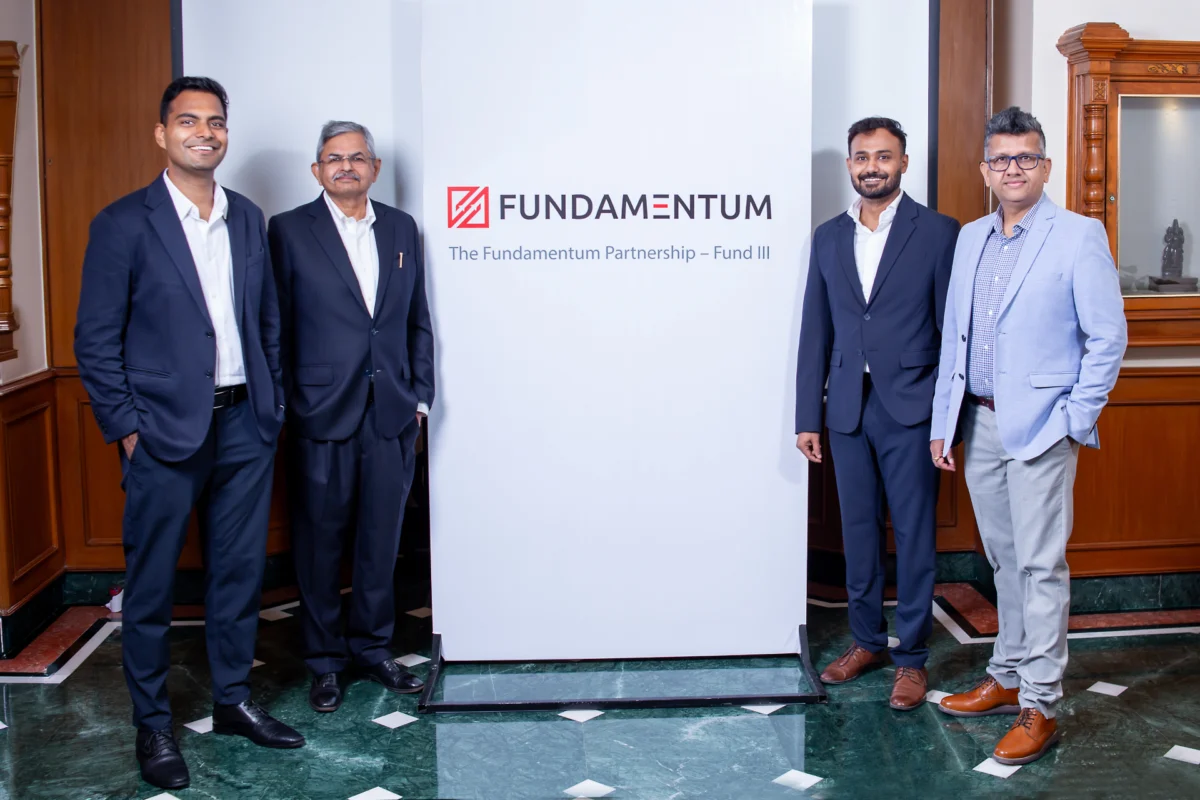
In a significant leadership transition for the Indian venture capital landscape, Nandan Nilekani, the co-founder of IT titan Infosys and a titan of India’s digital infrastructure, is stepping down as a general partner at Fundamentum Partnership. The firm, which he co-founded nearly a decade ago, is now embarking on its third fund, targeting a corpus of approximately $200 million. While Nilekani will vacate his operational role, his influence on the firm remains undiminished; he will transition into the role of anchor investor and strategic advisor, continuing his long-standing commitment to mentoring the next generation of Indian entrepreneurs.
The Evolution of Fundamentum: A Strategic Pivot
The announcement coincides with a broader restructuring of the Fundamentum senior investment team. As the firm moves into its third iteration, it seeks to double down on its mandate of supporting growth-stage startups in the consumer tech, fintech, and AI sectors.
Sanjeev Aggarwal, who co-founded Fundamentum alongside Nilekani in 2017 after a distinguished career at Helion Venture Partners, emphasized that the move is more of a structural refinement than a departure. "It’s really just a title thing," Aggarwal remarked in an interview. "Nandan is, and will always be, an integral part of our firm. The one thing that he enjoys the most is mentoring the teams that we back, and he will continue to do so in Fund III."
This transition allows Fundamentum to formalize a leadership structure that highlights its seasoned investment team. Alongside Aggarwal, the third fund will be steered by Prateek Jain—an original member of the firm since its 2017 inception—fintech specialist Mayank Kachhwaha, and CFO Sanjay Chaturvedi, who has been instrumental in the firm’s financial operations for nearly ten years.
Chronology: From Foundation to the Third Fund
To understand the significance of this move, one must look at the trajectory of Fundamentum over the last decade:
- 2017: Nandan Nilekani and Sanjeev Aggarwal launch Fundamentum Partnership to fill a gap in the Indian market for Series B and growth-stage capital.
- 2017–2022: The firm builds a portfolio of high-growth companies, including the used-car marketplace Spinny, the digital pharmacy PharmEasy, audio storytelling platform Kuku FM, and the devotional app developer AppsForBharat.
- 2022: The launch of Fund II consolidates the firm’s reputation as a patient, hands-on investor, with Mayank Kachhwaha joining the leadership rank.
- 2024–2025: The firm sees the departure of general partner Ashish Kumar, who moved to launch the AI-focused fund, Fundamentum Frontier Advisors (F2A)—a separate entity in which Nilekani also serves as an anchor investor.
- 2026: Fundamentum initiates the launch of Fund III, marking the formal transition of Nilekani from an operational general partner to an anchor investor and strategic mentor.
The Architectural Influence of Nandan Nilekani
At 71, Nandan Nilekani’s resume is inextricably linked to the modernization of India. Beyond his role at Infosys, he is the visionary architect behind Aadhaar, the world’s largest biometric identity system. His advocacy for Digital Public Infrastructure (DPI) has provided the bedrock for modern Indian commerce, most notably through the Unified Payments Interface (UPI).
His transition at Fundamentum reflects a man who has spent decades building systems that endure. By shifting from the daily grind of deal-sourcing to a more focused role as a strategic mentor and anchor investor, Nilekani is effectively institutionalizing his influence. He remains a pillar for Indian startups, and his continued involvement in Fund III—which represents his largest-ever financial commitment to a venture fund—signals a deep-seated belief in the maturation of the Indian startup ecosystem.
Financial Strategy and Market Outlook
Fundamentum’s third fund is designed to be highly targeted. The firm plans to back eight to 10 companies, writing initial checks of approximately ₹100 crore (roughly $10.5 million). While the firm has not yet announced a "first close," capital deployment has already commenced.
Aggarwal expects the fundraising cycle to span the next 12 to 18 months, noting a fundamental shift in the sourcing of capital. "When we launched Helion, there was no domestic capital in the country, and all the capital was raised from the U.S.," Aggarwal noted. "Over the last five years, we are experiencing very strong interest from Indian investors to back venture capital firms. Now, you can build a venture firm with domestic capital."

The firm anticipates that roughly half of the $200 million corpus will be sourced from international investors, with the remainder coming from domestic institutions, family offices, and high-net-worth founders—a testament to the growing depth of India’s internal financial markets.
AI and the Indian Application Layer
A significant portion of the conversation surrounding Fund III centers on artificial intelligence. While the U.S. and China are currently engaged in a capital-intensive race to build "frontier" foundation models, Fundamentum is taking a more pragmatic, application-centric approach.
Aggarwal believes that the greatest value for Indian startups lies in building robust applications on top of existing global models. He points toward financial services, content creation, and vernacular consumer applications as the most fertile ground for AI innovation in the Indian context. By focusing on the "application layer," Fundamentum aims to capture value in sectors where localized, context-aware software can drive massive user adoption, rather than competing in the expensive, hardware-heavy business of training Large Language Models (LLMs).
The Departure of Ashish Kumar and the F2A Factor
The reshuffle also addresses the recent departure of Ashish Kumar. His new venture, Fundamentum Frontier Advisors (F2A), focuses exclusively on the AI frontier. Aggarwal was clear in clarifying that F2A is a distinct entity with no operational or structural ties to the Fundamentum Partnership. The clean break ensures that Fund III remains focused on its core strategy, while also highlighting the trend of specialized venture funds emerging in the Indian market to capture the growing demand for deep-tech investment.
Implications for the Indian Venture Ecosystem
The transition of a figure as prominent as Nandan Nilekani from a general partner to an anchor investor is a signal to the broader industry. It suggests that the "founder-investor" model, which relies on the active participation of industry legends, is evolving into a more sustainable, institutionalized form.
For the startups in Fundamentum’s portfolio, the change is largely immaterial. Nilekani’s value as a mentor—his ability to provide guidance on scaling, public policy, and corporate governance—remains accessible. For the broader market, the successful transition demonstrates that the firm has reached a level of maturity where it can thrive on the strength of its core team while retaining the wisdom and capital commitment of its founders.
As Fundamentum enters this new chapter, it mirrors the maturation of India’s economy: moving from a reliance on foreign expertise and capital toward a self-sustaining ecosystem where seasoned leaders mentor the next generation, and domestic capital fuels the growth of the next wave of unicorns. With $200 million in the pipeline and a clear, focused strategy on application-layer AI and consumer tech, Fundamentum remains a bellwether for the health and direction of Indian venture capital.
The firm’s success in the coming years will not just be measured by the returns on Fund III, but by its ability to integrate the wisdom of its past—represented by Nilekani—with the operational rigor of its current partners, ensuring that the next generation of Indian startups has the foundation they need to scale globally.