Siti Muinah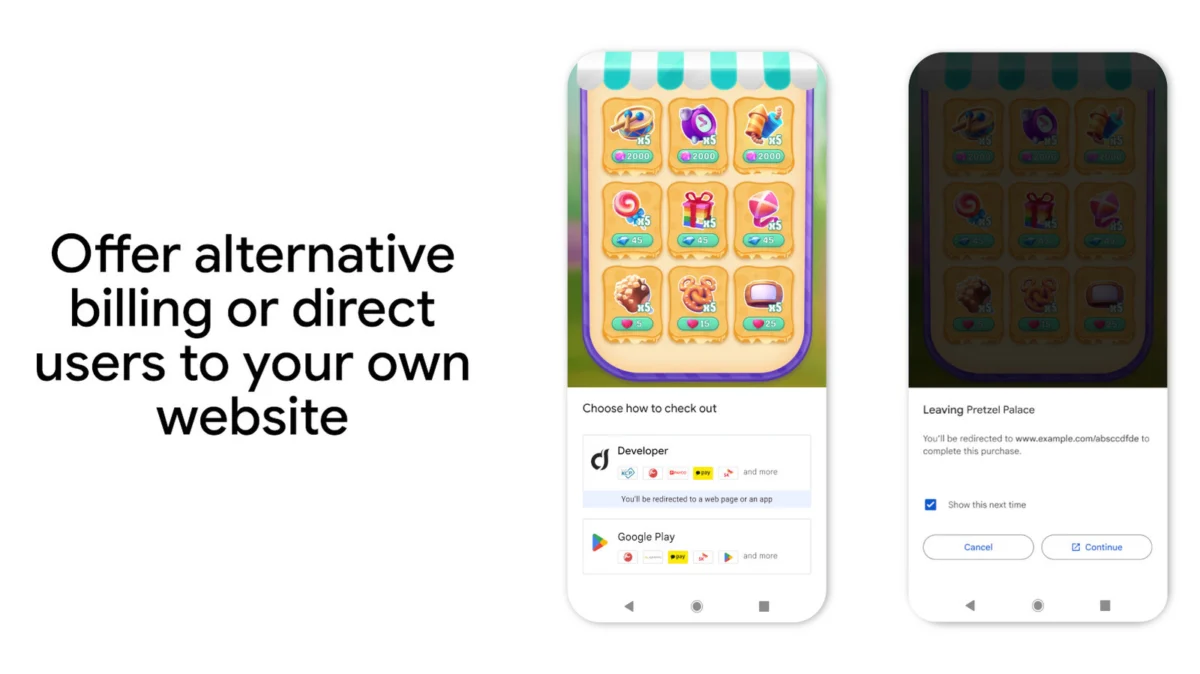
In a landmark shift that marks the beginning of the end for the "walled garden" era of mobile software, Google has officially confirmed that it will open the Google Play Store to third-party billing systems starting June 30. This sweeping change, initially teased following the resolution of a protracted antitrust legal battle with Epic Games, represents one of the most significant pivots in the history of the Android ecosystem. By decentralizing payment processing and slashing commission rates, Google is attempting to preempt further regulatory scrutiny while modernizing its relationship with the global developer community.
The Core Transformation: Breaking the Billing Monopoly
Starting June 30, developers operating in the United States, the United Kingdom, and Europe will gain the long-awaited ability to offer alternative payment options within their Android applications. Under the new "billing choice" program, developers are no longer tethered exclusively to Google’s proprietary payment infrastructure.
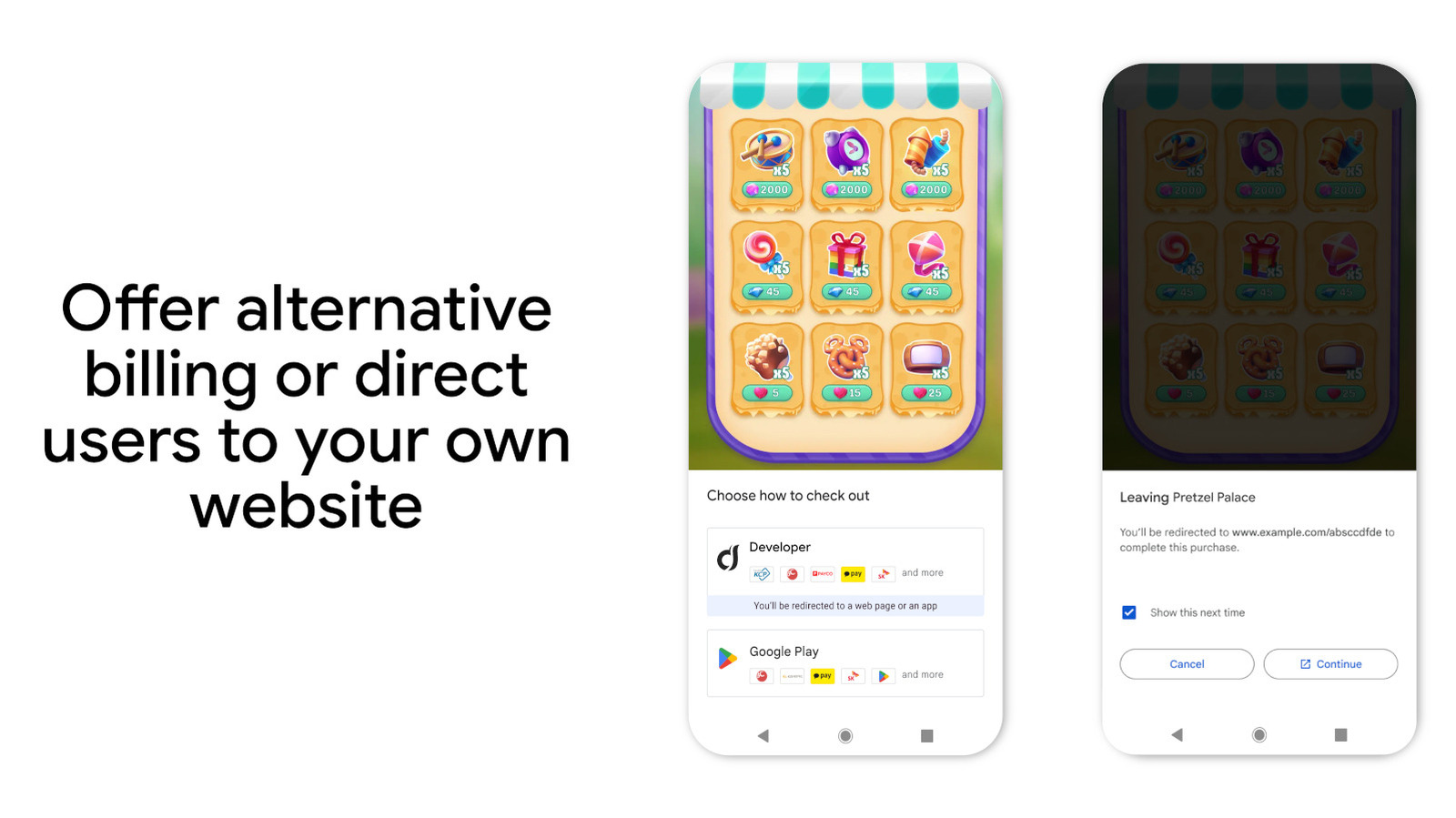
When a user initiates a purchase, they will be presented with a choice screen—a new interface designed to facilitate transparency. While developers have the freedom to design their own custom checkout screens, they must adhere to Google’s established User Experience (UX) guidelines to ensure the process remains intuitive and secure for the consumer. This move effectively allows developers to route transactions through their own websites or third-party payment processors, bypassing the "Google Play Tax" that has been a primary point of contention for over a decade.
A Chronology of Conflict and Compliance
The road to this decision has been paved with years of litigation and intense public pressure. The conflict reached a fever pitch during the high-stakes Epic Games v. Google antitrust trial, where the creator of Fortnite argued that Google exercised an illegal monopoly over Android app distribution and billing.
- 2020–2023 (The Litigation Phase): Epic Games and various developer coalitions filed multiple lawsuits, alleging that Google’s mandatory use of Play Billing for in-app purchases constituted anti-competitive behavior.
- March 2026 (The Settlement): Following a protracted court battle, Google reached a settlement with Epic Games. As part of the terms, Google agreed to revise its developer distribution agreement, paving the way for the billing choice program.
- June 30, 2026 (The Rollout): The initial implementation of third-party billing and reduced fee structures takes effect across key Western markets.
- September 30, 2027 (Global Standardization): Google has committed to a phased global rollout, ensuring that by late 2027, these policies will represent the new standard for the Play Store worldwide.
Decoding the New Fee Architecture
Perhaps more consequential than the billing choice itself is the radical restructuring of Google’s service fees. For years, the industry standard was a blanket 30 percent commission on all transactions. Under the new model, Google is bifurcating its revenue stream to account for the complexity of app development and transaction processing.
The Service Fee vs. The Billing Fee
Google is moving toward a "service-first" model. The core service fee, which supports the maintenance of the Play Store platform, is being reduced significantly:
- The 10% Floor: For the first $1 million in annual earnings, developers will pay a 10 percent service fee, regardless of which billing system the consumer chooses.
- Subscription Stability: This 10 percent rate will also apply to all subscription auto-renewals, providing a massive boost to developers building recurring revenue models.
- The Billing Surcharge: If a developer chooses to continue using Google’s proprietary payment system, an additional 5 percent billing fee is applied to cover the costs of payment processing, fraud protection, and global reach.
Scaling and Complexity
The fee structure becomes more dynamic as a developer’s success grows. Once a developer exceeds the $1 million annual threshold for new installs, the service fee increases to 20 percent. While this is still a marked improvement over the previous 30 percent standard, it represents a tiered approach that rewards emerging developers while capturing more value from industry giants.
For established apps, the commission on transactions (outside of subscriptions) may fluctuate between 20 and 25 percent. However, Google is introducing two new initiatives to mitigate these costs: the Games Level Up program and the Apps Experience program. These initiatives are designed to incentivize high-quality, resource-intensive software development. Developers who meet the strict quality criteria for these programs will maintain access to lower fee structures, effectively using the commission rate as a lever to drive higher standards across the Android platform.
Official Responses and Industry Sentiment
The reception to these changes has been mixed, reflecting the diverse interests of the developer ecosystem.
The Google Perspective:
In its official documentation, Google has framed this shift as a commitment to "developer choice and user security." By allowing alternative billing, Google argues it is fostering a more competitive marketplace. "Our goal is to provide a platform that enables developers of all sizes to reach global audiences while ensuring that the infrastructure remains secure and reliable for the billions of users who trust the Play Store every day," a spokesperson noted in a recent blog post.
The Developer Community:
For many indie developers, the reduction to a 10 percent fee for the first million dollars is a game-changer. It lowers the barrier to entry and increases the survival rate of new startups. Conversely, larger enterprises remain skeptical. Critics point out that even with the new billing choice, the "service fee" remains mandatory even if the developer uses their own payment processor. Some legal analysts suggest that this "platform fee" is simply a rebranding of the old commission, designed to satisfy regulators without actually relinquishing control over the Android revenue stream.
Long-Term Implications for the Mobile Market
The ripple effects of this policy change will be felt for years to come.
1. Pressure on Apple
By opening the Play Store, Google has significantly increased the pressure on Apple to follow suit with the iOS App Store. With the US, UK, and Europe acting as the testing ground, regulators in other regions—such as South Korea, Japan, and India—are likely to demand similar concessions. Apple’s "walled garden" is looking increasingly precarious as the two major mobile platforms are forced to accommodate a more open, fragmented payment landscape.
2. The Rise of Independent Billing Providers
The market for third-party payment processors (such as Stripe, Adyen, and PayPal) is set to expand rapidly within the mobile sector. These companies now have a massive opportunity to offer specialized billing solutions for Android developers, potentially offering lower transaction fees than the 5 percent "billing fee" Google charges for its own system.
3. Shift in User Experience
For the end-user, this transition may be jarring at first. As users begin to see a variety of checkout screens, the sense of a unified, seamless Google experience may diminish. Google’s emphasis on "UX guidelines" is a defensive maneuver aimed at ensuring that even when a user pays via a third-party, the transaction feels as secure as a native Google purchase. If the user experience becomes fragmented or riddled with phishing risks, Google could face a public relations backlash that undermines the benefits of the transition.
4. Innovation Through Quality Tiers
By tying lower fees to the "Games Level Up" and "Apps Experience" programs, Google is effectively becoming a curator of quality. This could lead to a "golden age" of Android development where developers are financially incentivized to optimize for multi-device experiences, better battery performance, and higher-fidelity gaming. It is a strategic move to ensure that even if Google loses some commission revenue, the overall value of the Android platform remains superior to its competitors.
Conclusion
The decision to open the Google Play Store to outside billing is a watershed moment for the tech industry. It acknowledges that the era of closed, monolithic platforms is fading, replaced by a more complex, regulated, and negotiated digital economy. While the changes starting June 30 are a clear victory for developers seeking more autonomy, the true impact will be measured by how these policies evolve between now and the global rollout in 2027.
Google is attempting to balance the demands of antitrust regulators, the ambitions of developers, and the expectations of consumers. Whether this new, tiered fee structure and the integration of alternative billing will satisfy the long-term concerns of the market remains to be seen. What is certain, however, is that the Android ecosystem will never be the same again.


 Iffa Jayyana
 Suro Senen