Evan Lee Salim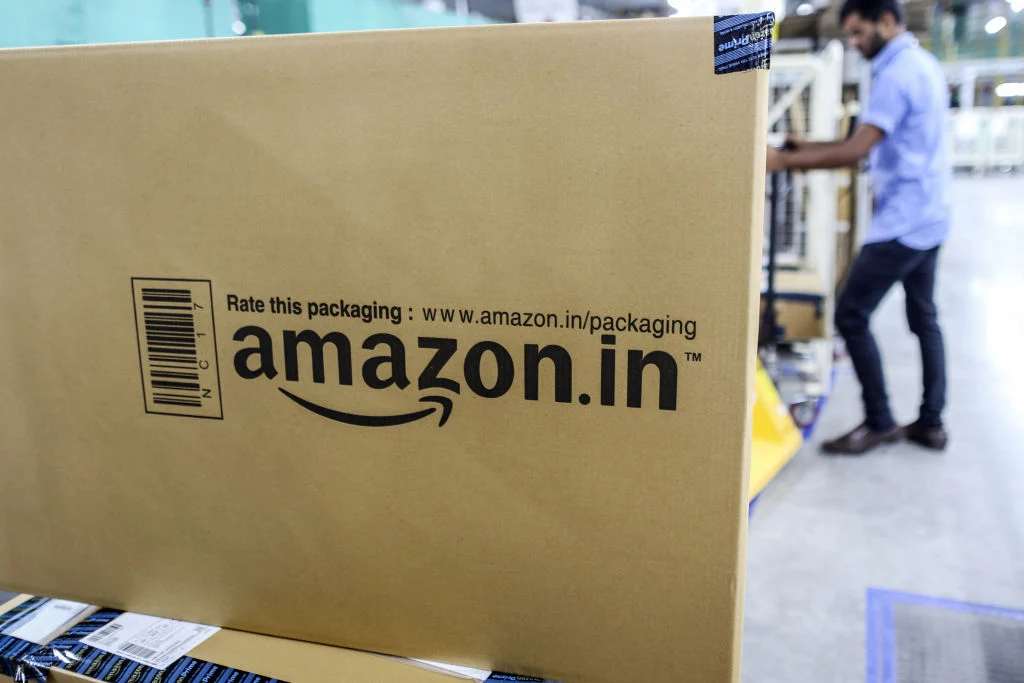
In a landmark move that underscores India’s rising stature as a global epicenter for artificial intelligence and cloud computing, Amazon has announced an additional $13 billion investment into its Indian operations. This latest capital infusion, slated for deployment through 2030, marks a significant escalation in the e-commerce giant’s long-term strategy to dominate the South Asian tech landscape. The announcement follows a high-level meeting between Amazon CEO Andy Jassy and Indian Prime Minister Narendra Modi in New Delhi, signaling a deepening synergy between one of the world’s largest corporations and the fastest-growing major economy.
The Strategic Core: Powering the AI Infrastructure Revolution
The $13 billion injection is primarily earmarked for the expansion of Amazon Web Services (AWS) data center capacity. These facilities, concentrated in the key technology hubs of Mumbai and Hyderabad, are the engine rooms of Amazon’s broader strategy. As global demand for AI-driven enterprise solutions, machine learning, and high-performance computing surges, these data centers will serve as the backbone for businesses ranging from budding startups to massive multinational conglomerates.
While Amazon has not provided a granular breakdown of how the total $48 billion—the aggregate of its multi-year commitments—will be allocated across its various business verticals, industry analysts note that such figures typically encompass a blend of capital expenditure (CapEx) and operating expenditure (OpEx). This covers not just physical infrastructure, but also talent acquisition, R&D, and the maintenance of a robust digital ecosystem.
A Chronology of Escalation: Building the $48 Billion Foundation
Amazon’s latest commitment is the third major investment announcement in just three years, reflecting a rapid acceleration of its India strategy. The timeline of this financial commitment is as follows:
- 2023: Following a pivotal meeting between Andy Jassy and Prime Minister Modi, Amazon committed $15 billion through 2030, with $12.7 billion specifically designated for AWS infrastructure.
- December 2025: In a massive show of confidence in the Indian market, Amazon pledged an additional $35 billion, effectively pushing its total planned spending to an unprecedented $75 billion—a figure that solidified India’s position as a core pillar of Amazon’s global growth.
- Present Day (2026): With the latest $13 billion addition, the cumulative commitment has reached $48 billion, cementing the company’s role as one of the largest foreign investors in India’s digital transformation.
This steady cadence of investment suggests that Amazon is not merely reacting to market trends but is proactively shaping the regulatory and technical environment in India to suit its long-term objectives.
Supporting Data: India’s Emergence as a Global Data Haven
Amazon is not operating in a vacuum. Its aggressive expansion is mirrored by a broader influx of global capital, as the world’s leading technology companies recognize India’s unique advantage: a massive reservoir of technical talent, a favorable regulatory environment, and a rapidly digitizing domestic economy.
The competition for the "Indian AI Cloud" is intense:
- Microsoft: In December 2025, the tech giant announced a $17.5 billion investment in India to be deployed through 2029.
- Google: In October 2025, Google unveiled a $15 billion plan focused on building an AI infrastructure hub and expanding its data center footprint.
- Global Infrastructure Players: Beyond big tech, the physical infrastructure is being bolstered by heavyweights like Australia’s AirTrunk, which has committed $30 billion to build 5GW of AI-ready data centers. Meanwhile, the Canada Pension Plan Investment Board (CPP Investments) has also entered the fray, funding large-scale data center projects.
Domestically, India’s corporate giants are not standing on the sidelines. The Adani Group has pledged $100 billion toward AI-ready data centers, while Reliance Industries has unveiled a $110 billion AI investment plan. These figures, while staggering, reflect the sheer scale of the energy and computing power required to fuel the next generation of AI applications.
Official Responses and Policy Incentives
The Indian government, under the leadership of Prime Minister Modi, has been instrumental in creating an environment conducive to these massive inflows. New Delhi has introduced aggressive policy incentives designed to lure global cloud providers. Among the most notable is a policy offering zero taxes through 2047 for foreign cloud providers on services sold overseas, provided those digital workloads are processed within Indian data centers. This "data sovereignty" approach serves a dual purpose: it builds out India’s domestic infrastructure while establishing the country as a global data processing hub.
For Amazon, the alignment with New Delhi’s vision of a "Digital India" is essential for navigating the complex regulatory landscape. By framing its investments as a contribution to the nation’s infrastructure and employment, Amazon secures the political capital necessary to scale its operations seamlessly.
Implications: Beyond the Cloud
While the headlines are dominated by AWS and AI, Amazon is simultaneously doubling down on its retail and logistics operations to maintain its relevance in the hyper-competitive consumer market.
The Battle for Quick Commerce
Amazon’s expansion strategy includes the addition of 20 new fulfillment centers and over 100 last-mile delivery stations this year. Furthermore, the company is aggressively scaling its "Amazon Now" quick-commerce service, targeting more than 300 cities and towns. This push is a direct response to the "10-minute delivery" revolution currently sweeping India.
The quick-commerce landscape is arguably the most fiercely contested retail space in the world today. Amazon finds itself battling:
- Blinkit: Owned by Eternal.
- Instamart: Powered by Swiggy.
- Zepto: A nimble, fast-growing local startup.
- Flipkart: Backed by Walmart, which recently announced a massive expansion involving 1,500 micro-fulfillment centers by the end of 2026.
The integration of advanced AI into these logistics networks—using predictive analytics to stock goods closer to the consumer—is where Amazon believes it can leverage its massive cloud infrastructure to win the retail war.
Conclusion: A Long-Term Bet on India’s Digital Future
Amazon’s $48 billion total commitment is more than just a capital allocation; it is a profound bet on the future of the Indian economy. By investing simultaneously in the bedrock of the digital future (data centers and AI) and the fabric of daily life (logistics and retail), Amazon is positioning itself as an indispensable utility in the lives of over 1.4 billion people.
As India moves toward its goal of becoming a $10 trillion economy, the infrastructure built by Amazon, Google, Microsoft, and their domestic counterparts will serve as the foundation for the nation’s innovation. Whether these investments yield the expected returns depends on a delicate balance of regulatory stability, technical talent retention, and the ability to out-compete agile local players in the quick-commerce space. However, one thing is clear: the race to dominate the Indian digital market has moved beyond the startup phase, evolving into a capital-intensive marathon that will define the global technology landscape for decades to come.


 Azzam Bilal Chamdy
 Jia Lissa