Ammar Sabilarrohman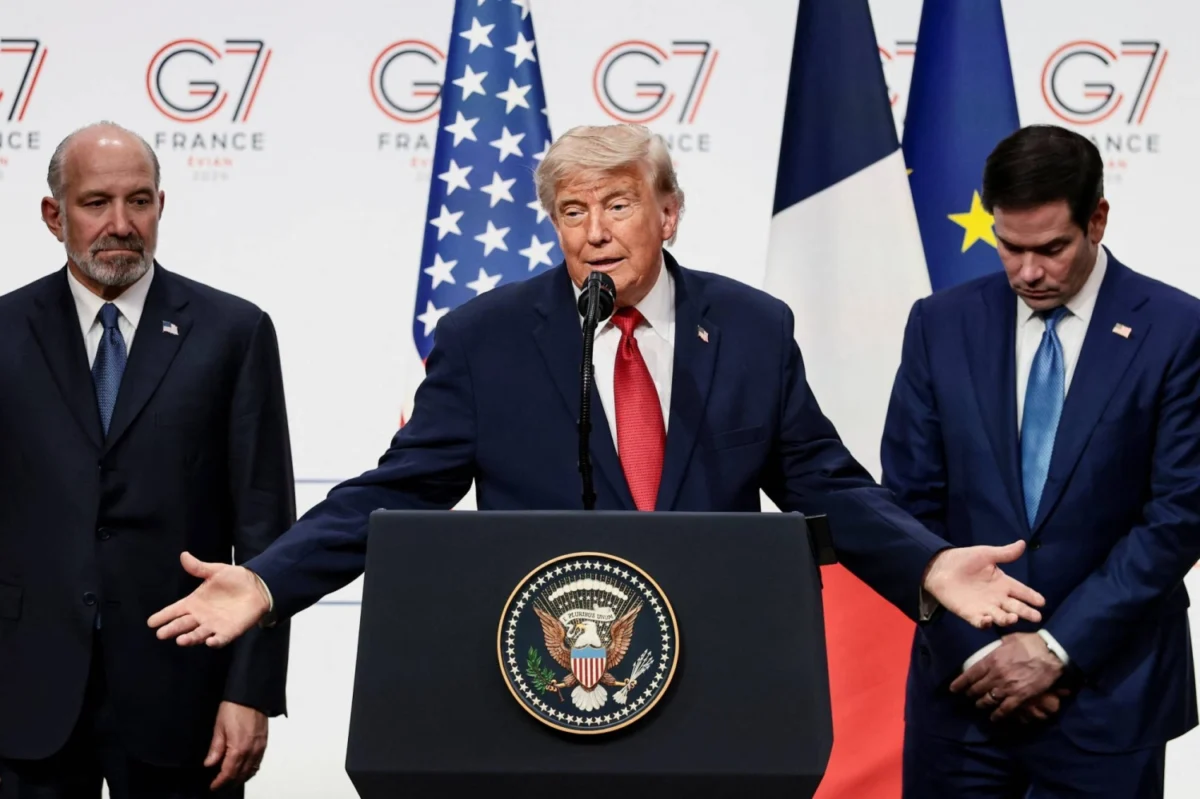
VERSAILLES, FRANCE — In a move that has sent shockwaves through the corridors of power in Washington and reshaped the geopolitical landscape of the Middle East, U.S. President Donald Trump has signed an interim memorandum of understanding (MOU) to formally end hostilities with the Islamic Republic of Iran. The agreement, intended to de-escalate months of military tension and restore the flow of global energy, mandates the immediate reopening of the Strait of Hormuz, a critical maritime artery that had been effectively shuttered for the past three months.
The signing, conducted under the historic, gilded ceilings of the Palace of Versailles, mirrors the symbolic weight of the 1919 Treaty of Versailles that ended the First World War. However, while the setting suggests a return to peace, the political fallout in the United States remains volatile. As the ink dries, President Trump faces an unprecedented rebellion from his own party, with influential Republican hawks labeling the deal a capitulation that risks long-term American security in exchange for short-term economic relief.
The Architecture of the Agreement: A Two-Stage Peace
The memorandum, which took effect immediately upon its final signing on Wednesday, serves as a bridge to a more comprehensive diplomatic framework. According to a senior U.S. official, the document was finalized through a multi-step digital and physical process.
Vice President JD Vance and Iranian Parliament Speaker Mohammad Bagher Ghalibaf initiated the signing process digitally this past Sunday. The process culminated in a high-profile ceremony at Versailles, where President Trump and Iranian President Masoud Pezeshkian finalized the terms.
Under the provisions of the draft, the immediate priority is the cessation of naval blockades in the Strait of Hormuz. For months, the waterway—responsible for the transit of approximately 20% of the world’s petroleum—had become a site of intense military posturing, with both U.S. and Iranian forces deploying sea mines and patrol vessels. The agreement stipulates that the strait must be cleared of all ordnance, allowing international shipping conglomerates to resume transit routes that have been largely dormant since the conflict began in February.
Crucially, the deal includes immediate, broad-based sanctions waivers for Iranian oil exports. This move is designed to inject supply back into a fractured global market, aiming to stabilize energy prices that have soared to record highs since the onset of the conflict. Discussions regarding Iran’s nuclear enrichment program and broader financial compensation packages are slated to follow as part of a secondary phase of negotiations.
Chronology of a Conflict and its Sudden Conclusion
The journey to the Palace of Versailles began in February, following a series of maritime skirmishes that escalated into a full-scale regional conflict.
- February: Tensions reach a breaking point after an exchange of fire between U.S. and Iranian naval assets, leading to the closure of the Strait of Hormuz.
- March–May: As the conflict deepens, the U.S. launches a series of targeted strikes against Iranian infrastructure. Global energy prices experience a sustained, vertical climb, triggering inflationary pressure across North America and Europe.
- June 19: Originally proposed as the primary signing date, this deadline was set to allow for the systematic clearing of mines in the strait.
- Late June: Behind-the-scenes diplomacy intensifies as the economic toll of the war begins to threaten the stability of the global financial system.
- Sunday: Vice President JD Vance and Speaker Ghalibaf sign the MOU digitally, marking the first major breakthrough.
- Wednesday: President Trump and President Pezeshkian meet in France to finalize the memorandum, marking the official end of the kinetic phase of the war.
Economic Implications: The Cost of Global Energy
The primary driver behind the Trump administration’s sudden pivot toward diplomacy appears to be the mounting economic strain caused by the conflict. With Persian Gulf supplies cut off for nearly ninety days, the global economy teetered on the edge of a systemic crisis.
Energy analysts note that the "hormuz premium"—the added cost to a barrel of oil due to the risk of transit through the strait—had become unsustainable for the global recovery. By securing the reopening of the strait, the White House is betting that a surge in Iranian oil exports will provide the necessary supply to cool down heating oil, gasoline, and manufacturing costs before the domestic economic impact becomes irreversible.
However, the "financial gains" promised to Iran as part of the broader negotiation have raised significant questions. If the U.S. proceeds with further sanctions relief, it could provide the Islamic Republic with the liquidity needed to project power throughout the region, a prospect that has deeply unsettled the administration’s traditional allies in the Middle East, including Israel and the Gulf Cooperation Council states.
Political Backlash: A House Divided
While the international community has largely responded with relief, the reaction on Capitol Hill has been one of visceral outrage. Republican lawmakers, who had previously supported the administration’s "maximum pressure" military campaign, now view the turn toward diplomacy as an abandonment of conservative principles.
Senator Ted Cruz (R-TX) was among the most vocal critics, issuing a scathing statement regarding the morality and efficacy of the agreement. "History teaches us that giving billions of dollars to theocratic lunatics who want to murder us is not a good idea," Cruz stated. "We have moved from a position of strategic dominance to one of appeasement in a matter of weeks."
Even within the President’s inner circle, there is palpable friction. Senator Lindsey Graham (R-SC), typically one of the President’s most steadfast defenders on defense and foreign policy, offered a measured but critical assessment. Graham described the MOU not as a definitive peace treaty, but as a "framework of how to get a deal," noting that he remains deeply skeptical of the administration’s ability to secure meaningful concessions on Iran’s nuclear program.
"I applaud the President for attempting to bring this to a close," Graham remarked in a press briefing on Wednesday. "But there are parts of this memorandum I simply cannot support. We are entering a phase of uncertainty where we are relying on the good faith of a regime that has shown very little throughout this conflict."
The Path Forward: Challenges to Implementation
As of Wednesday evening, it remained unclear whether Iran had begun the physical process of clearing mines or withdrawing its naval assets from the strait. The success of the deal rests entirely on the operational reality on the ground.
For the shipping industry, the announcement comes as a welcome, if cautious, reprieve. Major shipping lines have signaled that they will wait for official confirmation from international maritime monitoring agencies before sending vessels back into the waterway. The logistical challenge of restarting the world’s most vital oil transit corridor is immense, requiring both security assurances and a complex coordination effort between U.S. naval forces and the Iranian Revolutionary Guard.
Furthermore, the domestic political landscape in Washington suggests that the President’s battle is far from over. With a divided Congress and an electorate increasingly concerned about both the cost of war and the perceived weakness of this peace deal, President Trump must navigate a narrow path. He must prove that this interim agreement can evolve into a lasting, secure, and verifiable pact, or risk the memorandum being remembered as a temporary fix that sacrificed long-term security for short-term political expediency.
As the President prepares to leave France, the world watches with bated breath. The signing at Versailles may have concluded the fighting, but the real test—the test of whether peace can be sustained without compromising the strategic interests of the United States—is only just beginning.


 Neng Nana
 Asro
Asro