

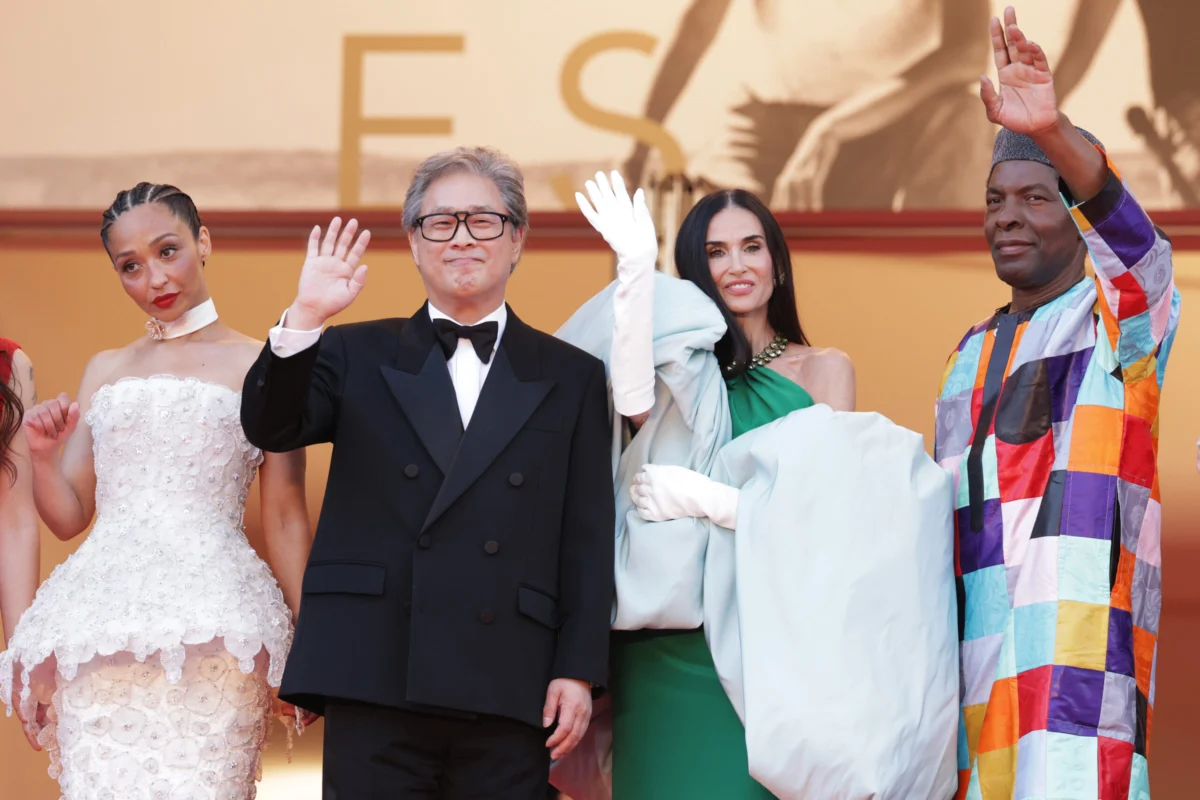
The 79th Cannes Film Festival drew to a dramatic, star-studded close this weekend, leaving the global cinematic community with a legacy of bold choices, unexpected ties, and a touch of self-deprecating humor from one of world cinema’s most revered architects. As the curtain fell on the Croisette, it was clear that the jury, led by the visionary South Korean auteur Park Chan-wook, had sought to elevate European narrative complexity while navigating the inevitable pressures of selecting the best among a world-class field.
The Climax: A Palme d’Or for Cristian Mungiu
The highest honor of the festival, the Palme d’Or, was awarded to Romanian master Cristian Mungiu for his latest feature, Fjord. A searing, complex moral drama, the film features powerhouse performances by Sebastian Stan and Renate Reinsve, both of whom have been widely praised for their ability to navigate Mungiu’s notoriously challenging, long-take psychological realism.
With this win, Mungiu enters the pantheon of cinema history, becoming only the tenth filmmaker to claim the Palme d’Or twice. His first triumph, the harrowing abortion drama 4 Months, 3 Weeks and 2 Days, shocked the world in 2007. Nineteen years later, Mungiu proves that his grip on the human condition remains as firm and uncompromising as ever. Fjord has already been pegged by critics as a frontrunner for the upcoming awards season, marking a significant return to form for the Romanian New Wave icon.
Park Chan-wook: The Jury President’s Wit and Wisdom
Perhaps the most memorable moment of the closing press conference was not the announcement of the winner, but the candor of jury president Park Chan-wook. Long considered a perennial favorite at Cannes—having stunned audiences with Oldboy and The Handmaiden—Park has famously never taken home the top prize himself.
In a moment of refreshing vulnerability, Park offered a deadpan admission when asked about the difficulty of the jury’s task. "To be completely honest, I didn’t want to award the Palme d’Or to any of the films because it’s an award that I myself have never gotten," Park quipped, drawing laughter from the gathered international press. "But I had no other choice."
While the comment served as a playful roast of his own decorated but "Palme-less" career, it underscored the weight of the responsibility he carried. Leading a jury that included luminaries such as Demi Moore, Ruth Negga, Chloé Zhao, and Stellan Skarsgård, Park navigated a volatile selection process with what many observers described as a blend of artistic empathy and technical rigor.
Chronology of the Jury’s Deliberations
The final days of the festival were marked by intense, marathon deliberations. The selection process, which took place behind the closed doors of the Palais des Festivals, was reportedly characterized by deep debates over the nature of "contemporary storytelling."
The jury’s methodology became clear when they announced the decision to abstain from naming single winners in two major categories. By opting for shared honors in both Acting and Directing, the jury sent a signal that the quality of this year’s competition was simply too high to be distilled into singular choices.
- Acting Awards: Virginie Efira and Tao Okamoto shared the prize for their performances in Ryusuke Hamaguchi’s All of a Sudden. The dual recognition highlighted the film’s ensemble strength.
- Directing Awards: In a rare split, the directing prize was shared by Polish auteur Pawel Pawlikowski for Fatherland and the Spanish creative duo Javier Calvo and Javier Ambrossi for The Black Ball.
Addressing the controversy that often follows such decisions, Park was unyielding. "If you have seen the two films that were awarded the acting award, I’m certain you’d have to agree with our choices," he stated, dismissing the notion that the jury was indecisive. Regarding the directing tie, he doubled down: "To emphasize this again, both filmmakers did an amazing job, and we just couldn’t decide if one was better than the other. We chose to honor the work rather than force a hierarchy where none existed."
A European-Centric Year: The American Shutout
A striking trend of the 79th Cannes Film Festival was the near-total dominance of European cinema. Despite the presence of high-profile American Competition titles—specifically James Gray’s Paper Tiger and Ira Sachs’ The Man I Love—both films ultimately left the Croisette empty-handed.
Industry analysts are already parsing the implications of this. In an era where streaming platforms and American blockbusters have begun to dominate the global cultural conversation, the 79th Cannes jury seemed to double down on a commitment to regional storytelling. Whether this represents a lasting shift in the festival’s identity or merely a reflection of the specific artistic sensibilities of the 2026 jury remains a point of debate.
The Evolution of Park Chan-wook
To understand the weight of Park’s presence as president, one must look at his trajectory. From his early breakout with Joint Security Area (2000) to the global sensation of Oldboy (2003), Park has been the primary architect of the "Korean Wave" in cinema.
However, his influence has transcended his home country. Recent years have seen him seamlessly integrate into the Hollywood ecosystem, most notably with the HBO limited series The Sympathizer and his 2025 arthouse success No Other Choice. His ability to bridge the gap between high-concept Asian genre cinema and the American prestige drama made him the ideal candidate to oversee a festival that, more than ever, is trying to balance commercial relevance with artistic purity.
Supporting Data and Jury Composition
The jury, a diverse collection of global talent, provided the necessary breadth to evaluate the 2026 selection. With the inclusion of Oscar-winning director Chloé Zhao and powerhouse actors like Ruth Negga and Stellan Skarsgård, the group was uniquely equipped to look at both the structural and emotional mechanics of film.
The Jury Members:
- Park Chan-wook (President): Director (Oldboy, The Handmaiden)
- Demi Moore: Actor
- Ruth Negga: Actor
- Laura Wandel: Director
- Chloé Zhao: Director (Nomadland)
- Diego Céspedes: Director
- Isaach De Bankolé: Actor
- Paul Laverty: Screenwriter
- Stellan Skarsgård: Actor
This mix of professional backgrounds—ranging from screenwriting to acting to directing—allowed for a holistic evaluation of the films in competition, moving beyond mere aesthetic appreciation to a focus on the structural integrity of the scripts and the nuances of the performances.
Implications: Looking Toward the Future of Cannes
As the 79th Cannes Film Festival concludes, the industry is left to reflect on the implications of a "split-decision" jury and the overwhelming success of European cinema. The festival remains the most important marketplace and cultural barometer for the film industry, but it is clearly navigating a transition.
The decision to honor Mungiu for a second time reinforces the festival’s role as a lifelong champion of specific filmmakers. Unlike the Academy Awards, which often favor the "film of the moment," Cannes continues to nurture a long-term relationship with its auteurs.
Furthermore, Park Chan-wook’s tenure as president has left a mark. His humor, his intellectual rigor, and his refusal to be cowed by the expectations of the press have set a tone for future juries. By championing shared honors, he has challenged the industry’s obsession with "winning" and instead encouraged a focus on the collective elevation of the medium.
As for the films themselves, Fjord, All of a Sudden, Fatherland, and The Black Ball will now move into the next phase of their life cycles: global distribution and the awards circuit. With the Cannes seal of approval, these films are positioned to define the cinematic discourse for the remainder of the year.
The 79th Cannes Film Festival was not just a collection of screenings; it was a testament to the enduring power of the director’s vision. And while Park Chan-wook may still be without a Palme d’Or on his mantle, his legacy as the man who presided over a year of bold, unapologetic, and collaborative storytelling is perhaps a more fitting tribute to a career that has done so much to shape modern cinema.











No comments yet. Be the first to join the conversation!