

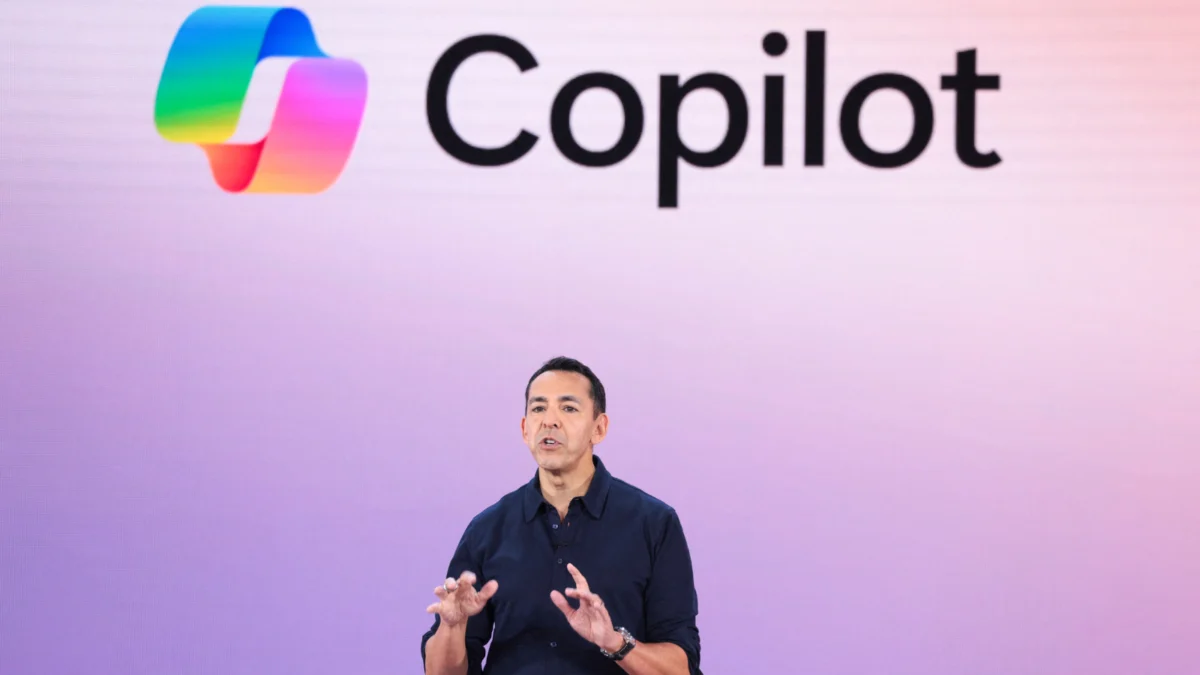
The landscape of big tech is undergoing a profound generational turnover, and Microsoft—a titan of the industry—is currently at the center of this transformation. Yusuf Mehdi, the company’s chief consumer marketing officer and a veteran of 35 years, has announced his intention to depart the firm in June 2027. His exit is not merely a personal milestone; it serves as a symbolic bookmark for the end of an era that saw Microsoft evolve from a desktop-centric software developer into a global cloud and artificial intelligence powerhouse.
Mehdi, who has been a steady hand through decades of technological disruption, confirmed his departure via a reflective LinkedIn post. "After 35 extraordinary years at Microsoft, I’ve decided the time is right to begin planning for my next adventure," he wrote. As he prepares to step down, the tech world is left to consider the legacy of a man who helped shape the digital lives of billions, and the uncertain path forward for a company currently grappling with the growing pains of its aggressive AI pivot.
The End of a 35-Year Tenure: A Career Defined by Tech Revolutions
Yusuf Mehdi’s career at Microsoft is a mirror of the modern tech age. Joining the company in January 1992, Mehdi entered a nascent Microsoft at a time when Windows was still a fledgling graphical interface for MS-DOS. He rose through the ranks during the most explosive growth period in the company’s history.
His fingerprints are on some of the most critical products in consumer technology. In 1995, he led the launch of Internet Explorer 1.0, steering the product to become the dominant browser of the early web era. Later, he took the helm during the introduction of the Xbox One console, cementing Microsoft’s status in the gaming industry. By 2015, his mandate expanded to oversee the global marketing efforts for the entire Windows family—a massive portfolio encompassing software, applications, gaming, and hardware devices.
Most recently, Mehdi served as the public face and architect behind the rollout of Copilot, Microsoft’s flagship AI assistant. His departure represents the loss of a foundational institutional memory, occurring at a time when Microsoft is attempting to shed its "corporate bulk" to regain the agility of a startup.
Chronology of a Leadership Exodus
Mehdi’s exit is far from an isolated incident. He is part of a wave of "éminences grises"—long-tenured senior leaders—who have been exiting the Microsoft campus in rapid succession. This exodus suggests a deliberate, perhaps necessary, clearing of the old guard as the company aligns itself with a new, AI-first strategic reality.
- 2023: Long-time CMO Chris Capossela departed after a 32-year run, leaving behind a legacy of navigating tech upheaval.
- 2024: Jeff Bogdan, the director of Windows learning and development and a 33-year veteran, concluded his tenure.
- March 2026: Microsoft announced that Rajesh Jha, the 35-year veteran who ran the Experience + Devices group, would retire later that year.
- May 2026: Julia Liuson, head of the Developer division and a 34-year veteran, confirmed her retirement for June 2026.
- June 2027: Yusuf Mehdi will officially conclude his 35-year tenure.
This trend of voluntary departures and retirement programs—including the company’s first-ever voluntary buyout plan offered in April to senior leaders and long-tenured staff—highlights a significant shift in corporate culture. CEO Satya Nadella has been vocal about the need to shed the company’s weight. Speaking on the MD Meets podcast, Nadella candidly admitted that Microsoft’s massive size is a "massive disadvantage" in the current competitive climate, citing the need to emulate the nimble playbooks of Silicon Valley startups.
The AI Paradox: Ambition vs. Adoption
The central narrative of Mehdi’s final years was the aggressive integration of Artificial Intelligence. While the company views AI as a shift as significant as the advent of the internet, the execution has been met with mixed results from consumers and the market.
The "Bloatware" Backlash
The integration of Copilot and AI-driven features into Windows 11 has been a polarizing move. While Microsoft views these features as essential, a significant segment of the user base has labeled them "bloatware." This friction highlights a fundamental marketing challenge: how to push an AI-first agenda without alienating users who rely on Windows for stability and performance.
Data-Driven Reality Check
The numbers tell a challenging story for Microsoft’s consumer AI strategy. Despite having a base of 450 million Microsoft 365 subscribers, current data suggests that fewer than 4.5% of those users are willing to pay for the Copilot add-on. Furthermore, the generative AI chatbot market is currently dominated by OpenAI’s ChatGPT, which commands a 60.6% market share, according to FirstPageSage. Microsoft’s Copilot trails significantly, holding only 12.5% of the market.
These figures underscore why the transition from the old guard to new, perhaps more aggressive or focused leadership, is viewed as critical. The "AI-as-a-utility" model has not yet achieved the universal adoption that characterized the early Windows or Internet Explorer eras.
Institutional Implications: The Post-Nadella-Shift Strategy
The departure of figures like Mehdi and Jha marks the final transition of Microsoft from the era of "Windows and Office" to the era of "Cloud and AI." In October of last year, the structural changes became more apparent when Judson Althoff, the chief commercial officer, took on the CEO reins for specific business segments. This allowed Satya Nadella to narrow his focus exclusively to the company’s AI infrastructure and strategic partnerships.
The recent dissolution of the exclusive partnership between Microsoft and OpenAI also signals a shift in strategy. By freeing OpenAI to partner with competing cloud services, Microsoft is acknowledging that it can no longer rely on singular, locked-in relationships to maintain dominance. It must compete on the merits of its Azure infrastructure and its proprietary AI stack.
A Future in Flux
As Microsoft enters the latter half of the 2020s, it faces a defining question: Can a 51-year-old corporate giant successfully reinvent itself before the "massive disadvantage" of its own size slows it down?
The departure of Yusuf Mehdi creates a leadership vacuum in the consumer marketing space. While a successor has yet to be named, the appointment will be scrutinized for signals of the company’s future direction. Will Microsoft double down on the aggressive integration of AI into its hardware and software, or will it pivot to a more user-centric, less intrusive approach to appease a consumer base that has increasingly pushed back against its recent updates?
Mehdi’s own reflection on his career provides a hint at the scale of what is occurring. "I’ve had the privilege of being a part of some of the most consequential shifts in technology," he noted, "from the rise of Windows and the early Internet, to search, gaming, devices, and now one of the most profound platform transitions yet: AI."
Whether his departure signals a retreat or simply the final passing of the baton to a new generation of engineers and marketers remains to be seen. What is clear, however, is that Microsoft is no longer the company it was in 1992, nor even the company it was in 2020. It is a firm in the midst of a radical metamorphosis, stripping away its historical identity in the hopes that it can survive the most disruptive wave of technology it has ever faced.
For the employees who remain and the leaders who will step into these newly vacant roles, the mandate is clear: they must justify the massive investments in AI to a skeptical public, repair the relationship with a frustrated user base, and prove that a half-century-old company can still define the next chapter of the digital age. As Mehdi moves on to his "next adventure," he leaves behind a legacy that is as complex as the technology he spent his life building—a testament to the enduring power of the company he helped shape, and the daunting challenges that lie ahead for those who inherit it.











No comments yet. Be the first to join the conversation!