Rifan Muazin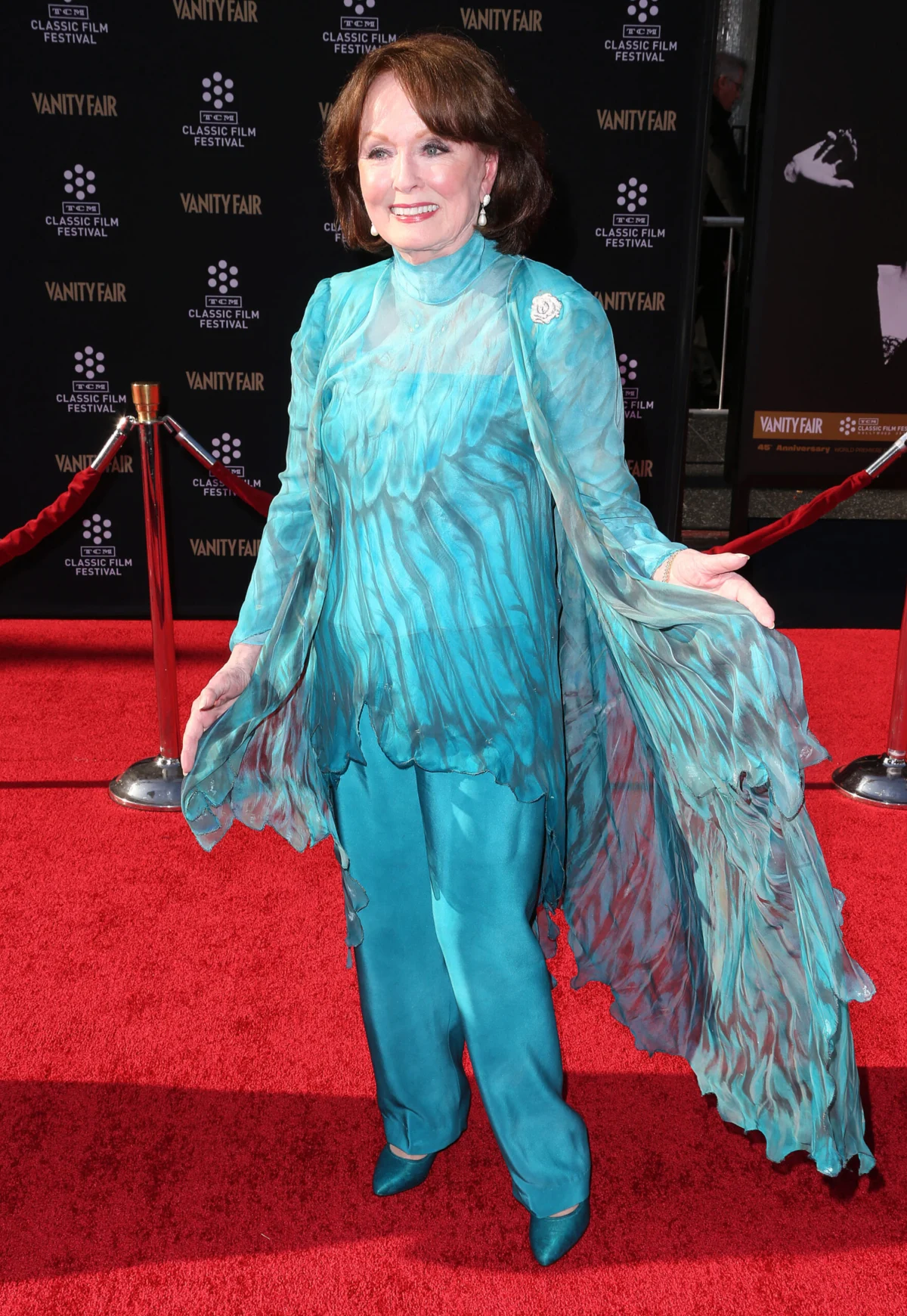
Ann Blyth, a luminous fixture of Hollywood’s Golden Age whose career spanned the transition from the glitz of the studio musical to the grit of film noir, passed away on Wednesday at the age of 98. Her death was confirmed by KABC’s George Pennachio, marking the end of a storied life that saw the actress evolve from a promising teenage soprano into one of cinema’s most chillingly effective villains and versatile leading ladies.
Though she left an indelible mark on the screen through a vast array of genres—from operettas and melodramas to hard-boiled prison dramas—Blyth remains best known for her Academy Award-nominated performance as Veda Pierce, the manipulative, status-obsessed daughter of Joan Crawford’s title character in the 1945 noir masterpiece Mildred Pierce.
A Life of Resilience and Performance
Born Ann Marie Blyth in Mount Kisco, New York, the actress’s early life was marked by the upheaval of her parents’ divorce and a subsequent move to New York City with her mother and sister. Her path toward stardom began not in front of a camera, but on the stage and in the opera house. A student of the San Carlo Opera Company, Blyth possessed a classically trained voice that would define her early career.
Her Broadway debut came in the 1941–42 production of Lillian Hellman’s Watch on the Rhine. It was during a tour of the production in Los Angeles that she caught the eye of studio scouts, leading to a screen test at Universal Pictures. Her arrival in Hollywood coincided with the tail end of the "B" musical era, and she quickly secured roles in films such as Chip Off the Block (1944), The Merry Monahans (1944), and Babes on Swing Street (1944).
However, Blyth’s trajectory was nearly derailed by tragedy in 1945. While vacationing from the set of Danger Signal, she suffered a severe sledding accident that resulted in a broken back. For eighteen months, she endured a painful period of convalescence while confined to a back brace and, at times, a wheelchair. Despite these physical hardships, her professional spirit remained unbroken; Universal famously utilized her in the critically acclaimed prison drama Brute Force (1947), starring Burt Lancaster, even while she was still navigating her recovery in a wheelchair.
Chronology of a Versatile Career
Following her breakout performance in Mildred Pierce, which earned her a nomination for Best Supporting Actress, Blyth’s career trajectory shifted toward more complex, dramatic territory.
- The Post-War Rise (1945–1950): After her recovery, Universal afforded her a starring role in Swell Guy (1946) and cast her alongside Mickey Rooney in the noir Killer McCoy (1947). She tackled the challenging role of a younger Regina Hubbard in the 1948 film Another Part of the Forest, a prequel to Lillian Hellman’s The Little Foxes, proving her ability to inhabit roles famously associated with icons like Bette Davis.
- The Universal and MGM Years (1950–1957): Her versatility was on full display in the early 1950s. She starred in the adoption drama Our Very Own (1950), the mystery Thunder on the Hill (1951), and the lavish biopic The Great Caruso (1951), where she played the wife of Mario Lanza’s titular character. In 1952, she starred opposite Gregory Peck in the adventure The World in His Arms, marking her final collaboration with Universal. She later transitioned to MGM, where she starred in a series of operettas, including Kismet.
- The Twilight of the Studio Era: By the mid-1950s, the decline of the grand studio musical forced many stars to pivot. Blyth chose to go out on a high note, delivering a haunting performance as the tragic, alcoholic torch singer in 1957’s The Helen Morgan Story. Although her singing voice was famously dubbed for the film, her acting performance was lauded for its emotional depth and gravity.
The ‘Mildred Pierce’ Legacy: A Complex Dynamic
Central to any retrospective of Blyth’s career is the legendary tension—both on and off-screen—of Mildred Pierce. Based on the novel by James M. Cain, the film depicts a mother’s desperate attempts to satisfy her daughter’s insatiable hunger for social mobility.
In later years, during an interstitial recording for Turner Classic Movies, Blyth addressed the rumors regarding her relationship with Joan Crawford. Contrary to the industry whispers of animosity, Blyth maintained that the two shared a professional and respectful rapport. She famously recalled that the film’s most pivotal, violent scene—where Veda slaps her mother—was a source of significant anxiety for her, as she found it difficult to strike a legend like Crawford.
The film, which saw Crawford win the Academy Award for Best Actress, stands as a pillar of American noir. Its enduring impact was underscored in 2011, when Todd Haynes directed an HBO miniseries adaptation starring Kate Winslet, with Evan Rachel Wood stepping into the formidable shoes of Veda.
Later Years and Television Transition
Following her semi-retirement from film in 1957, Blyth shifted her focus toward her family life and the world of musical theater. A devout Catholic, she found fulfillment in stage productions of The Sound of Music, The King and I, Carnival, South Pacific, and Show Boat.
Her transition to television was seamless. Throughout the 1950s and 60s, she made appearances in prestigious anthology series such as Lux Video Theatre, The DuPont Show With June Allyson, and The Dick Powell Theatre. She became a recurring guest on the hit Western Wagon Train and delivered a memorable performance in the 1964 Twilight Zone episode "Queen of the Nile." She continued to work sporadically, appearing in Quincy, M.E. before making her final screen appearance in a 1985 episode of Murder, She Wrote.
Personal Life and Official Responses
Ann Blyth’s personal life was characterized by a stability rarely found in the turbulence of mid-century Hollywood. She married Dr. James McNulty in 1953, a union that lasted until his death in 2007. Together, they raised five children. Her legacy continues through her 10 grandchildren and five great-grandchildren.
Industry tributes have poured in following the news of her passing. Historians and film preservationists have hailed her as one of the last true links to the studio system, noting that while she was often cast as the "dark beauty," her range extended far beyond the tropes of the era. She was remembered by peers not merely as a star, but as a consummate professional who handled the transition from the height of the studio system to the domesticity of post-Hollywood life with grace and humility.
Implications for Film History
The passing of Ann Blyth serves as a poignant reminder of the ephemeral nature of the Hollywood "Golden Age." As one of the few remaining actors who worked under the rigid, contract-based studio system of the 1940s, her death marks the conclusion of a significant chapter in cinematic history.
Her filmography remains a critical resource for scholars studying the evolution of the female archetype in American film. From the spoiled ingénue to the tortured lead, Blyth’s work provides a template for the dramatic shifts in American culture between the end of World War II and the rise of the television age. By maintaining a balance between her public persona and her private devotion to her family, Blyth offered a model for longevity in an industry notoriously unkind to its stars. As audiences continue to rediscover the noir classics and technicolor musicals of the past, Ann Blyth’s contributions will undoubtedly remain a focal point for those seeking to understand the craft of acting at its most disciplined and enduring level.


 Suro Senen
 Nana
Nana