Arm has officially unveiled its next-generation platform for the data center, the Neoverse Compute Subsystem (CSS) N4. Built on TSMC’s cutting-edge N3P manufacturing process, the N4 platform represents a massive leap in architectural density and efficiency, aiming to provide cloud service providers (CSPs) with the building blocks necessary to dominate the increasingly competitive landscape of artificial intelligence and high-performance computing (HPC).
As the industry shifts away from monolithic, one-size-fits-all processors toward highly specialized, workload-optimized silicon, Arm’s "CSS" strategy—a semi-custom program that allows partners to license pre-validated IP and configure core counts, cache hierarchies, and connectivity—has become the gold standard for companies like Google, Microsoft, and Nvidia. With the arrival of the N4, Arm is not merely releasing a new core; it is providing a modular foundation for the next decade of cloud infrastructure.
Main Facts: The Anatomy of the Neoverse CSS N4
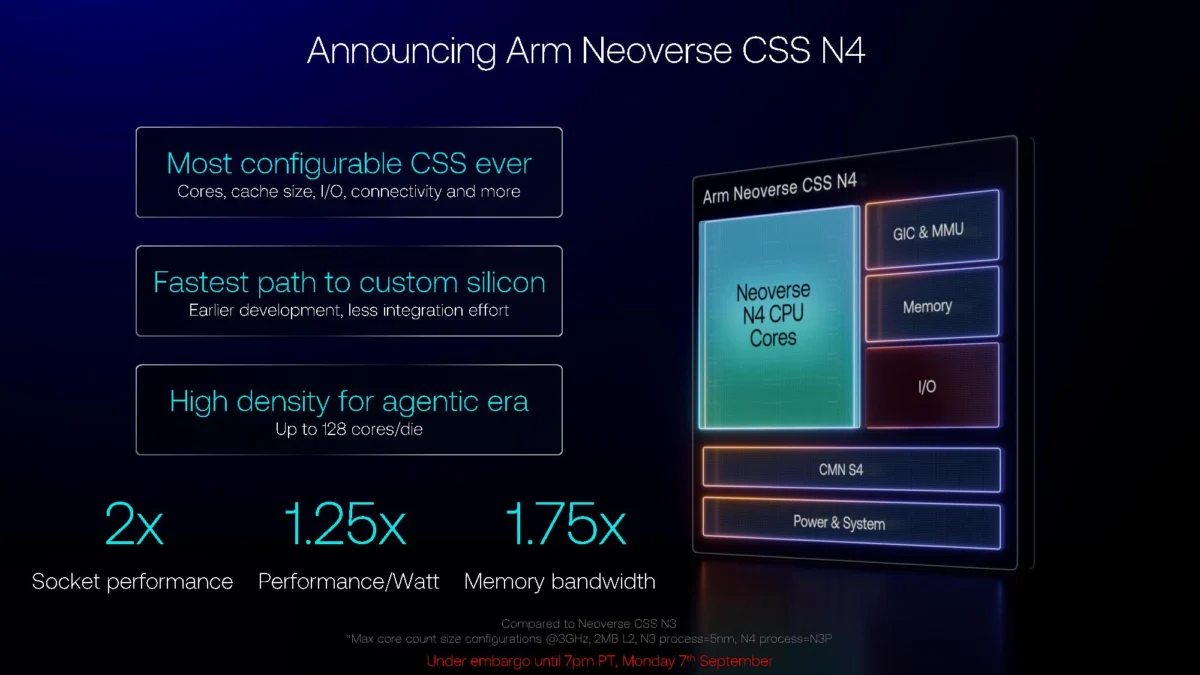
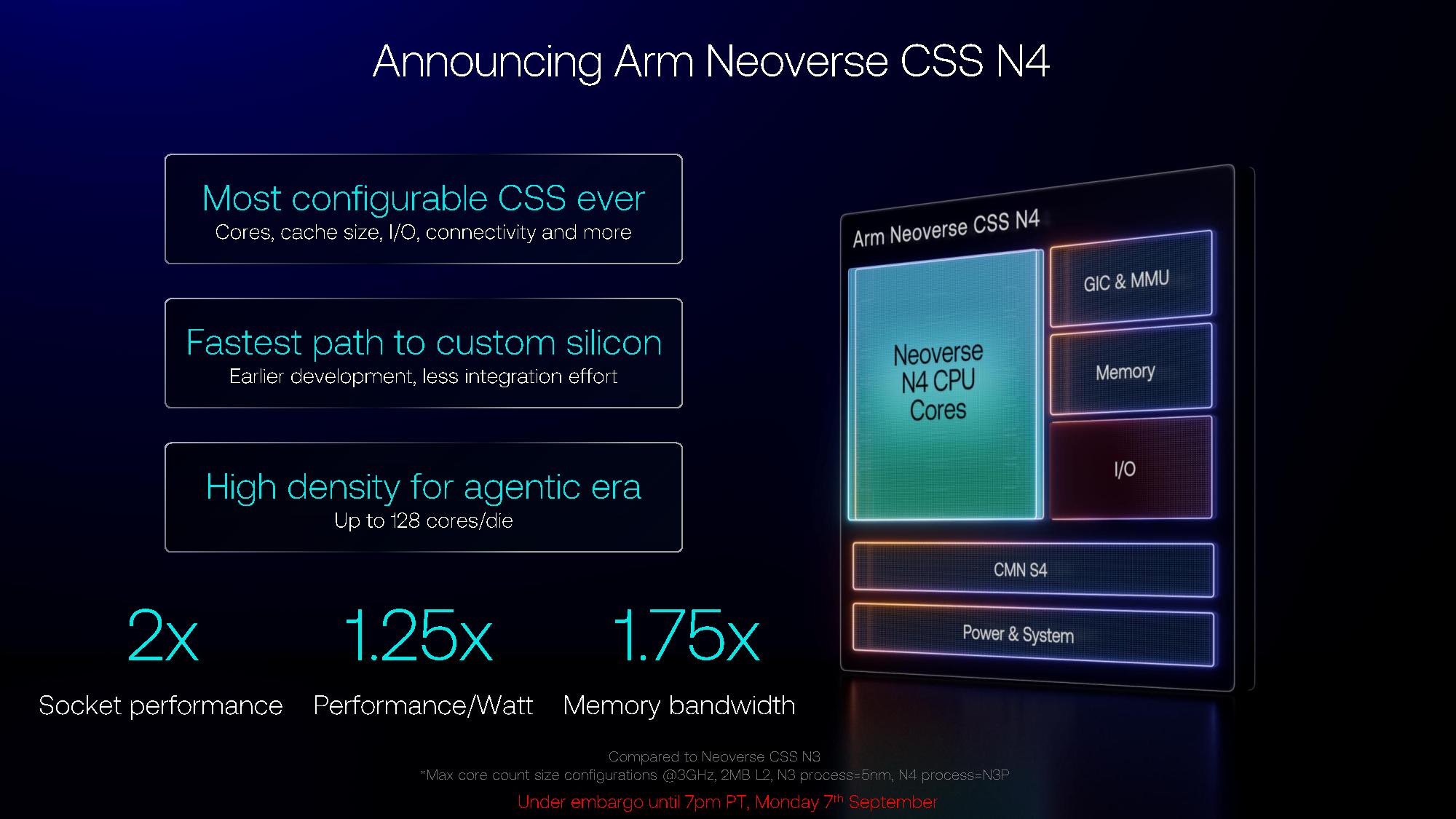
The Neoverse CSS N4 platform is designed to provide massive scalability for cloud-native workloads. At its heart, the platform supports between eight and 128 Neoverse N4 cores, which Arm states can reach frequencies of up to 3.8 GHz. While Arm has not provided a granular breakdown of clock speeds across all configurations, the architecture is designed to scale gracefully from efficient, lower-core-count accelerators to massive 128-core behemoths.
The technical specifications are a significant step up from the previous generation N2 platform:
- Process Node: Manufactured on TSMC’s advanced N3P process.
- Core Count: Scalable from 8 to 128 cores per die.
- Cache Architecture: Up to 256 MB of L3 cache per die, with each core featuring 2 MB of dedicated L2 cache and 64 KB of L1 instruction and data cache each.
- Connectivity: Support for 128 lanes of PCIe 7.0/6.0 and CXL 4.0, providing massive throughput for memory and peripheral expansion.
- Memory Support: Compatibility with both high-speed DDR5 and LPDDR6 memory standards.
Beyond the individual die, the N4 platform supports multi-chiplet and multi-socket designs, utilizing Universal Chiplet Interconnect Express (UCIe) to enable seamless communication between dies. This modularity allows partners to create massive, distributed computing fabrics that far exceed the 128-core limit of a single die.
A Chronological Evolution: From N1 to N4
To understand the significance of the Neoverse CSS N4, one must look at the rapid evolution of Arm’s server-grade silicon.
The Early Days (Neoverse N1): Arm’s initial foray into the data center focused on establishing its credibility as an alternative to x86. The N1, deployed in specialized accelerators like the Intel IPU Adapter E2100, proved that Arm-based architectures could handle the specialized tasks of cloud networking and offloading.
The Rise of Custom Silicon (Neoverse N2 and V-Series): The N2 platform refined this vision, finding a home in high-efficiency cloud instances, such as Microsoft’s Azure Cobalt 100. Simultaneously, Arm introduced the V-series (V2/V3), which prioritized raw performance over pure efficiency. This branch enabled AWS to build its highly successful Graviton series and gave Google the foundation for its Axion processors.
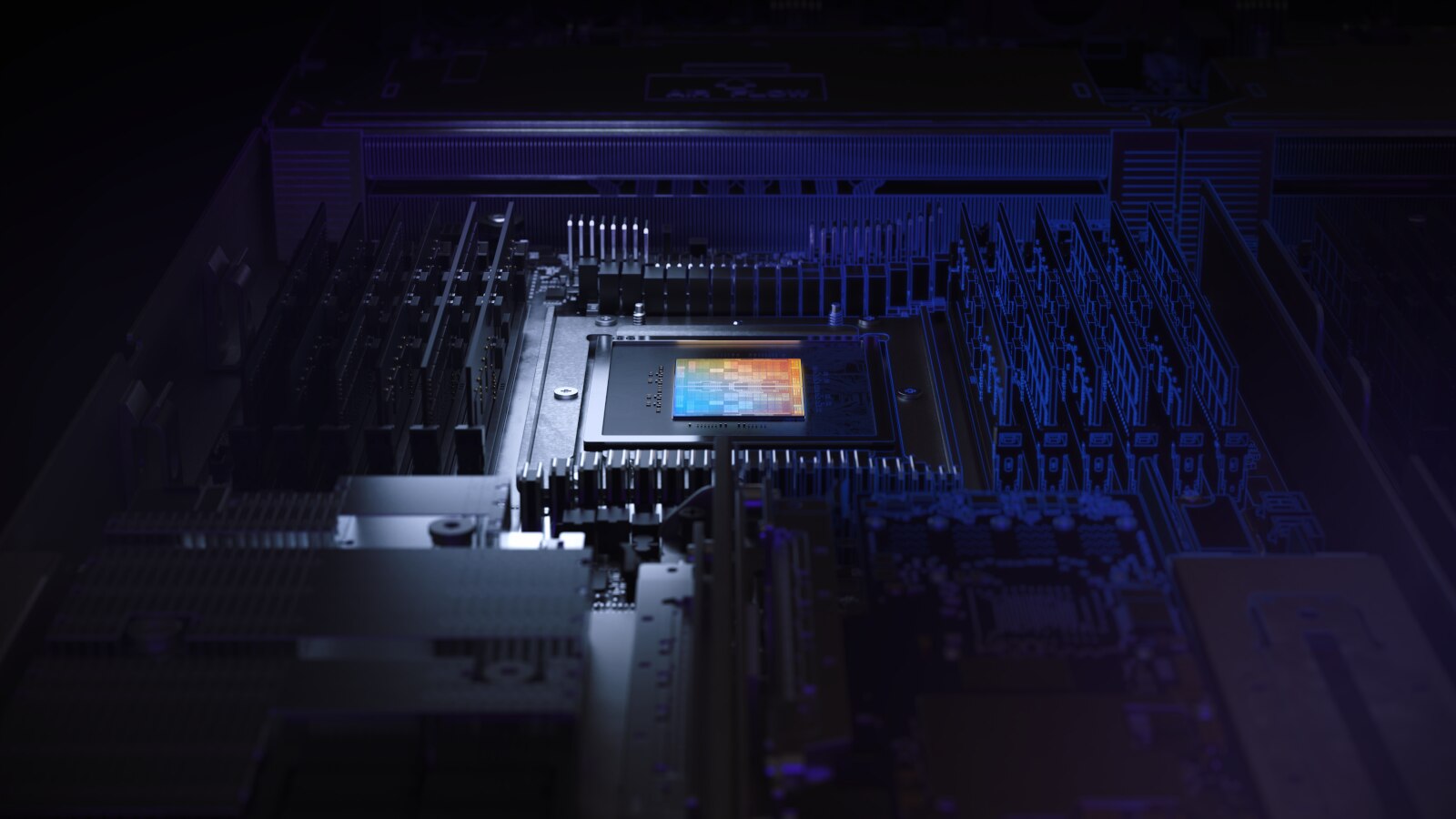
The Current Milestone (Neoverse N4): The announcement of the N4 (codenamed "Dionysus") signals a pivot toward massive-scale efficiency. With the N4, Arm is doubling down on the CSS model, providing a "pre-baked" design that slashes time-to-market for silicon designers, allowing them to focus on unique value-adds like custom memory controllers or AI-specific accelerators.
Supporting Data: Performance Gains
Arm claims the Neoverse CSS N4 delivers a staggering performance uplift compared to the N3. According to internal metrics, the N4 provides:
- 2x the socket performance compared to the Neoverse N3.
- 1.25x the performance-per-watt, a critical metric for hyperscalers managing massive, power-constrained data centers.
- 1.75x the memory bandwidth, facilitated by the platform’s support for next-generation memory standards and enhanced CXL interconnects.
These gains are largely attributed to the shift to the N3P process and an optimized cache hierarchy. By increasing the L2 cache to 2 MB per core and streamlining the L3 structure, Arm has effectively reduced data movement bottlenecks, a common pain point in modern AI training and inference workloads.
Official Responses and Strategic Positioning
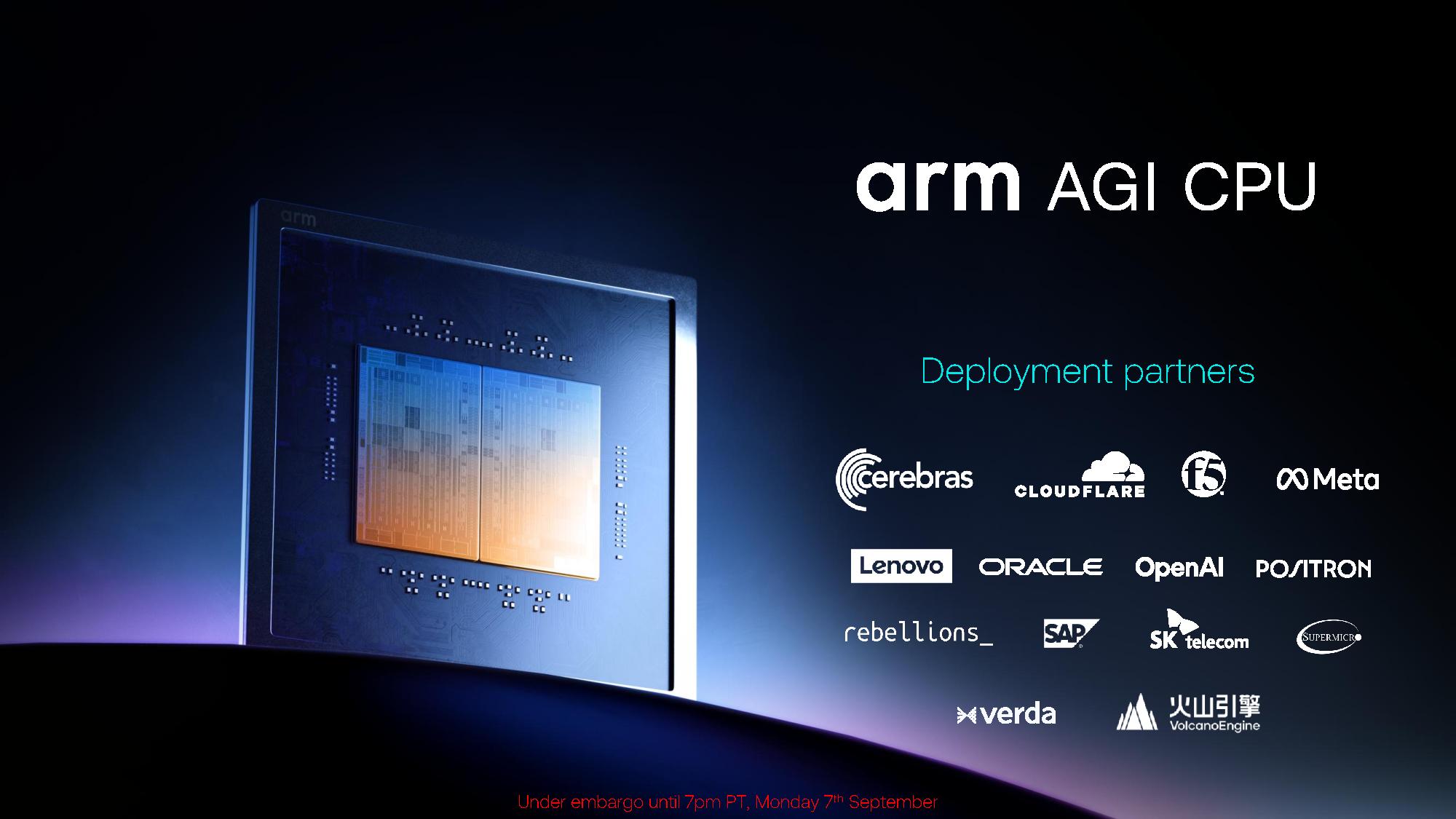
While Arm has not yet publicly named the partners slated to adopt the CSS N4, the industry trajectory is clear. The company’s "AGI" chip (a custom-designed CPU featuring V3 cores) has already garnered support from heavyweights such as Oracle, ByteDance, Meta, Lenovo, SAP, and OpenAI.
Arm’s leadership has emphasized that while the company is now dipping its toes into production silicon with the AGI CPU, the primary focus remains the ecosystem. By acting as the "architect of the data center," Arm is enabling a diverse range of companies to design their own proprietary chips that are still fully compatible with the broader software ecosystem.
"The goal," as one industry analyst put it, "is to make the design of a data center-grade chip as accessible as building a Lego set." By providing the validated building blocks of the N4, Arm lowers the barrier to entry, forcing traditional giants like Intel and AMD to compete not just on hardware performance, but on the flexibility and customization capabilities of their platforms.
Implications: The Death of the Monolith
The implications of the Neoverse CSS N4 are profound for both the cloud industry and the broader semiconductor landscape:
1. Workload Specialization: As AI models grow in size and complexity, generic CPUs are becoming increasingly inefficient. The N4’s modular architecture allows cloud providers to tailor their chips to specific tasks—whether that’s high-throughput database processing, AI inference, or low-latency networking.
2. The Rise of the "Cloud Native" Chip: With the N4, we are seeing the end of the "one CPU for everything" era. Hyperscalers are now vertically integrating their hardware, aligning their chips with their internal software stacks. This leads to better power management, lower latency, and ultimately, lower costs for the end-user.
3. Challenging the x86 Hegemony: For decades, the data center was a two-horse race between Intel and AMD. Arm’s steady march toward performance parity, combined with the extreme power efficiency of its designs, has created a formidable third pillar. The N4 platform makes it easier than ever for companies to jump ship from x86, as they can now design custom Arm chips that meet their specific density and throughput requirements without needing to reinvent the wheel.
4. The Future of AGI: With the continued deployment of Arm-based chips at companies like ByteDance and Oracle, we are seeing a shift in how AGI is being built. Instead of relying purely on GPUs for processing, the industry is increasingly using high-performance Arm CPUs to handle the orchestration and pre-processing tasks, creating a heterogeneous computing environment that is faster and more efficient than traditional setups.
Conclusion
The Neoverse CSS N4 is more than just an iteration in Arm’s product line; it is a declaration of intent. By combining 128-core scalability, advanced interconnects like UCIe, and the efficiency of the N3P process, Arm is effectively handing the keys to the kingdom to cloud providers. While we wait for the first commercial deployments to hit the market and provide real-world benchmark data, the trajectory is unmistakable. The future of the data center is custom, it is modular, and it is increasingly powered by Arm. As hyperscalers continue to innovate, the N4 will likely serve as the bedrock upon which the next generation of cloud services is built.