
 Evan Lee Salim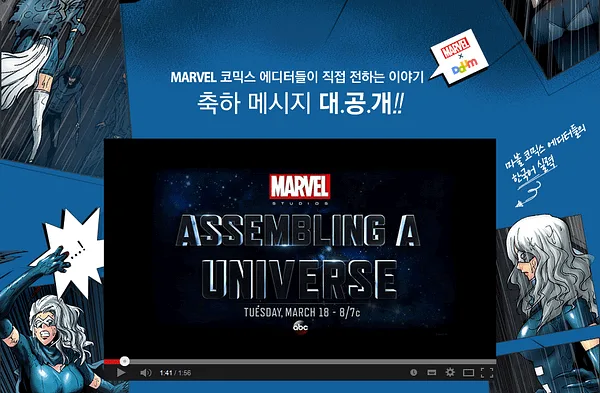
Introduction: The Convergence of East and West
In the ever-evolving landscape of global comic book publishing, the collaboration between Marvel Entertainment and the Korean digital platform Daum represents a watershed moment. This partnership birthed Avengers: Electric Rain, a unique manhwa-style webcomic that not only brings Earth’s Mightiest Heroes to the streets of Seoul but also introduces an entirely new character to the Marvel mythos. Created by the acclaimed Korean artist Younghoon Ko, the series stands as a testament to the cultural fluidity of modern digital storytelling, bridging the gap between American superhero traditions and the highly successful Korean webtoon industry.
Main Facts: A New Front for the Avengers
Avengers: Electric Rain is not merely a translation of existing American source material; it is an original, localized expansion of the Marvel Universe. Set firmly within the vibrant, neon-drenched urban environment of South Korea, the narrative centers on the Avengers responding to threats that hit closer to home for the East Asian market.

The most significant aspect of this project is the introduction of a brand-new character, specifically designed to resonate with the Korean audience while maintaining the high-stakes, action-oriented pedigree of Marvel Comics. By leveraging the "manhwa" format—a vertical-scrolling, high-color digital comic style—Marvel has effectively optimized its intellectual property for a generation of readers who consume their entertainment primarily via mobile devices. The collaboration between Marvel, Disney Korea, and Daum was meticulously orchestrated to ensure that while the tone remains unmistakably "Marvel," the aesthetic and narrative pacing align with the sophisticated expectations of the Korean webtoon readership.
Chronology: The Development of a Digital Marvel
The genesis of Electric Rain began with a strategic move by Marvel to penetrate the burgeoning South Korean digital market. Understanding that the webtoon model was vastly different from the traditional American monthly pamphlet style, Marvel executives sought local expertise.

- Phase One: Strategic Partnership: Marvel Entertainment and Disney Korea entered negotiations with Daum, one of South Korea’s leading web portals, to create a localized Marvel experience.
- Phase Two: Creative Recruitment: The search for an artist who could marry the kinetic energy of Marvel action with the sleek, polished look of modern manhwa led to the selection of Younghoon Ko.
- Phase Three: Conceptualization: Working under the editorial guidance of Marvel’s New York team, Ko developed the visual language for the series. This included designing the new, original character and reimagining iconic Avengers in a Seoul setting.
- Phase Four: Launch and Reception: Upon release, the series saw immediate traction, utilizing the scroll-down reading format that allows for seamless, cinematic transitions between panels—a hallmark of the webtoon medium.
- Phase Five: Global Awareness: The project gained international attention, leading to press junkets and behind-the-scenes features that showcased Marvel editors discussing the challenges of cross-cultural adaptation.
Supporting Data: The Webtoon Phenomenon
To understand why this collaboration was so significant, one must look at the data surrounding webtoons in Korea. Unlike the declining print sales of Western comics, the Korean webtoon market experienced exponential growth during the early 2010s. Platforms like Daum and Naver transformed the medium into a cornerstone of Korean pop culture, with millions of daily active users.
- Format Advantages: The vertical scroll format is specifically designed for smartphone screens, eliminating the need for constant "pinch-to-zoom" movements.
- Accessibility: By serializing the series on Daum, Marvel tapped into a massive, built-in audience that was already accustomed to daily or weekly updates.
- Visual Fidelity: The digital-first nature of the series allows for vibrant, high-definition coloring that often surpasses the traditional four-color process used in physical printing, which proved essential for capturing the "Electric" aesthetic of the title.
Official Responses and Cross-Cultural Communication
The promotional campaign for Electric Rain featured a series of videos involving Marvel’s top editorial brass, including C.B. Cebulski, Axel Alonso, Tom Brevoort, Ellie Pye, Jordan White, and Nick Lowe. These clips served a dual purpose: they provided fans with insight into the creative process while highlighting the inherent difficulties of language and cultural translation.

While the attempts by these editors to speak Korean were met with mixed reactions—ranging from amusement to gentle criticism for "mutilating" the language—the underlying message was one of genuine respect. These figures acknowledged that creating a Marvel story for Korea required humility and a willingness to relinquish total control to local creators like Younghoon Ko.
In contrast, the promotional material featuring Ko himself demonstrated the artistic mastery behind the project. Ko’s work displays a profound understanding of perspective and kinetic energy, often utilizing the "infinite canvas" of the webtoon format to create sweeping action sequences that feel significantly more fluid than traditional comic book layouts.

Implications: The Future of Globalized IP
The success of Avengers: Electric Rain has far-reaching implications for the future of comic book publishing. It sets a precedent for how major Western publishers can export their intellectual property by allowing local creators to adapt them to local tastes.
1. Cultural Localization vs. Translation
The industry has learned that simple translation is often insufficient. Electric Rain proves that "localization"—which includes changing the setting, the context, and even the artistic style—leads to higher engagement. This project has become a case study for companies like Disney looking to integrate their brands into international markets.

2. The Shift to Mobile-First Storytelling
As the world moves further toward mobile consumption, the traditional comic format faces an identity crisis. The success of this Marvel-Daum partnership provides a roadmap for publishers to modernize their output. By adopting the scrollable, vertical format, legacy companies can reach younger demographics who find the traditional "page-turner" format outdated.
3. Expansion of the Marvel Multiverse
By introducing a new Avenger within this specific storyline, Marvel has effectively created a "branch" of their multiverse that is uniquely tied to Korean geography and culture. This creates a feedback loop: fans of the webtoon are more likely to watch the Marvel Cinematic Universe (MCU) films, and fans of the films are introduced to a new, diverse way of consuming the source material.

Conclusion: A Blueprint for Success
Avengers: Electric Rain is more than just a digital comic; it is a bridge between two distinct creative worlds. Through the vision of Younghoon Ko and the collaborative efforts of Marvel and Daum, the project successfully navigated the treacherous waters of international brand integration. It remains a benchmark for how the comic book industry can evolve in the digital age, proving that when world-class IP meets local artistic innovation, the results are nothing short of electric. As digital platforms continue to dominate the media landscape, the lessons learned from this Korean experiment will undoubtedly inform the next generation of global superhero storytelling.


 Pevita Pearce
 Neng Nana





