Dwi Wanna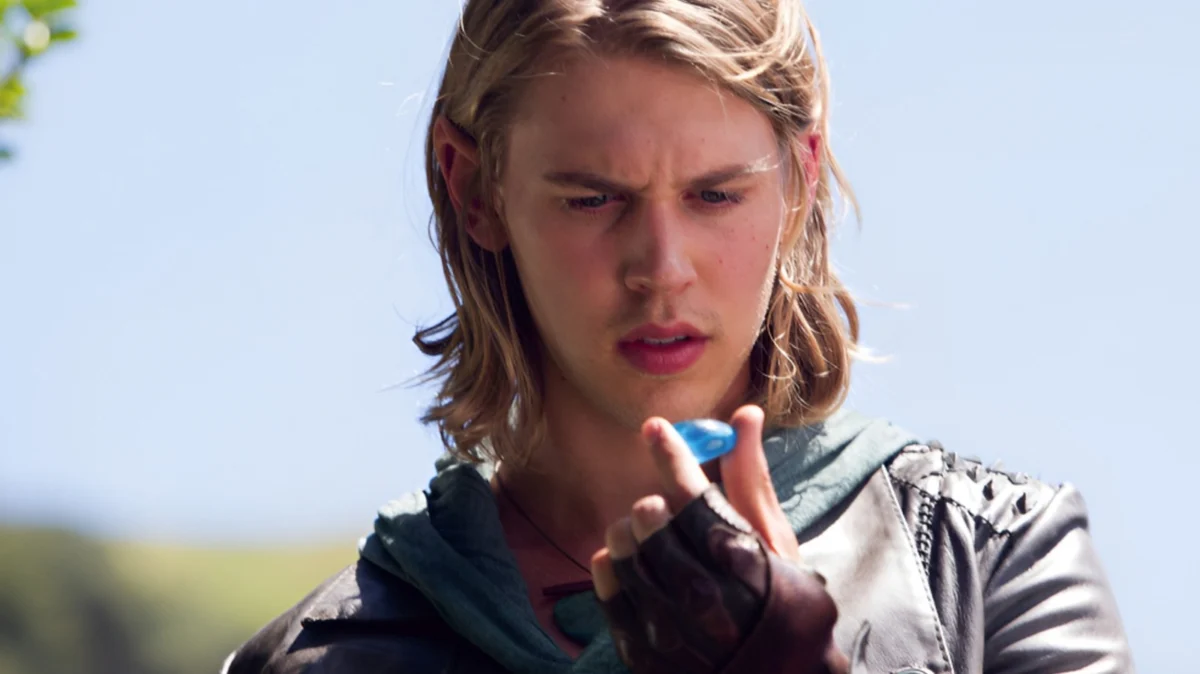
Long before he was chilling audiences as the sociopathic Feyd-Rautha Harkonnen in Denis Villeneuve’s Dune: Part Two, or embodying the King of Rock and Roll in Baz Luhrmann’s Elvis, Austin Butler was a working actor navigating the landscape of teen television. While his trajectory to superstardom feels meteoric, his resume is paved with the familiar stepping stones of the Nickelodeon and Disney eras. Yet, nestled between his guest stints on Hannah Montana and his recurring roles in teen soaps, lies a curious entry in his filmography: the MTV-turned-Spike high fantasy series, The Shannara Chronicles.
Adapted from Terry Brooks’ best-selling literary saga, The Shannara Chronicles stands as a fascinating case study in mid-2010s young adult (YA) television. It captured a moment when networks were desperate to replicate the success of The Lord of the Rings and Game of Thrones on a cable budget, providing a platform for rising stars like Butler to cut their teeth on genre storytelling.
The Evolution of a Leading Man: From Sitcoms to Sci-Fi
Austin Butler’s career path is a masterclass in professional patience. To the modern audience, he is the embodiment of method-acting intensity. However, his roots are firmly planted in the lighthearted, brightly lit sets of the mid-2000s. After making his mark as a recognizable face in youth-oriented programming—including appearances on Zoey 101, iCarly, and Switched at Birth—Butler transitioned into more mature, character-driven narratives.
The Shannara Chronicles arrived in 2016, a pivotal point in his transition from "teen actor" to "leading man." Cast as Wil Ohmsford, a half-human, half-elf hybrid struggling with his destiny, Butler was tasked with carrying the weight of a franchise that leaned heavily on the tropes of high fantasy. It was an ambitious swing for the network, marking one of MTV’s most expensive attempts at scripted drama to date.
Chronology of a Fantasy Ambition
The journey of The Shannara Chronicles is one of high expectations and shifting network landscapes.
- 2015: Development of the series is announced, helmed by Alfred Gough and Miles Millar, the creative duo behind the massive hit Smallville and, later, Netflix’s Wednesday. Their pedigree suggested a polished, accessible approach to the fantasy genre.
- January 2016: The series premieres on MTV to a mix of visual praise and narrative skepticism. It draws in a respectable audience base, particularly among the core YA demographic, but struggles to find a footing with critics who compared its world-building unfavorably to more established fantasy IP.
- 2017: As viewership numbers on MTV begin to plateau, the series undergoes a significant shift. It is moved to Spike TV (which would later rebrand as the Paramount Network) for its second season.
- 2018: Following the conclusion of the second season, the series is officially canceled. Despite a devoted fan base and an uptick in critical reception during its sophomore year, the cost of production—relative to the shrinking linear ratings—led to its quiet retirement.
Narrative Overview: The Four Lands
Based loosely on The Elfstones of Shannara, the second book in Brooks’ series, the show introduces viewers to the "Four Lands," a post-apocalyptic version of Earth where magic has returned and humanity has been reshaped into diverse fantasy races.
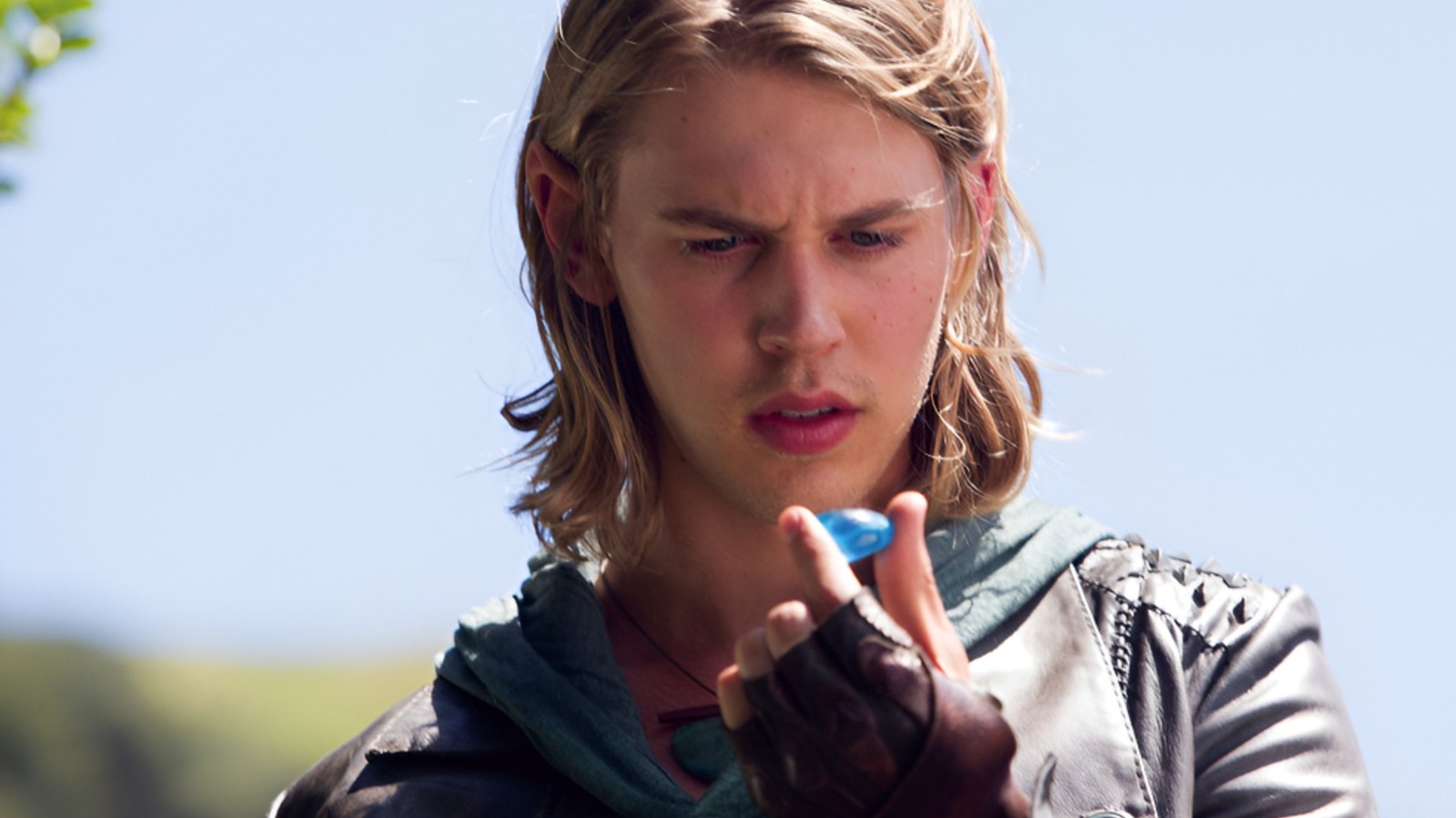
The plot centers on the Ellcrys, an ancient, sacred tree that acts as a barrier against a demonic realm known as the Forbidding. When the tree begins to die, dropping its leaves to signify the return of dark forces, an unlikely trio is formed. Wil Ohmsford (Butler), an aspiring Healer, is joined by Amberle (Poppy Drayton), an elven princess, and Eretria (Ivana Baquero), a skilled scavenger. Guided by the last Druid, Allanon (Manu Bennett), the group embarks on a quest to save the world.
For viewers accustomed to the gritty, cynical tone of modern fantasy like House of the Dragon, The Shannara Chronicles can feel like a throwback to a simpler era of television. It embraces the "Chosen One" trope with sincere, if occasionally campy, earnestness.
Supporting Data: The High Fantasy Dilemma
The series faced a unique set of challenges that defined its legacy.
The Aesthetic of the "Safe" Fantasy
The show’s visual identity was arguably its strongest asset. Filmed in New Zealand, it utilized the same lush, sweeping vistas that defined the Lord of the Rings films. However, the storytelling often struggled to move beyond the comfort zone of standard genre fare. Data-driven analysis of the show’s reception reveals a clear divide: viewers appreciated the high production values and the chemistry of the cast, but critics consistently pointed to a lack of narrative originality.
The "CW-ification" of Genre
While it began on MTV, the show’s DNA was undeniably that of a CW-style drama. It prioritized romantic subplots and interpersonal tension alongside its quest narrative. While this allowed Austin Butler to showcase his range as a romantic lead and an action hero, it often relegated the deeper, post-apocalyptic lore of Terry Brooks’ world to the background.
The Second Season Pivot
Interestingly, the show’s cancellation remains a point of contention for its cult following. Many reviewers noted that the second season, produced under the Spike TV banner, was a marked improvement. By stripping away some of the more superficial YA romance and focusing on tighter world-building and character arcs, the show began to find its voice just as the network lost interest in continuing the investment.
Official Responses and Creative Vision
Alfred Gough and Miles Millar spoke often during the show’s promotion about the difficulty of adapting a series as sprawling as Shannara. In various interviews, they emphasized that the goal was to provide a "gateway" into fantasy for a younger generation. They viewed the show not as a direct, page-by-page adaptation, but as a reimagining that respected the spirit of the books while catering to a modern, fast-paced television audience.
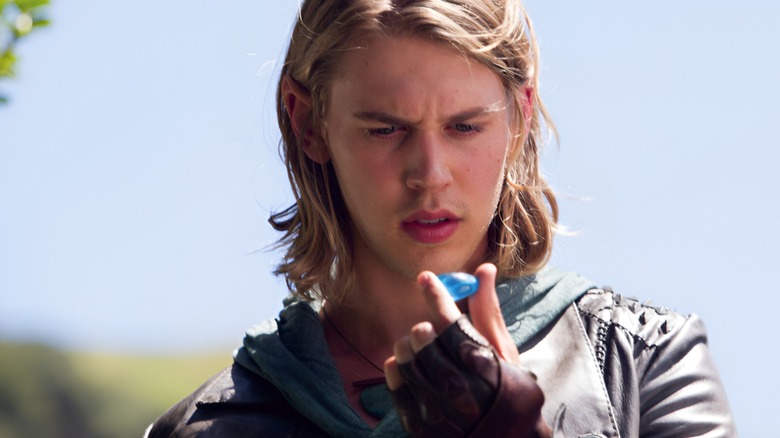
Austin Butler, in retrospective interviews, has spoken fondly of the experience. The physical demands of the role—which required significant stunt work and long days in prosthetics—provided him with a foundation for the physical transformation he would later undertake for roles like Elvis Presley and Feyd-Rautha. It was here, in the mud and magic of the Four Lands, that he learned how to anchor a blockbuster performance in the midst of high-concept spectacle.
Implications for the Fantasy Landscape
The Shannara Chronicles serves as a bridge between the "pre-Peak TV" era of fantasy and the current streaming golden age. It proved that there was a massive, untapped appetite for high-fantasy adaptations, but it also demonstrated the risks of "playing it safe."
For Austin Butler, the series was a necessary exercise in versatility. It forced him to balance the inherent absurdity of magical quests with a grounded, human performance. Today, that skill set is evident in his ability to play characters who are larger than life without ever losing their emotional core.
While The Shannara Chronicles may not be remembered as a landmark of television history, it occupies a significant space in the development of modern fantasy. It was a show that walked so that the massive-budget streaming epics of today could run. For fans of Austin Butler, it remains a "must-watch" to see the evolution of an actor who would eventually become one of the most sought-after talents in Hollywood. Whether viewed as a guilty pleasure or a nostalgic look at the mid-2010s, the series stands as a testament to the fact that every great actor starts their journey somewhere—even if that "somewhere" involves protecting a dying tree from demonic forces in a post-apocalyptic fantasy land.

 Neng Nana
 Jia Lissa