Ali Ikhwan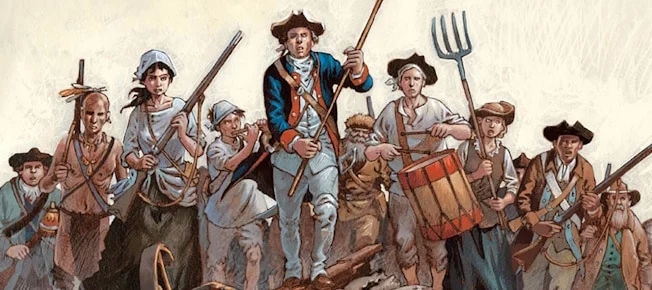
In a bold fusion of historical scholarship and graphic storytelling, Oni Press and Magnetic Press have officially announced a forthcoming Kickstarter campaign for Liberty. This ambitious graphic novel serves as a narrative bridge between the high-stakes world of 18th-century statecraft and the modern medium of sequential art. Written by Jordan Mechner—the visionary architect behind the Prince of Persia franchise—and brought to life by the illustrative mastery of Étienne Le Roux and Loïc Chevallier, Liberty promises to illuminate a forgotten corner of the American Revolutionary War: the clandestine logistical war that arguably saved the Continental Army from total collapse.
The Genesis of an Epic: The Core Narrative
At its heart, Liberty is a dramatization of the shadow war fought not on the battlefields of Long Island, but in the ornate salons of Paris and the hushed chambers of European bureaucracy. The plot centers on an unlikely alliance between two historical figures: Silas Deane, a Connecticut merchant turned diplomat, and Pierre-Augustin Caron de Beaumarchais, a man better known to history as the playwright behind The Barber of Seville and The Marriage of Figaro.
While the American narrative often focuses on the heroism of George Washington or the intellectual rigor of Thomas Jefferson, Liberty pivots toward the logistical backbone of the rebellion. As 1776 dawned, the American cause appeared dire. The Continental Army, severely undersupplied and outgunned by the professional British military, faced an existential threat in New York. The story tracks the perilous mission to procure, transport, and smuggle vital armaments across the Atlantic under the noses of British naval intelligence. It is a tale of espionage, high-stakes diplomacy, and the precarious intersection of theater and war.
A Chronology of Conflict: Setting the Stage for ‘Liberty’
To understand the gravity of the events depicted in the graphic novel, one must look at the historical timeline that necessitated such drastic measures:
- Early 1776: The Continental Congress realizes that without European gunpowder and artillery, the American Revolution will be crushed by the British war machine within months.
- May 1776: Silas Deane is dispatched to France on a secret mission to secure covert aid.
- The Summer of 1776: Beaumarchais, having gained the ear of the French court, begins the complex task of creating a shell company, Rodrigue Hortalez et Cie, to funnel supplies to the colonies while maintaining France’s official stance of neutrality.
- Late 1776–1777: The logistical pipeline begins to flow. These secret shipments provide the rebels with the necessary materiel to hold out long enough to secure the decisive victory at Saratoga, which ultimately brought France into the war as a formal ally.
Mechner’s script emphasizes that this was not merely a military operation, but a feat of performance art. Beaumarchais, a master of deception and intrigue, utilized his status as a playwright to navigate the treacherous political waters of the French monarchy, turning his life into the ultimate stage production to save a fledgling democracy.
The Creative Force: A Convergence of Mediums
Jordan Mechner’s transition from the pioneer of cinematic platforming in games like Prince of Persia, Karateka, and The Last Express to the realm of historical graphic novels has been one of the most compelling career evolutions in modern media. His recent work, including the celebrated modernization of Monte Cristo and the 2023 Chateau de Cheverny prize-winning memoir Replay, demonstrates a profound command of pacing and visual storytelling.
In Liberty, Mechner is joined by the artistic duo Étienne Le Roux and Loïc Chevallier. Known for their intricate line work and ability to capture the atmospheric density of historical settings, the duo brings a level of period-accurate detail that elevates the narrative. Their aesthetic, characterized by a mix of classical composition and modern, expressive character design, provides a perfect visual counterpart to the layered intrigue of Mechner’s script. The collaboration aims to recreate the opulent, dangerous world of 18th-century Europe, ensuring that the reader is as immersed in the velvet-draped palaces of Versailles as they are in the frigid, desperate reality of a soldier’s camp.
The Collector’s Edition: Commemorating 250 Years
The Kickstarter campaign for Liberty is not merely an exercise in crowdfunding; it is a curated publishing event. Recognizing the gravity of the upcoming 250th anniversary of the American Revolution, Magnetic Press is offering a "Limited Collectors 250th Anniversary Edition."
This high-end offering is designed for bibliophiles and history enthusiasts alike. It features:
- A Foil-Stamped Slipcase: Adorned with iconography representing the synthesis of the Fleur-de-Lis and the spirit of Liberty.
- Premium Physicality: Foil-gilded pages and an elegant ribbon bookmark to reflect the prestige of the subject matter.
- Signed Provenance: Each copy includes a bookplate signed and numbered by Jordan Mechner, turning each volume into a unique piece of historical memorabilia.
The Strategic Implications: Why ‘Liberty’ Matters
The decision to bring this story to the public via Kickstarter reflects a growing trend in the publishing industry: the desire to bypass traditional gatekeepers to reach a dedicated, niche audience that values high-quality, long-form graphic literature.
Historical Literacy in Graphic Media
Graphic novels have increasingly become a primary vehicle for historical education. By humanizing the figures behind the logistics of the American Revolution, Liberty challenges the "great man" theory of history, suggesting instead that the fate of nations often rests in the hands of merchants, playwrights, and smugglers. The implication is clear: the American Revolution was as much a triumph of supply chain management and international intrigue as it was a conflict of ideology.
The Role of Intellectual Property
Jordan Mechner’s involvement signals the continued maturation of the video game industry’s creative class. As game designers move into literature and film, the "ludo-narrative" skills honed in digital spaces—where the user experience is paramount—are being translated into panel-by-panel storytelling. Mechner’s experience in crafting The Last Express, a game renowned for its historical accuracy and complex, branching narratives, provides a clear blueprint for the narrative density found in Liberty.
Official Perspectives and Looking Ahead
While specific interview quotes regarding the creative process remain under embargo, the consensus among industry observers is that Liberty represents a significant departure from typical historical fiction. The research backing the graphic novel is reportedly extensive, drawing on primary source archives to ensure that the clandestine relationship between Deane and Beaumarchais is portrayed with historical fidelity.
"This is a story about the intersection of art and revolution," a representative for the project noted. "It explores the idea that to save a country, one must be willing to live a lie."
As the Kickstarter campaign approaches, the project serves as a reminder of the power of independent publishing. By allowing readers to fund the creation of a deluxe, high-fidelity book, the team behind Liberty is fostering a community of supporters who are invested not just in a product, but in the preservation of a complex, nuanced chapter of history.
For those interested in the project, the campaign represents a rare opportunity to secure a collector’s item that bridges the gap between the revolutionary era and contemporary artistic excellence. The launch of the Kickstarter is expected to be a major event in the independent comic sector, setting a high bar for historical storytelling in the coming year. As we approach the quarter-millennium mark of the United States’ founding, Liberty stands as a poignant, visual reminder that the fight for independence was won as much by the ink of a playwright’s pen as by the steel of a soldier’s musket.

 Sagoh
Sagoh
 Ammar Sabilarrohman