

In an era where "smart" home security often necessitates surrendering privacy to cloud-based conglomerates, a growing movement of self-hosting enthusiasts is reclaiming control. By leveraging open-source tools like Frigate and Home Assistant, users can create surveillance ecosystems that are not only more private but increasingly intelligent.
My journey into local surveillance began with a simple premise: I wanted a robust Network Video Recorder (NVR) that didn’t rely on subscription-based cloud storage or proprietary ecosystems. However, I soon discovered that while traditional motion detection is functional, it is often "barebones." Receiving a notification that an "object" was detected is one thing; understanding the context of that event is another. To bridge this gap, I integrated local Large Language Models (LLMs) into my security pipeline. The result is a system that doesn’t just record video—it understands it.
The Foundation: Building a Privacy-First Surveillance Stack
The primary motivation for shifting away from commercial cloud platforms is the inherent risk of data exposure. When you allow a third-party platform to manage footage of your home, you are trusting them with intimate visual data. My solution, built on the Frigate NVR, provides a lightweight, FOSS (Free and Open Source Software) alternative.
Frigate and Home Assistant Integration
The backbone of my setup is Frigate, which stands out for its native support for AI accelerators, allowing for efficient object detection without the need for high-end dedicated servers. To manage the automation layer, I utilize Home Assistant (HASS), the gold standard for smart home orchestration.
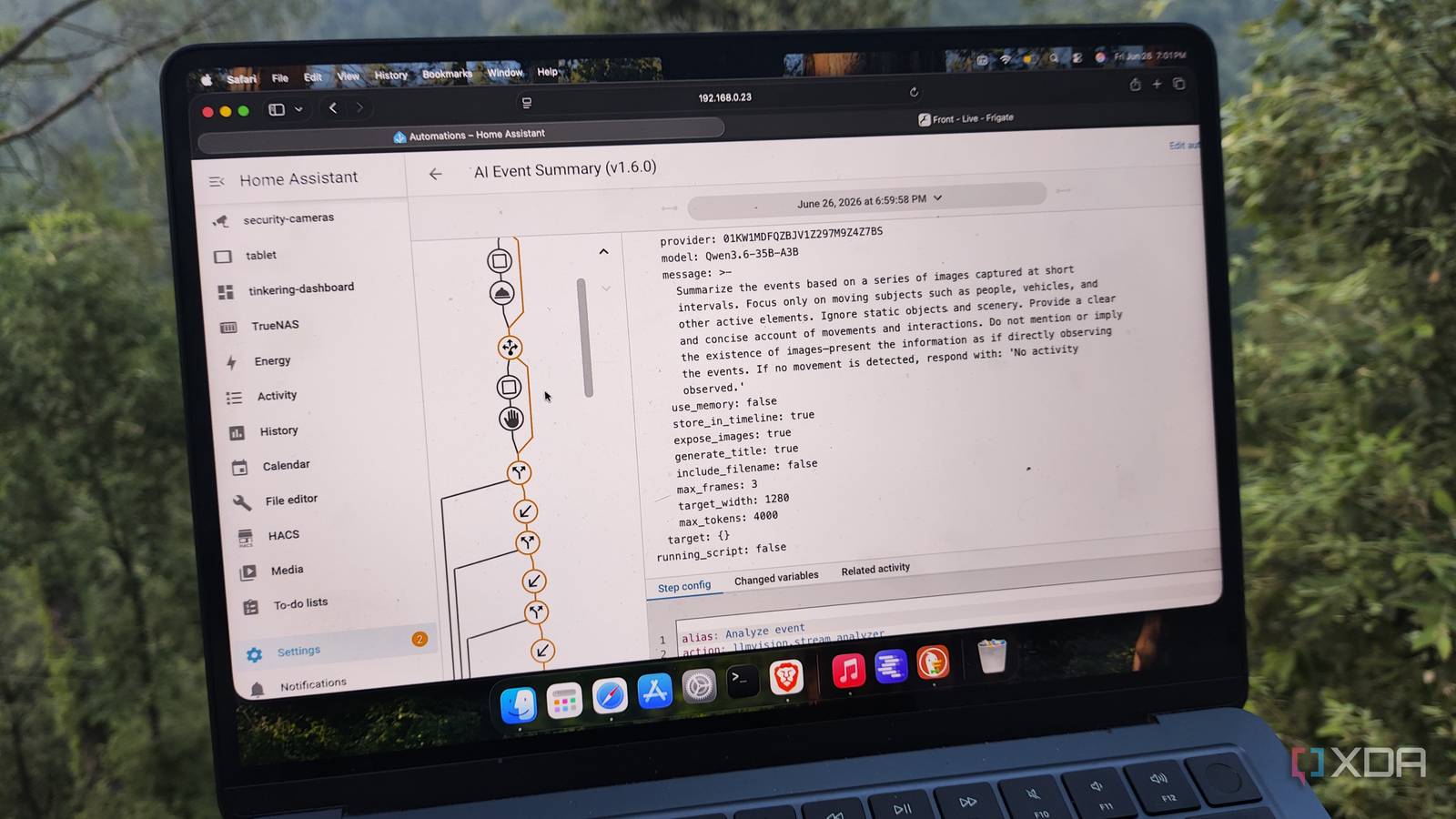
The integration process was remarkably straightforward. Using the Home Assistant Community Store (HACS), I installed the Frigate integration. By pointing it to the local IP address of my Frigate server (typically on port 5000), the system immediately recognized my camera streams and object detection zones. While the integration initially populated my dashboard with unnecessary zone-based sensors, cleaning up the interface allowed me to create a focused, high-performance security dashboard that consolidates RTSP feeds and mobile-device cameras into a single, cohesive view.
Integrating Intelligence: The Rise of LLM Vision
While Frigate excels at identifying a "person" or a "vehicle," it lacks the semantic understanding of a modern LLM. For instance, knowing a person is at the door is useful, but knowing that the person is a delivery driver leaving a package is significantly more actionable.

Deploying Llama-Server
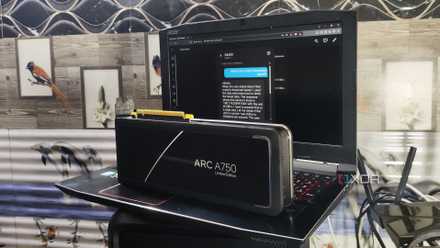
To achieve this, I turned to local inference. I chose to deploy a Qwen3.6-35B-A3B model—a powerful model utilizing a Mixture-of-Experts (MoE) architecture. This allows me to run high-parameter intelligence on my existing hardware (an NVIDIA RTX 3080 Ti) without encountering the slow token generation rates that often plague smaller or unoptimized setups.
The key to unlocking vision capabilities was the LLM Vision integration in Home Assistant. By configuring this to communicate with my local llama-server instance, I enabled the system to analyze static images and video clips.
Overcoming the "Vision Gap"
During the implementation, I encountered a significant technical hurdle: the model was failing to perform visual tasks despite functioning as a conversational agent. Upon investigation, I realized that while I had the base model files, I had neglected to point the llama-server to the mmproj (Multimodal Projector) file. This file is the "eyes" of the model, enabling it to bridge the gap between text-based reasoning and visual perception. Once I relaunched the server with the --mmproj flag, the system was able to parse image data provided by my security cameras. The turnaround time—under 90 seconds for a full analysis—is a testament to the efficiency of current local AI pipelines.
Chronology of an AI-Enhanced Security Event
To understand the practical application of this system, let us look at the lifecycle of a typical security notification:
- The Trigger: A motion event occurs in a defined zone on my porch. Frigate identifies a human object.
- The Capture: Frigate captures a high-resolution snapshot and a 10-second buffer of the event.
- The Analysis: Home Assistant sends the image and event metadata to the local
llama-serverrunning the Qwen model. - The Reasoning: The LLM evaluates the scene, identifying the person’s actions, clothing, and whether they are carrying an object.
- The Notification: A push notification is sent to my wall-mounted touchscreen, providing a natural language summary: "A person is at the front door; they appear to be a courier dropping off a package. No suspicious activity detected."
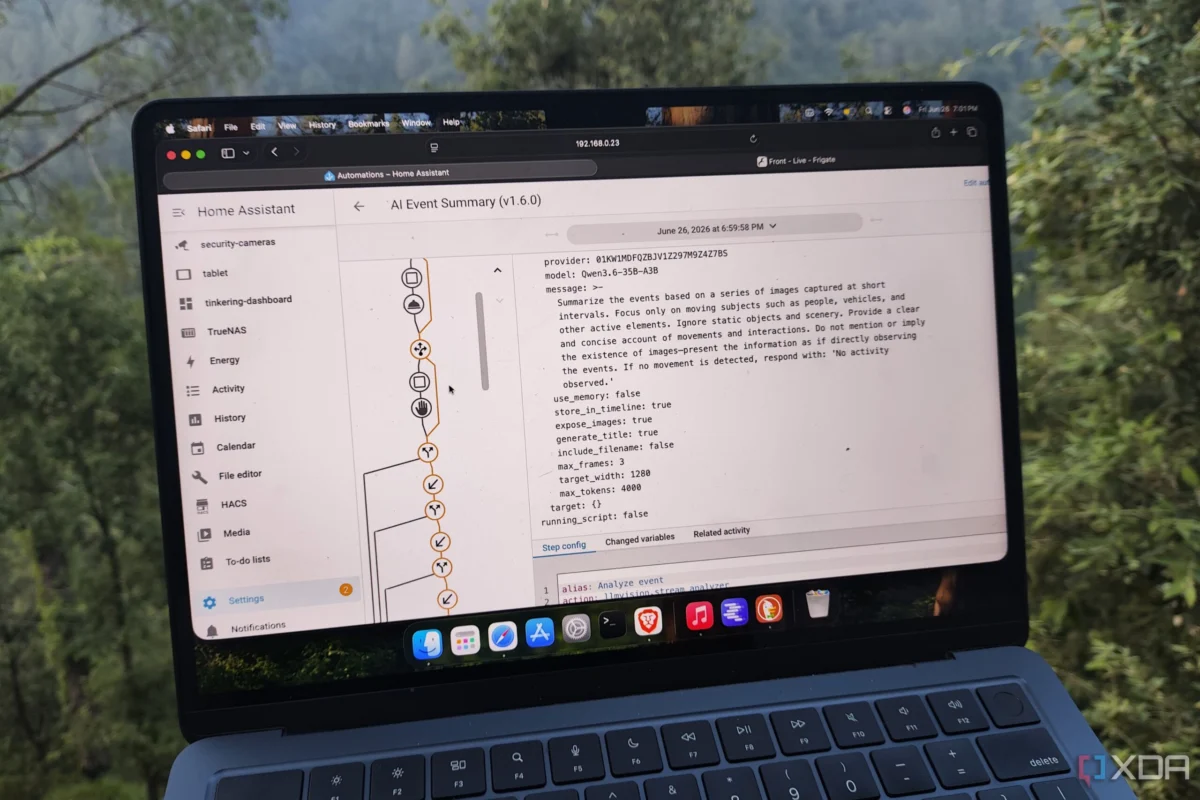
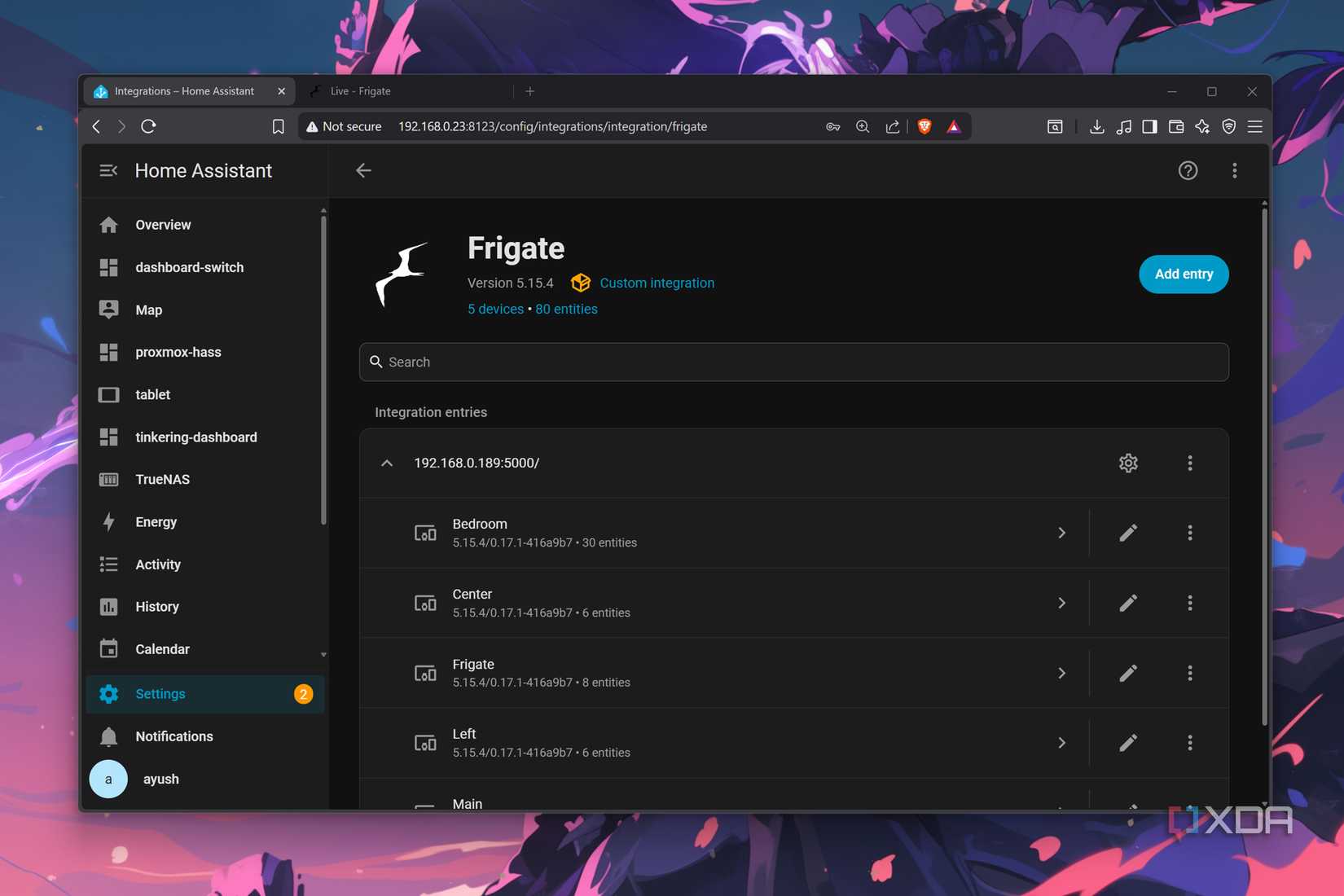
This workflow is managed by the AI Event Summary Blueprint, an incredibly efficient tool that automates the orchestration between the camera feed, the vision model, and the final notification output.
Supporting Data: Why Local Inference Matters
The shift toward local inference is supported by several critical factors in the current computing landscape:
- Latency: By keeping the inference on the local network, I eliminate the round-trip time associated with cloud APIs, ensuring faster notifications.
- Cost-Efficiency: Aside from the initial hardware investment, there are zero monthly fees. Proprietary systems often gate advanced AI features behind expensive subscriptions.
- Data Sovereignty: My footage never leaves my local network. This mitigates the risk of data leaks—a recurring problem for major cloud-based security camera providers who have faced scrutiny over unauthorized data access.
- Scalability: Because I use an MoE-based architecture, I can scale my intelligence by adding more local compute nodes without changing the underlying architecture of my home security.
Implications of Self-Hosted AI
The integration of LLMs into residential surveillance signals a broader shift in the "Smart Home" market. We are moving away from passive devices that merely report status toward agents that actively interpret the environment.
Privacy and Ethics
The most significant implication is the democratization of advanced privacy-preserving tech. When intelligence is local, the user is the sole owner of the data. However, this also shifts the responsibility of security maintenance to the user. A cloud-managed system updates itself; a self-hosted system requires the user to monitor logs, manage dependencies, and ensure that the hardware is sufficiently patched.
Troubleshooting as a Service
The use of LLMs extends beyond security. By using an MCP (Model Context Protocol) server, I have allowed my LLM to ingest Home Assistant logs. When a sensor fails or an automation behaves unexpectedly, the LLM can analyze the system state and suggest fixes. This transforms the home automation hub from a "set and forget" system into a living, learning entity that assists the homeowner in its own maintenance.
Official Perspectives and Industry Trends
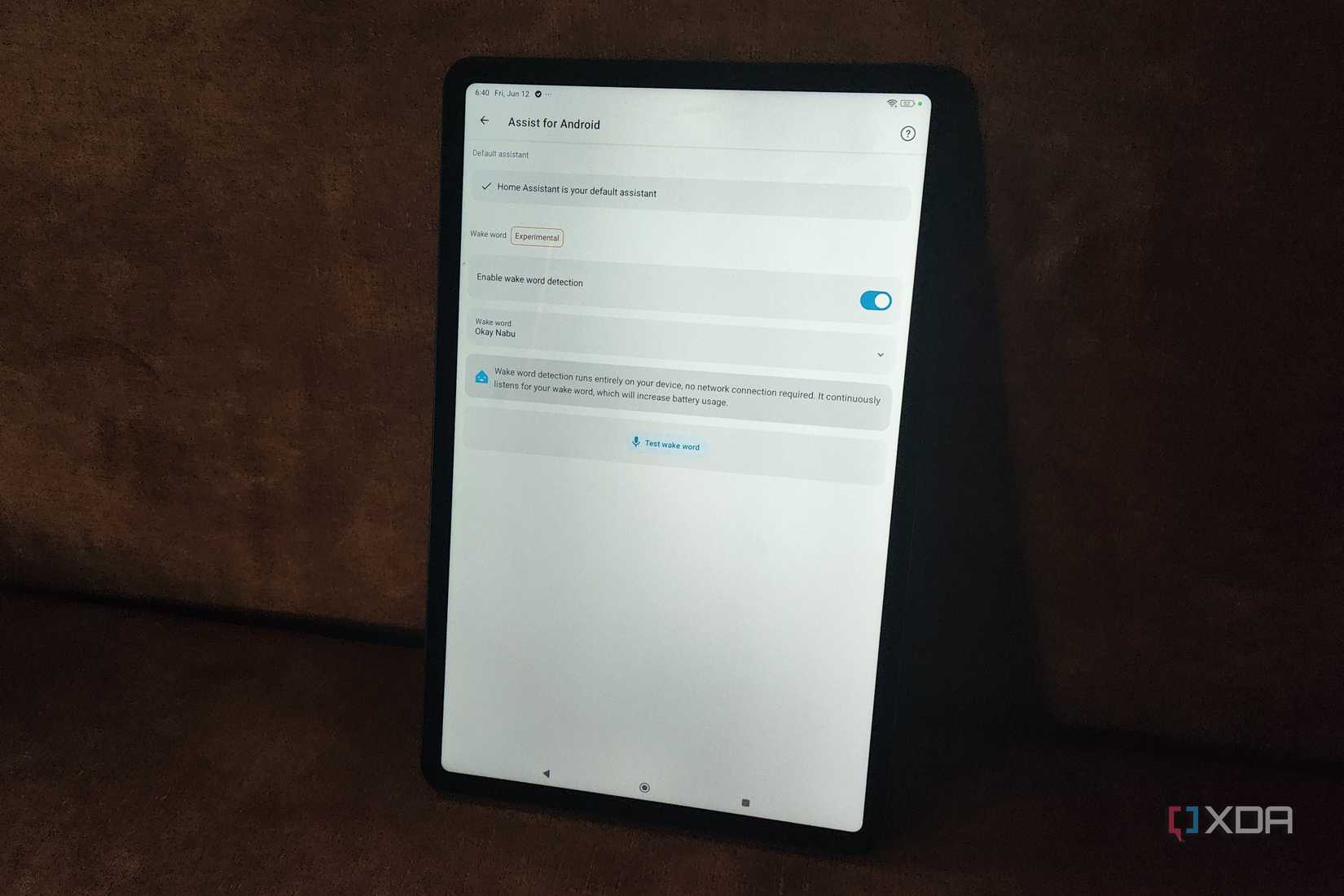
While the industry at large continues to push for cloud-connected "AI-powered" cameras, independent developers and organizations like the Home Assistant team are signaling that the future lies in local control. The recent updates to the Home Assistant Companion app, which include voice satellite functionality, confirm that the industry is responding to user demand for offline, low-latency, and private AI.
Experts in the FOSS community suggest that the primary barrier to entry remains the "technical debt" of setting up these systems. However, with the emergence of blueprints—like the AI Event Summary used in my setup—the complexity of these integrations is dropping rapidly. What was once the domain of expert sysadmins is becoming accessible to any enthusiast willing to dedicate a weekend to the process.
Conclusion: The Future of the Home
My transition to an LLM-powered, self-hosted security setup has fundamentally changed my relationship with my home technology. It is no longer just a collection of devices—it is an integrated, intelligent, and private ecosystem.
As hardware becomes more capable and models become more efficient, the line between professional-grade surveillance and consumer home security will continue to blur. For those willing to venture into the world of local inference, the benefits are clear: total control, complete privacy, and an intelligence layer that is tailored exactly to the nuances of your own home. Whether you are using a Raspberry Pi for basic automation or a dedicated server for heavy-duty LLM inference, the tools are now at your disposal to build a home that is truly as smart as it is secure.











