

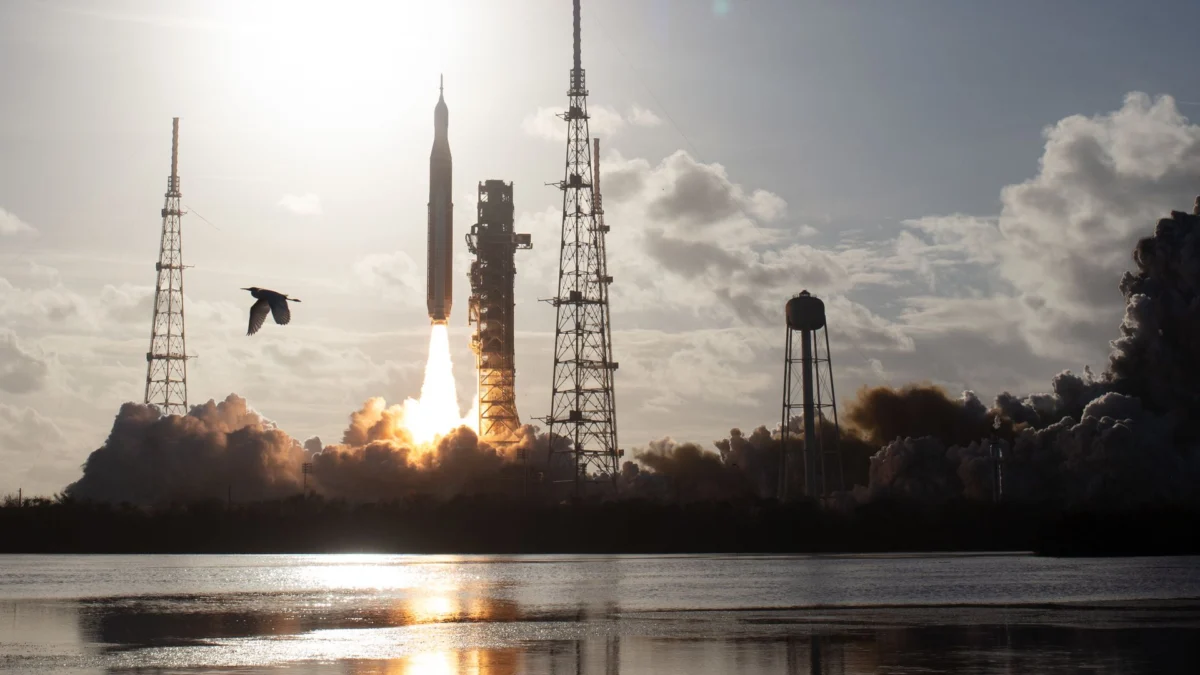
In the high-stakes arena of commercial space exploration, the primary constraint on launch frequency has long been the launch pad itself. Traditional rocket launches are violent, fiery affairs, subjecting ground infrastructure to extreme thermal stress and chemical degradation. Now, a Chinese aerospace startup, Z-Trak Space, is proposing a radical departure from the norm: a "cold launch" system that utilizes supercritical carbon dioxide—the very same gas used to carbonate soft drinks—to propel vehicles skyward. By rethinking the physics of the initial ascent, the company hopes to transform the economics of the burgeoning commercial space sector.
The Mechanics of the "Cold Launch"
At the heart of Z-Trak Space’s proposal is the utilization of supercritical carbon dioxide. A substance enters a supercritical state when it is subjected to temperature and pressure levels beyond its critical point, where the distinction between gas and liquid vanishes. In this state, the fluid possesses unique density and viscosity properties, making it an ideal, non-toxic medium for high-pressure kinetic energy storage.
Unlike traditional "hot launches," where chemical engines ignite while the rocket is still anchored to the launch pad, Z-Trak’s system uses the rapid expansion of supercritical CO2 to eject the vehicle. The rocket essentially "pops" off the pad, gaining significant altitude through kinetic thrust before the primary liquid-fuel engines are ignited in the thin air of the upper atmosphere.
By deferring combustion until the vehicle is safely removed from the launch infrastructure, the system eliminates the thermal shock that plagues conventional spaceports. In a standard launch, exhaust streams can reach temperatures exceeding 3,000°C. This extreme heat necessitates the construction of massive flame trenches, water-deluge suppression systems, and extensive, time-consuming maintenance routines to repair ablation damage on launch towers and platforms. Z-Trak’s approach removes the need for this expensive, complex support infrastructure entirely.
A Chronology of the Initiative
The emergence of this technology is the result of a strategic collaboration between Hunan-based Zhiyu Aerospace Technology and Chiyang Space Power Technology Company. The partnership, which solidified recently, marks a significant pivot in how Chinese private firms are approaching the "small-lift" launch vehicle market.
- Conceptualization (2023): Initial feasibility studies began exploring the thermodynamic properties of supercritical fluids as a propulsion alternative.
- Strategic Alliance (Early 2024): Zhiyu Aerospace and Chiyang Space Power formally joined forces, combining engineering expertise in propulsion and launch architecture.
- Public Unveiling (Mid-2024): Z-Trak Space, led by founder Zhang Zihan—an alumnus of Hong Kong Polytechnic University—introduced the concept to the broader aerospace industry.
- Current Development Phase: The team is currently refining the pressure-vessel technology required to hold and release the supercritical CO2 safely, with an eye toward small-scale prototype testing in the near future.
Supporting Data: The Case for Efficiency
The economic impetus behind this shift is clear. As China’s commercial space industry continues to scale, the bottleneck has shifted from "can we build the rocket?" to "how quickly can we turn the launch pad around?"
According to official reports, China’s commercial space sector conducted 50 orbital launches last year, accounting for more than half of the nation’s total space activity. However, the reliance on traditional launch pads acts as a hard ceiling on how quickly these firms can respond to market demands.
Comparative Infrastructure Metrics:
- Thermal Load: Traditional rockets subject pads to >3,000°C; cold launch systems maintain ambient temperatures during liftoff.
- Ablation Maintenance: Standard pads require weekly or monthly structural inspections and surface repairs; Z-Trak’s model suggests a potential reduction in infrastructure maintenance by up to 70%.
- Environmental Impact: Because the propellant is non-toxic and inert at the point of release, the "carbon footprint" of the launch site itself is significantly lower than that of systems relying on heavy-metal igniters or caustic cooling chemicals.
Zhang Zihan, the driving force behind Z-Trak, has been vocal about the systemic inefficiency of current practices. "In commercial space launch scenarios requiring high frequency and rapid response, [traditional launch methods] incur high time and financial costs, directly affecting launch pacing and response speed," Zhang stated during a press briefing. By decoupling the propulsion mechanism from the heat-heavy combustion phase, the company believes they can achieve a "factory-floor" pace for rocket launches, turning spaceports into something more akin to commercial airports.
Official Responses and Industry Outlook
The aerospace community has received the announcement with cautious optimism. While the physics of supercritical fluids is well-understood in the context of power generation and chemical processing, applying it to the massive scale of rocket propulsion is a significant engineering hurdle.
Industry analysts point out that while the concept is sound in theory, the energy density required to move a heavy-lift vehicle solely via CO2 expansion is immense. The current consensus is that the technology is likely best suited for small, agile launch vehicles—the "light-lift" category—rather than massive rockets intended for deep-space exploration.
"This approach could fundamentally change the model for small liquid-fuel launch vehicles," Zhang noted. By lowering the barrier to entry for space access, Z-Trak hopes to tap into the growing market for small-satellite deployment, where speed-to-orbit is the primary competitive advantage.
The company has highlighted four key pillars of its value proposition:
- High Safety: The absence of combustion at the ground level mitigates the risk of catastrophic launch-pad fires.
- Low Cost: By stripping away the need for flame trenches and cooling water systems, the total capital expenditure for a launch site is slashed.
- Environmental Stewardship: The use of clean, non-toxic CO2 aligns with global trends toward "Green Space" initiatives.
- Low Ablation: The physical integrity of the ground structures remains intact, allowing for "turnaround" times that can be measured in days rather than months.
Implications for Global Space Competition
The global race for orbital dominance is no longer just about engine efficiency; it is about infrastructure sustainability. As SpaceX continues to demonstrate with its reusable Falcon 9 boosters, the ability to iterate rapidly is the ultimate force multiplier.
Z-Trak Space’s proposal reflects a broader trend within the Chinese space industry: an aggressive pursuit of "disruptive" engineering. By attempting to leapfrog the traditional "flame and fury" paradigm of spaceflight, Chinese firms are signaling that they are not merely catching up to Western standards—they are looking for ways to bypass them entirely.
If Z-Trak succeeds, the implications for the global launch market could be profound. A "cold launch" facility would be cheaper to build, faster to operate, and significantly less environmentally invasive. Such technology could enable the construction of smaller, distributed launch sites in geographically diverse areas, reducing the reliance on massive, centralized spaceports that are vulnerable to logistical bottlenecks and inclement weather.
However, the path forward is not without risk. The transition from a controlled lab environment to the extreme conditions of a rocket launch is notoriously fraught with failure. The challenge lies in managing the high pressures required to maintain the supercritical state throughout the transport and loading process. If the pressure vessel fails, the resulting expansion would be violent and potentially destructive.
Nevertheless, the spirit of innovation demonstrated by Z-Trak Space underscores a critical reality: the future of space travel is not just about the rockets themselves, but about the systems that support them. As we move toward a future where orbital launches occur with the regularity of commercial flights, the "fizzy drink" propellant approach may move from the fringes of aerospace theory to the center of a new, faster, and cleaner space economy.
As the industry watches, Z-Trak continues to iterate, moving from the drawing board toward real-world testing. Whether or not this specific technology becomes the new standard, it has already succeeded in challenging the status quo, reminding the world that in the vacuum of space, the most effective innovations often start with a simple, creative rethink of the ground beneath our feet.











