

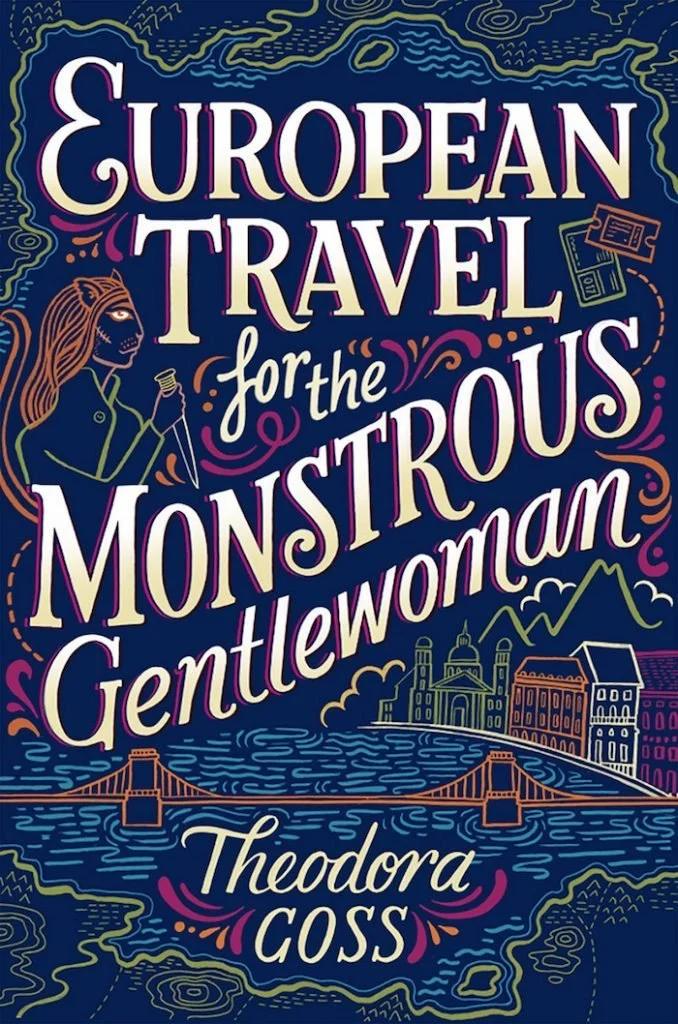
The literary landscape of Victorian-era reimagining has been forever altered by the imaginative prowess of Theodora Goss. Following the critical and commercial triumph of The Strange Case of the Alchemist’s Daughter, Goss has returned with a sweeping, ambitious sequel: European Travel for the Monstrous Gentlewoman. This second installment in the Athena Club series does not merely repeat the formula of its predecessor; it expands the horizons of its protagonists, moving from the foggy, crime-ridden streets of London to the grand, treacherous vistas of Continental Europe.
As the Athena Club—a collective of daughters born from the nightmares of history’s most infamous mad scientists—confronts a new threat, the narrative evolves into a globe-trotting adventure that balances high-stakes espionage with the intimate, often painful, search for identity.
The Core Narrative: A Race Across the Continent
The premise of European Travel for the Monstrous Gentlewoman is as urgent as it is personal. Having settled into a semblance of domestic stability at the Jekyll household in London, the members of the Athena Club—Mary Jekyll, Diana Hyde, Beatrice Rappaccini, Catherine Moreau, and Justine Frankenstein—find their tranquility shattered by a single telegram.
Lucinda Van Helsing, the daughter of the legendary vampire hunter, has been kidnapped. Her disappearance is not a random act of violence, but a calculated maneuver by the shadowy Alchemical Society. The discovery that Professor Van Helsing has been subjecting his own daughter to horrific, unspeakable experiments sends the Athena Club on an urgent mission to the Austro-Hungarian Empire.
What follows is a narrative defined by its mobility. The protagonists traverse Paris, Vienna, and Budapest, utilizing the iconic Orient Express as a backdrop for both character development and pulse-pounding tension. The central conflict is clear: the club must intercept the Alchemical Society’s machinations, rescue Lucinda, and finally dismantle the organization that has sought to weaponize their very existences.
Chronology of the Athena Club’s Evolution
To understand the trajectory of this series, one must view the timeline of the Athena Club’s formation and expansion:
- The Genesis: Following the successful resolution of the Whitechapel Murders, where the group first collaborated with Sherlock Holmes and Dr. Watson, the ladies solidified their bond.
- The Period of Domesticity: A brief interlude of peace in London, characterized by the uneasy but essential cohabitation of five women with radically different origins and temperaments.
- The Inciting Incident: The reception of the telegram regarding Lucinda Van Helsing, marking the shift from passive resistance to active, international pursuit.
- The European Campaign: The journey through the heart of the Austro-Hungarian Empire, involving deep-cover infiltration, confrontations with the Alchemical Society, and the navigation of shifting political and social alliances.
- The Confrontation: The climactic intersection of the club’s personal pasts with the broader, darker objectives of their adversaries, forcing a permanent shift in how they view their roles as "monstrous" women in a patriarchal society.
Supporting Data: Literary Analysis and Thematic Depth
While the novel functions as an adventure story, its weight is carried by its thematic maturity. Critics and readers alike have noted that this installment embraces a significantly darker tone than the first.
The Weight of History
Theodora Goss does not shy away from the grim realities of the Victorian era. The narrative explores the expendability of the working class, the systemic abuse of women under the guise of medical treatment—specifically the weaponization of the diagnosis of "hysteria"—and the haunting specter of trauma. The book serves as a poignant reminder that while the characters are "monstrous" by scientific standards, they are human in their suffering.
Agency and Relationships
One of the most praised aspects of the work is its handling of relationships. The book features a diverse tapestry of connections, including sapphic relationships and deep, platonic bonds, yet it remains firmly grounded in the characters’ individual agency. Goss deliberately avoids the tropes of traditional romance, ensuring that the women’s goals and personal growth remain the central focus. As one character notes regarding their attire and autonomy: "How can you expect women to exercise their faculties, nay, their rights, in clothes that confine them?"
Technical Execution
The novel is lauded for its atmospheric research. The portrayal of travel across 19th-century Europe is meticulously rendered, grounding the fantasy elements in a tactile, historical reality. Furthermore, the audiobook production has been highlighted for its exceptional linguistic accuracy, with the narrator navigating German, French, and Hungarian with a fluency that enhances the reader’s immersion.
The Complexity of the Plot: A Critical Assessment
Despite its strengths, the novel is not without its complexities. A recurring observation in critical circles is that the expansion in scope—moving from a single city to an entire continent—comes at the cost of the tight, claustrophobic cohesion found in the first book.
At times, the narrative structure leans toward a "side-quest" mentality. The protagonists find themselves entangled in so many disparate subplots, secret spy networks, and overlapping conspiracies that even the characters themselves occasionally express confusion. While this "chaotic" approach mirrors the overwhelming nature of their mission, some readers may find the pacing occasionally meandering. However, the strength of the character voices acts as a vital anchor; the wit, the banter, and the deep, found-family warmth ensure that even when the plot threatens to spiral into excess, the reader remains invested in the group’s survival.
Implications: The Legacy of the Monstrous Gentlewoman
The implications of this series for contemporary fantasy are profound. By reclaiming the "monsters" of classic literature—the daughters of Jekyll, Hyde, Frankenstein, and Moreau—Theodora Goss is rewriting the canon from the perspective of those who were previously defined solely by their father’s sins.
- Redefining Femininity: The series suggests that "gentlewoman" status is not a birthright or a social standing, but a construction of one’s own resilience.
- The Ethics of Science: Through the Alchemical Society, the book provides a scathing critique of unchecked scientific advancement and the dehumanization of those deemed "other."
- The Power of Collective Resistance: The core message of the Athena Club is that survival is not an individual endeavor. By facing life together, the characters prove that their collective strength is far greater than the sum of their individual trauma.
Conclusion
European Travel for the Monstrous Gentlewoman is a testament to the fact that sequels can be both messier and more ambitious than their predecessors. While it trades the structural precision of The Strange Case of the Alchemist’s Daughter for a sprawling, at-times overloaded European adventure, it gains an emotional depth that is rare in the genre.
It is a story that balances the absurdity of fighting unkillable men with the quiet, devastating reality of loss. For fans of the first book, the opportunity to spend more time with these characters—to see them evolve, argue, and ultimately stand together against a world that wishes to cage them—is an experience that more than justifies the ride. In the end, Theodora Goss has crafted a series that is not only a delightful pastiche of Victorian tropes but a serious, thoughtful, and deeply hopeful exploration of what it means to be a woman, a monster, and, ultimately, a person in charge of one’s own destiny.









No comments yet. Be the first to join the conversation!