

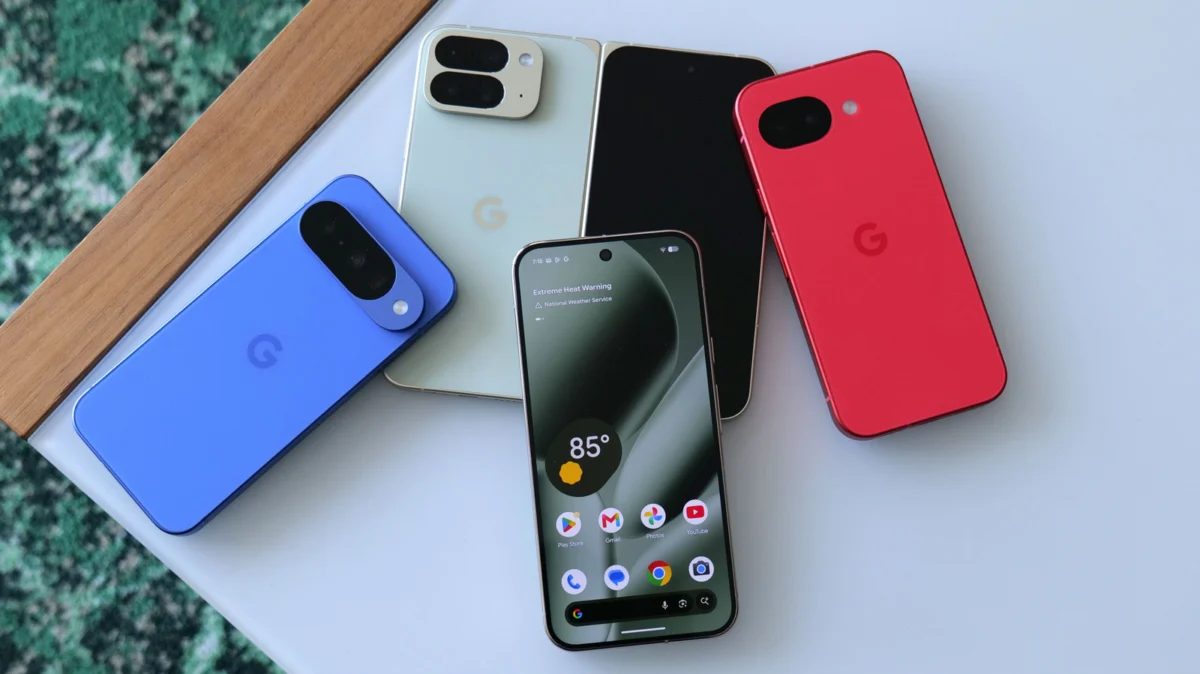
In an increasingly globalized technology market, the concept of a "universal" smartphone is often an illusion. While tech giants like Google strive for a unified user experience across their product lines, the reality of hardware manufacturing, regulatory landscapes, and carrier-specific infrastructure necessitates a degree of regional customization. For the Google Pixel series, which has grown into a dominant force in the global smartphone market, these regional adjustments are often subtle but carry significant weight for power users, travelers, and expatriates.
While the differences between a Pixel purchased in New York and one bought in Tokyo or London may not be immediately apparent to the casual observer, they represent a complex interplay of engineering choices, local telecommunications standards, and localized software rollouts. This report breaks down the technical and functional disparities between the American Pixel models and their international counterparts.
Main Facts: The Core Parity of the Pixel Ecosystem
The primary takeaway for most consumers is that the "Pixel experience" remains fundamentally consistent regardless of the point of purchase. Unlike competitors who might use entirely different processors—such as the regional split between Qualcomm Snapdragon and Samsung Exynos found in some flagship lines—Google maintains parity with its custom Tensor silicon.
Whether you purchase a base Pixel 10 in San Francisco or Berlin, you are receiving the same Tensor G5 processor, identical RAM configurations, and equivalent internal storage capacities. Furthermore, the display technology, camera sensor arrays, and battery architectures remain standardized. Google’s design philosophy ensures that a user transitioning from one region to another does not suffer a "downgrade" in core performance, processing power, or imaging capabilities. The aesthetic, materials, and color palettes are similarly harmonized, ensuring the brand identity remains consistent across the globe.
Chronology: The Evolution of Regional Customization
The divergence between US and international models has evolved alongside the maturation of mobile networking standards.
- Early Years (2016–2018): During the early iterations of the Pixel, regional differences were largely limited to power adapter inclusions and minor variations in LTE band support to accommodate local carrier spectrums.
- The 5G Transition (2020–2022): As 5G technology began to roll out, the landscape changed. The US, driven by carriers like Verizon, pushed heavily into millimeter-wave (mmWave) 5G. This required internal hardware changes to accommodate specialized antennas, a feature that was largely absent from the initial international versions of those devices.
- The eSIM Era (2024–Present): With the release of the Pixel 10 series, a new divide emerged. US models shifted exclusively to eSIM technology, effectively removing the physical Nano SIM tray for the majority of the lineup. This marked a significant departure from international models, which retained physical SIM support to accommodate markets where eSIM adoption is either slower or less standardized.
Supporting Data: Hardware and Software Disparities
While the chips and cameras are identical, the "hidden" hardware differences are where the divergence occurs.
The eSIM vs. Physical SIM Divide
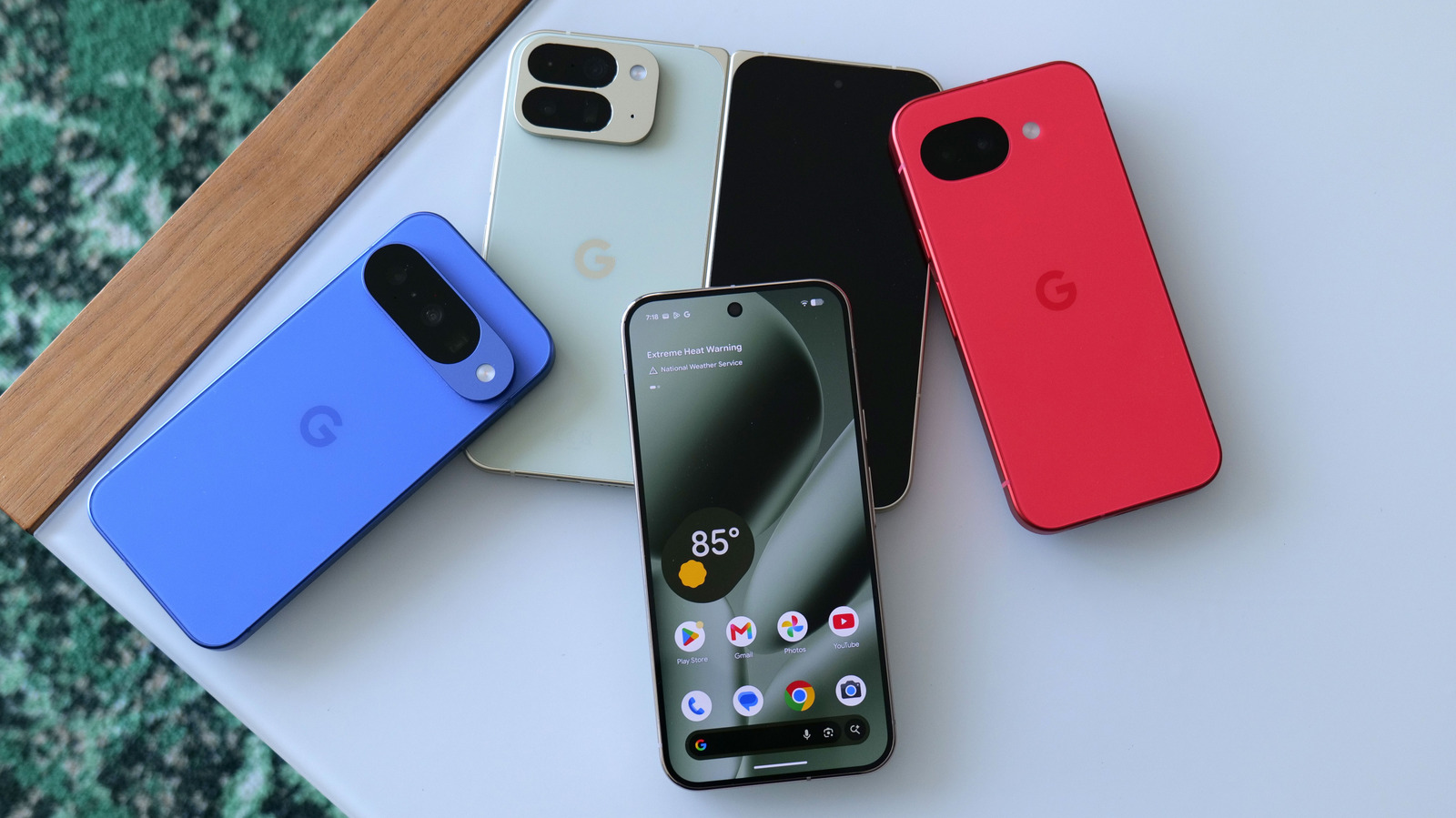
The most prominent hardware difference in the current Pixel 10 generation is the SIM card configuration. The US-market Pixel 10, 10 Pro, and 10 Pro XL are eSIM-only. This strategic shift was driven by two primary factors: the ubiquity of eSIM support among US carriers and the need for internal real estate. By removing the physical SIM tray, Google’s engineers gained internal volume—a precious commodity in modern, densely packed smartphones. This space is repurposed for components essential to the mmWave 5G connectivity that remains a hallmark of the American mobile experience.
Notably, the Pixel 10 Pro Fold remains the exception to this rule. Because the folding form factor presents unique structural challenges, it retains a physical Nano SIM tray globally, providing a rare point of absolute consistency across all regions.
Software Localization and the AI Rollout
Software is where the "subtle" changes become most apparent. Google leverages AI-driven tools, such as the Magic Cue feature—which contextually parses messages to surface calendar events and addresses—as a core differentiator for the Pixel. However, these features are not always global at launch.
The software ecosystem is subject to a "localization delay." Before a feature like Magic Cue can be deployed in a new country, it must pass rigorous regulatory vetting and language-processing training to ensure it functions accurately in the local tongue and complies with regional data privacy laws. Consequently, a user in the US might have access to a suite of AI features months before a user in, for example, a smaller European or Southeast Asian market.
Official Responses and Strategic Rationale
Google’s engineering teams have consistently framed these regional variations as "optimization for user environment." Regarding the move to eSIM in the US, Google representatives have emphasized that American carriers have achieved a level of infrastructure maturity that allows for a seamless, digital-first activation process.
In contrast, Google maintains that in many international markets, the physical SIM remains a critical "failsafe" for consumers who frequently switch devices or travel across borders where local SIMs are the most cost-effective way to secure data. By keeping the physical tray in international models, Google ensures that its phones remain compatible with the diverse carrier ecosystems of over 30 countries, where the infrastructure for digital-only activation is still catching up to the US.
Implications: What This Means for the Consumer
For the average user, these differences are academic. However, for those who move internationally or frequently travel, the implications are practical and significant.
The Connectivity Trap
The most critical implication is cellular compatibility. While the international models support a wide array of sub-6GHz 5G bands, they often lack the hardware to connect to the specific high-frequency mmWave bands used in the United States. A user bringing an international Pixel 10 to the US may find they are unable to connect to the ultra-fast 5G networks in dense urban areas, though they will still be able to use standard 5G and LTE.
Regulatory and Warranty Considerations
Furthermore, there are legal and support implications. Phones purchased in the US are optimized for US carrier testing and vetting requirements. When a device is taken out of its intended market, the warranty support can become complicated. Google typically restricts warranty claims to the country of purchase. If a US-bought Pixel develops a hardware fault while the owner is living abroad, they may be forced to ship the device back to the US for service, a costly and time-consuming process.
The "Best Practice" Recommendation
The consensus among telecommunications experts and Google’s own support documentation is clear: if you are planning to relocate, purchase your device in the region where you intend to reside. This ensures that you have a device with the correct cellular band support, the proper localized software optimizations, and, most importantly, access to local warranty and repair services.
In conclusion, while the Google Pixel remains a unified product at its core, the regional variants are a reflection of the fractured nature of global telecommunications. Whether it is the inclusion of a physical SIM tray or the phased rollout of AI-driven software features, Google’s strategy is one of pragmatic adjustment—ensuring that the Pixel remains a "smart" phone in every market, even if the definition of "smart" changes slightly as you cross borders.











