Ali Ikhwan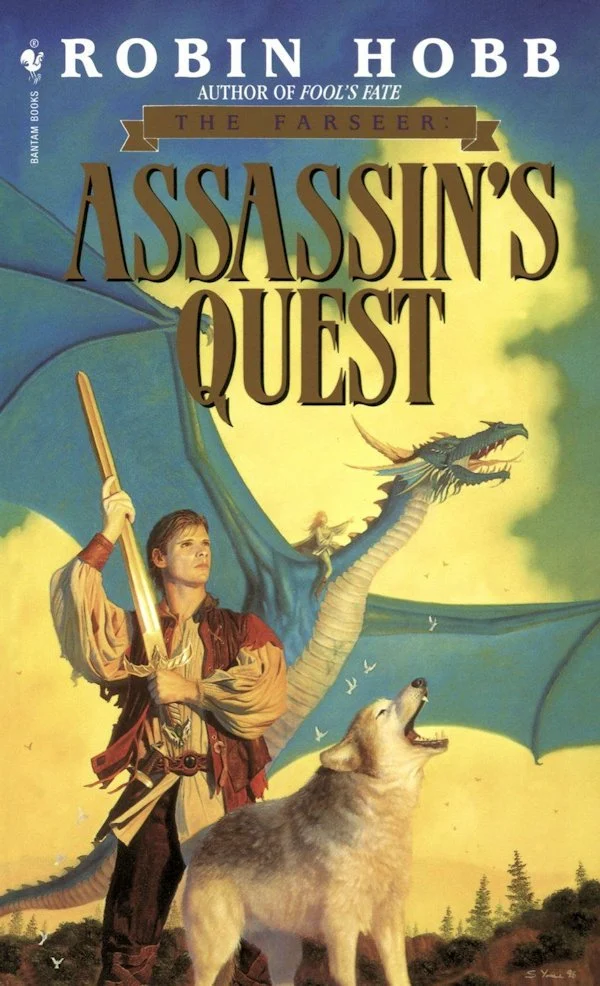
At first glance, Robin Hobb’s The Farseer Trilogy—comprising Assassin’s Apprentice (1995), Royal Assassin (1996), and Assassin’s Quest (1997)—appears to belong to a bygone era of high fantasy. It is a world of grim politics, lethal poisons, and the relentless, icy threat of the Red Ship Raiders. Yet, beneath the surface of this epic saga, there lies a structural DNA that mirrors the explosive rise of contemporary "romantasy." While Hobb’s work is not defined by the genre-specific tropes of modern bestsellers like Rebecca Yarros’s The Empyrean or Sarah J. Maas’s A Court of Thorns and Roses, a deeper investigation into the trilogy’s narrative mechanics reveals a profound connection to the emotional, character-driven storytelling that defines today’s most popular fiction.
The Core of the Narrative: Character Over Cosmos
In modern romantasy, the protagonist’s internal landscape is the true theater of war. While the world may be in peril, the reader’s engagement is tethered to the protagonist’s emotional evolution. Hobb mastered this technique decades ago through FitzChivalry Farseer.
Fitz is the quintessential "reluctant hero." His primary motivations are rarely the noble, world-saving platitudes of traditional epic fantasy; rather, they are rooted in personal survival, longing, and the quest for belonging. Hobb prioritizes the intimacy of Fitz’s internal monologue, forcing the reader to navigate his trauma, his mistakes, and his deep-seated insecurities. By tethering the stakes of the Six Duchies to the personal whims and heartbreaks of a single boy, Hobb established a blueprint that modern authors have adopted with fervor: the idea that a character’s personal journey is, in itself, the most vital plot point.
As the Fool famously notes in Royal Assassin:
"Not all men are destined for greatness… What good is a life lived as if it made no difference at all to the great life of the world? … Why should not a mother say to herself, if I raise this child aright… she shall live a life that brings joy to those about her, and thus I have changed the world?"
This philosophy—that the personal is universal—is the heartbeat of the romantasy genre. It elevates individual desire to a matter of cosmic significance, a feat Hobb accomplished long before it became a market trend.
Chronology of an Enduring Legacy
The publication of Assassin’s Apprentice in 1995 marked a shift in the fantasy landscape, moving away from the sprawling, detached epics of the 1980s and toward a more claustrophobic, intense focus on the individual.
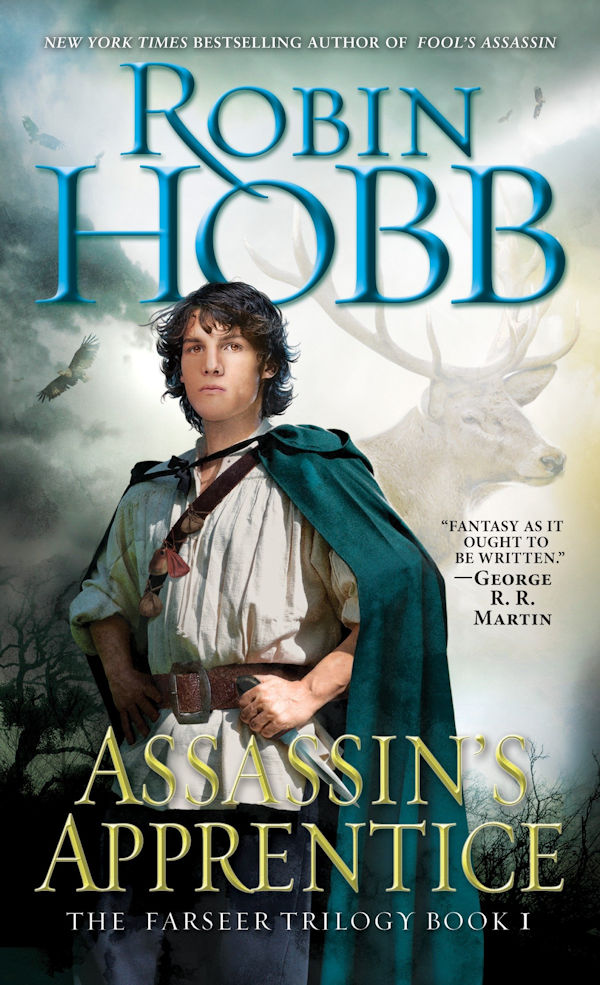
- 1995: Assassin’s Apprentice introduces the world to the Six Duchies and the Bastard of Chivalry, setting the stage for a story defined by its emotional weight rather than its combat scenes.
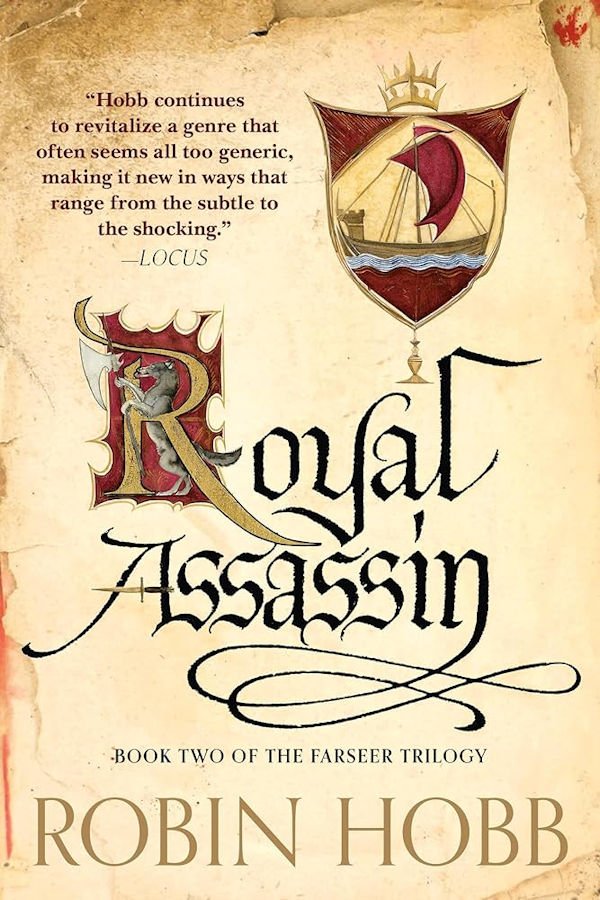
- 1996: Royal Assassin deepens the intimacy of the series, focusing on the volatile, evolving relationship between Fitz and the Fool, while further exploring the isolation of the protagonist.
- 1997: Assassin’s Quest concludes the initial trilogy, cementing the series as a masterclass in the "hero’s journey" as an internal, rather than external, conquest.
Across these three years, Hobb meticulously refined the art of the slow-burn, emotional payoff—a staple of the modern romantasy reader’s diet.
The Power of the First-Person Perspective
The success of The Farseer Trilogy—and the modern romantasy boom—is anchored in the first-person narrative. By trapping the reader inside the mind of the protagonist, Hobb ensures that every decision, no matter how objectively poor or detrimental to the "greater good," is experienced as a necessity.
In romantasy, this is often used to justify choices that prioritize romantic entanglements over the survival of the kingdom. In Hobb’s world, it is used to justify Fitz’s obsession with vengeance or his erratic, sometimes self-destructive loyalty to those he loves. Because the reader shares in his emotional burden, we do not judge him; we feel with him. When Fitz chooses a path that risks his own life—or the stability of the throne—for a moment of personal solace or retribution, the reader remains invested because the emotional logic is ironclad.
As the character Nighteyes notes in Assassin’s Quest regarding a dangerous pursuit:
"To hunt that one is as wise as to go hunting a porcupine… I cannot leave this alone, Nighteyes… I understand. I am the same about porcupines."
This visceral, almost irrational commitment to a goal or a person is the hallmark of the romantic obsession that drives modern fantasy readers.
The Anatomy of Intimacy: Friendships and Magic
If we strip away the traditional romance labels, the relationship between Fitz and the Fool is perhaps the most "romantasy-coded" dynamic in literature. It features a slow-build, years-long development, the interference of fate, and a profound, often painful, codependency. Their bond is characterized by the tension between devotion and verbal cruelty, a classic "forbidden" or "misunderstood" dynamic that mirrors the tropes of forced proximity and hidden identities found in today’s top-charting romances.
Furthermore, Fitz’s struggle with his own magic functions as a metaphor for the internal conflict inherent in many romantic protagonists. He battles two distinct forms: the Wit, an animalistic, primal connection to the world, and the Skill, a prestigious, dangerous, and seductive mental power.
The Wit represents the untamed, rejected self—the part of the protagonist that society deems "unfit." The Skill represents the crushing weight of duty and social expectation. Fitz’s attempt to reconcile these two forces is a masterful metaphor for the struggle to integrate one’s true desires with the expectations placed upon them by the world. It is, at its core, the classic struggle of the romantic hero: Can I be myself and still be loved? Can I wield my power without losing my soul?
Implications for Modern Authors
The enduring popularity of The Farseer Trilogy serves as a lesson for modern writers: character depth is not an alternative to plot; it is the foundation upon which plot is built. While current trends in romantasy may rely on specific tropes—enemies-to-lovers, high-stakes court intrigue, or the "fated mate"—the longevity of Hobb’s work suggests that these tropes are only as effective as the emotional vulnerability of the characters who inhabit them.
Hobb did not need to invent "romantasy" to create the same addictive, high-stakes emotional pull. By focusing on the "moments of the heart’s beating," she created a template that resonates just as strongly today as it did nearly thirty years ago.
Final Reflections: The Wisdom of the Wolf
As the genre continues to evolve, writers would do well to look back at the lessons offered by the Six Duchies. The complexity of the human—or in Fitz’s case, the Witted—heart remains the most compelling mystery in fiction. Whether we are discussing the geopolitical machinations of the Farseer throne or the intimate, often biting exchanges between a boy and his Fool, the takeaway remains constant:
"Don’t do what you can’t undo, until you’ve considered what you can’t do once you’ve done it."
In literature, as in life, it is the irreversible choices—the moments where we choose love, or vengeance, or truth—that define our journey. And as for the rest, we might remember the simple, enduring wisdom of the Wit: Wolves have no kings. Perhaps, in the end, it is that desire for a life unchained from expectation that keeps us all returning to the page.


 Asep Darmawan
 Dwi Wanna