

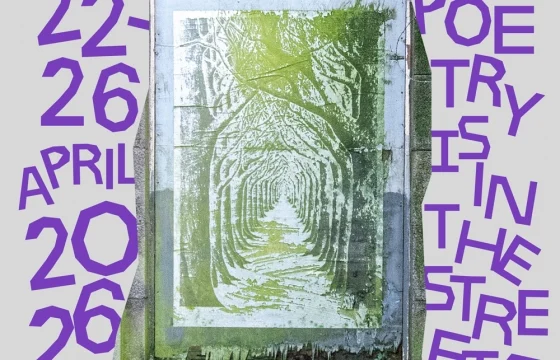
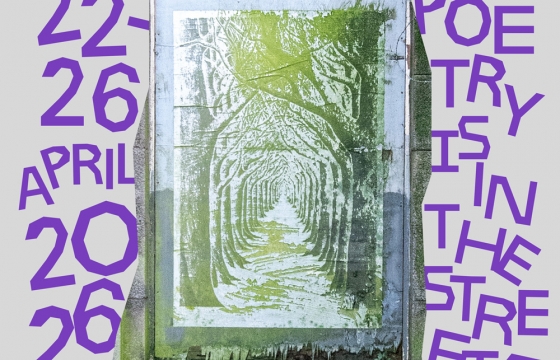
Aberdeen, Scotland — April 22 – April 26, 2026
In an era where the “muralism” movement has become synonymous with grand, hyper-realistic, and often corporate-sponsored spectacles, the world-renowned Nuart festival is pivoting back to the streets’ most radical roots. For its 2026 edition in Aberdeen, Nuart has launched what is believed to be the world’s first major street art festival centered primarily on poetry and text-based interventions.
By shifting the focus from the towering, technically demanding figurative murals that have defined city skylines for the past decade, Nuart is attempting to democratize public art. It is a bold move, one that prioritizes accessibility, intellectual engagement, and the spirit of the “everyday creator” over the spectacle of the professional muralist.
The Genesis: A Return to the Accessible
For years, the large-scale mural has been the undisputed king of street art. While visually stunning, these projects are inherently exclusionary. They require significant funding, heavy machinery, high-level technical expertise, and weeks of preparation. As Nuart founder and curator Martyn Reed observes, these massive works are, in many ways, the “least democratic form of art on the streets.”
“No one stands in front of a ten-story tower block mural and thinks, ‘I’ll pop home and have a go myself on the gable end of Gran’s house,’” Reed says.
The 2026 edition of Nuart seeks to bridge this gap. By focusing on stencils, paste-ups, and text-based interventions, the festival aims to reignite the participatory culture of the 1980s. The inspiration for this shift came from two seminal touchstones: the 1968 Parisian student uprising slogan, “La poésie est dans la rue” (Poetry is in the Streets), and a realization shared by pioneering UK graffiti writer Mode2. Reflecting on the rise of UK graffiti, Mode2 noted that the movement flourished because it didn’t require the academic training of traditional fine arts; it simply required an understanding of the ABCs.
Chronology of the Festival: April 22 – April 26
The 2026 festival program was designed to transform Aberdeen into a living manuscript.
- April 22 (The Opening): The festival launched with a series of quiet, site-specific installations that immediately contrasted with the typical "flashy" arrival of mural festivals. The city center became a repository for poetry, with text appearing in unexpected cracks, alleyways, and public squares.
- April 23–24 (The Interventions): Local and international artists focused on the “human scale.” These days saw the deployment of paste-ups and stencils, focusing on direct communication between the artist and the passerby. The emphasis was not on "viewing" a masterpiece, but on "reading" the city.
- April 25 (Public Engagement): Workshops and guided tours took place, shifting the focus to the next generation of potential artists. By highlighting that the tools needed—a craft knife, cardboard, and a pen—are universally accessible, the festival aimed to demystify the act of creation.
- April 26 (Closing): The festival concluded with a reflection on the sustainability of street art as a culture, rather than just an aesthetic. Curators and artists gathered to discuss how to maintain the “soul” of the street in an increasingly commercialized urban environment.
The Artist Lineup: A Diverse Voice
The 2026 lineup featured a carefully curated selection of artists who specialize in the intersection of visual art and the written word. The participants included:
- Alisa Oleva (UK)
- Ciarán Glöbel (SCT)
- dr.d AKA Subvertiser (UK)
- HICKS (UK)
- James Klinge (SCT)
- KMG (SCT)
- Molly Hankinson (UK)
- Remi Rough (UK)
- Robert Montgomery (SCT)
- The Rebel Bear (SCT)
- The Writing Is On The Wall (UK)
- Trackie McLeod (SCT)
- V2k | (LT – SCT)
This group represents a mix of seasoned veterans and emerging talent, many of whom trace their own artistic beginnings back to volunteering or assisting at past Nuart events.
Supporting Data: Why "Text" Matters
The shift toward text-based art is supported by sociological evidence regarding urban interaction. Smaller, human-scale interventions encourage "dwell time"—the amount of time a pedestrian stops to engage with an object.
While a mural might capture a glance from across a street, a text-based paste-up requires proximity and cognitive effort. Data from previous Nuart experimental years suggests that "interventions" are more likely to be replicated by the public. When art is perceived as an "extraordinary professional feat," it creates a barrier to entry. When art is perceived as a "simple idea expressed clearly," it creates a bridge.
The festival aims to foster an environment where the city is viewed as a canvas for everyone. By lowering the barrier to entry, Nuart is acting as a catalyst for the next generation of creative output in Aberdeen.
Official Responses and Curatorial Vision
Martyn Reed’s vision for the 2026 festival is perhaps the most progressive stance in the event’s history. He acknowledges the tension inherent in his role: balancing the requirements of sponsors, tourism boards, and city councils against the rebellious, anti-establishment roots of street art.
“As curators, researchers, and producers, we have a responsibility to not only showcase the most technically competent works of our time but to ensure the culture’s development and survival,” Reed stated. “The only way to do this is to inspire those without the privilege of a fine art degree or access to elite arts institutions to have a go themselves.”
The city council and festival partners have remained supportive, even as the festival moves away from the "postcard-perfect" murals that are typically used for city marketing. This suggests a growing maturity in how municipal leaders view public art: as a tool for community empowerment rather than just a tool for urban beautification.
Implications: The Future of Street Art Festivals
The implications of Nuart 2026 are significant for the broader global street art scene. If a major, internationally recognized festival can pivot toward text and poetry without losing its audience, it sets a precedent for others to follow.
- Democratization of Space: By prioritizing ephemeral, text-based work, festivals can move away from the "gentrification" argument often leveled against large-scale mural projects.
- Sustainability: Text-based works are significantly cheaper to produce, allowing for a wider distribution of art across more neighborhoods, rather than concentrating resources on a few "prestige" walls.
- Intellectualization: By integrating poetry, the festival invites a deeper, more philosophical engagement with the urban landscape, transforming the city from a gallery into a site of discourse.
A Challenge to the Next Generation
As Nuart 2026 draws to a close, the challenge for the city of Aberdeen—and the wider world—is clear. The festival has stripped away the scaffolding and the cranes to reveal that the most powerful tool in an artist’s kit remains the same as it was in the 1960s: the ability to articulate an idea.
For those who felt intimidated by the hyper-realistic murals of the past, this year’s festival offers a different message: the street belongs to those who have something to say. Whether it is a single word scrawled in charcoal or a carefully crafted poem pasted on a brick wall, the act of expression is a fundamental human right.
In the words of the 1968 Parisian protesters, poetry truly is in the streets. Through the efforts of Nuart Aberdeen 2026, it is once again finding its voice, one letter at a time. The festival stands as a testament to the idea that while murals may dominate the skyline, it is the words on the walls that truly get under the skin of a city, inspiring change, conversation, and, most importantly, the courage to create.









No comments yet. Be the first to join the conversation!