Asro
Asro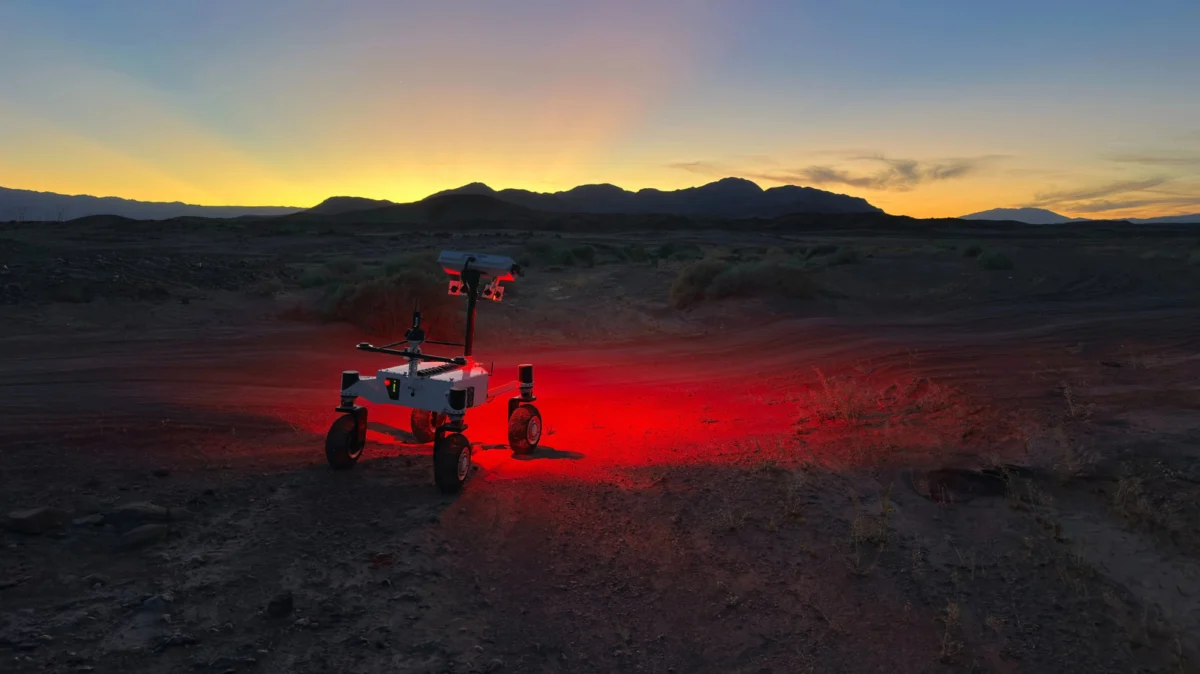
For decades, the image of a NASA rover on a distant planet has been defined by a slow, deliberate crawl. From the pioneering Sojourner, which landed on Mars in 1997, to the state-of-the-art Perseverance rover currently traversing the Jezero Crater, these robotic explorers have been masters of patience. However, their physical limitations—glacial speeds and a vulnerability to jagged Martian terrain—have long hampered the scope of extraterrestrial exploration.
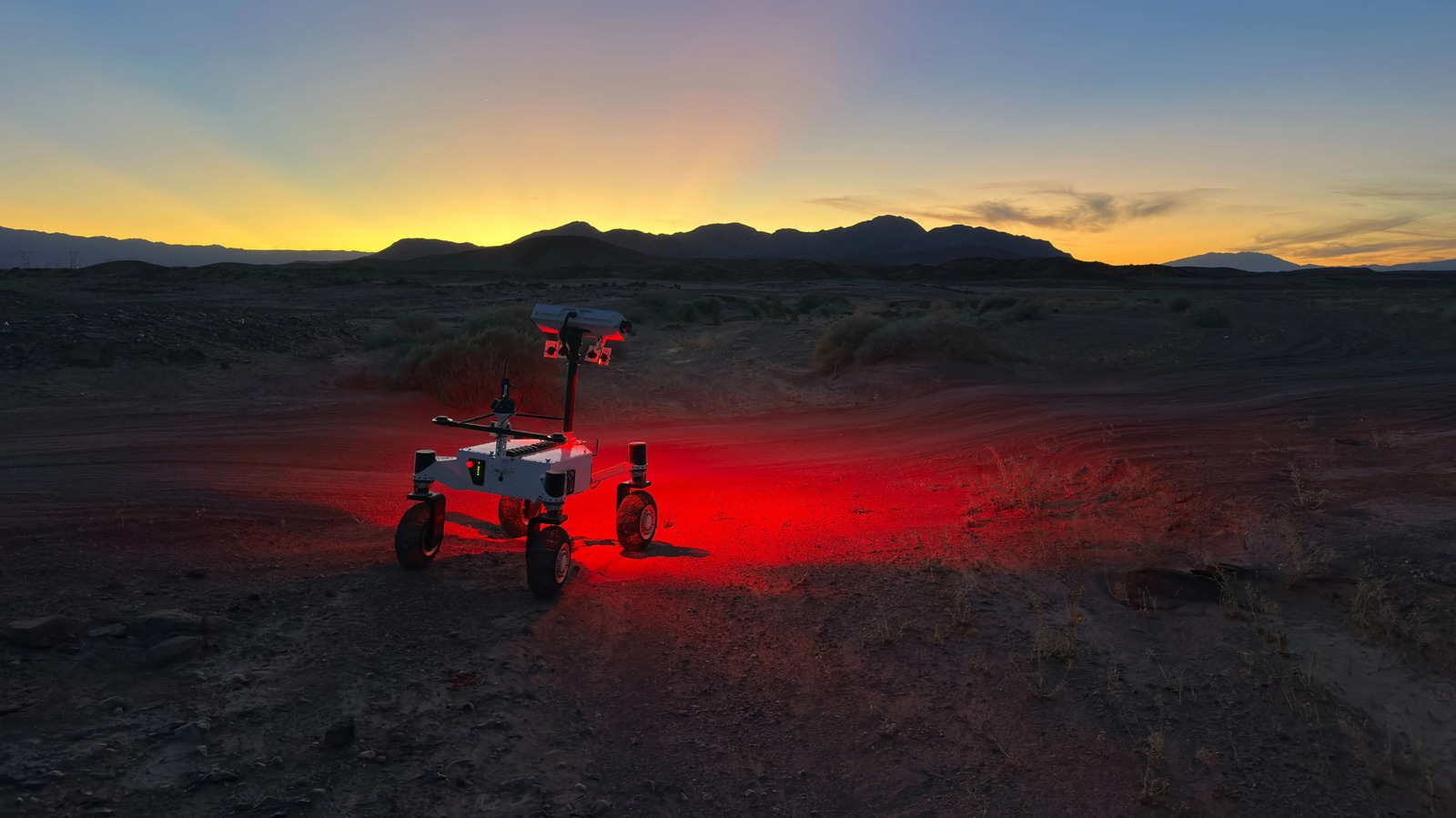
This week, NASA unveiled a technological leap that promises to shatter these constraints. The Exploration Rover for Navigating Extreme Sloped Terrain (Ernest), a new prototype currently undergoing rigorous field testing in the Colorado Desert, represents a radical departure from the traditional rocker-bogie design. With the ability to lift its wheels, navigate complex gaits, and achieve speeds six times faster than its predecessors, Ernest is not just an upgrade; it is a fundamental reimagining of how we traverse the solar system.
The Main Facts: A Paradigm Shift in Mobility
The fundamental challenge of planetary robotics has always been the trade-off between stability and agility. Traditional rovers rely on passive suspension systems to keep all wheels in contact with the ground, preventing the vehicle from tipping over on uneven surfaces. While highly reliable, this design is mechanically rigid, forcing rovers to take long, circuitous routes to avoid obstacles that could damage their wheels or cause them to become mired in sand.
Ernest changes this by introducing active suspension. Unlike previous rovers, which operate as a single, cohesive unit, Ernest treats its wheels as semi-autonomous limbs. Featuring four wheels—a reduction from the six-wheel configuration seen on Curiosity and Perseverance—the prototype utilizes powered joints in its front assembly to articulate a specialized gimbal. This allows the rover to employ distinct "gaits," including:
- Squirming: Adjusting body orientation to navigate tight, uneven crevices.
- Wheel-Walking: Individually lifting wheels to step over boulders that would otherwise force a detour.
- Obstacle Climbing: Engaging active suspension to maintain traction on slopes that were previously considered "no-go" zones.
During recent tests in the harsh, rocky environment of the Colorado Desert, the prototype logged over 37 hours of operation across seven days, traversing approximately 16 miles. Most impressively, the rover reached a top speed of 0.6 mph—a staggering improvement over the 0.1 mph average of the Perseverance rover.
Chronology: From Concept to Desert Trials
The development of Ernest is the result of a deliberate, multi-year engineering trajectory focused on optimizing autonomous travel.
- 2022: Program Inception. NASA’s Jet Propulsion Laboratory (JPL) launched the initiative to address the "speed and access" gap in planetary surface missions. Engineers began by mapping the limitations of legacy rocker-bogie systems.
- 2022–2023: Iterative Design. The team developed nearly a dozen distinct active suspension configurations. Each iteration was subjected to computer modeling and small-scale testing to determine how the center of gravity could be shifted dynamically to aid in climbing.
- Late 2023: Prototype Construction. The current iteration of Ernest was finalized. While the prototype is currently four feet in length, NASA engineers have already drafted plans for a full-scale version that would double those dimensions for actual spaceflight.
- 2024: Field Testing. The team deployed the prototype to the Colorado Desert, an environment chosen for its geological similarity to the rugged, sand-strewn landscapes of Mars and the shadowed, boulder-filled craters of the Moon.
Supporting Data: Why Speed and Agility Matter
To understand the necessity of Ernest, one must look at the "opportunity cost" of current exploration. The Perseverance rover, despite its immense scientific value, is a victim of its own delicate nature. Its wheels, made of thin, high-strength aluminum, have shown signs of wear due to sharp Martian rocks. Furthermore, when a rover encounters a steep slope or a field of loose "dune" sand, it must stop, wait for human operators back on Earth to analyze the terrain, and plot a multi-day detour.
Comparative Performance Metrics
| Feature | Legacy Rovers (e.g., Perseverance) | Ernest Prototype |
|---|---|---|
| Top Speed | ~0.1 mph | 0.6 mph |
| Suspension | Passive (Rocker-Bogie) | Active (Gimbal-assisted) |
| Terrain Strategy | Avoidance/Detour | Active Negotiation/Climbing |
| Autonomy | High (Human-assisted) | Enhanced (Independent decision-making) |
The data from the Colorado Desert tests suggests that Ernest can handle terrain that would immobilize a traditional rover. By reducing the reliance on human-in-the-loop navigation, Ernest can cover more ground in a single day than a traditional rover could in a week, significantly increasing the scientific return on investment for NASA’s multi-billion dollar missions.
Official Responses and Scientific Outlook
The excitement within the scientific community is palpable. James Keane, a JPL planetary scientist deeply involved in lunar mission planning, noted the transformative potential of this technology. "You could do a science road trip across the Moon—or Mars—with this vehicle," Keane stated.
The philosophy driving Ernest is the transition from "survival-focused" engineering to "exploration-focused" engineering. By allowing the rover to switch between active and passive suspension—using active modes for difficult obstacles and passive, energy-saving modes for flat, predictable terrain—engineers are effectively maximizing the mission’s energy budget.
"The latest version of Ernest has integrated enhanced independent decision-making capabilities," a NASA spokesperson noted. "By minimizing the time spent waiting for commands from Earth, the rover can identify a target of interest, analyze the terrain, and choose the most efficient gait to reach it without requiring human intervention for every minor adjustment."
Implications for Future Exploration
The success of the Ernest program has profound implications for the future of the Artemis moon missions and the eventual human exploration of Mars.
1. Lunar Prospecting
The Moon’s South Pole, a primary target for Artemis, is notoriously difficult. It contains regions of permanent shadow and treacherous, cratered slopes. Ernest’s ability to "walk" over obstacles makes it the ideal candidate for scouting these regions to locate water ice and other resources before human astronauts arrive.
2. Martian Scientific Return
Mars remains the "holy grail" for astrobiology. However, the most interesting sites—such as deep canyon floors or the steep rims of impact craters—are currently inaccessible. With the maneuverability provided by active suspension, future rovers could descend into terrain that was previously forbidden, potentially uncovering evidence of ancient life that has remained hidden from current, cautious explorers.
3. Efficiency and Cost
The cost of planetary missions is measured not just in dollars, but in time. If a rover can cover 16 miles in a week of testing—a distance that might take a current rover months to achieve—the scientific "yield per dollar" increases exponentially. This makes it easier for NASA to justify ambitious, high-risk missions that explore the frontiers of our solar system.
The Path Forward
While the Ernest prototype is still in the developmental phase, its performance in the Colorado Desert serves as a proof-of-concept that will dictate the design of future planetary landers. The next stage for the team will likely involve testing the system in varying atmospheric pressures and simulated low-gravity environments to ensure that the active joints can function reliably in the vacuum of space.
As we look toward the 2030s and beyond, the legacy of the slow-crawling rover may be eclipsed by the agile, intelligent, and daring machines represented by the Ernest project. By finally giving rovers the ability to "lift" themselves up, NASA is effectively lifting the boundaries of what humanity can discover in the silent, dusty reaches of our neighbor worlds.


 Pevita Pearce
 Ammar Sabilarrohman