

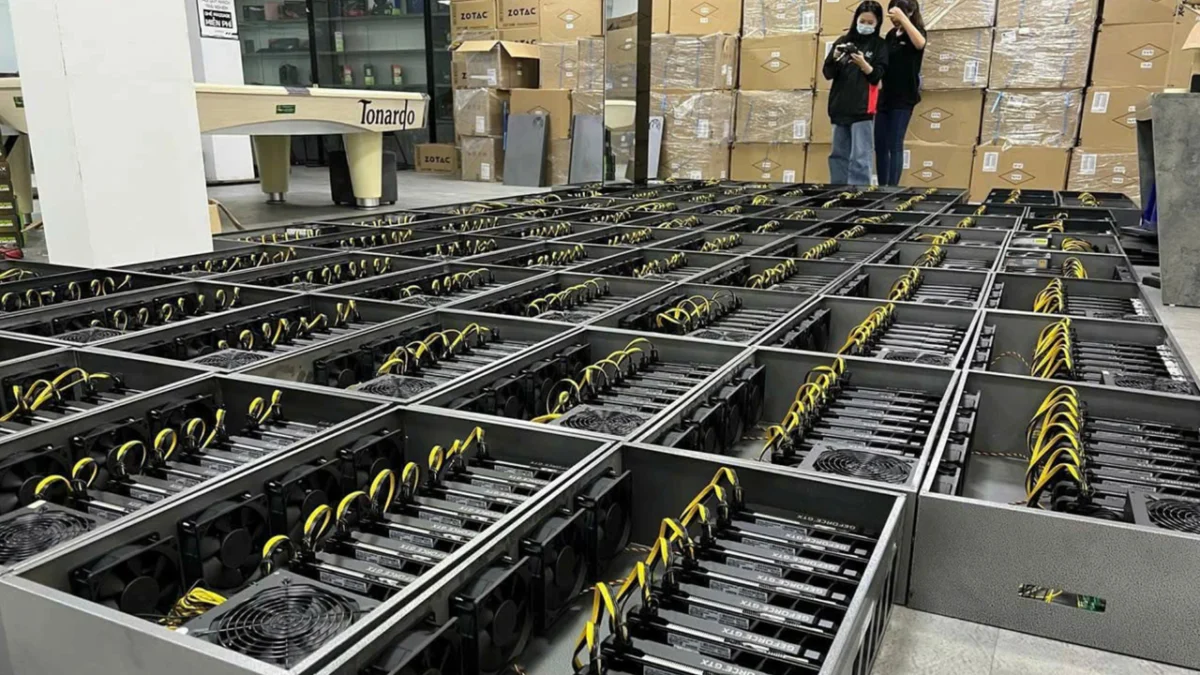
The cryptocurrency landscape has witnessed yet another volatile surge, this time centered on a novel project named Pearl (PRL). Launched in late April 2026 by Pearl Research Labs, the project has introduced a radical consensus mechanism dubbed "Proof-of-Useful-Work." By replacing the standard, energy-intensive hashing algorithms of legacy chains with the intensive matrix multiplication calculations required for Artificial Intelligence (AI) training and inference, Pearl has inadvertently sparked a frenzied, albeit short-lived, mining gold rush.
While early participants saw daily returns for high-end hardware like the Nvidia RTX 5090 climb as high as $33.80, the excitement has already begun to wane. As the network’s difficulty levels adjust to an influx of compute power, the economic viability of this new "AI-mining" model is being called into question.
The Genesis: Proof-of-Useful-Work
At its core, Pearl attempts to solve the fundamental criticism of traditional Proof-of-Work (PoW) blockchains: the perception that mining is an environmental and economic waste of energy. By utilizing matrix multiplication—the mathematical backbone of modern AI—Pearl claims that its network is "productive."
In theory, this creates a symbiotic relationship between the blockchain and the burgeoning AI industry. Instead of solving arbitrary puzzles that serve no purpose beyond network security, Pearl miners are performing the actual heavy lifting required to power AI models. However, the practical application is more nuanced. While the protocol is technically capable of extracting a proof from genuine AI inference tasks, a significant portion of the current network activity is comprised of "AI-shaped" work. This means miners are running massive amounts of matrix operations that, while mathematically identical to AI training, are not being utilized by any consumer or enterprise application. Consequently, the output—and the potential value—is largely ephemeral.
Chronology: A Rapid Rise and a Predictable Retreat
Late April 2026: The Launch
Pearl Research Labs officially brought its mainnet online. The promise of monetizing AI compute power immediately caught the attention of the crypto-mining community, which had been suffering from a prolonged "winter" following the decline of Ethereum’s mining profitability.
Mid-May 2026: The Together AI Partnership
The project gained significant credibility on May 15, 2026, when cloud AI provider Together AI announced a formal partnership with Pearl. The collaboration introduced an instruction-tuned model, Gemma-4-31B-it-pearl, offered to users at a 25% discount. The revenue shortfall for Together AI is purportedly subsidized by the future value of PRL emissions, a model that integrates blockchain tokenomics directly into the cost structure of commercial AI services.
Late May 2026: The Mining Frenzy
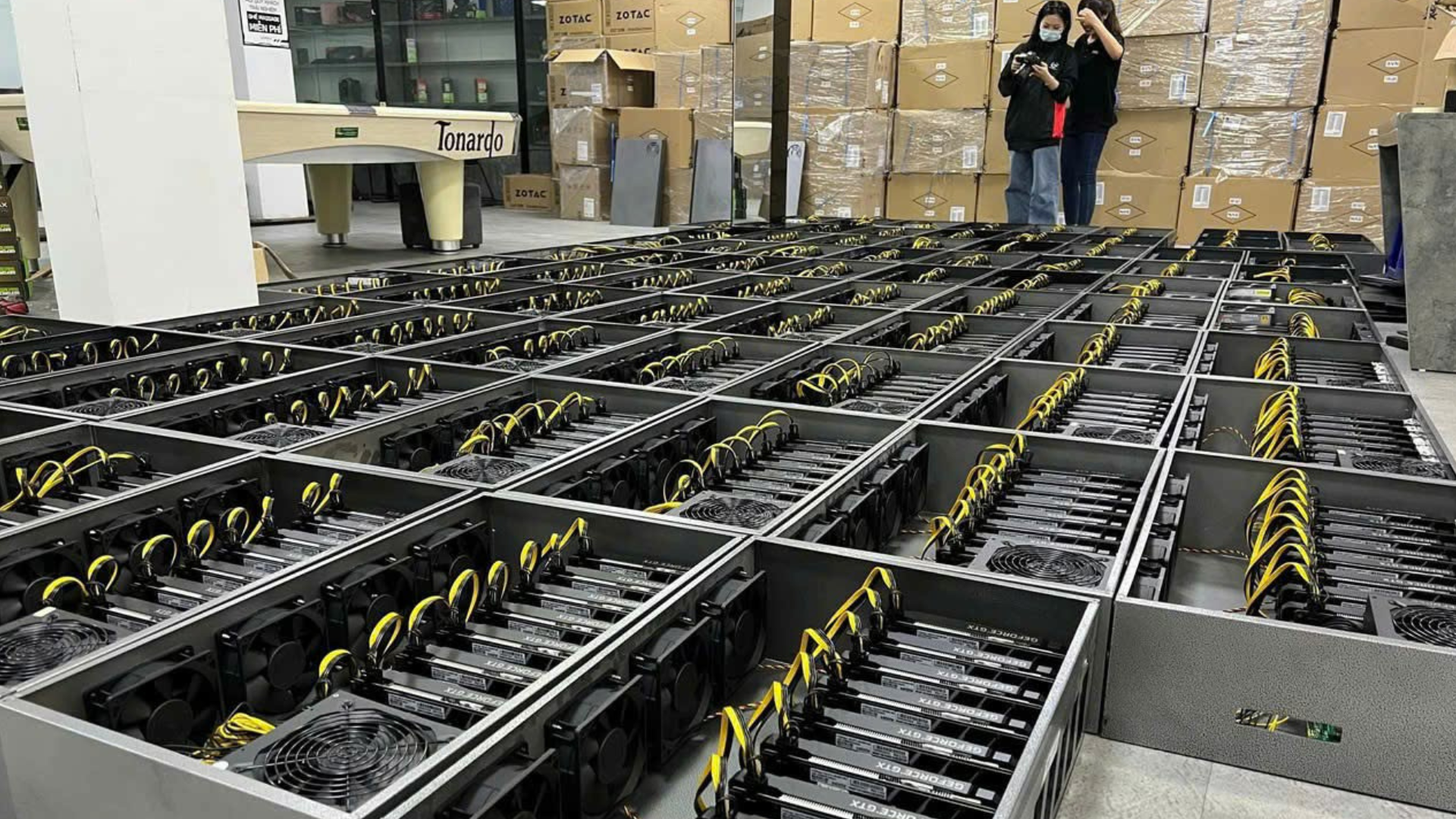
As news of the partnership spread, the "mining rush" began in earnest. Cryptocurrency profitability trackers like hashrate.no reported eye-watering daily revenue figures for high-end consumer GPUs, specifically the RTX 5090. This triggered a migration of miners away from traditional altcoins toward the Pearl network, with many utilizing rented cloud GPU instances via platforms like RunPod and Vast.ai to bypass the need for physical hardware ownership.
Early June 2026: The Correction
By the first week of June, the reality of the "Difficulty Bomb" set in. As the network hash rate climbed exponentially, the rewards per individual GPU plummeted. As of current estimates, the daily revenue for an RTX 5090 has fallen from $33.80 to roughly $17.19—a staggering 49% drop in just over two weeks.
Data Analysis: The Economics of AI Mining
The economic viability of Pearl rests on a delicate balance between the cost of electricity (or cloud rental) and the market price of the PRL token. Unlike previous mining booms, where hardware was bought and held, the Pearl rush is largely driven by "rented capacity."
The Cost-to-Reward Ratio
The reliance on cloud providers like RunPod and Vast.ai introduces a unique risk factor. Because miners are renting hardware by the hour, they are hypersensitive to changes in network difficulty. When the return on investment (ROI) falls below the hourly rental rate, these miners disconnect almost instantly.
| Date | RTX 5090 Daily Revenue (Approx.) | Trend |
|---|---|---|
| Late May 2026 | $33.80 | Peak |
| Early June 2026 | $17.19 | Decline |
| Forecasted | TBD | Volatile |
This volatility is compounded by the fact that PRL is currently listed only on minor, low-liquidity exchanges like SafeTrade and MEXC. For institutional or high-volume miners, the difficulty of offloading tokens without crashing the price creates a significant barrier to long-term profitability.
Official Responses and Strategic Vision
Omri Weinstein, co-founder and CEO of Pearl Research Labs, has been vocal about the project’s long-term mission. In the official announcement regarding the Together AI partnership, Weinstein remarked, "Pearl changes the unit economics of AI." The goal, according to Pearl, is to decentralize the massive compute infrastructure required for AI, effectively crowdsourcing the "brainpower" of the internet to lower the barrier to entry for developers.
However, critics point out that the network is heavily optimized for enterprise-grade hardware—specifically Nvidia’s H100 and H200 datacenter GPUs. While community-developed builds have managed to make the protocol functional on consumer-grade cards like the RTX 4090 and 5090, these consumer cards lack the memory bandwidth and interconnect capabilities that define the true AI compute environment. This creates a two-tier ecosystem where the most efficient miners are those with access to professional-grade hardware, further alienating the casual "garage" miner.
Implications: A New Era for GPU Mining?
The Pearl experiment serves as a microcosm for the next iteration of the crypto industry. The "useful work" narrative is highly appealing to regulators and environmentalists who have long scrutinized the carbon footprint of Proof-of-Work mining. By aligning blockchain security with the technological advancement of AI, Pearl is attempting to rebrand mining as a "service" rather than a purely speculative endeavor.
Will There Be Another GPU Shortage?
One of the most persistent fears in the PC gaming community is that a new crypto-rush will lead to another repeat of the 2020–2022 GPU shortages. Currently, this appears unlikely for three primary reasons:
- Hardware Optimization: Pearl is explicitly designed to favor datacenter-grade hardware (H100/H200). These chips are sold directly to cloud providers and large-scale enterprises, not through retail channels where gamers purchase their cards.
- The Rented-Capacity Model: Because the majority of the current mining is occurring on rented cloud instances, the demand is concentrated in data centers rather than in the consumer retail market.
- Diminishing Returns: The rapid descent of profitability in just two weeks demonstrates that the market is far more efficient at self-correcting than it was during the Bitcoin or Ethereum booms. The barrier to entry for profitable mining is now significantly higher, and the window for peak profitability is remarkably short.
Future Outlook
The long-term survival of Pearl depends on its ability to transition from "AI-shaped" work to "Actual" AI work. If the network can successfully attract legitimate, paid AI inference tasks that provide revenue outside of token emissions, it may establish a sustainable model. However, if the protocol continues to rely on emissions to attract compute, it risks becoming another hyper-inflationary experiment that collapses once the token price reaches a point where it no longer covers the electricity costs of the miners.
As it stands, Pearl is a fascinating, if unstable, look into the future of decentralized infrastructure. It highlights a critical intersection of two of the most significant technologies of the decade—Blockchain and AI—and proves that while the market is ready to embrace innovation, it is equally ready to abandon it the moment the math stops adding up. For now, the "Pearl Rush" is a reminder that in the world of crypto-economics, the only thing more volatile than the coins themselves is the market’s enthusiasm for the next big thing.










No comments yet. Be the first to join the conversation!