Jia Lissa
Elon Musk’s SpaceX has long been synonymous with the democratization of space access and the revolutionary promise of global, high-speed satellite internet. Through its Starlink division, the company has already successfully disrupted the traditional broadband landscape, bringing connectivity to the most remote corners of the planet. However, a new frontier is emerging that threatens to shake the foundations of the telecommunications industry: SpaceX is reportedly exploring a direct-to-consumer mobile carrier service in the United States.
If realized, this move would signal a seismic shift in how Americans interact with their mobile devices, potentially positioning SpaceX as a direct competitor to the "Big Three"—Verizon, AT&T, and T-Mobile.
The Core Revelation: From Partner to Provider
According to reports from the Financial Times, SpaceX has been signaling to investors its intention to transition from a behind-the-scenes network provider to a full-fledged retail mobile carrier. Currently, Starlink operates largely as a complementary layer to the existing telecom infrastructure. It provides essential "dead zone" coverage for rural users while relying on partnerships with established carriers to bridge the gap between satellite and terrestrial networks.
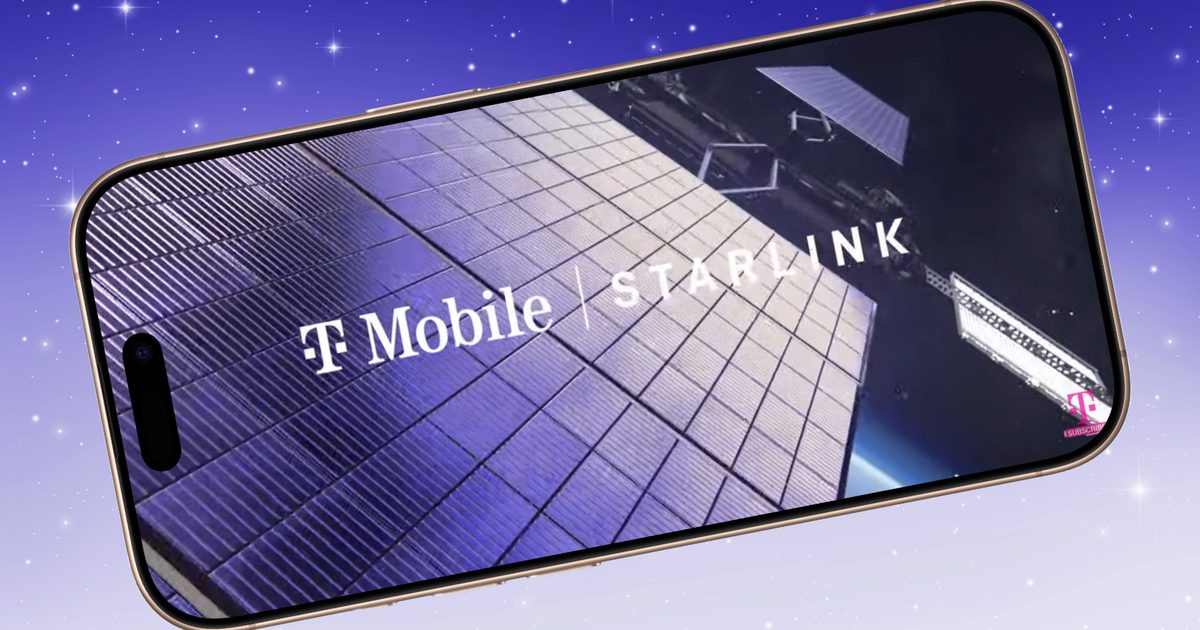
Moving to a retail model would represent a radical departure from this strategy. Instead of acting as a silent partner, SpaceX would manage the end-to-end customer experience—from billing and retail operations to customer support and network management. This shift would fundamentally alter the company’s relationship with its user base, transforming it from a utility provider for the underserved into a ubiquitous brand competing for the average urban and suburban consumer’s monthly phone bill.
A Chronology of Strategic Expansion
The evolution of SpaceX’s telecommunications ambitions has been deliberate and methodical. Understanding this trajectory is key to recognizing why a direct-to-consumer service is a logical next step.
- 2019: Launching the Constellation: SpaceX begins the rapid deployment of Starlink satellites, establishing the backbone of a low-Earth orbit (LEO) internet network.
- 2022: The T-Mobile Partnership: SpaceX and T-Mobile announce a "Coverage Above and Beyond" initiative, utilizing Starlink’s V2 satellites to provide text messaging, and eventually voice and data, to mobile phones in cellular dead zones.
- 2024: Spectrum Acquisition: In a pivotal move, SpaceX acquires significant wireless spectrum assets from EchoStar. This multibillion-dollar investment provided the company with the necessary radio frequencies to operate more independently of traditional carrier infrastructure.
- 2025: Regulatory Engagement: Throughout early 2025, SpaceX intensified its lobbying efforts with the FCC, seeking broader authority to utilize its satellite constellation for direct-to-device (D2D) cellular services.
- 2026: The Retail Pivot: Reports emerge that SpaceX is gauging investor appetite for a standalone mobile service, moving beyond the "middleman" model of its existing partnerships.
Supporting Data: Why the Move is Feasible
The technical infrastructure for this transition is already in motion. SpaceX has successfully demonstrated the ability to transmit mobile data directly from its satellites to standard, off-the-shelf smartphones.

The Satellite Advantage
Unlike terrestrial towers that require expensive cabling and local power, the Starlink constellation functions as a massive, floating grid of base stations. By utilizing the spectrum acquired from EchoStar, SpaceX can theoretically offer connectivity in regions where traditional carriers have failed to invest due to low population density.
Scaling the User Base
Starlink currently boasts over 10 million subscribers worldwide for its broadband services. By converting a portion of this existing user base into mobile subscribers, SpaceX gains an immediate "beachhead" in the consumer market. Furthermore, the company’s manufacturing capacity for satellites is unparalleled, allowing it to rapidly densify its constellation to meet the increased bandwidth demands of mobile voice and data services.
The Herculean Hurdles: Why Skeptics Remain
Despite the technological prowess of SpaceX, transforming into a national mobile carrier is a task of gargantuan proportions. Analysts point to several critical areas where SpaceX lacks the current infrastructure required to compete with incumbents.
1. The "Last Mile" of Customer Service
Verizon, AT&T, and T-Mobile have spent decades perfecting the retail experience. From physical storefronts to sophisticated billing software and 24/7 customer support centers, the logistical overhead of managing millions of individual accounts is immense. Building this from scratch—or acquiring it—would be a capital-intensive diversion from SpaceX’s core mission of aerospace engineering.
2. Terrestrial Infrastructure
Satellite coverage is excellent for outdoor or remote connectivity, but it often struggles with high-density urban environments where signals need to penetrate concrete, steel, and glass. To compete as a primary carrier, SpaceX would need a robust terrestrial network of small cells or an extremely high-density satellite deployment that minimizes latency and maximizes indoor penetration.
3. Regulatory and Competitive Moats
The US telecommunications market is one of the most heavily regulated sectors in the world. Incumbents possess deep legal teams and decades of political capital, which they have frequently used to slow the entry of new competitors. A transition to a retail carrier model would invite intense scrutiny from the FCC and the Department of Justice regarding market concentration and spectrum usage.

Official Responses and Industry Outlook
To date, SpaceX has not issued a formal public statement confirming the launch of a retail mobile service. However, the company’s internal messaging and strategic moves suggest that a shift in power dynamics is inevitable.
Industry analysts suggest that the mere threat of a Starlink mobile service is a tactical move. By positioning itself as a potential competitor, SpaceX gains leverage in negotiations with existing carriers. If T-Mobile or Verizon want to maintain their dominance, they may be forced to offer SpaceX more favorable revenue-sharing agreements to ensure their customers have access to the Starlink satellite network.
"It is a classic Musk strategy," says a lead analyst at a major telecom research firm. "By threatening to become the disruptor, he forces the incumbents to cooperate on his terms. Even if he never launches a retail phone plan, the threat alone increases his bargaining power exponentially."

The Broader Implications: What Does This Mean for the Consumer?
If SpaceX does proceed with a direct-to-consumer mobile service, the implications for the average user are profound.
- Universal Coverage: The "dead zone" could become a thing of the past. Imagine hiking in the deep wilderness or driving through a remote canyon while maintaining a stable connection for voice calls and navigation.
- Price Competition: A new, well-capitalized entrant with lower overhead costs (due to the lack of thousands of physical cell towers) could force incumbents to lower prices, potentially ending the era of rising monthly service fees.
- The Convergence of Tech and Telecom: This move would further solidify the trend of "connectivity ecosystems." If SpaceX can bundle Starlink home internet with mobile services—perhaps even integrating with Tesla’s automotive connectivity—it would create a powerful, unified brand experience that is difficult for traditional carriers to match.
The Tesla-SpaceX Nexus
Adding fuel to the fire are ongoing discussions regarding closer ties between SpaceX and Tesla. With Elon Musk at the helm of both, there is significant potential for cross-synergy. A Tesla vehicle could act as a mobile hub for a Starlink connection, and the massive amount of data generated by Tesla’s fleet could be routed directly through the Starlink network, creating a closed-loop system of communication and data processing that operates entirely outside the traditional telecom infrastructure.
Conclusion: A High-Stakes Gamble
The potential for Starlink to become a major US mobile carrier is both a logical extension of its current capabilities and a monumental business risk. While the company has proven it can dominate in the skies, the ground-level reality of the telecommunications market is defined by customer service, retail footprints, and intense regulatory scrutiny.

Whether this is a genuine plan for expansion or a calculated maneuver to reshape the telecom landscape in its favor, one thing is certain: the era of the traditional carrier is under pressure. As SpaceX continues to push the boundaries of what is possible, the barrier between the satellite in the sky and the phone in your pocket is rapidly dissolving. If SpaceX succeeds, the future of mobile connectivity may not be built on the ground, but in orbit—giving the world a truly global, seamless, and potentially unified communication network.

 Ali Ikhwan
 Lina Hope