

By João Silva | Featured Tech News
As the global technology industry gears up for the high-octane atmosphere of Computex, manufacturers are racing to unveil their latest innovations. Lian Li, a perennial favorite among PC enthusiasts and custom builders, has officially pulled back the curtain on its hardware roadmap for the latter half of 2026. The announcement promises a significant shift in thermal management, modularity, and aesthetic integration, headlined by the evolution of their flagship O11 series and the introduction of a new, high-performance cooling ecosystem.
The Main Facts: Redefining the Enthusiast Chassis
Lian Li’s upcoming product lineup is anchored by three distinct chassis releases: the O11 EVO RGB V2, the UX100 mid-tower, and the Lancool 207 XL. Each represents a different design philosophy, ranging from the highly customizable, workstation-grade versatility of the EVO series to the aggressive price-to-performance ratio of the Lancool range.
The O11 EVO RGB V2: Engineering Precision
The O11 series has long been the gold standard for show-piece builds. The V2 iteration refines this legacy with several critical engineering updates:
- Thermal Partitioning: A new side-mounted AIO (All-In-One) chamber serves to physically isolate radiator airflow from the main motherboard compartment, preventing heat soak and improving internal component temperatures.
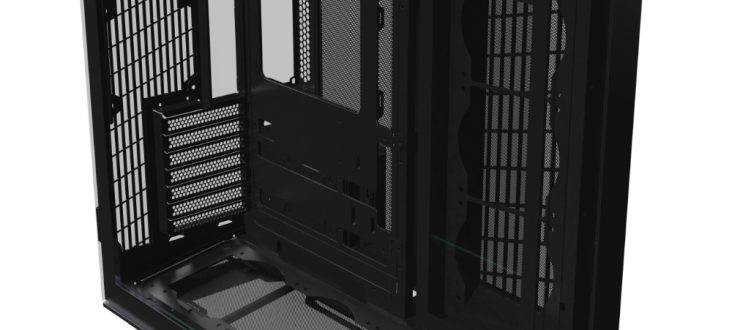
- Adjustable Modularity: The motherboard tray is now vertically adjustable, supporting a spectrum of form factors from ATX and microATX to the increasingly popular back-connect motherboards that hide cable clutter behind the tray.
- Radiator Versatility: A new three-position top radiator bracket allows for greater clearance for bulky VRM heatsinks or memory modules.
- Aesthetic Accents: The chassis features an angled bottom fan mount specifically designed for optimized GPU intake, complemented by diffused ARGB strips along the top and bottom edges for a cleaner, modern lighting profile.
The UX100: Panoramic Clarity
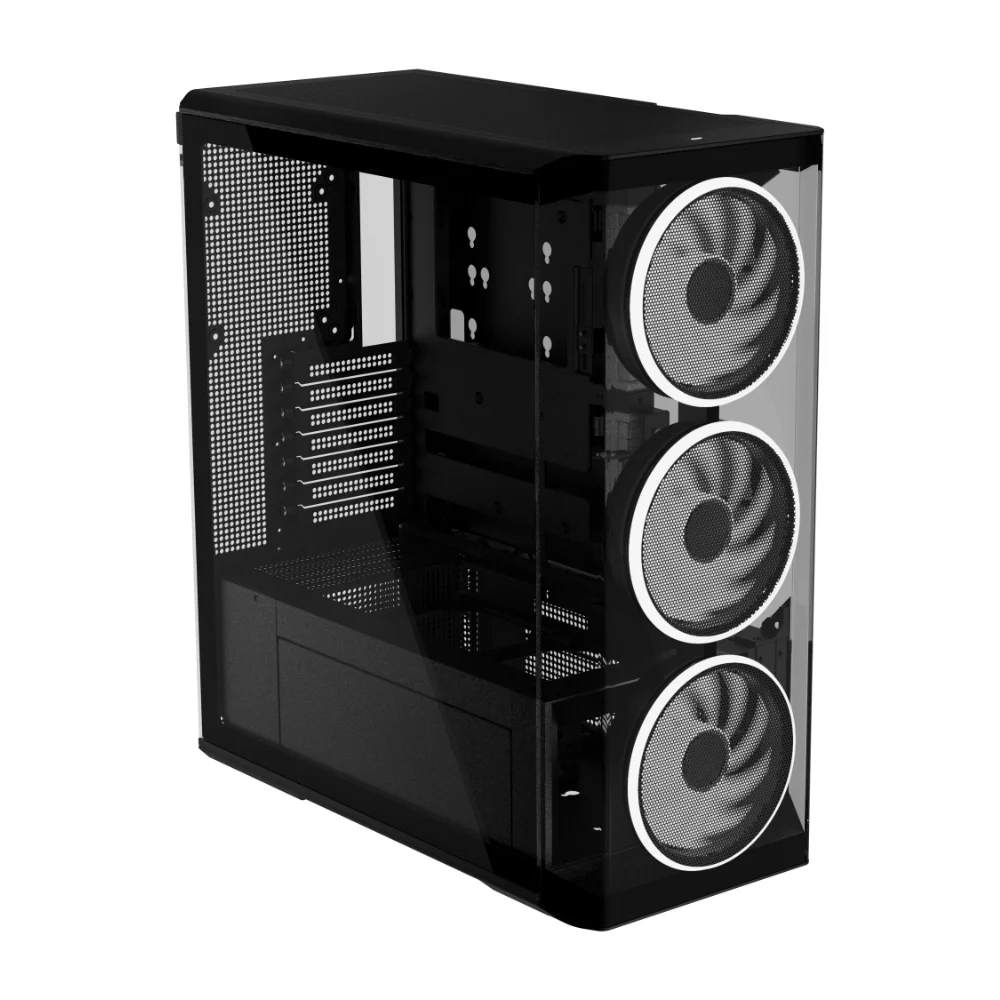
The UX100 represents Lian Li’s foray into the "fish tank" aesthetic with a refined approach to visibility. By utilizing a curved front panel and three-sided tempered glass, the chassis effectively removes the corner pillar that typically obstructs the view of the internal hardware. To support the thermal demands of such a compact design, the case is mounted on a raised base, creating a dedicated intake path that channels cool air directly toward the graphics card.
The Lancool 207 XL: High Performance on a Budget
Perhaps the most surprising reveal is the Lancool 207 XL. While the "XL" moniker typically denotes a premium, high-cost chassis, Lian Li has aimed for the mainstream market. Expected to retail for approximately $110 in Q4 2026, this case features a pair of newly designed bottom-mounted cross-flow fans. These fans are specifically engineered to direct high-pressure air toward the PCIe slots, offering a solution to the thermal throttling often seen in modern, power-hungry GPUs.
Chronology of the 2026 Hardware Pipeline
Lian Li’s development cycle has been carefully timed to precede the broader industry announcements expected at Computex. The company’s roadmap for the next six months is as follows:
- Late Q2 2026 (Pre-Computex Phase): Initial reveal of design specifications and prototype showcasing to gauge market reception.
- Computex 2026: Live demonstrations of the O11 EVO RGB V2 and the new Uni Fan Flex ecosystem.
- Q3 2026: Finalization of production models and early press samples distributed to global reviewers.
- Q4 2026: Full commercial launch of the Lancool 207 XL and the broader cooling product range, aiming to coincide with the holiday build season.
Supporting Data: The Uni Fan Flex Ecosystem
A chassis is only as effective as the cooling solution within it. Lian Li is expanding its cooling portfolio with the Uni Fan Flex series, a modular ecosystem designed to solve the perennial issue of cable management in high-density builds.
Technical Specifications of the Flex Series:
- Centralized Hub: All fans interface through a single Flex receiver hub, which synchronizes with the L-Connect 3 software suite.
- Wireless Synchronization: Integration with L-Wireless Sync allows for cable-free control of PWM speeds and 5V ARGB lighting profiles.
- Performance Metrics: The TL Flex model stands out with a raw performance output of 90.1 CFM and a static pressure of 3.97mmH2O at 2600 RPM.
- Display Integration: The flagship LCD variants feature a 1.8-inch 400×400 resolution screen, allowing users to monitor system vitals or display custom animated media.
- Versatility: Every model in the series—including the SL-INF, TL, and CL variants—will be available in both standard and reverse-airflow configurations, ensuring that users can maintain a uniform aesthetic regardless of their intake/exhaust orientation.
Official Implications for the DIY Market
The introduction of the "Flex" ecosystem and the move toward back-connect motherboard support signals a broader industry trend toward "stealth" builds. Lian Li is clearly positioning itself to be the primary provider for builders who prioritize clean lines, minimal cable visibility, and high thermal throughput.
By standardizing their cooling connectivity, Lian Li is also reducing the barrier to entry for novice builders. The ability to control a complex array of fans via a single hub significantly reduces the time required for assembly and troubleshooting—a key differentiator in an increasingly crowded PC component market.
Furthermore, the price point of the Lancool 207 XL suggests a strategic pivot. While Lian Li remains a premium brand, the $110 price tag for an "XL" chassis indicates they are aggressively targeting the mid-range demographic that was previously priced out of high-end airflow-focused cases.
Analysis: The Future of PC Building
As we look toward the second half of 2026, several conclusions can be drawn from Lian Li’s current trajectory:
1. Thermal Management is Paramount
With GPUs and CPUs reaching higher TDPs (Thermal Design Power) than ever before, the integration of bottom-mounted cross-flow fans and dedicated side chambers is no longer a luxury—it is a necessity. Lian Li’s commitment to these features indicates that they are designing their cases not just for aesthetics, but for the longevity of the expensive components housed within them.
2. The Death of the "Pillar"
The shift toward curved, pillar-less glass panels like that of the UX100 reflects a growing consumer desire for uninterrupted hardware showcases. As RGB lighting becomes more sophisticated, manufacturers are realizing that the chassis should act as a frame, not a barrier.
3. Modularity as a Service
By allowing for vertically adjustable motherboard trays, Lian Li is future-proofing their cases against the rapid evolution of motherboard layouts. Whether a user chooses a standard ATX board or a proprietary back-connect design, the chassis remains relevant for years to come.
Conclusion
As the industry prepares for the chaos and excitement of Computex, Lian Li has firmly established its position as an innovator. By balancing extreme performance with user-friendly features like the Flex hub and versatile chassis layouts, they have set a high bar for the competition.
For the enthusiasts, the message is clear: the hardware you purchase in late 2026 will be designed with a level of integration and thermal awareness that was previously unavailable. As we head to the exhibition floor, the focus will undoubtedly shift to how these components perform in real-world scenarios, but for now, Lian Li has provided a compelling roadmap for the future of custom PC building.
KitGuru will be reporting live from Computex in the coming days. Stay tuned for deeper dives, hands-on reviews, and interviews with the engineering teams behind these latest innovations.










No comments yet. Be the first to join the conversation!