

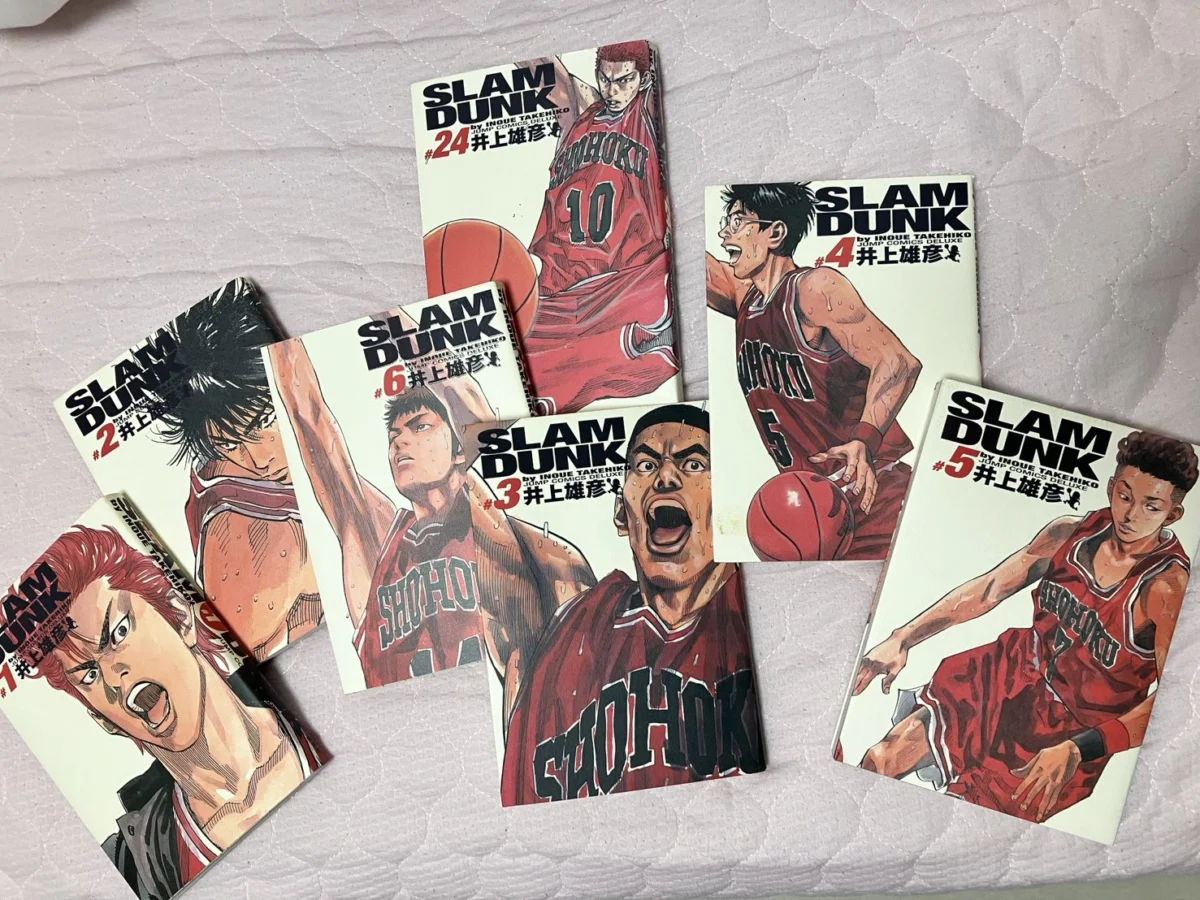
Remember those afternoons spent hiding a comic book behind a heavy, uninspiring textbook? For generations, manga has been unfairly maligned as a frivolous distraction, a "guilty pleasure" that stood in the way of serious academic pursuit. However, a groundbreaking new study suggests that those who grew up devouring serialized adventures were doing far more than just killing time—they were participating in a sophisticated, highly effective form of immersive learning.
The Japanese online illustration school, Atam Academy, recently released the results of a comprehensive survey involving 500 men and women across various age demographics. The data provides a compelling counter-narrative to the idea that comics are merely entertainment. By blending visual storytelling with narrative structure, manga acts as a cognitive catalyst, allowing readers to absorb complex information—from historical intricacies to scientific principles—with a retention rate that traditional static textbooks often fail to achieve.
The Data: A New Perspective on Literacy and Learning
The Atam Academy survey, which focused primarily on participants in their 30s, sought to dismantle the long-standing stigma surrounding comic literature. The findings were staggering: an overwhelming 97.8 percent of respondents admitted that they had gained tangible knowledge through reading manga.
When broken down by frequency, the results reveal a consistent pattern of informal education:
- 65.4 percent reported learning from manga "occasionally."
- 32.4 percent reported that they "often" learned from the medium.
- Only a negligible 2.2 percent claimed to have learned little to nothing at all.
This data suggests that for the vast majority of the population, the consumption of visual narratives is an inherently educational experience. The survey did not merely ask if people learned, but what they learned, uncovering a diverse curriculum hidden within the pages of popular series.
A Curriculum of the Imagination: What We Really Learn
The subject matter found in manga is surprisingly academic. According to the survey, the top categories of knowledge acquisition are as follows:
- Historical Knowledge (35.6%): Readers frequently cited that complex historical timelines, societal power structures, and the nuances of major conflicts are far more digestible when depicted through characters and plotlines rather than dense, dry prose.
- Scientific Knowledge (20.2%): Concepts in anatomy, physiology, and astrophysics are often brought to life through visualization, making abstract theories concrete.
- Social Navigation and Emotional Intelligence (15.2%): Perhaps most surprisingly, a significant portion of readers credits manga with teaching them how to interact with others, providing a roadmap for conflict resolution and empathy.
- Cognitive Flexibility (15%): Manga offers diverse perspectives, allowing readers to experiment with different ways of thinking and problem-solving.
- Technical Skills and Vocabulary (14% – 4.4%): From the specific rules of sports like baseball and soccer to professional jargon in fields like law or medicine, manga provides a crash course in specialized fields that are rarely touched upon in school curricula.
The Power of Visualization and Context
Why does manga succeed where textbooks struggle? The answer lies in the psychological mechanisms of association. The survey highlights that 50.8 percent of participants believe the primary reason for manga’s educational efficacy is its inherent "ease of understanding."
Unlike a traditional textbook, which presents information as a series of facts to be memorized, manga embeds information within a story. When a reader empathizes with a character, they become emotionally invested in the character’s success or failure, which, in turn, makes the facts surrounding that character’s world easier to recall. It is the difference between reading a definition of a chemical reaction and watching a personified white blood cell battle a pathogen in Cells at Work!. The latter creates a mnemonic anchor that lasts far longer than rote memorization.
Chronology: The Evolution of Manga as an Educational Tool
To understand why this shift in perception is occurring now, one must look at the evolution of the industry.
- The Early Era (1950s–1970s): Manga was largely viewed as entertainment for children, with little consideration for its educational value. The focus was on escapism and simple moral tales.
- The Golden Age of Shonen and Seinen (1980s–2000s): The medium began to mature, introducing complex, long-form narratives like Slam Dunk (1990). This era taught readers about discipline, the ethics of competition, and the nuances of teamwork.
- The Informational Explosion (2010s–Present): A new wave of "edutainment" manga emerged. Series like Cells at Work! (2015) and Dr. Stone (2017) were explicitly designed to teach biological processes and scientific principles, respectively. These titles represent the institutional acceptance of manga as a legitimate, reliable educational resource.
Official Responses and Expert Sentiment
Educational experts have long debated the role of visual media in the classroom, but the data from Atam Academy provides a definitive "pro-manga" stance. Educators noted that for students who find the "reading hurdle" of standard literature too high, manga offers a gateway. By reducing the intimidation factor of a dense page of text, manga encourages reluctant readers to engage with complex topics.
The survey also highlighted the importance of furigana—the small phonetic characters placed next to kanji. By including these, publishers have made it possible for younger readers to learn complex vocabulary and kanji organically, turning the act of reading into an effortless acquisition of language skills.
Real-World Implications: The Classroom of Tomorrow
The implications of this study are profound. If nearly 98 percent of adults believe they have learned from manga, the pedagogical community must consider how to integrate these visual narratives into formal education systems.

Enhancing Long-Term Memory
The survey’s findings on memory retention are particularly striking. 22.2 percent of participants noted that information sticks in their memory better when presented through manga. This suggests that "visual narrative integration" could be a powerful tool for educators. By pairing scientific articles with narrative-driven comics, teachers could potentially improve student engagement and information retention across the board.
Beyond the Classroom: Life Lessons
The impact extends beyond academic subjects. Manga serves as a "mirror" for social situations. For individuals who identify as shy or socially anxious, manga characters provide models for behavior. Watching a protagonist navigate a difficult confrontation or a moral dilemma allows the reader to safely rehearse their own responses to similar life events.
Conclusion: A New Chapter for Literacy
As we look toward the future, the divide between "serious" literature and "recreational" manga is rapidly dissolving. The Atam Academy survey serves as a validation for the millions of people who have found wisdom in the pages of their favorite series.
Whether it is learning the history of ancient China through Kingdom or understanding the complexities of the human immune system through Cells at Work!, the message is clear: knowledge is not defined by the medium, but by the impact it has on the mind. The next time you find yourself browsing a bookstore, don’t feel the need to hide your manga choice behind a biography or a science journal. You aren’t just reading—you’re studying, and you’re likely learning in one of the most effective ways humanly possible.











