Iffa Jayyana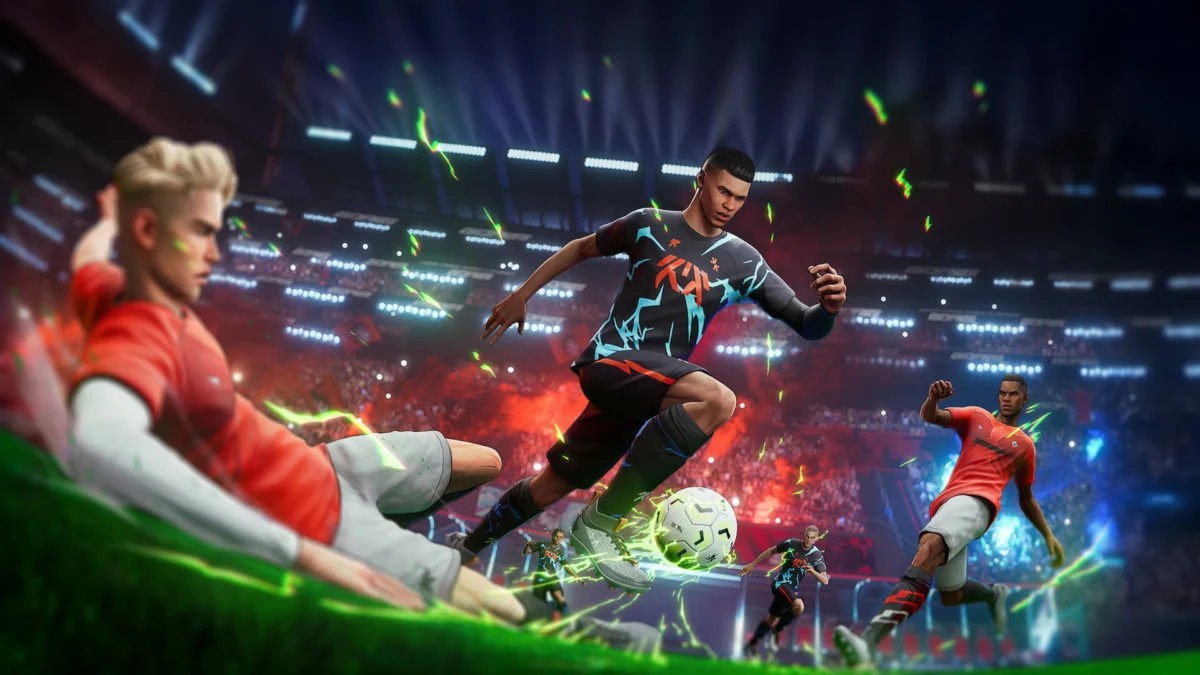
For years, the virtual soccer landscape has been dominated by a duopoly that has increasingly drawn the ire of its core community. As player sentiment toward the EA Sports FC series hits an all-time low, marked by complaints of aggressive monetization and a lack of innovation, the arrival of Goals feels less like a product launch and more like a necessary intervention. Billed as a "gameplay-first" alternative, Goals has spent years under the microscope of an expectant audience. Now that it has arrived, it is clear that the game is not trying to beat EA at its own game; it is trying to change the rules entirely.
The Philosophy of Difference: A Reimagined Ultimate Team
At its core, Goals is a direct challenge to the "Ultimate Team" paradigm that has defined soccer gaming for over a decade. However, where its competitors rely on the dopamine loop of card packs and the prestige of real-world licensing, Goals takes a different path. By stripping away the licenses, the developers have liberated themselves from the constraints of real-world parity.
In Goals, every player is a unique entity. There are no copy-paste squads where every user fields the same meta-defining stars. The progression system is deeply personalized: a player with a 48 rating might possess the hidden potential to reach a 52, while another could blossom into a 95-rated superstar. This unpredictability creates a genuine connection between the player and their squad. You aren’t just building a team of assets; you are developing a unique roster that belongs solely to you. The absence of a transfer market means you cannot simply buy your way to the top of the competitive ladder, effectively neutering the "pay-to-win" stigma that plagues the genre.
Chronology of a Challenger: From Hype to Reality
The journey to Goals has been one of high stakes and high expectations. When the title was first announced, it promised a radical departure from the status quo. Industry observers watched closely as the development team emphasized technical transparency and a commitment to player-first design.
- Initial Reveal: The project was unveiled with a focus on "gameplay-first" mechanics, distancing itself from the heavy reliance on microtransactions.
- Beta Phases: Early testing windows were met with guarded optimism. While the community praised the UI and the innovative progression systems, concerns regarding on-pitch movement and ball physics began to surface.
- The Launch: The game’s arrival this year has been marked by a stark contrast between its systemic brilliance—its menus, progression, and fair-play economy—and its mechanical growing pains. It has proven to be a game that understands the business of soccer better than the incumbents, but it still struggles to master the art of the sport itself.
Supporting Data: Progression, Economy, and Transparency
The primary differentiator for Goals is its economy. In the ecosystem of EA Sports FC 26, the user experience is frequently interrupted by prompts to spend real-world currency. Progression is often gated behind "SBCs" (Squad Building Challenges) or pack-opening mechanics that feel more like a casino than a sporting simulation.

Goals offers a refreshing, albeit simpler, alternative:
- XP-Based Progression: Matches yield experience points that fill bars for your active squad. There are no hidden hoops to jump through. If you play, you progress.
- The "Anti-Store" Sentiment: While the game does feature a store, its function is relegated to acquiring base-level players. Because these players are unique to your account and cannot be sold, the incentive to "whale" (spend excessive amounts of money) is non-existent. You are essentially competing against your own ability to grind and develop talent.
- UI Clarity: The squad management screen is a masterclass in minimalism. It removes the bloat of redundant menus, allowing players to focus on what matters: the team.
Furthermore, the game introduces clever quality-of-life mechanics, such as the visual "Full-Time Grid." Instead of the arbitrary and often frustrating "whistle in the middle of a breakaway," a visual indicator fades from green to red across the pitch as the match clock nears its conclusion. It provides a tactile sense of urgency that brings a new layer of strategy to the final seconds of a game.
Official Responses and Developer Stance
The developers of Goals have been remarkably candid regarding their goals (pun intended). Their messaging has consistently reinforced that they view the project as a long-term, evolving platform rather than a yearly iteration.
In response to early feedback regarding the clunkiness of movement, the team has acknowledged that the "gameplay-first" promise is an iterative process. They have positioned the game as a living service—one that will be patched, adjusted, and refined in the coming months. Unlike legacy titles that focus on marketing the next annual installment, the developers here have signaled that their primary KPI is player retention through fairness rather than extraction through volume.
The Implications: A Shift in the Soccer Gaming Paradigm
The implications of Goals are significant for the broader gaming industry. If Goals succeeds, it proves that there is a viable market for "Fair Play" sports titles. It challenges the assumption that licensing is the only way to build a successful soccer game.

Technical Hurdles
Despite the praise for its systems, Goals faces a steep uphill battle in the department of pure, visceral gameplay. The current build feels "arcadey"—a conscious choice, perhaps, but one that currently lacks the polished, fluid responsiveness of its competitors. Passing and dribbling, while functional, lack the nuance that veteran players have come to expect. The shooting mechanics, in particular, suffer from an imbalance where finesse shots dominate the meta, potentially stifling tactical variety.
The Competitive Landscape
When compared to other recent entrants like UFL, Goals is undeniably more consistent at launch. It avoids the catastrophic bugs and server instability that often sink new titles. However, the game sits in a precarious middle ground: it is not a realistic simulation, nor is it a fully realized arcade masterpiece. It is currently a prototype of a better, fairer system that needs its "engine" to be tuned to match its ambition.
Conclusion: A Work in Progress with Heart
Goals is not the "EA-killer" that some fans were hoping for on day one. It is not yet the perfect, fluid simulation that makes you forget you are holding a controller. However, it is something perhaps more important: it is a rebuke of everything that has made the current generation of soccer games feel exploitative.
The game is respectful of its players’ time and money. It offers a progression system that feels rewarding rather than punitive, and it treats the user as a participant in a sport rather than a consumer of a product. For those who are tired of the endless cycle of yearly resets and microtransaction-heavy progression, Goals offers a sanctuary.
As the developers continue to iterate, the path forward is clear: sharpen the movement, balance the shooting, and maintain the current ethical stance on monetization. If they can align the mechanical quality of the game with the brilliance of its design philosophy, Goals won’t just be a competitor—it will be the new standard by which all other soccer games are measured. The pitch is currently being prepared, and for the first time in years, the game in the center circle feels like it has a soul.

 Azzam Bilal Chamdy
 Reynand Wu