

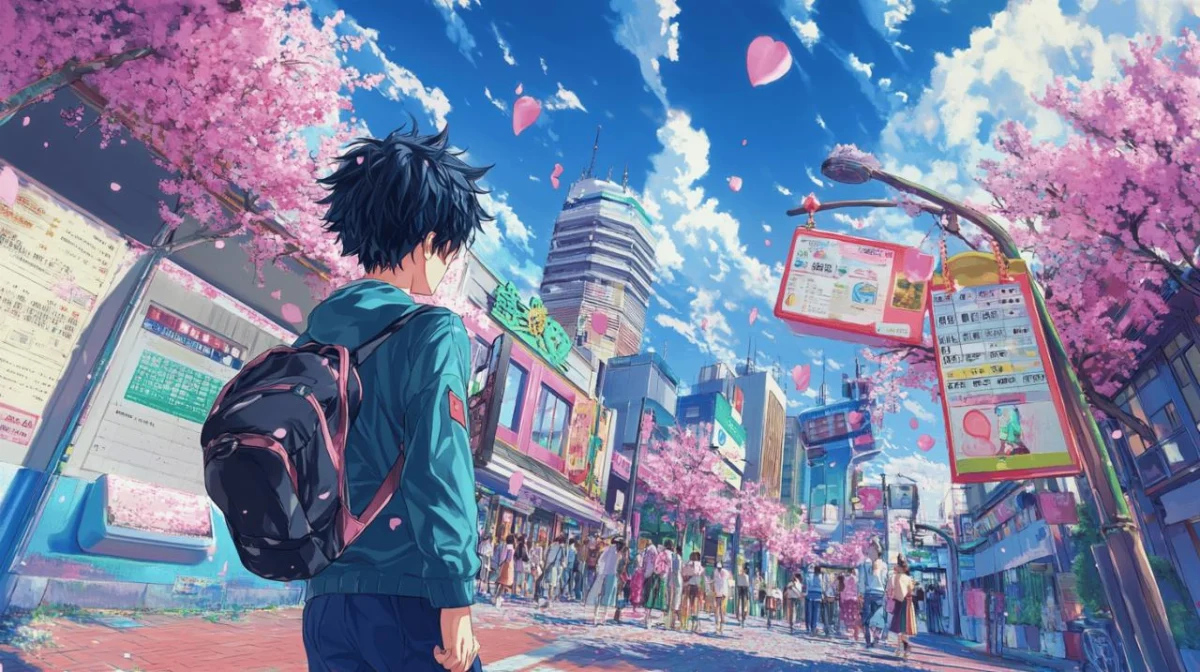
The world of romantic comedy anime is often saturated with predictable tropes and static character arcs. However, Masamune-kun’s Revenge—a series birthed from the creative partnership of writer Hazuki Takeoka and illustrator Tiv—stands out as a sophisticated exploration of psychological transformation, the toxicity of social masks, and the long-term impact of childhood trauma. As the franchise progresses, most notably with the anticipation surrounding its latest developments and the narrative depth of its third season, it has transitioned from a simple "vengeance plot" into a poignant study of human vulnerability.
Main Facts: The Anatomy of a Modern Romance
Masamune-kun’s Revenge centers on Masamune Makabe, a young man who, after being cruelly rejected and nicknamed "Piggy" by the wealthy and intimidating Aki Adagaki during their childhood, undergoes a radical physical metamorphosis. Returning to high school as a handsome, athletic, and narcissistic heartthrob, his singular goal is to seduce Aki, make her fall deeply in love with him, and then cruelly reject her—a classic "revenge play."
However, the core of the work lies in the deconstruction of this plan. Published by Ichijinsha in Japan and licensed by Meian in France, the manga spanned 11 volumes between 2012 and 2018. Its adaptation by studio Silver Link has brought this complex dynamic to a global audience via platforms like Crunchyroll, turning a niche manga into a staple of the contemporary shonen-romance genre.
Chronology: From Childhood Trauma to Emotional Maturity
The narrative of the series is not linear; it is a tapestry woven with threads from the past that dictate the actions of the present.
- The Formative Trauma (Childhood): The inciting incident occurs in childhood, where an act of rejection by Aki Adagaki permanently alters Masamune’s self-perception. This period is defined by the "Piggy" nickname, which serves as the anchor for his obsession with physical perfection.
- The Metamorphosis (High School Debut): Years later, Masamune returns to the scene of his humiliation. His transformation is not merely physical; it is a defensive shell designed to protect him from ever being vulnerable again.
- The Initiation of the "Dead or Love" Plan: The first act of the series details his methodical approach to wooing Aki. During this phase, the audience observes the "social mask" phenomenon: Masamune plays the perfect prince, while Aki maintains the persona of the "Cruel Princess" to keep others at a distance.
- The Unraveling (Mid-Series): As Masamune interacts with Aki, the lines between his manufactured persona and his true feelings begin to blur. The introduction of third parties, such as the enigmatic Yoshino Koiwai and the affectionate Neko Fujinomiya, forces Masamune to confront his own lack of authenticity.
- The Third Season (Current Narrative): The latest developments represent the maturation of the cast. The "vengeance" is no longer the central focus; instead, the story shifts toward reconciling the personas they have created with their genuine desires.
Supporting Data: The Dynamics of Identity
The success of Masamune-kun’s Revenge rests on its commitment to character growth rather than static archetypes.
The Weight of Physical Judgment
The series serves as a critique of how society, particularly in high school environments, values physical appearance over personality. Masamune’s obsession with his weight is a manifestation of internalized body dysmorphia triggered by his childhood rejection. The brilliance of the narrative lies in showing how Aki, despite her status as the "perfect" beauty, is equally trapped by the expectations placed upon her. Her cruelty is a defense mechanism, a barrier built to prevent others from seeing her insecurities.
The Role of Secondary Characters
Characters like Yoshino Koiwai act as the catalyst for truth. As Aki’s maid, Yoshino possesses intimate knowledge of both the past and present, often manipulating the situation to force both protagonists to face reality. Neko Fujinomiya, conversely, represents the path not taken—a character who is unapologetically honest about her feelings, serving as a foil to the deception that defines Masamune and Aki’s relationship. The introduction of characters like Kanetsugu Gasō further complicates the social landscape, forcing the protagonists to question whether they are in love with a person or a memory.
Official Perspectives and Production Insights
The production by Studio Silver Link has been lauded for its ability to transition Tiv’s delicate, high-detail character designs into a fluid animated format. In interviews, the production team has emphasized that the "revenge" element was always intended to be a vehicle for emotional discovery rather than a destination.
The adaptation process involved a delicate balancing act: maintaining the comedic timing of the original manga while ensuring that the dramatic pivots—the moments where the mask slips—carried sufficient weight. By utilizing flashbacks, the studio ensures that the audience understands that Masamune and Aki are not just two high schoolers falling in love, but two wounded individuals trying to heal through a shared history they both fundamentally misunderstood.
Implications: The Philosophical Shift
The evolution of the series has significant implications for the romantic comedy genre as a whole.
The Deconstruction of the "Revenge" Trope
By the time the series reaches its latter chapters, the audience realizes that the "revenge" was never against Aki; it was against the version of himself that Masamune hated. The series suggests that real growth occurs only when one stops performing for an audience. When Masamune finally abandons his "prince" persona, he finds that the connection he has with Aki is far stronger than any manufactured seduction could have yielded.
Authentic vs. Fabricated Identity
The series asks a fundamental question: Who are we when we stop trying to impress others? The journey of these characters from the first volume to the conclusion of the latest arc is a testament to the idea that love is only possible when vulnerability is present. The "Cruel Princess" and the "Perfect Prince" must both perish for the real people beneath them to meet.
The Legacy of the Franchise
Masamune-kun’s Revenge leaves a lasting legacy in the way it handles narrative resolution. By moving away from the premise that initially drew viewers in, it proves that character development is the most powerful tool in a writer’s arsenal. The series has become a benchmark for fans of the genre who look for more than just slapstick humor, instead seeking stories that mirror the messy, uncomfortable, and ultimately rewarding nature of human relationships.
Conclusion: A Reflective Journey
As the anime continues to unfold and the legacy of the manga remains solidified, Masamune-kun’s Revenge stands as a poignant reminder that the stories we tell ourselves about our past are often the biggest obstacles to our future. Through the meticulous illustration of Tiv and the narrative vision of Hazuki Takeoka, the series has successfully transitioned from a story of spite to a story of grace. It is a work that encourages its audience to drop their own masks, recognize their worth beyond physical judgment, and embrace the raw, unfiltered reality of their own identities. Whether through the lens of a fan watching on Crunchyroll or a reader perusing the volumes, the lesson remains the same: revenge may provide a temporary shield, but only authenticity provides a home.











No comments yet. Be the first to join the conversation!