

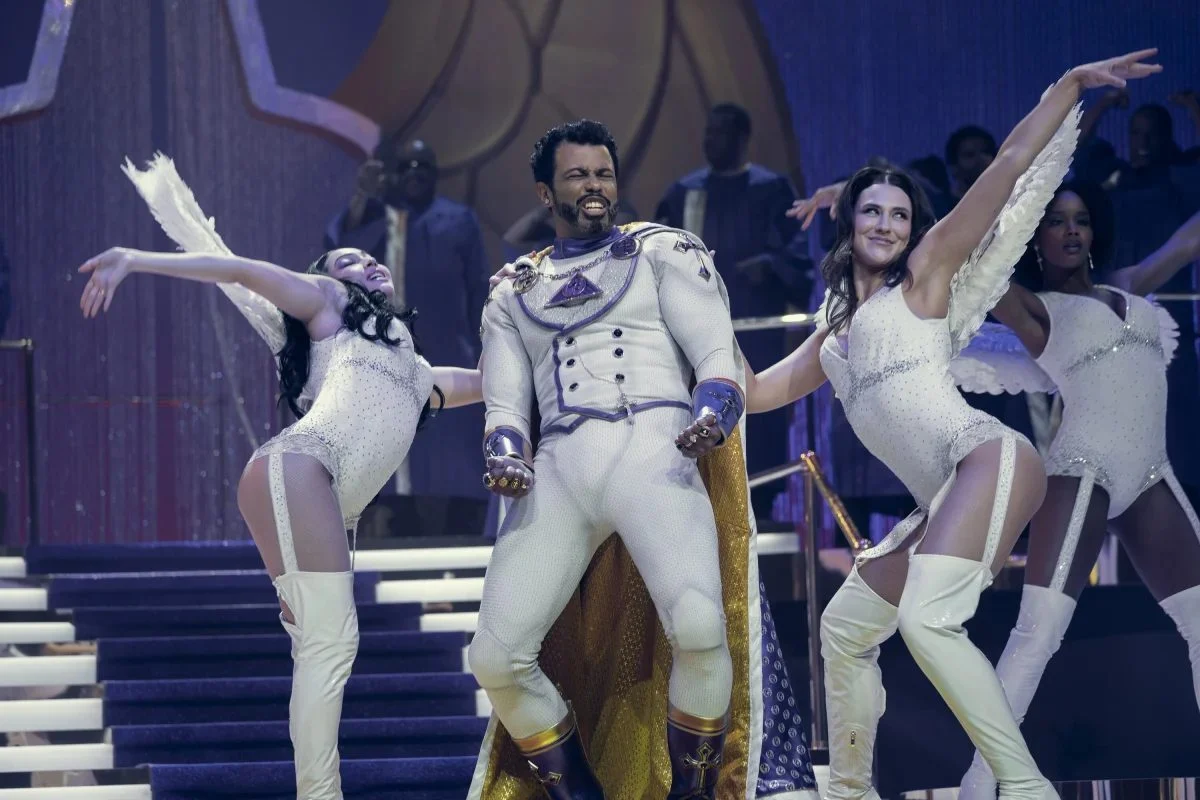
As The Boys barrels toward its explosive series finale, the satirical landscape of Vought International has become increasingly surreal. In its fifth and final season, the Prime Video juggernaut has introduced a character who embodies the show’s central themes of media manipulation, religious fanaticism, and the commodification of blind loyalty: Oh-Father, played with chilling, theatrical precision by Daveed Diggs.
While the series is known for its cavalcade of depraved “Supes,” Oh-Father represents a distinct shift in the show’s villainy. He is not merely a super-powered individual looking to cause mayhem; he is a political strategist and a religious charlatan who has successfully weaponized faith to serve Homelander’s rise to absolute power.
The Evolution of a Comic Book Antagonist
To understand the weight of Oh-Father’s presence in the final season, one must look back at the source material. In Garth Ennis and Darick Robertson’s original The Boys comic series, the character served as a minor, albeit repulsive, antagonist. Within the pages of the source material, he was the face of “Capes for Christ,” a religious organization that provided a thin veneer of piety to hide a litany of heinous crimes, particularly those involving his child sidekicks.
The comic iteration of Oh-Father was a staunch, vocal supporter of Homelander, eventually fighting alongside the erratic leader during the infamous attack on the White House. In the comics, his end was swift—the U.S. military decimated his forces, bringing his reign of terror to an abrupt conclusion.
The television adaptation, however, has opted for a more nuanced, slow-burn approach. By integrating him into the current political climate of the show—where Vought is essentially a failing state—the writers have elevated him from a one-note villain into a complex, terrifying architect of a cult-like movement.
Chronology: From Prayer Breakfast to State-Sanctioned Theology
The narrative arc of Oh-Father in Season Five has been one of the most compelling subplots of the final season. His introduction in the series premiere established his role not as a combatant in the Seven, but as a cultural engineer.
The Political Alliance
We are introduced to Oh-Father in a high-profile interview with Firecracker, where his connection to Ashley Barrett—who currently holds the office of Vice President—is revealed. Their union is framed as a “match made in Heaven,” though subsequent episodes suggest it is a cold, calculated arrangement of convenience. By taking the mantle of head pastor at “Samaritan’s Embrace”—the spiritual successor to the late Ezekiel’s “Capes for Christ”—Oh-Father positioned himself as the primary moral voice for the pro-Homelander movement.
The Escalation of Rhetoric
In Episode 2, following the tragic death of A-Train, Oh-Father utilized his unique ability to amplify his voice to command the grieving crowd at the funeral. He skillfully pivoted the narrative, casting blame on Starlight and characterizing her followers as “possessed.” This was a turning point for the show’s internal politics, as it solidified the division between the general public and the “Starlighters.”
The Shift to Totalitarian Cultism
By Episode 4, the veil began to thin. The “freaky” and tense domestic dynamic between Ashley and Oh-Father exposed the fragility of his operation. Despite financial debts threatening the stability of his church, Oh-Father doubled down, announcing the rebranding of his institution as the “Democratic Church of America.” In this chilling declaration, he officially canonized Homelander as the “Lord and Savior” of the nation, marking a departure from secular politics into full-blown theocratic worship.

The Infiltration and The Final Pivot
By Episode 6, the stakes reached a boiling point. The discovery that Annie (Starlight) and Oh-Father share a history provided a layer of personal tension, but the real threat was his intervention in Annie’s attempt to deploy a supe-killing virus within his church. By the time Episode 7 concludes, it is clear that Oh-Father has transitioned from a public speaker to a true believer in his own rhetoric, producing disturbing propaganda and threatening anyone who refuses to submit to the new Homelander-centric faith with lethal consequences.
Supporting Data: The Anatomy of a Supe-Theocracy
The rise of Oh-Father is not happening in a vacuum. It is supported by the collapse of Vought’s traditional marketing strategies. With the Seven in shambles and public trust at an all-time low, Vought has pivoted toward “Theocratic Nationalism.”
- Financial Instability: As revealed in the fourth episode, the church is operating under significant debt. This suggests that Oh-Father’s fanaticism is a desperate play to secure corporate funding from a crumbling Vought, which needs a new ideological pillar to keep its base engaged.
- Propaganda Reach: The shift to the “Democratic Church of America” suggests a coordinated effort to merge the powers of the state (via Ashley’s VP position) with the powers of the church (via Oh-Father). This is a classic authoritarian tactic, designed to ensure that political dissent is equated with moral sin.
- The Power of Sound: Oh-Father’s ability to amplify his voice is a clever metaphor for the echo chambers created by modern media. He does not just speak; he projects a curated reality that drowns out opposing viewpoints.
Official Responses and Internal Tensions
Behind the scenes of this religious fervor, the tensions within the Vought hierarchy are palpable. While Ashley Barrett remains the public face of the administration, she is clearly out of her depth. Her concern regarding the church’s financial health and the optics of their “marriage” highlights the disconnect between the administrators and the zealots they have unleashed.
Homelander’s reaction to Oh-Father is perhaps the most telling aspect of the season. The “hero” of this new movement does not seem entirely impressed by the pastor’s efforts. Homelander is a character who demands total, unthinking adoration, and the fact that he is dissatisfied with the pace of Oh-Father’s conversion process suggests that the pastor’s life expectancy in the show is likely very short.
Furthermore, Sage’s role as the puppet master of this administration adds another layer of intrigue. Her admission that the marriage between Ashley and Oh-Father is purely for public consumption confirms that every interaction we see is a calculated move on a chessboard that the characters themselves may not fully understand.
Implications for the Series Finale
The inclusion of Oh-Father in the final season serves a critical narrative purpose: it illustrates that Homelander’s greatest threat is not just the titular “Boys,” but the systemic rot that allows his narcissism to be packaged as divine intervention.
As we look toward the final episodes, the implications of Oh-Father’s propaganda are severe. If he succeeds in cementing Homelander’s status as a religious icon, the physical battle will become secondary to an ideological war. The show has spent five seasons deconstructing the “Super Hero” myth; now, it is deconstructing the “Messiah” myth.
Oh-Father is a mirror held up to the audience, reflecting the dangers of unquestioning loyalty. Whether he meets his end at the hands of the military, as he did in the comics, or whether he is dismantled by the very man he claims is a god, remains to be seen. What is certain is that Daveed Diggs’ portrayal has added a layer of sophisticated dread to the final act of The Boys, proving that in a world of monsters, the most dangerous ones are often the ones holding the hymnal.
As the final credits roll, Oh-Father will likely be remembered not for his powers, but for his ability to convince the world that its end is actually a blessing. The unraveling of Vought, and the descent of the nation into a Homelander-led cult, remains the most gripping arc of the show’s final chapter.










No comments yet. Be the first to join the conversation!