Asro
Asro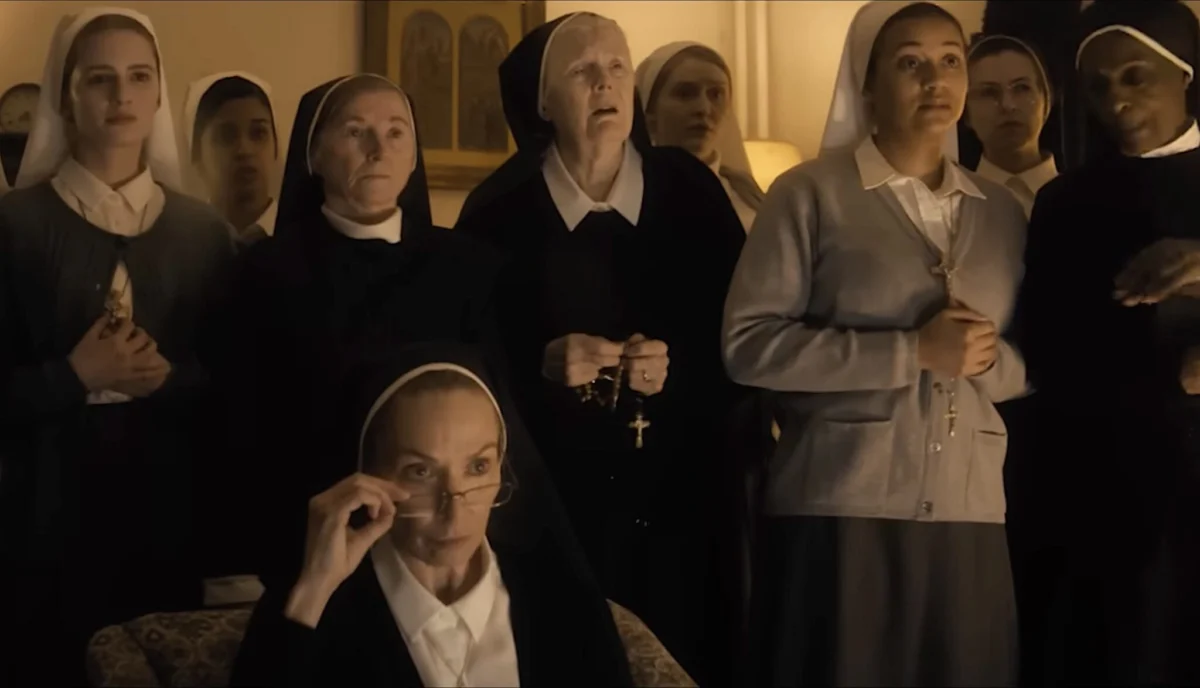
Steven Spielberg has long been the cinematic architect of the "divine encounter." From the desert-swept wonder of Close Encounters of the Third Kind to the Christ-like sacrifice inherent in E.T. and the apocalyptic dread of War of the Worlds, his filmography is a tapestry woven with religious allusion. Yet, his latest directorial venture, Disclosure Day—penned by long-time collaborator David Koepp—seeks to push this conversation into a more aggressive, uncomfortable territory.
While the film ostensibly centers on the political and existential fallout of first contact, it is, at its core, a messy, ambitious, and ultimately incomplete meditation on faith, consent, and the "straitjacket" of religious symbolism.
The Mechanics of the Divine: A Chronology of Discovery
The narrative of Disclosure Day functions through a dual-protagonist structure, bifurcating the experience of "The Event" into two distinct manifestations of transcendence.
Daniel Kellner (Josh O’Connor), a 20-year-old college student, experiences a cognitive rupture. Following a brush with an inexplicable craft, Daniel is granted a synesthetic understanding of mathematics—the foundational code of the universe. This "gift," however, is a poison chalice. It alienates him from his peers, erases his childhood memories, and leaves him socially adrift until he finds an unlikely anchor in Jane (Eve Hewson).
Simultaneously, we follow Margaret Fairchild (Emily Blunt). Her encounter with an "uncanny cardinal" results in a different, more socialized form of power: polyglot fluency and a telepathic empathy that allows her to bypass mental chatter and speak to the core of a person’s trauma.
As the film progresses, the disparity between these characters becomes starkly gendered. Daniel, hardened by his experience and a subsequent stint in prison, adopts the role of the radical whistleblower. He views his knowledge of extraterrestrial life not as a miracle, but as a burden he intends to force upon the world, regardless of the socio-political chaos it might incite. Margaret, conversely, acts as a conduit for grace. Despite the migraines and the sheer exhaustion of her empathy, she treats her power as a duty to heal, often acting as a mirror for those who have lost their way.
Supporting Data: Faith as a Narrative Weapon
The film’s reliance on religious imagery is both its greatest aesthetic strength and its most significant narrative flaw.
The crux of the film’s theological debate is channeled through Jane, who is revealed to be a former nun-in-training. The script utilizes her background to anchor the film’s discourse on whether humanity is capable of reconciling a belief in a Supreme Being with the empirical reality of "actual" supreme beings from the stars.
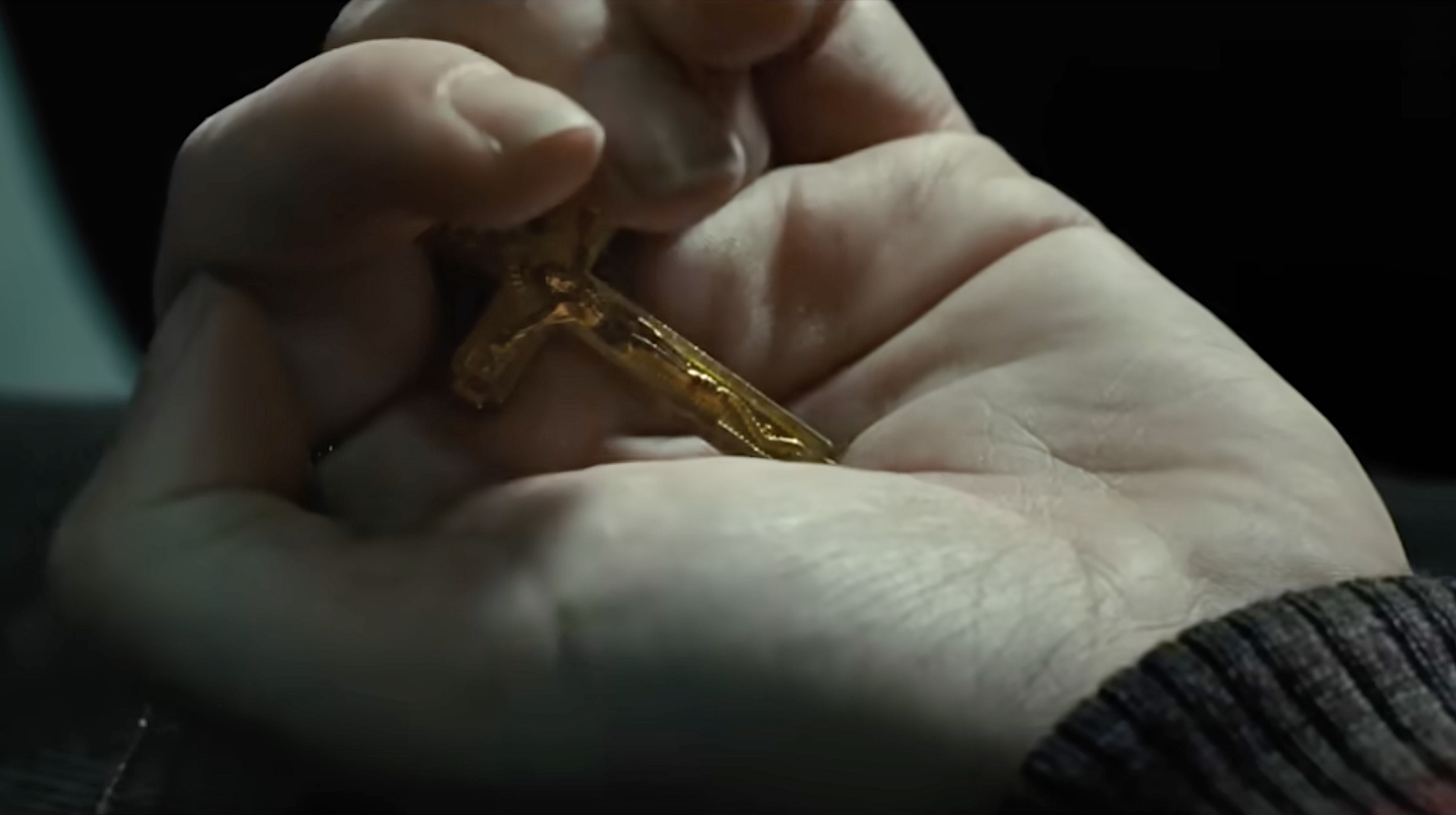
However, the film’s approach to this discourse is curiously narrow. Jane wears a large, ornate gold crucifix—a visual shorthand that the film leans on heavily. When she is subjected to a "dive"—a form of aggressive, invasive mental torture administered by the antagonist, Noah Scanlon (Colin Firth)—the film transforms religious symbols into instruments of agony.
In a harrowing sequence, Jane clutches her crucifix, pressing the sharp edges into her palm to ground herself against Scanlon’s intrusion. It is a literalization of stigmata, used not as a sign of holiness, but as a desperate, failing defense mechanism. Scanlon further weaponizes her faith by forcing her to recite the Gethsemane prayer, "Not my will, but thine, be done," turning a moment of supreme theological surrender into a tool for emotional enslavement.
Official Responses and Creative Intent
The creative choices made by Spielberg and Koepp have sparked significant debate regarding the film’s singular focus on Catholic imagery. While Koepp has identified as an agnostic—noting that human knowledge is too narrow to definitively parse the existence of either God or aliens—the film remains stubbornly, almost exclusively, Catholic in its visual language.
Critics have pointed out that in a world of diverse religious traditions, the film’s insistence on "Catholicism as the default religion" acts as a bottleneck. Whether it is a woman crossing herself in front of Margaret or the internal monologue of a nun, the film seems unable or unwilling to explore how faith functions outside of this specific, high-drama, visually grand tradition.
Furthermore, the film’s pacing issues—specifically the "phone call" sequence where Jane attempts to discuss her spiritual crisis with Sister Maura (Elizabeth Marvel)—illustrate the film’s inability to sit with its own questions. The scene is constantly interrupted by the mundane, chaotic reality of a diner, effectively stifling the emotional gravity of the dialogue. When compared to the similar, masterful phone call scene in Rian Johnson’s Wake Up Dead Man, where the camera lingers to allow for emotional resonance, Disclosure Day feels rushed, leaving the audience to do the heavy lifting of processing Jane’s internal conflict.
The Implications of "The Truth"
The failure of Disclosure Day lies not in its ambition, but in its lack of commitment to the stakes it establishes. The film asks: If we discover we are not alone, does our faith in the divine lose its validity?
Jane’s arc suggests that her faith is a shield that fails. When her prayer does not protect her from the trauma of her interrogation, she is left in a state of existential vertigo. Does God love us less if we are merely one of many creations? If we are the "babies" of the universe, why were we not enough?
The film ultimately dances around these questions without providing a synthesis. The final, cryptic utterance of the word "Listen"—an allusion to the Shema, the foundational prayer of Judaism—is a late-stage pivot that feels disconnected from the two-and-a-half hours of "Team Catholic vs. Team Alien" posturing that preceded it. It is a final attempt to invoke a deeper, broader spirituality, but it arrives too late to recontextualize the preceding narrative.
Conclusion: A Conversation Cut Short
Disclosure Day is a film that wants to be a profound philosophical treatise, yet it is hampered by a lack of narrative space. It introduces concepts of consent and bodily autonomy—seen through the lens of torture and the involuntary granting of alien "gifts"—but fails to interrogate these ideas with the rigor they require.
By using religion as a surface-level aesthetic rather than a deeply examined facet of the human condition, Spielberg and Koepp have created a film that is visually stunning and conceptually intriguing, yet ultimately hollow. It treats the audience as spectators to a crisis of faith, rather than participants in it.
To tell a story about humanity’s place in an infinite universe, one must be willing to look beyond the local horizon. By restricting its spiritual inquiry to the iconography of a single tradition, Disclosure Day misses the opportunity to truly explore what it means to be "small" in a universe that is suddenly much, much larger. The film offers a glimpse into the divine, but because it refuses to let us linger, we are left only with the mystery—and a lingering frustration at what might have been.


 Iffa Jayyana
 Ammar Sabilarrohman