Reynand Wu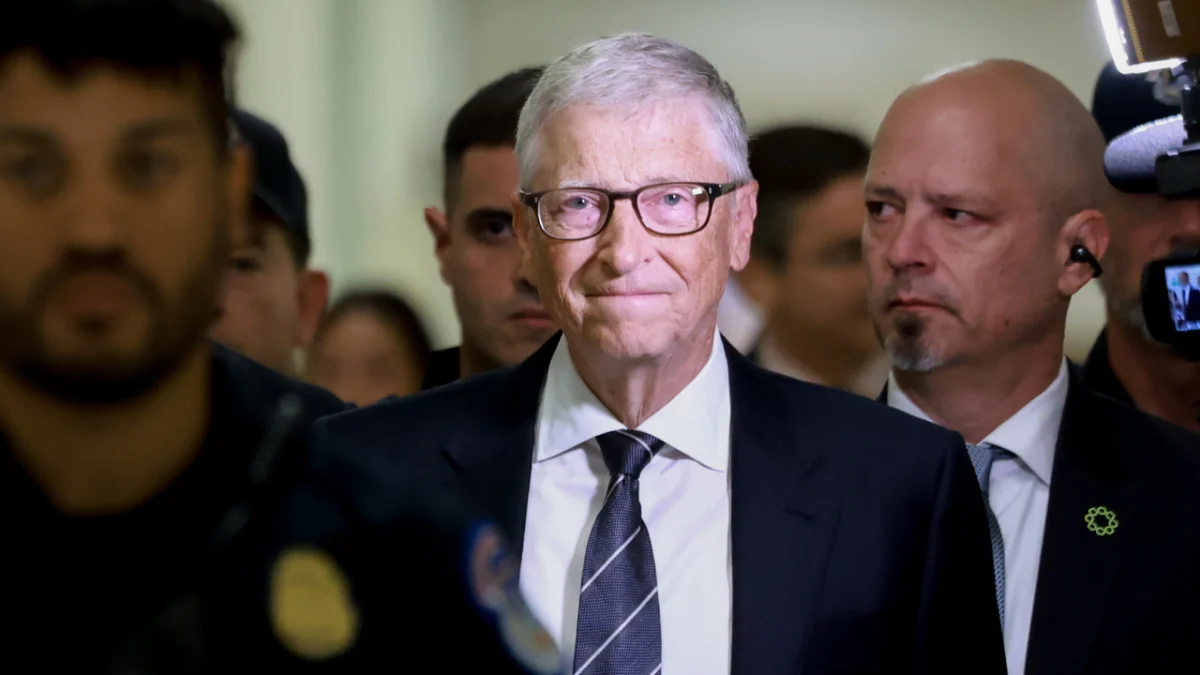
In a stark assessment of the current technological landscape, Microsoft co-founder and billionaire philanthropist Bill Gates has issued a sobering warning: global governments are fundamentally unprepared for the rapid ascent of artificial intelligence. In a recent interview with Reuters, Gates characterized the current state of policy-making as being “way behind” the blistering pace of AI development. His comments serve as a clarion call for international regulatory bodies to pivot from passive observation to proactive governance, particularly as the technology prepares to disrupt the fundamental structure of the modern workforce and social cohesion.
The Reality Check: Why Governments Are Trailing
The central thesis of Gates’ warning is rooted in the disparity between the innovation cycle of the private sector and the legislative cycle of the public sector. While corporations are integrating Large Language Models (LLMs) and autonomous agents into global infrastructure at an exponential rate, government frameworks remain tethered to traditional, slower-moving bureaucratic processes.
Gates suggests that the current disconnect is not merely a matter of inefficiency but a systemic vulnerability. Without comprehensive, forward-looking policies, the potential for societal harm—ranging from mass labor displacement to the destabilization of information ecosystems—increases exponentially. The "AI era," as Gates has described it, promises to be one of the most turbulent periods in human history, characterized by a fundamental shift in how value is created, distributed, and regulated.
A Chronology of the AI Surge and Regulatory Response
To understand the gravity of Gates’ recent remarks, one must look at the rapid acceleration of AI integration over the last three years:
- Late 2022: The public release of generative AI tools marks a turning point, triggering an “arms race” among tech giants. Governments begin to treat AI as a peripheral issue rather than a core national security priority.
- 2023: Global AI summits commence, focusing on abstract safety goals rather than concrete legislative guardrails. Public discourse remains centered on theoretical risks, such as existential threats, while neglecting immediate economic impacts.
- 2024: Businesses begin large-scale automation of white-collar roles. The economic reality begins to diverge sharply from political rhetoric, as unemployment and retraining needs become pressing concerns.
- Late 2025 – Early 2026: The current period. The widespread adoption of AI agents has rendered previous regulatory proposals obsolete. Gates emerges as a vocal critic of the prevailing inertia, pushing for immediate, structural changes to taxation and labor law.
Supporting Data: The Scale of the Disruption
The urgency of Gates’ message is supported by economic data indicating a seismic shift in labor market dynamics. According to various industry reports, up to 40% of global employment could be affected by AI, with a significant portion of those jobs facing total automation.
Furthermore, the integration of AI into data centers—the physical backbone of this revolution—has created an unprecedented demand for energy and high-end semiconductor hardware. As nations compete for dominance in the AI hardware supply chain, the lack of a unified global policy has led to fragmented markets. This fragmentation poses a risk to smaller nations that lack the infrastructure to compete, potentially widening the global wealth gap between “AI-ready” economies and the rest of the world.
Potential Regulatory Interventions: Taxes and Human-Reserved Roles
Gates has not merely diagnosed the problem; he has proposed controversial, yet pragmatic, solutions. His vision for mitigating the impact of AI includes:
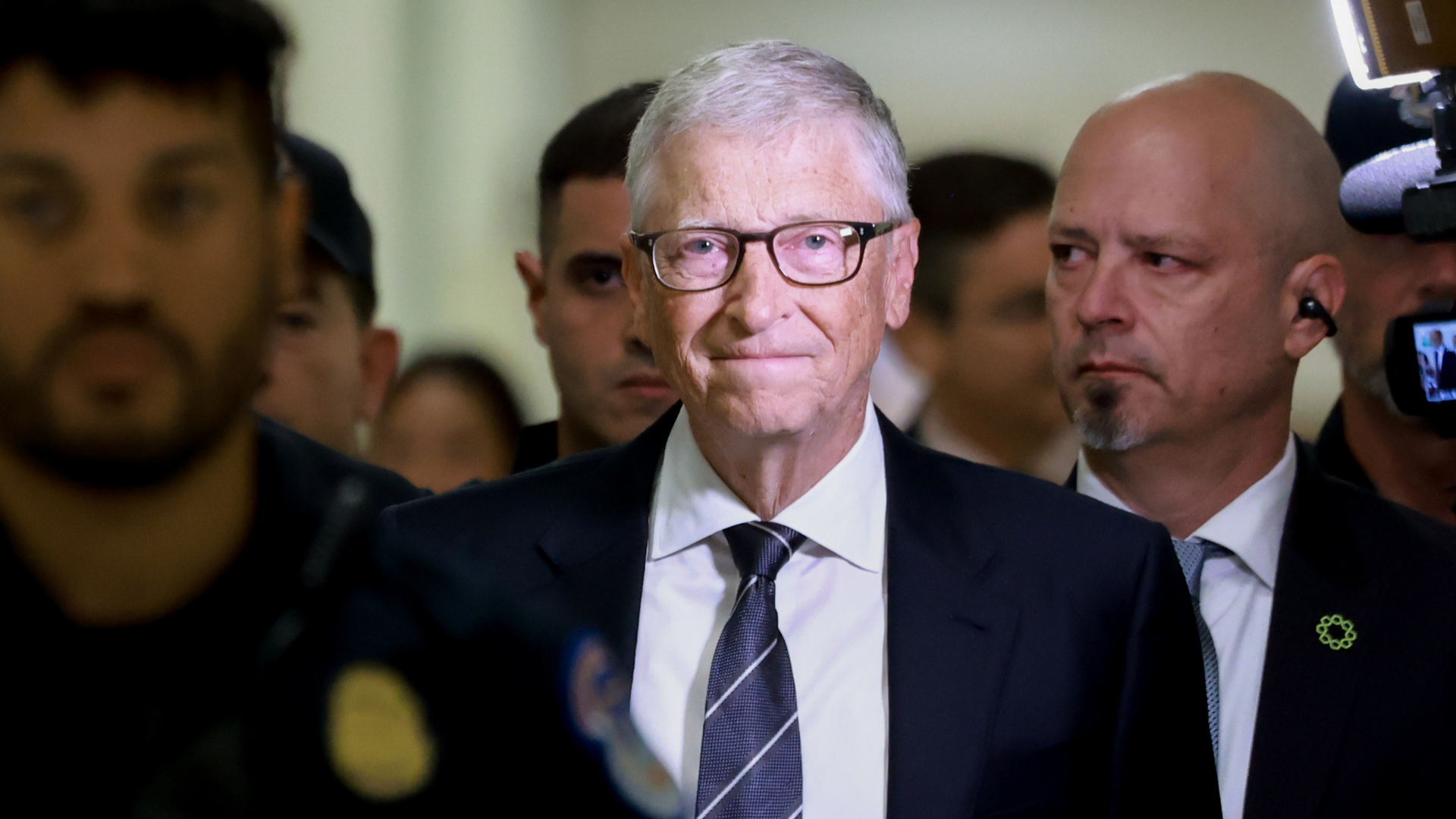
- Taxing AI Tokens and Robots: Gates has long championed the idea of taxing the productivity gains derived from non-human labor. By taxing the "tokens" or compute power used by AI models, governments could generate the necessary revenue to fund social safety nets for displaced workers.
- Human-Reserved Employment: Recognizing that certain roles—such as those requiring deep empathy, complex ethical judgment, or direct human-to-human care—are irreplaceable, Gates advocates for a protected class of "human-only" occupations. This would ensure that as machines take over analytical and repetitive tasks, the dignity of human labor is preserved in critical sectors like education, healthcare, and elder care.
- Cross-Border Regulatory Alignment: Given that AI models do not respect national boundaries, Gates is pushing for international cooperation. He argues that without a unified approach, tech companies will engage in “regulatory arbitrage,” shifting their operations to jurisdictions with the weakest oversight, thereby undermining global safety standards.
Official Responses and Political Implications
The political response to Gates’ warning has been mixed. In Washington, D.C., lawmakers have praised Gates’ foresight while acknowledging the difficulty of passing sweeping technology legislation in a polarized climate. European Union officials, meanwhile, point to the EU AI Act as a baseline for the global standards Gates is calling for.
However, industry lobbyists argue that overly aggressive regulation—specifically the taxing of AI compute—could stifle innovation and cause Western nations to lose their competitive edge against rivals like China. This tension between innovation and protection is the defining struggle of the decade. The debate is no longer about whether AI should be regulated, but rather how much "friction" can be applied to the industry without causing a technological slowdown that would be equally detrimental to the economy.
Implications for Society and the Workforce
The implications of a slow government response are profound. If the transition to an AI-integrated economy is left entirely to market forces, the result could be a historic concentration of wealth, with a small group of tech elites capturing the vast majority of the productivity gains.
For the average worker, the next decade will likely be defined by the "turbulent" nature of the transition. Without government-led retraining programs, significant portions of the workforce face the prospect of obsolescence. Gates’ vision suggests that the state must transition from being a reactive observer to an active participant in the economy—a role that involves not just regulation, but the active management of the social contract in the digital age.
Conclusion: The Path Forward
Bill Gates’ warning is a testament to the fact that we have moved past the “novelty” phase of artificial intelligence. We are now in the “structural” phase, where the technology is being woven into the very fabric of our civilization.
Governments must now decide whether to continue their passive stance or to embrace the difficult task of governing an entity that evolves faster than the legislative process itself. The technology is already here; the question remains whether our political institutions possess the agility and the political will to ensure that this “turbulent” era results in a more prosperous, rather than more fractured, society.
As we move toward 2027 and beyond, the policies enacted today will serve as the foundation for the next century of human progress. The time for deliberation has passed; the time for systemic, comprehensive policy action has arrived. Whether through the taxation of artificial intelligence, the protection of human-centric labor, or the international alignment of safety standards, the mandate is clear: prepare for the disruption, or risk being consumed by it.


 Azzam Bilal Chamdy
 Sagoh
Sagoh