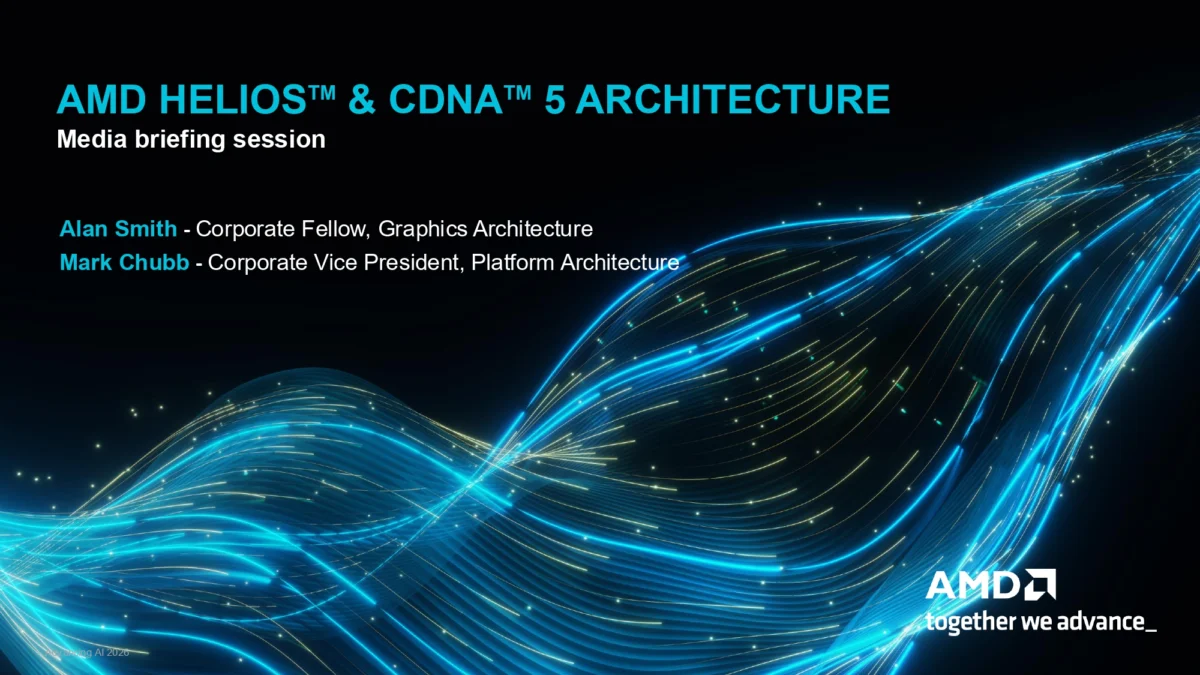
At its highly anticipated Advancing AI event this week, AMD pulled back the curtain on its most formidable challenge to date against Nvidia’s dominance in the artificial intelligence sector. The centerpiece of the reveal is the Instinct MI455X GPU, a silicon behemoth paired with the new Helios rack-scale architecture. This combination represents a decisive shift in strategy, aiming to provide a unified, coherent accelerator domain that matches the scale and ambition of Nvidia’s NVL72 designs.
As the AI industry shifts from training massive foundational models to the high-stakes world of massive-scale inference, AMD is betting that its hardware-first, architectural-flexibility approach will carve out a significant share of the multi-billion-dollar data center market.
The Technological Foundation: A 320-Billion Transistor Titan
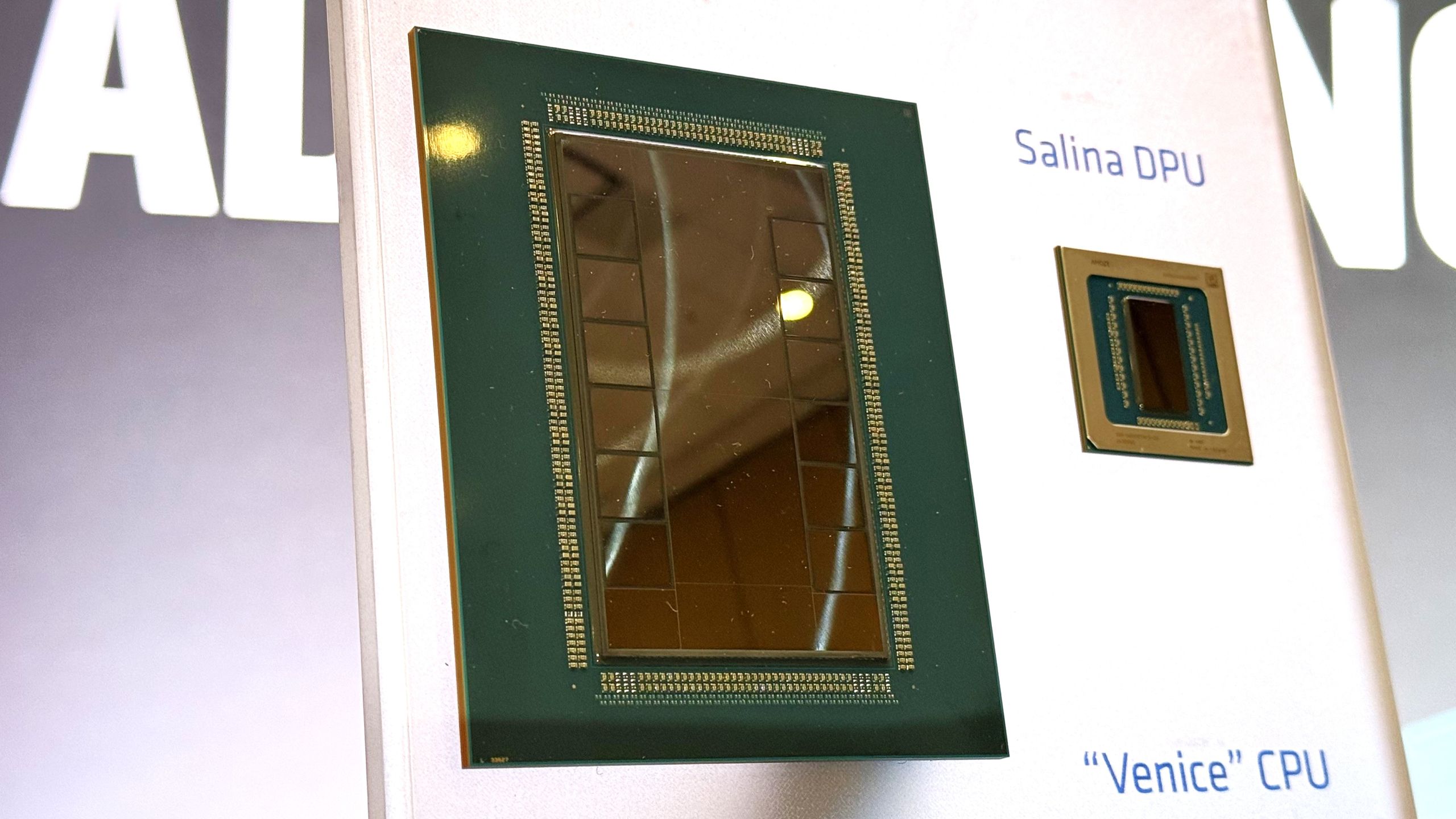
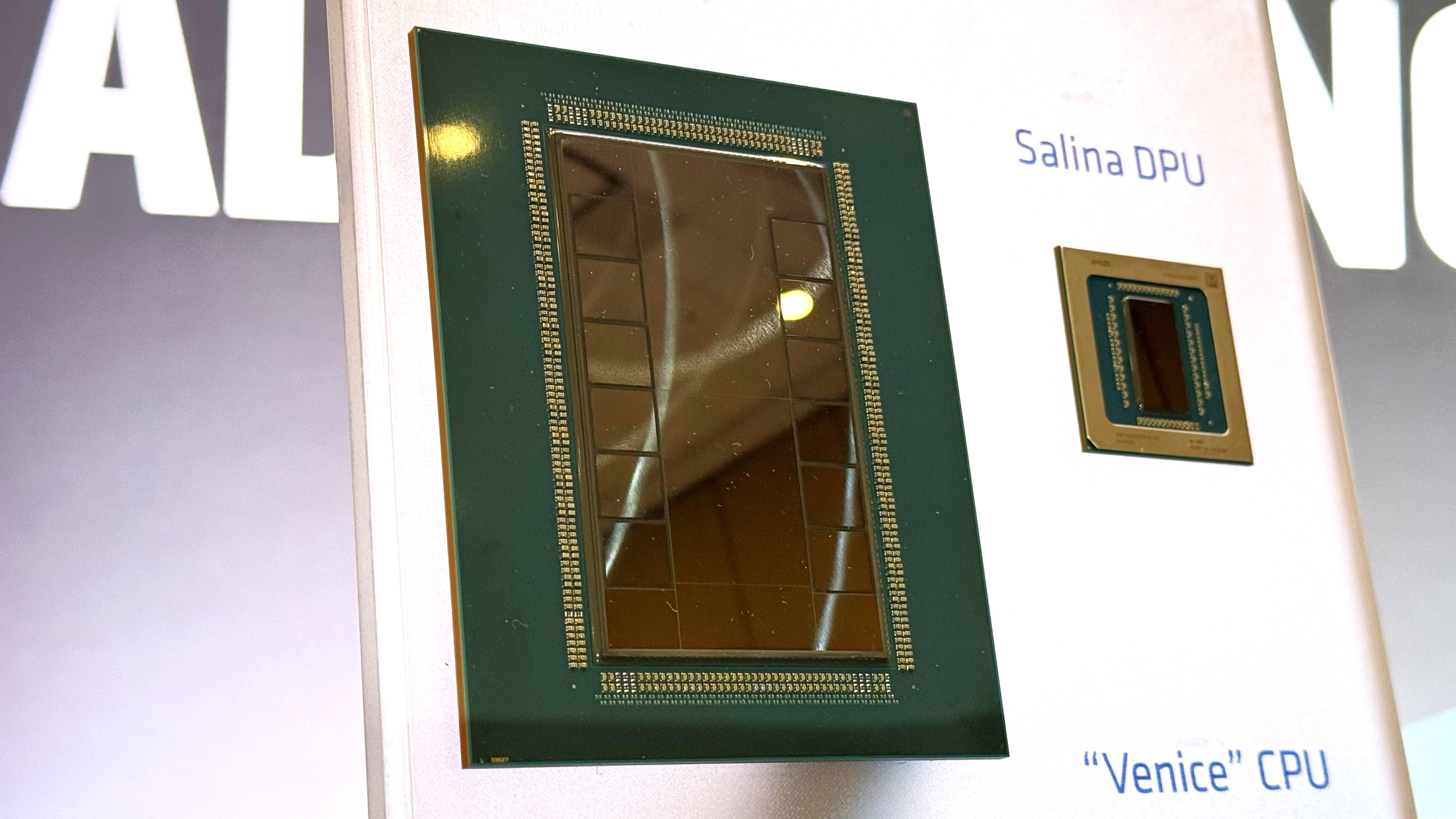
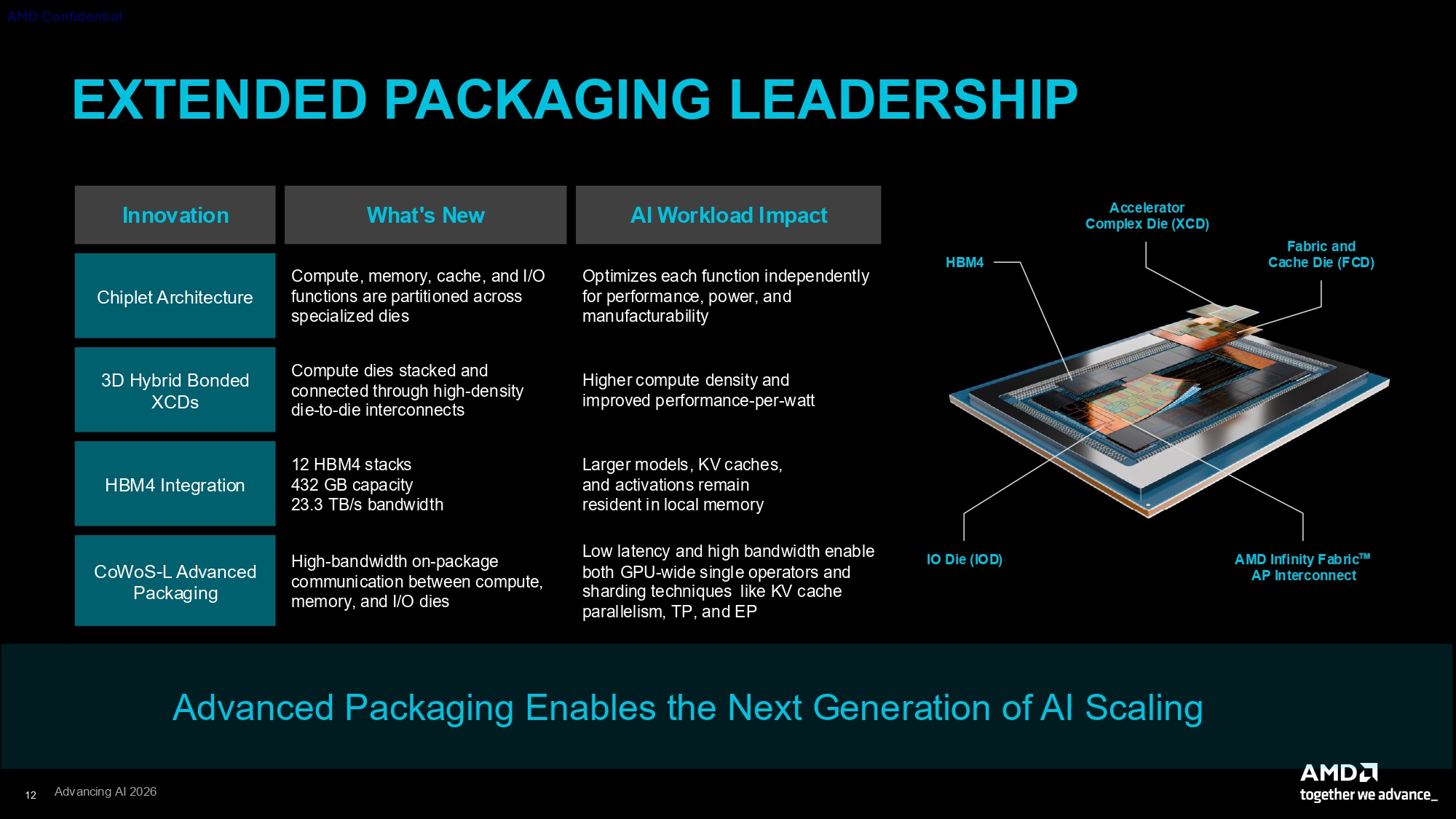
The MI455X is not merely a revision of previous iterations; it is a fundamental architectural overhaul. At the heart of the chip lies a staggering 320 billion transistors, a testament to the advancements in semiconductor manufacturing. AMD has employed a sophisticated chiplet-based design, leveraging TSMC’s cutting-edge packaging technologies to maximize efficiency.
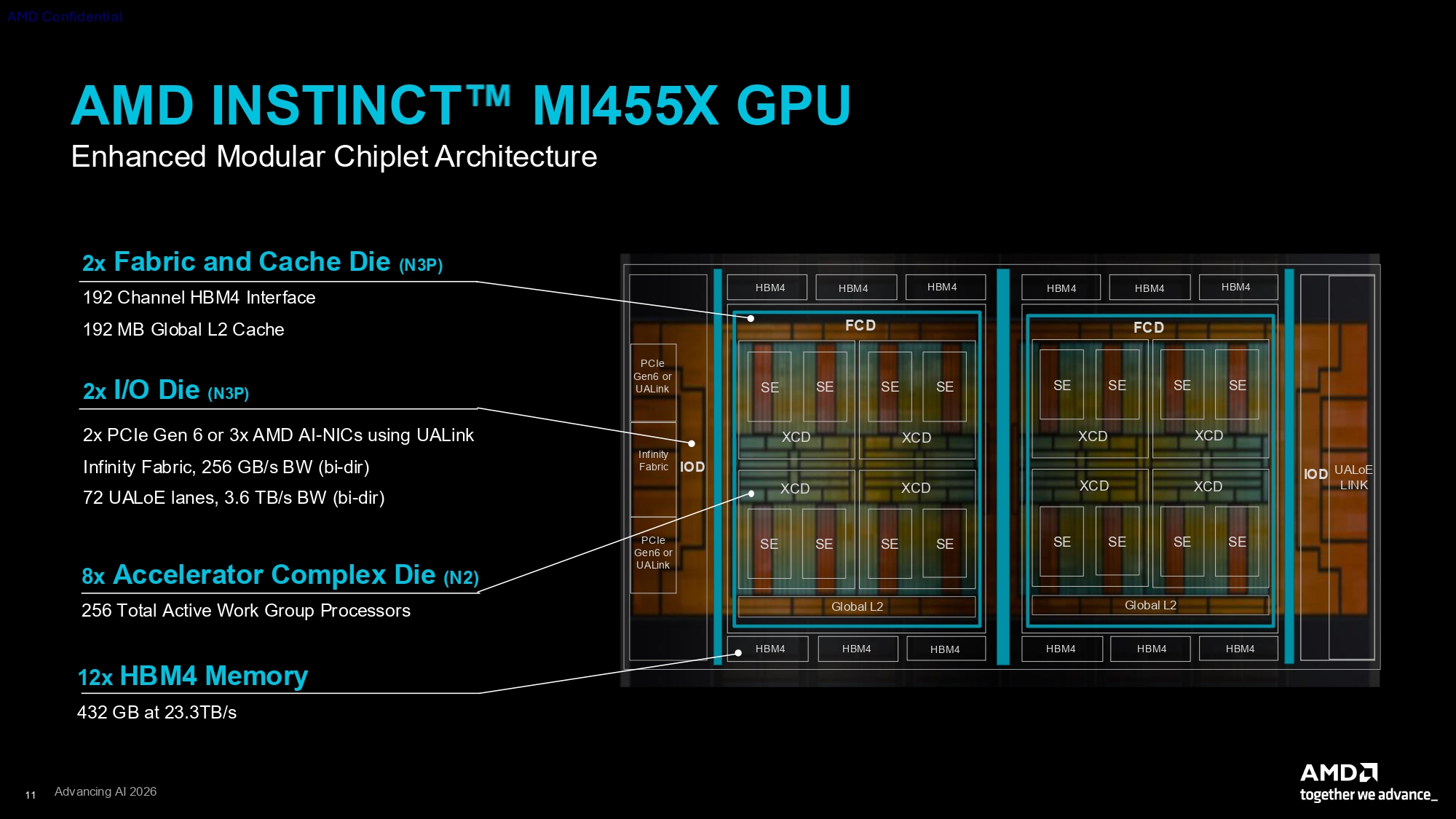
The architecture utilizes four Accelerator Complex Dies (XCDs) stacked atop two Fabric and Cache Dies (FCDs) using hybrid bonding. These FCDs serve as the traffic controllers, connecting the compute cores to six stacks of high-bandwidth HBM4 memory, as well as high-speed I/O dies. The entire assembly is integrated via TSMC’s CoWoS-L (Chip-on-Wafer-on-Substrate) packaging. By utilizing a modular approach, AMD can dedicate the most advanced 2N gate-all-around (GAA) process technology to the power-hungry XCDs, while relying on the more mature, cost-effective N3P process for the I/O and fabric components.
From Compute Units to Work Group Processors
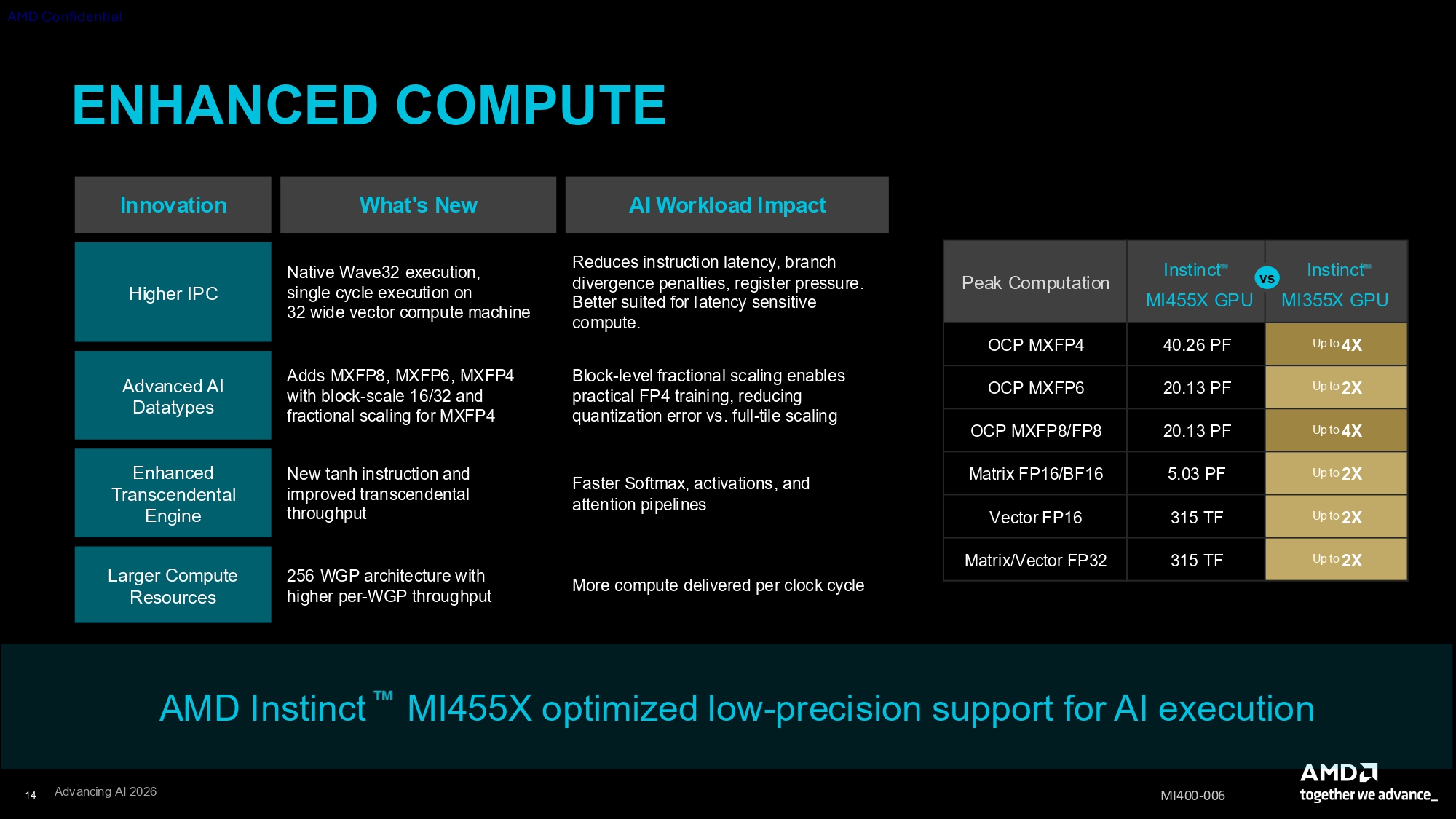
The introduction of the CDNA 5 architecture marks a departure from traditional naming conventions. AMD has rebranded the fundamental compute building block of the XCD from a "Compute Unit" to a "Work Group Processor" (WGP). While the numerical count of 256 WGPs remains identical to the preceding MI355X, the per-WGP throughput has been exponentially increased to drive the generational performance leap.
Crucially, CDNA 5 introduces a major change to the programming model. The wavefront size—the granular group of threads addressed by a WGP—has been reduced from 64 to 32. This shift, which aligns the Instinct line with the native 32-wide wavefront size found in RDNA consumer graphics, is designed to reduce instruction latency, mitigate branch divergence penalties, and alleviate register pressure, ultimately making the hardware more flexible when mapping complex AI kernels.
Chronology of the Development Cycle
The path to the MI455X began years ago as AMD sought to pivot its CDNA architecture from a general-purpose compute focus to a specialized AI-centric powerhouse.
- Early Development: Initial design phases focused on overcoming the bottleneck of memory capacity, which had historically hindered large-scale LLM deployment.
- The CDNA 4 Bridge: The MI355X laid the groundwork for the chiplet strategy and introduced initial OCP (Open Compute Project) format support, proving that AMD could compete in high-performance inference.
- The Shift to HBM4: Development of the MI455X centered on the early integration of HBM4 memory, allowing for a density and bandwidth profile that surpassed existing standards.
- The Helios Reveal: Following months of rumors regarding a "Helios" platform, this week’s event confirmed that AMD had successfully engineered a rack-scale system capable of networking 72 GPUs into a single, coherent memory domain, directly challenging Nvidia’s Blackwell and Rubin platforms.
Supporting Data: Peak Performance vs. Real-World Reality
The theoretical peak performance numbers for the MI455X are undeniably aggressive. In several categories, AMD’s new accelerator theoretically outpaces Nvidia’s upcoming Rubin GPU.
| Metric | Instinct MI355X | Instinct MI455X | Nvidia Rubin |
|---|---|---|---|
| OCP MXFP4 | 10 PF | 40.26 PF | — |
| OCP MXFP8 | 10 PF | 20.13 PF | 17.5 PF |
| Matrix FP16/BF16 | 2.5 PF | 5.03 PF | 4 PF |
| Matrix FP32 | 157.3 TF | 315 TF | 400 TF |
However, AMD leadership was transparent during technical sessions, acknowledging that peak FLOPS are only one part of the equation. "The real challenge is bridging the gap between theoretical peak and realized performance in real-world application environments," noted an AMD representative. Software optimization remains the primary hurdle; the company is investing heavily in its ROCm ecosystem to ensure that developers can extract the maximum potential from the hardware.
The Memory and Cache Revolution
Perhaps the most significant differentiator for the MI455X is its memory hierarchy. AMD has abandoned the large Infinity Cache seen in CDNA 4, replacing it with a smaller but significantly faster, shared L2 cache on each Fabric Compute Die. Each FCD provides a 96MB L2 slice, resulting in a total of 192MB of L2 cache, which delivers 3X the aggregate bandwidth compared to the MI355X.
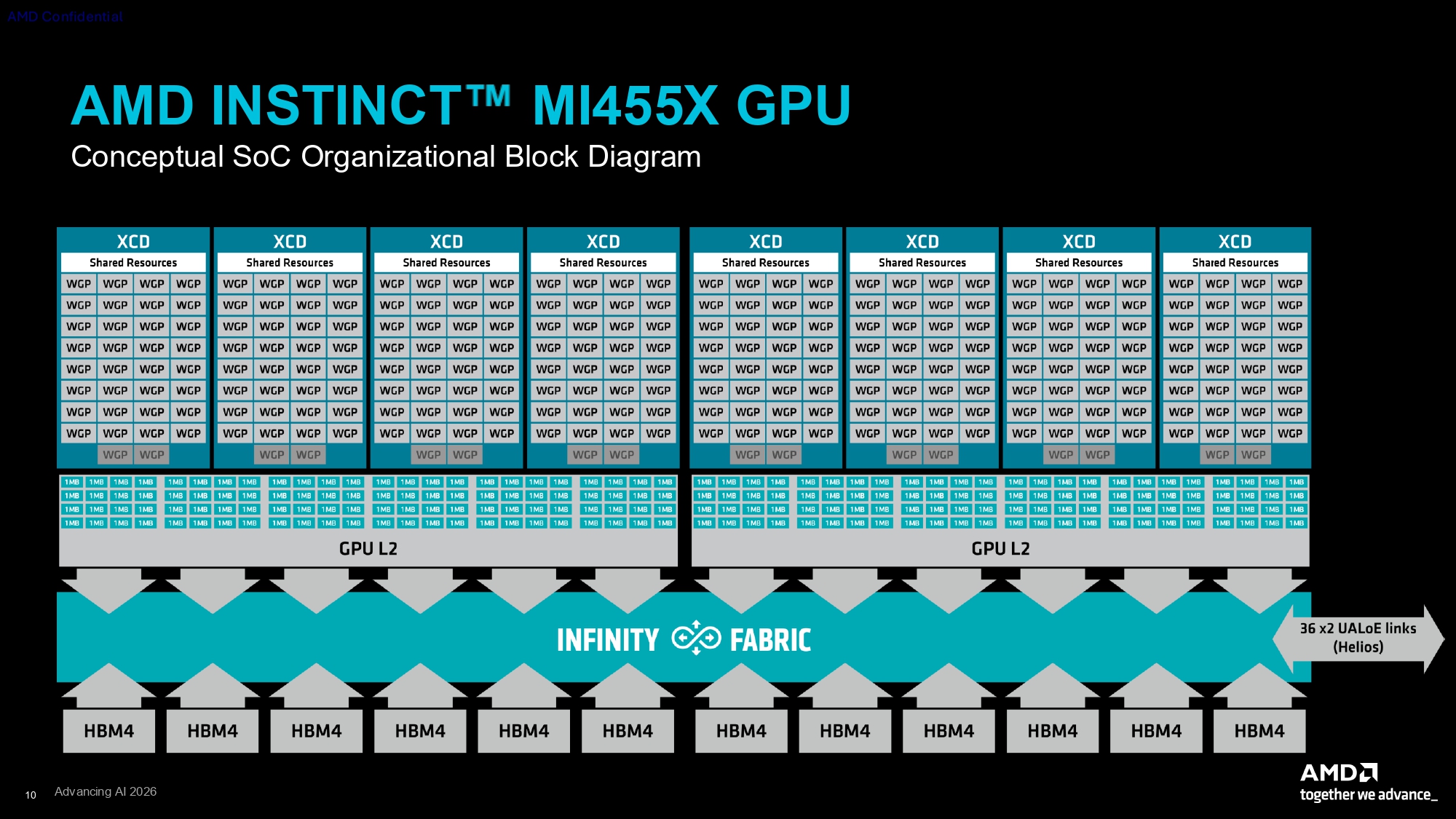
The move to HBM4 is the "secret sauce" of this generation. With 432GB of HBM4 per GPU, the MI455X provides a massive workspace for AI models. When configured in the Helios rack, the 72-GPU system offers 31.1 TB of HBM, a 50% increase over the 20.7 TB provided by Nvidia’s Vera Rubin platform. For companies running massive inference workloads, this extra "headroom" allows for larger context windows and more efficient KV caching, which directly impacts latency.
Implications: A New Competitive Landscape
The release of the MI455X and the Helios architecture has immediate implications for the tech industry:
- Breaking the Monopoly: The announcement of key partnerships with Microsoft and Anthropic indicates that hyperscalers are actively seeking alternatives to the Nvidia-centric status quo. The availability of a high-performance, open-standard alternative gives these companies leverage in negotiations and supply chain planning.
- Inference-First Design: The heavy optimization for MXFP4 and MXFP8 formats suggests that the industry is pivoting toward inference. By tailoring the hardware to these lower-precision formats, AMD is positioning itself to be the preferred choice for companies deploying AI models at scale rather than just training them.
- The Rise of Coherent Domains: Helios is not just a collection of GPUs; it is a singular, coherent domain. By allowing all 72 GPUs to act as one, AMD is reducing the complexity of distributed computing, potentially lowering the barrier to entry for developers who struggle with the overhead of multi-node synchronization.
Looking Ahead
As we move into the second half of the year, the "AI Compute Race" will intensify. Nvidia is expected to launch its next-generation products, and the industry will be watching closely to see how the software stacks hold up against one another. While AMD has the raw hardware specifications to claim the performance crown, the final verdict will be delivered in the data centers of the world.
If AMD can successfully navigate the software integration challenges and deliver the Helios platform at scale, the MI455X could prove to be the turning point that transforms the market from a single-vendor landscape into a true, competitive ecosystem. For now, the hardware is ready, the specs are compelling, and the race to power the next generation of AI is officially on.