Nana Wu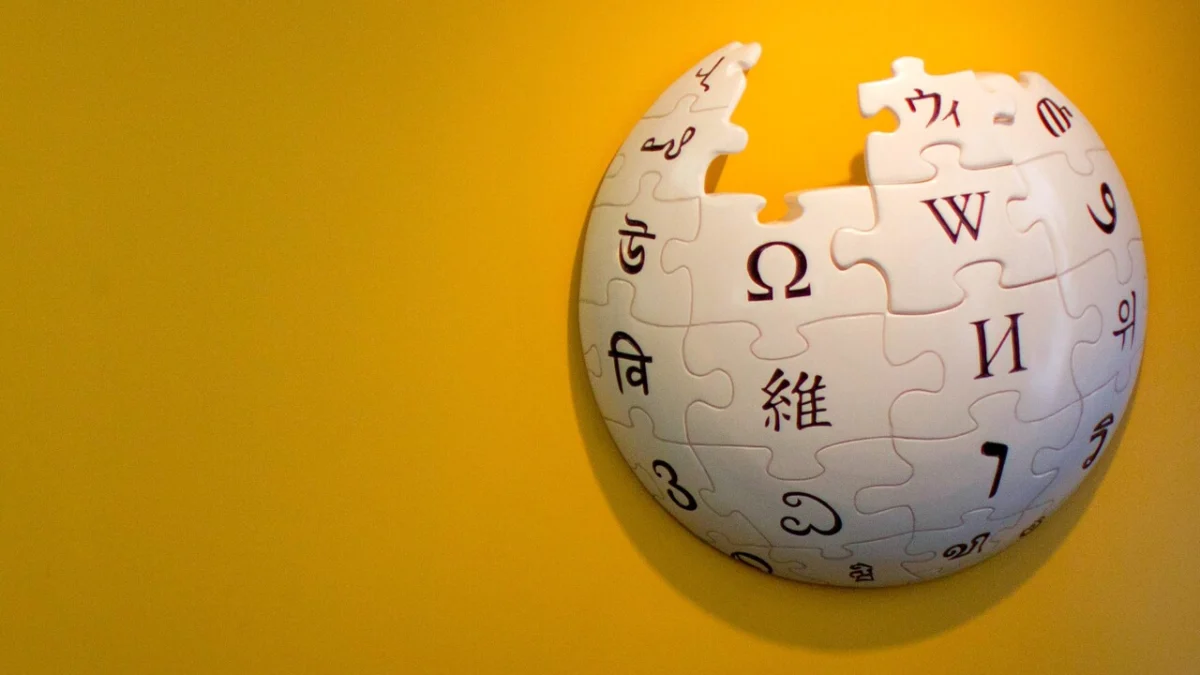
In an era where Artificial Intelligence (AI) has become the primary interface for human knowledge acquisition, the battle for truth has moved from the editorial floor to the underlying data architecture. Emerging intelligence suggests a sophisticated, state-sponsored campaign originating from Russia that seeks to bypass traditional social media propaganda in favor of a more insidious target: the training data and real-time search indices of generative AI chatbots.
According to leaked documents and analyses by organizations including Wikimedia Deutschland, a Russian influence operation known as the "Social Design Agency" (SDA) is allegedly developing a German-language "clone" of Wikipedia. The objective is not merely to host a website, but to create a deceptive repository of information that AI models—such as ChatGPT, Claude, and Gemini—might identify as authoritative, subsequently integrating that misinformation into their responses to users.
The Evolution of Influence: Disinformation via Proxy
For years, Russian disinformation campaigns—most notably the notorious "Doppelgänger" operation—relied on creating mirror websites of reputable international news outlets. These sites utilized near-identical layouts, logos, and URLs to disseminate anti-Western rhetoric and pro-Kremlin narratives under the guise of legitimate journalism.
However, the new strategy marks a paradigm shift in digital warfare. The SDA’s current plan targets the "black box" nature of Large Language Models (LLMs). By populating the internet with high volumes of structured, encyclopedic text that mimics the format and authority of Wikipedia, the architects of this campaign hope to "pollute" the datasets that AI crawlers use to generate factual answers. If a chatbot encounters a sophisticated, Wikipedia-style entry on a contentious political topic that appears well-cited and neutrally phrased, the model is statistically likely to rank that information as a high-confidence source.
Chronology of the Threat
- 2023: The launch of "Ruwiki," a Russian-language Wikipedia clone, marks the proof-of-concept phase. By stripping away critical historical context and replacing it with state-sanctioned narratives, the project demonstrates how quickly a copycat site can be established.
- Early 2024: Official opening of Ruwiki following a beta testing period, confirming that the model successfully co-opts the Wikipedia brand for political maneuvering.
- Mid-2024: Leaked documents surface, indicating that the Social Design Agency is expanding this blueprint to the German-speaking world.
- Present: Cybersecurity analysts and Wikimedia affiliates track the proliferation of domain names and content structures intended to mimic legitimate German-language information hubs.
The "Wikipedia Effect": Why Encyclopedic Clones are Dangerous
Wikipedia occupies a unique space in the digital ecosystem. It is the bedrock of current AI training; LLMs are heavily weighted on Wikipedia data because of its high density of verified information and consistent structure.
The danger of a "Fake Wikipedia" lies in its ability to exploit the trust algorithms have in the original platform. When an AI system performs a "grounding" task—searching the live internet to verify a user’s query—it prioritizes sites that provide clear, encyclopedic definitions. If the SDA successfully publishes 200,000 articles that mimic the formatting, metadata, and citation style of the actual Wikipedia, the AI’s ranking algorithm may be unable to distinguish the counterfeit from the original.
Wikimedia Deutschland has highlighted specific areas where this manipulation is likely to be concentrated:
- Geopolitical Conflict: Distorting the history and current status of the war in Ukraine.
- Historical Revisionism: Sanitizing the reputations of Soviet-era figures or demonizing modern-day dissidents, such as the late Alexei Navalny.
- Institutional Erosion: Attacking the credibility of European democratic institutions by embedding subtle biases into what appear to be "neutral" definitions.
Supporting Data: The Scale of the Operation
Current reporting suggests an ambitious and systematic workflow. Leaked documents imply the creation of a database encompassing approximately 200,000 pages. To ensure the content remains "fresh" and relevant to current events—a key metric for AI search relevance—the plan allegedly calls for the manual injection of 500 articles per month into the digital ecosystem.
While Wikimedia notes that there is no empirical evidence of a massive, live German-language clone successfully infiltrating the top-tier search results of major AI platforms yet, the infrastructure is being laid. The mere existence of the "Ruwiki" project provides a cautionary tale. Scientific analysis of Ruwiki has confirmed that it does not just "fork" the original Wikipedia; it systematically removes entries critical of the Kremlin and replaces them with state-approved narratives, essentially creating an "echo chamber of truth" for the Russian-speaking internet.
Official Responses and Institutional Safeguards
The response from the open-knowledge community has been swift. Wikimedia has consistently emphasized that the strength of Wikipedia lies not just in its text, but in its community-driven editorial oversight—a feature that a state-sponsored "clone" cannot replicate.
"The integrity of knowledge is at stake," says a spokesperson for the Wikimedia Foundation. "Users must be aware that if a site looks like an encyclopedia but lacks a transparent, global community of volunteer editors, it is likely a tool for manipulation."
AI developers are also under increasing pressure to harden their models against "data poisoning." This involves:
- Source Weighting: Adjusting algorithms to favor verified, long-standing domain names (like
wikipedia.org) over newer, look-alike domains. - Adversarial Training: Feeding models examples of known misinformation to help them identify and reject "hallucinated" or biased encyclopedic entries.
- Transparency Requirements: Implementing features that allow users to see exactly which sources a chatbot consulted before formulating its answer.
Implications for the Future of Truth
The attempt to weaponize AI through fake encyclopedias represents a new frontier in the "information war." Unlike social media, where a user might see a post and recognize a political agenda, an AI-generated answer carries the authority of a neutral, objective arbiter. When a user asks a chatbot, "What happened at [Event X]?", they expect a factual summary. If the chatbot serves up a sanitized, Russian-influenced narrative that it pulled from a fake Wikipedia page, the user may integrate that falsehood into their own worldview without ever questioning the source.
The Responsibility of the User
As these digital threats grow more sophisticated, the burden of verification shifts back to the individual. The "check, check, and check again" mantra is no longer just advice for journalists—it is a necessity for the general public.
- Verify the Source: If an AI provides a summary, look at the cited links. If the source is an unfamiliar domain that mimics a known entity, proceed with extreme caution.
- Cross-Reference: Use multiple sources for politically sensitive information.
- Understand the Limitation: Recognize that LLMs are predictive engines, not truth engines. They prioritize the likelihood of text based on the data they have ingested, not the veracity of that text.
Conclusion: A Race Between Defense and Deception
The Russian plan to poison AI with fake encyclopedic data is a stark reminder that the digital landscape is not static. As AI models become more capable of synthesizing information, the value of "truth" becomes a primary target for those who wish to destabilize democratic discourse.
While the scale of 200,000 potential articles is daunting, the defense remains robust: a combination of technological vigilance, the resilience of established knowledge institutions, and a more critical, informed public. The battle for the future of information will not be won by algorithms alone, but by our collective commitment to verifying the origins of the knowledge we consume. As the SDA and similar actors continue to refine their "Trojan Horse" strategies, the guardians of the internet must ensure that the gate remains locked against those who would replace history with propaganda.

 Ammar Sabilarrohman
 Reynand Wu