Nana Wu
The God of War franchise has long stood as a pillar of action-adventure gaming, defined by two distinct identities: the high-octane, combo-heavy spectacle of the Greek trilogy and the intimate, cinematic, and visceral storytelling of the Norse saga. For years, fans and developers alike have wondered if these two disparate philosophies could ever truly coexist. According to Ariel Lawrence, the director behind the upcoming God of War: Laufey, the answer lies in the agility and strength of the franchise’s new protagonist, Faye.
By positioning Laufey—Kratos’s legendary wife—as the central figure, Sony Santa Monica is attempting to synthesize the series’ history. This pivot represents more than just a change in perspective; it is a mechanical and narrative bridge intended to unite the "pick-up-and-play" roots of the PS2 era with the grounded, weighty combat that defined the PlayStation 4 and 5 installments.
The Synthesis of Two Worlds: The Mechanical Philosophy
At the heart of the current development cycle is a desire to honor the franchise’s heritage while maintaining the high-fidelity standards of modern hardware. Ariel Lawrence, a veteran of the studio who cut her teeth on the original God of War titles, views this project as an opportunity to reconcile her own professional growth with the studio’s evolving vision.
"I mean, I definitely cut my teeth on the first God of War," Lawrence explained in a recent interview. "I loved the original games’ pick-up-and-play aspect. Juggling enemies, chaining complex combos, and having dynamic, vertical movement options—that was always something I loved doing."
However, Lawrence is equally passionate about the shift that occurred in 2018. The Norse saga introduced a more intimate camera, a focus on heavy, consequential strikes, and a tone that prioritized character development over sheer carnage. Finding the middle ground between these two styles was the primary challenge for the development team. Lawrence likened the process to a culinary experiment: "I like both of those things, so it’s really one of those, ‘Can I have chocolate and peanut butter together?’"
Chronology: From Mythic Slayer to Narrative Icon
To understand the significance of this shift, one must look at the progression of the series.
- 2005–2010 (The Greek Era): The series debuted as a third-person action game defined by fixed camera angles, massive boss encounters, and fluid, arcade-like combat. Kratos was a force of nature, moving with supernatural speed across the screen.
- 2018–2022 (The Norse Era): Santa Monica Studio reinvented the series, moving to an over-the-shoulder perspective. The combat became "grounded" and "visceral," focusing on the weight of the Leviathan Axe and the emotional stakes of fatherhood.
- The Present (The Laufey Era): The upcoming title seeks to preserve the emotional weight established in the Norse saga while reintroducing the kinetic, high-speed agility that characterized the series’ infancy. By choosing Faye, the developers have found a character whose lore allows for both speed and devastating power.
Supporting Data: Why Faye?
The decision to focus on Laufey (Faye) was not merely a narrative choice; it was a tactical one. When the team began scouting for a protagonist capable of bridging these eras, they had a specific set of requirements:
- Agility and Flexibility: The character needed to feel significantly faster than the Kratos of the Norse era, allowing for the reintroduction of aerial combat and complex juggling mechanics.
- Narrative Weight: The protagonist needed to be someone who could "stand toe to toe" with the gods of both the Greek and Norse pantheons.
- Mechanical Synergy: The move set had to feel "visceral" when hitting the ground but "light" enough to allow for the dynamic movement that defined the original trilogy.
As Lawrence noted, the team asked themselves: "What does it look like for those things to come together, and who can do that the best for us?" Faye, a figure previously shrouded in mystery and myth, provided the perfect vessel for this mechanical hybridization. She represents the "Agile God" archetype—someone who can command the battlefield with speed while maintaining the narrative gravitas expected of a God of War title.
Official Responses and Creative Vision
The discourse surrounding the development of God of War: Laufey highlights a studio that is keenly aware of its legacy. Sony Santa Monica has been careful to manage expectations while teasing the potential for long-term storytelling.
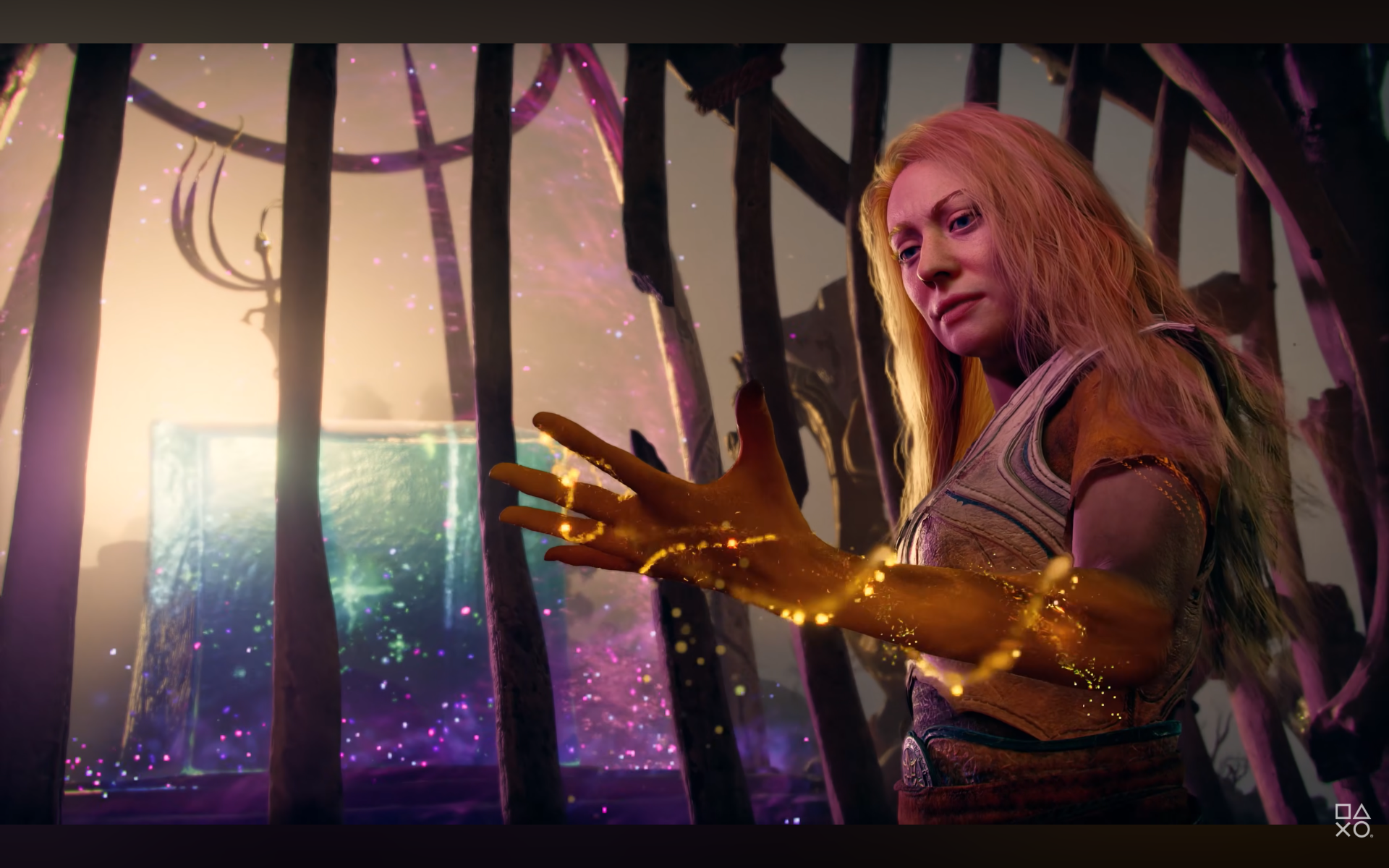
Beyond the mechanics, there is a clear interest in the broader implications of the series’ lore. Lawrence recently hinted that there is "definitely" some "long-term potential" in exploring the fallout of Kratos’s past. Because Kratos effectively butchered an entire pantheon in his youth, the "ghosts" of his past remain a fertile ground for future conflict. By utilizing Faye, the narrative can explore these repercussions through a fresh lens, potentially bringing Kratos’s past into direct contact with the Norse realm.
The studio’s commitment to this "fusion" approach suggests that God of War: Laufey will not be a regression to the past, but rather a maturation of the series’ identity. It is an acknowledgment that the franchise does not have to choose between being an action-spectacle and a character-driven drama—it can be both.
Implications for the Future of the Franchise
The implications of this shift are profound. If successful, God of War: Laufey could establish a new blueprint for the franchise, where the "old" and "new" styles of gameplay are no longer seen as contradictory, but as complementary.
Reinvigorating Combat
The reintroduction of high-mobility combat may satisfy a subset of the fanbase that has felt the recent games were too slow or restrictive. By allowing for more verticality and combo-chaining, the game promises a higher skill ceiling, which could reinvigorate the competitive and speed-running communities that were so central to the success of the original God of War.
Expanding the Lore
Faye’s perspective provides a unique entry point into the world. While Kratos was an outsider in the Norse lands, Faye was a local hero, a giant, and a warrior with her own legacy. This allows the writers to explore the Norse realms from a position of belonging rather than displacement. It also opens the door for more diverse storytelling, moving away from the "father-son" dynamic that dominated the last two titles and into new, uncharted interpersonal territories.
Longevity and Brand Identity
By successfully merging these styles, Sony Santa Monica ensures that the God of War brand remains versatile. It prevents the series from becoming stagnant or pigeonholed into one genre. If they can continue to deliver titles that honor the brutal, fast-paced action of the early days while keeping the emotional depth of the modern era, the franchise’s longevity is virtually guaranteed.
Conclusion
The development of God of War: Laufey is a testament to the studio’s willingness to look backward to move forward. By tasking Faye with the responsibility of uniting the series’ disparate eras, Ariel Lawrence and her team are attempting to satisfy two generations of gamers simultaneously.
Whether the game will succeed in balancing the "chocolate and peanut butter" of high-speed combat and grounded narrative remains to be seen. However, the intent is clear: God of War is no longer just about Kratos’s redemption—it is about the legacy of the gods he fought, the legends he left behind, and the potential for a future where every era of the franchise can live in harmony. As we wait for more details, one thing is certain: the battlefield of the gods is about to get much more dynamic.

 Jia Lissa