Basiran
For many homeowners, the backyard is more than just a plot of grass—it is an extension of the living space, a sanctuary for summer evenings, and the ultimate venue for social gatherings. While a custom-built deck can transform an unused yard into a functional paradise, the path to achieving this often presents a fork in the road: hire a professional contractor at a premium price, or embrace the "sweat equity" of a DIY project.
For those who find satisfaction in manual labor and possess a growing collection of power tools, the DIY approach is not only a path to substantial cost savings but also an opportunity to build a structure precisely to one’s specifications. However, a successful build requires more than just lumber and ambition; it demands the right machinery. For the budget-conscious builder, Ryobi has carved out a significant niche, offering a versatile range of power tools that bridge the gap between hobbyist-level affordability and professional-grade utility.
The Core Principles of Deck Construction
Building a deck is a multi-phase engineering challenge. It begins with site preparation and the setting of foundational footings, moves into the construction of the structural frame, and concludes with the aesthetic installation of deck boards and railings. Each phase requires specific torque, cutting precision, and leveling accuracy.
When opting for a DIY build, the primary goal is to ensure the structural integrity of the project while maintaining an efficient workflow. Ryobi’s expansive ecosystem—particularly its 18V ONE+ battery platform—has become a cornerstone for many DIY enthusiasts because it allows for a unified power source across dozens of tools, reducing both the cost of entry and the logistical headache of managing multiple battery types.
Essential Tools: A Chronological Guide to the Build
1. The Foundation: Ryobi Power Auger
The construction process begins literally from the ground up. To ensure a deck remains stable for years, the support posts must be set deep into the earth, often below the frost line.
- The Manual Struggle vs. The Power Solution: Traditionally, manual post-hole diggers were the standard. While functional, they are notoriously labor-intensive, requiring immense physical strain to break through rocky or compacted soil.
- The Ryobi Advantage: Ryobi offers a 40V cordless earth auger designed to eliminate the back-breaking labor of manual digging. Equipped with a 32-inch bit, it allows for consistent, deep holes that meet building code requirements for footing depth. While this is the most significant investment in the toolkit—often retailing near the $370 mark—the return on investment is measured in saved physical energy and time. It is an investment that pays dividends for future landscaping projects, from planting trees to installing fence posts.
2. Structural Framing: The Compound Miter Saw
Once the footings are set and the ledger board is attached to the house, the framing process begins. This stage requires the highest degree of precision.
- Precision and Repetition: A deck’s frame must be square and level. A compound miter saw is the industry standard for making clean, repeatable cross-cuts on joists and rim boards. Whether you are performing standard 90-degree cuts or complex mitered corners for architectural flair, this tool provides the stability that handheld saws cannot replicate.
- Choosing the Right Model: Ryobi provides a variety of options, ranging from corded bench-top models to cordless 18V variants. For a large deck build, a corded model ensures you never have to pause for a recharge, whereas the 18V versions offer superior portability if your work site is far from an external power outlet.
3. The Details: The Versatility of the Jigsaw
Not every cut on a deck is a straight line. As the project nears the finish line—specifically when installing deck boards around curved garden beds, or creating custom radiused edges—a jigsaw becomes indispensable.
- Intricate Maneuverability: Unlike a circular saw or miter saw, the jigsaw’s narrow, reciprocating blade allows the user to navigate curves and intricate shapes with ease. It is the tool that transforms a standard rectangular platform into a custom-designed outdoor living space.
- Ease of Use: Ryobi’s cordless jigsaws are lightweight and ergonomically designed, making them ideal for long sessions where you might need to trim multiple boards to fit snugly against rounded obstacles.
4. Assembly: Power Drills and Impact Drivers
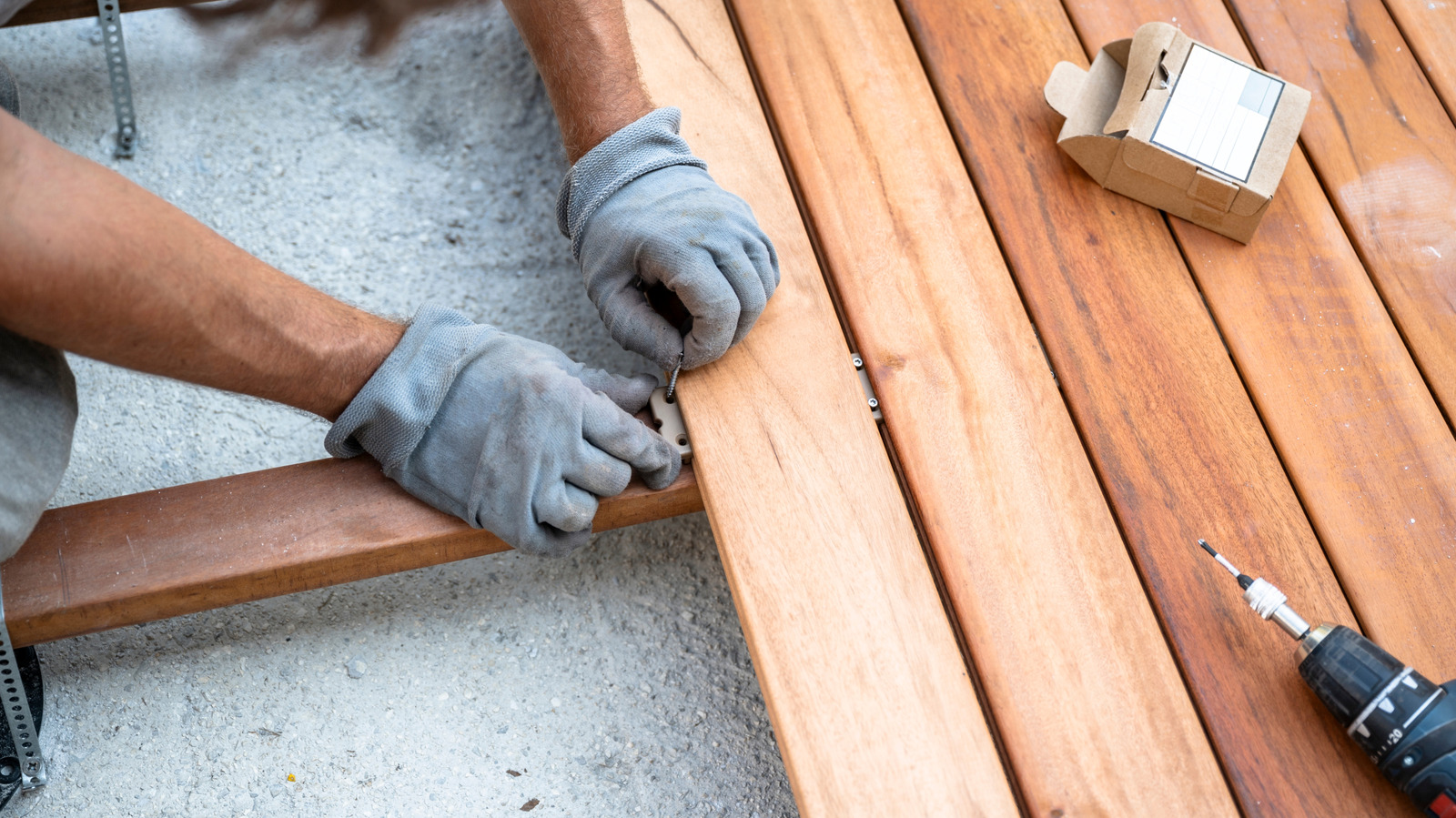
The connection between the wood and the frame is the most critical safety component of the deck. Modern construction has largely moved away from nails, favoring high-strength deck screws and structural bolts that resist the expansion and contraction of wood due to weather.
- The Dynamic Duo: It is common to see drills and impact drivers bundled together in starter kits. While a power drill is versatile for general drilling and driving, the impact driver is the workhorse of the deck build. It uses a hammering mechanism to deliver high torque, allowing the user to drive long, thick screws into pressure-treated lumber without stripping the screw heads or straining the motor.
- System Integration: Ryobi’s 18V ONE+ system is highly optimized for these tools. By using a two-tool kit, a builder can keep a pilot-hole bit in the drill and a driving bit in the impact driver, essentially eliminating the need to swap bits between every single board.
5. Final Alignment: The Laser Level
A deck that isn’t level is not only an eyesore but a potential safety hazard. Ensuring a consistent slope for water runoff and a perfectly level surface for furniture is paramount.
- Precision over Sight: While traditional bubble levels are reliable, they can be difficult to use when trying to align a deck spanning 20 or 30 feet. A laser level projects a perfectly straight line across the entire worksite, providing an objective reference point for joist height and beam placement.
- Ease of Adoption: Ryobi offers compact laser levels that are affordable and easy to mount. For the amateur builder, this tool acts as a "second set of eyes," ensuring that the final deck is level and professional in appearance.
Implications for the Modern DIYer
The decision to build a deck is an investment in both time and property value. By choosing a unified brand ecosystem like Ryobi, builders reduce the "hidden costs" of DIY work. When tools share the same battery platform, the builder spends less on proprietary accessories and more on high-quality materials, such as composite decking or pressure-treated cedar.
Furthermore, the longevity of these tools extends well beyond the life of the deck. The same drill used to secure floor planks will be used for hanging interior curtains; the same laser level used for deck framing will be used for mounting wall shelves.
Final Considerations and Safety
While Ryobi tools provide the mechanical advantage necessary for the job, the builder must remain vigilant regarding safety. Always wear eye and ear protection, especially when operating miter saws and power augers. Additionally, ensure that your deck plans are approved by local building departments; even with the best tools, a deck built without a permit can create significant legal and resale hurdles down the line.
In summary, building a deck is a monumental task that requires a mix of patience, structural planning, and the right equipment. By equipping yourself with a reliable miter saw for framing, an impact driver for assembly, an auger for the foundation, and a laser level for precision, you can bridge the gap between an ambitious concept and a durable, beautiful outdoor space. With Ryobi’s diverse range of tools, that transition is not only possible but well within the reach of the average homeowner’s budget.


 Jia Lissa
 Asro
Asro