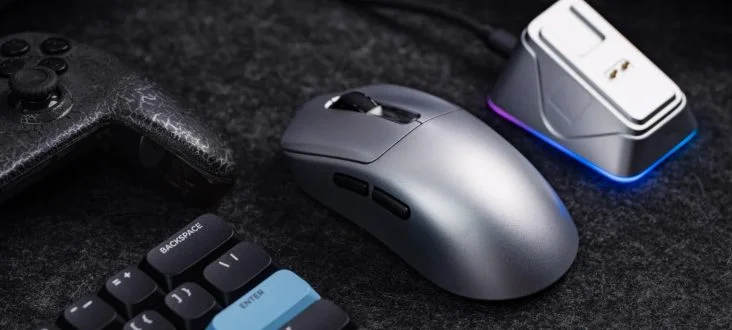
In a market segment increasingly defined by incremental updates and skyrocketing price tags, Epomaker has disrupted the status quo with the official launch of its Nex Pro wireless ergonomic gaming mouse. Priced at $79.99, the device aims to bridge the gap between budget-friendly peripherals and enthusiast-grade hardware, offering a feature set that, until now, was largely reserved for products retailing at double or triple the cost.
The Core Offering: Specifications and Design Philosophy
The Nex Pro enters the competitive arena with a clear mandate: to provide top-tier performance for right-handed users who prioritize ergonomic comfort. Measuring 122mm in length and weighing a nimble 65g, the mouse is built with a high-quality ABS shell that follows an asymmetric, ergonomic profile. This design choice is intended to provide comprehensive palm support, reducing strain during extended gaming sessions or professional workflows.
At the heart of the Nex Pro lies the PixArt PAW3950 optical sensor—a powerhouse component widely regarded as the current gold standard in gaming optics. This sensor is capable of tracking at up to 42,000 DPI, with a tracking speed of 750 IPS and an acceleration threshold of 50G. To ensure this data is processed with the highest fidelity, Epomaker has paired the sensor with a Nordic 54L MCU. This combination enables an 8000Hz polling rate, a specification that drastically reduces input latency and provides a distinct advantage in high-refresh-rate competitive scenarios.
Chronology: The Path to the Nex Pro Launch
The journey to the Nex Pro’s release reflects a broader trend in the peripheral industry where manufacturers are pivoting toward "prosumer" value propositions.
- Early Development Phase: Epomaker began focusing on internal MCU upgrades in early 2024, recognizing that the bottleneck for many wireless mice was no longer the sensor, but the latency between the wireless receiver and the PC.
- The Integration of 8K Polling: Following the industry-wide adoption of higher polling rates in mid-2024, Epomaker initiated the testing phase for the Nordic 54L chipset to ensure stability at 8000Hz.
- Refining the Ecosystem: Recognizing the inconvenience of proprietary software bloatware, the engineering team spent the final quarter of 2024 developing a browser-based configuration utility.
- The Launch Announcement: On the present date, Epomaker officially opened orders for the Nex Pro, accompanied by the reveal of its magnetic charging dock—a feature often excluded from sub-$100 mice to protect profit margins.
Supporting Data: Why the Nex Pro Stands Out
The value proposition of the Nex Pro is best understood when comparing it against current market trends. Most gaming mice at the $80 price point rely on older generation sensors (such as the PAW3395) and typically lack high-polling-rate capabilities out of the box.
Sensor Performance Metrics
The PixArt PAW3950 provides a significant leap over previous iterations. With a 42K DPI ceiling, the sensor offers extreme sensitivity, but more importantly, it offers improved "lift-off" distance (LOD) consistency and surface compatibility. For competitive players, the PAW3950 represents the pinnacle of current sensor technology, ensuring that "spin-outs" and tracking errors are effectively eliminated.
The Convenience of the Magnetic Dock
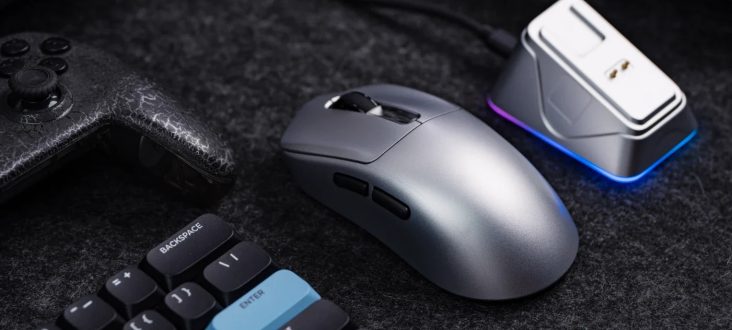
Perhaps the most notable addition is the magnetic charging dock. In the current peripheral market, a mouse charging dock is usually sold as a separate, expensive accessory (often retailing between $30 and $50). By bundling this with the Nex Pro, Epomaker solves two issues: it provides a permanent "home" for the mouse, ensuring it is always charged, and it acts as a convenient housing for the 2.4GHz wireless receiver. This placement minimizes the distance between the receiver and the sensor, further optimizing wireless signal strength.
Connectivity Flexibility
The Nex Pro supports tri-mode connectivity, offering users the ability to switch between:
- 2.4GHz Wireless: Optimized for low-latency gaming via the included dongle.
- Bluetooth: Ideal for multi-device workflows and mobile use where power efficiency is prioritized.
- Wired USB: Providing a reliable fallback for zero-latency requirements or situations where the battery requires a quick charge during active use.
The Software Revolution: Moving Away from Bloatware
One of the most persistent criticisms of modern gaming peripherals is the reliance on "bloatware"—heavy, background-consuming software suites that often require account creation and constant updates. Epomaker has opted for a browser-based web portal to handle the Nex Pro’s customization.
This utility allows users to adjust DPI stages, polling rates, lift-off distance, and angle snapping directly through a standard web browser (e.g., Chrome, Edge, or Firefox). Furthermore, the mouse supports on-board memory for button remapping and macro recording. This approach ensures that once the user configures their mouse, the settings are stored on the hardware itself, maintaining consistency regardless of the PC to which it is connected. This is a massive boon for esports athletes who travel and need to plug into tournament hardware without installing custom software.
Implications for the Peripheral Industry
The launch of the Nex Pro signals a significant shift in the competitive landscape. If a company can successfully deliver a PAW3950 sensor, 8000Hz polling, and a magnetic charging dock for under $80, it puts immense pressure on legacy peripheral manufacturers.
Competitive Pricing Pressure
Legacy brands that have historically maintained high margins on their "Pro" line of products will face increased scrutiny. Consumers are becoming more tech-savvy, and as the performance gap between $80 mice and $180 mice closes, justifying the higher price will become increasingly difficult for established industry giants.
The Death of Proprietary Software?
The success of Epomaker’s web-based utility could signal a shift in consumer preference. If the gaming community embraces the browser-based approach, it may force major players to reconsider their software strategies, potentially leading to lighter, more efficient, or web-based configuration tools that do not drain system resources.
Sustainability and Ecosystems
The inclusion of a magnetic dock promotes better hardware care. Users are less likely to experience frayed charging cables or damaged USB ports when they have a dedicated, stationary charging solution. This design choice highlights a maturation in the gaming hardware space, where user experience and hardware longevity are finally being prioritized alongside pure performance specs.
Conclusion
The Epomaker Nex Pro is not just another mouse; it is a direct challenge to the high-end peripheral segment. By stripping away the unnecessary costs of proprietary software development and leveraging high-performance, industry-standard components, Epomaker has delivered a product that provides genuine value.
For the gamer who demands precision, longevity, and modern connectivity without wanting to pay the "premium tax" associated with established gaming brands, the Nex Pro stands as a formidable contender. Whether it will force a wider shift in the industry remains to be seen, but one thing is certain: the bar for what $80 can buy has been raised significantly. As Epomaker continues to refine its ecosystem, the focus remains on the user experience—proving that professional-grade gear should be accessible to everyone, not just those with the deepest pockets.