

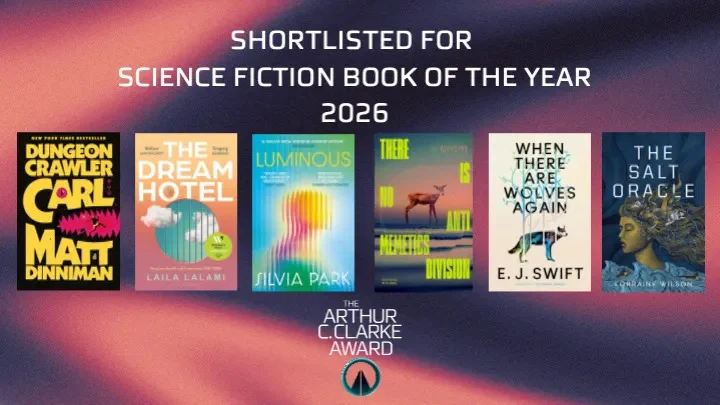
In a landmark year for speculative fiction, the administrators of the Arthur C. Clarke Award have officially unveiled the shortlist for their 40th anniversary edition. As one of the most prestigious accolades in the science fiction literary landscape, the "Clarke"—as it is affectionately known among fans and authors alike—continues to serve as a bellwether for the genre’s evolution, highlighting narratives that push the boundaries of human imagination, technology, and sociological exploration.
The announcement marks a significant milestone in the history of the prize, which was established by the legendary Sir Arthur C. Clarke in 1987. For forty years, the award has championed the "book of the year" in science fiction, consistently highlighting works that challenge the status quo and provoke profound discourse regarding our collective future.
The 2026 Shortlist: A Vision of Modern Speculative Fiction
While the specific titles were confirmed in today’s official dispatch, the diversity of the shortlist reflects the current state of global science fiction. The selection process, noted for its rigor and academic focus, has narrowed down a field of contenders to six standout works. These titles represent the best of what the genre has to offer in 2026, encompassing themes ranging from the ethical implications of artificial intelligence to the existential realities of climate crisis and post-human identity.
The jury has selected these works based on their literary merit, their contribution to the field of speculative fiction, and their ability to resonate with the complex challenges of the 21st century. As the literary world turns its gaze toward the final announcement, these six authors find themselves at the center of a prestigious tradition that has previously honored icons like Margaret Atwood, Geoff Ryman, and China Miéville.
A Legacy of Excellence: The Chronology of the Clarke Award
To understand the weight of the 2026 shortlist, one must look back at the foundation of the award. The Arthur C. Clarke Award was born out of a desire to provide a dedicated platform for science fiction in the United Kingdom, distinct from the broader literary prizes of the era. Sir Arthur C. Clarke’s vision was to elevate the genre, ensuring that writers who explored the scientific and philosophical underpinnings of our existence were recognized for their intellectual contributions.
Since the inaugural winner was announced in 1987—Margaret Atwood’s The Handmaid’s Tale—the award has served as a mirror for the times. In the 1990s, the focus shifted toward cyberpunk and the rise of digital culture. In the 2000s, the genre expanded to include more diverse voices and post-colonial narratives. By the 2010s and into the 2020s, the award has increasingly prioritized works that grapple with environmental collapse and the blurring lines between biological and machine consciousness.

The tradition of the "incrementing prize money" remains a charming, if idiosyncratic, element of the award. In a nod to the year 2001—a date famously associated with Clarke’s 2001: A Space Odyssey—the prize money has risen every year by exactly one pound, starting from an initial base. In 2026, the winner will receive £2026.00 and a commemorative, engraved bookend. While the financial sum is modest compared to commercial prizes, the cultural capital associated with a Clarke win remains among the highest in the industry.
The Judging Panel: A Multidisciplinary Approach
The integrity of the Arthur C. Clarke Award is maintained through a carefully curated judging panel that balances literary expertise with genre-specific knowledge. For the 40th anniversary, the panel comprises representatives from key organizations within the British science fiction community:
- Eliza Claudia Filimon and Antony Jones: Representing the British Science Fiction Association (BSFA), these judges bring a deep understanding of current trends within the fan and author communities.
- Tiffani Angus and John Coxon: Appointed by the Science Fiction Foundation, their roles ensure that the intellectual and historical context of science fiction is upheld during the deliberation process.
- Esther MacCallum-Stewart: Representing the SCI-FI-LONDON film festival, MacCallum-Stewart brings a cross-media perspective, recognizing the increasingly porous borders between literature, gaming, and visual media.
- Dr. Andrew M. Butler: Serving as the Chair of the Judges, Dr. Butler acts in a non-voting, advisory capacity, ensuring that the process remains transparent, consistent, and aligned with the directorial goals of the award.
This multidisciplinary approach is essential. By inviting judges from different branches of the speculative fiction ecosystem, the committee ensures that the shortlist isn’t just a list of popular titles, but a curated selection that pushes the genre forward.
Official Responses and Industry Context
In the wake of the announcement, the literary community has erupted in both celebration and speculation. The official press release emphasizes the importance of the 40th anniversary, noting that the award has successfully navigated four decades of technological shifts—from the early days of the personal computer to the current era of generative AI.
"The 40th anniversary of the Arthur C. Clarke Award is a testament to the endurance of science fiction as a critical tool for human understanding," stated a representative for the award. "These six titles demonstrate that the genre is not merely a form of escapism, but a vital apparatus for analyzing our current trajectory."
Critics and industry analysts have praised the panel for their selection, noting that the list feels both timely and timeless. The inclusion of diverse perspectives has been a point of focus for the award in recent years, and the 2026 shortlist is expected to continue this trend, offering readers a glimpse into a wider array of human (and non-human) experiences.

The Implications: Why the Clarke Matters in 2026
The announcement of the shortlist carries significant implications for the publishing industry. A nomination for the Arthur C. Clarke Award is a powerful indicator of literary quality, often driving sales and ensuring that the winning book remains in print for decades. Furthermore, it serves as a "stamp of approval" for authors working in a genre that is sometimes unfairly maligned by mainstream literary critics as being "low-brow."
By centering the discussion on the "science fiction book of the year," the award forces the mainstream literary establishment to acknowledge the intellectual rigor required to craft high-concept speculative fiction. The 2026 shortlist acts as a filter; it identifies the books that will likely be studied by future historians as the defining literature of this era.
As we look toward the final ceremony on August 12, the focus will undoubtedly remain on the themes present in these six books. Does the current climate crisis demand a specific type of storytelling? How are authors navigating the existential dread associated with rapid technological acceleration? The Clarke Award, in its 40th year, is perfectly positioned to answer these questions.
Looking Toward August 12th
The anticipation for the final winner announcement is building. For the authors shortlisted, the wait until August 12 is a period of both intense scrutiny and immense pride. Regardless of who takes home the engraved bookend and the £2026, the real winner is the genre itself.
The Arthur C. Clarke Award has proven that science fiction is not a static category, but a living, breathing tradition that evolves with the society it critiques. Whether the 2026 winner is a master of hard sci-fi, a pioneer of speculative realism, or a visionary of new-wave philosophy, the award will continue its mission: to celebrate the authors who dare to imagine what comes next.
As readers, researchers, and fans, we are invited to read these six books with the same intensity as the judges. In the coming weeks, the dialogue surrounding these works will undoubtedly sharpen, providing us with a clearer vision of our shared future—one page at a time. The 40th anniversary of the Clarke Award is not just a celebration of the past, but a bright, defiant, and necessary look at the possibilities of tomorrow.









No comments yet. Be the first to join the conversation!