

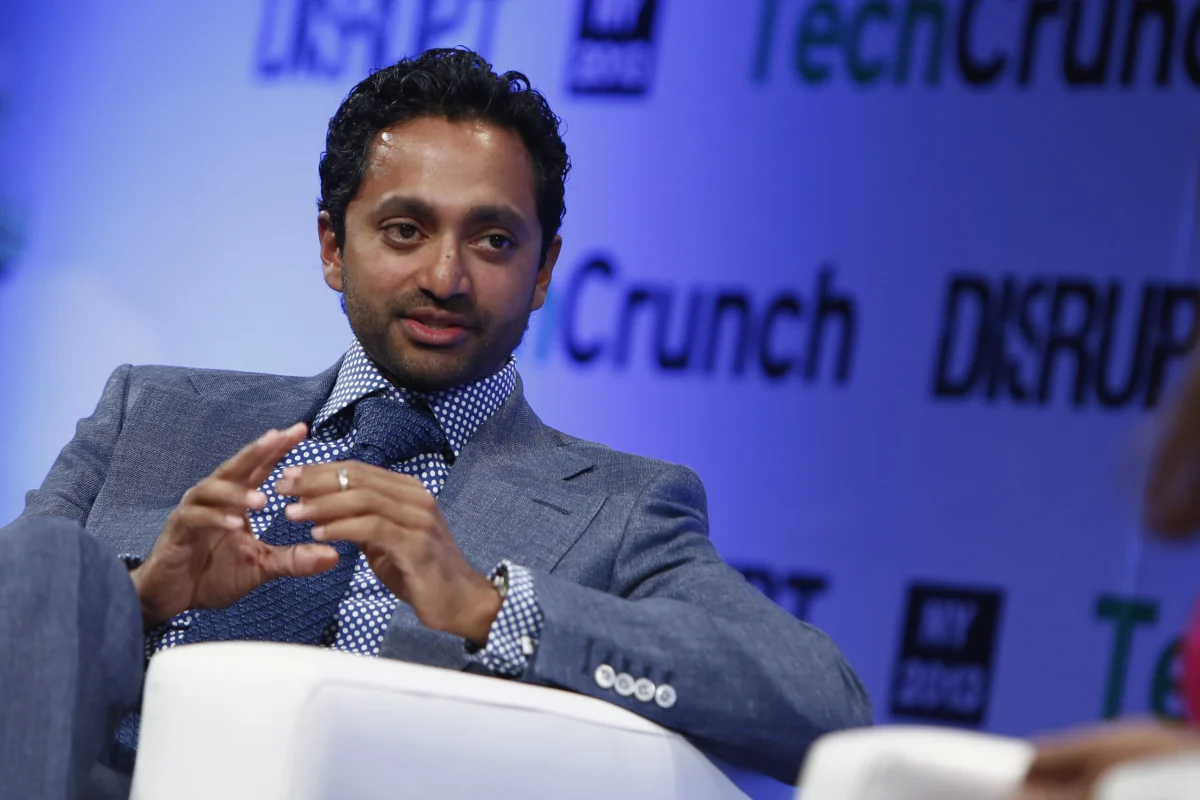
By TechCrunch Editorial Desk
June 29, 2026
In a move that signals a significant shift in the venture capital landscape, Chamath Palihapitiya, the prominent investor, venture capitalist, and co-host of the influential All-In podcast, has officially stepped back into the operating ring. On Monday, June 29, 2026, Palihapitiya announced that 8090 Labs, the AI coding startup he founded in early 2024, has successfully closed a substantial $135 million Series A funding round.
The investment, led by Salesforce Ventures, marks a pivotal moment for 8090 Labs as it transitions from stealth-adjacent development to an aggressive market expansion phase. More importantly, the announcement served as the venue for Palihapitiya to declare his transition from board member to full-time CEO, a role he claims is his first primary operating position since his formative years at Facebook.
The Core Facts: A Heavyweight Syndicate
The $135 million Series A represents a massive vote of confidence in 8090 Labs’ mission to modernize enterprise software development. The funding round is notable not only for its size but for the concentration of Silicon Valley elite involved in the deal.
In addition to Salesforce Ventures, the round saw participation from a "who’s who" of the tech industry, including:
- WndrCo: Led by legendary media and tech executive Jeffrey Katzenberg.
- Craft Ventures: Founded by venture capitalist David Sacks.
- The Production Board: Led by fellow All-In co-host David Friedberg.
- Launch: Representing the investment interests of Jason Calacanis.
- Angel Investors: A group of heavy hitters including Palo Alto Networks CEO Nikesh Arora and Quora CEO Adam D’Angelo.
This concentration of capital and expertise suggests that 8090 Labs is being positioned as a centerpiece of the next generation of enterprise AI infrastructure, backed by individuals who have historically shaped the trajectory of the software industry.
Chronology of a Startup: From Conception to Scale
The trajectory of 8090 Labs reflects the breakneck speed of the current generative AI boom.
- January 2024: Palihapitiya establishes 8090 Labs. The initial goal was to address the "prototype gap"—the observation that while AI can generate code, it often fails to meet the rigorous security, compliance, and architectural standards required for large-scale enterprise production environments.
- 2024–2025: The company operates in a focused development phase, iterating on its flagship product, "Software Factory." During this time, the team focused on building the "guardrails" necessary for corporate adoption: automated audit trails, security policy enforcement, and integration with legacy enterprise stacks.
- June 29, 2026: The company emerges with a $135 million war chest. Palihapitiya simultaneously announces his appointment as CEO, signaling that the product is ready for large-scale commercial deployment and that he intends to lead the company through this high-growth period.
The Technological Proposition: Beyond "Vibe-Coding"
The primary product of 8090 Labs, Software Factory, is designed to solve a specific pain point: the difference between AI-assisted experimentation and AI-driven production.
In the industry parlance that Palihapitiya and his peers often discuss, many AI coding tools today are used for "vibe-coding"—a colloquial term for quick, experimental scripting that lacks the structural integrity required for enterprise-grade applications. Software Factory aims to bridge this divide by providing:
- Enterprise Controls: Built-in compliance and security protocols that ensure every line of AI-generated code meets corporate standards.
- Auditability: A clear, traceable history of how code was generated, modified, and tested, which is critical for highly regulated industries like finance and healthcare.
- Production Readiness: Focus on scalability and maintainability, moving away from simple script generation toward the creation of complex, long-lived software systems.
Official Perspectives: A Return to Roots
The most significant aspect of this news is perhaps the psychological and strategic pivot made by Palihapitiya. In his announcement on X (formerly Twitter), he drew a direct line between the current state of AI and the early days of social media at Facebook.

"Since I left Facebook, I was waiting for a moment like this to return to a full-time operating role," Palihapitiya wrote. "I am convinced that what we are building now is even more important, so there was no decision to make except to be all in."
This sentiment underscores a broader trend: many of the most successful venture capitalists of the 2010s are increasingly becoming "builder-investors." By taking the CEO seat, Palihapitiya is signaling that the AI revolution is too significant to be managed from the sidelines of a board table. For him, the "All-In" mentality he promotes on his podcast is no longer just an investment philosophy—it is his daily operational reality.
Implications for the AI Landscape
The infusion of $135 million into 8090 Labs carries significant implications for the enterprise software market:
1. The Consolidation of Enterprise AI
With backing from Salesforce Ventures, it is clear that 8090 Labs is positioning itself to be deeply integrated into the enterprise software ecosystem. This move suggests a shift away from standalone AI tools toward platforms that act as an "AI layer" on top of existing corporate infrastructure.
2. The Professionalization of AI Coding
The market is moving past the initial excitement of simple LLM-based coding assistants. As enterprises realize the liability and technical debt that can come from poorly implemented AI-generated code, the demand for "Software Factory" style solutions—tools that emphasize governance, security, and long-term architectural health—will likely skyrocket. 8090 Labs is betting that the enterprise will pay a premium for safety and auditability.
3. The "Founder-CEO" Renaissance
Palihapitiya’s return to the CEO role is part of a larger trend where prominent investors return to the helm of startups to steer them through critical growth phases. This provides a unique signal to the market: when a high-profile investor puts their own reputation and daily time into a startup, it serves as a powerful validation for enterprise customers who are otherwise risk-averse regarding new, unproven AI vendors.
4. Competitive Pressure
The success of this round will undoubtedly put pressure on other AI coding startups. By assembling a "dream team" of investors, Palihapitiya has created a competitive moat. It will be harder for smaller startups to compete for top-tier enterprise clients when 8090 Labs can leverage the reach and influence of its backers to gain introductions and trust at the C-suite level.
Conclusion: The Path Ahead
As 8090 Labs moves into the second half of 2026, the tech industry will be watching closely. The $135 million Series A is only the beginning. The real challenge for Palihapitiya will be to prove that his vision of "enterprise-ready AI" can translate into tangible, widespread adoption across Fortune 500 companies.
For now, the move is a clear statement of intent. In a market crowded with AI hype, Palihapitiya is betting that the most valuable real estate in the AI revolution isn’t just the models themselves, but the systems that allow corporations to use those models reliably and securely. As he transitions back to a full-time operator, the industry is waiting to see if his operational instincts are as sharp as his investment ones. One thing is certain: in the world of 8090 Labs, the "All-In" philosophy has found its most ambitious testing ground yet.











