

This week’s edition of our industry scroll arrives with a note of solemnity, as we observe a moment of personal transition. Today’s report is presented in an "Ultra-Light" format, reflecting a necessary focus on family and remembrance. Despite the brevity of the dispatch, the cultural landscape remains as vibrant as ever, anchored by the long-awaited resurrection of a cinematic ghost and a deep dive into the surrealist legacy of 1970s fantasy.
I. The Impossible Project: Orson Welles’ Don Quixote
Main Facts: The Quest to Finalize a Legend
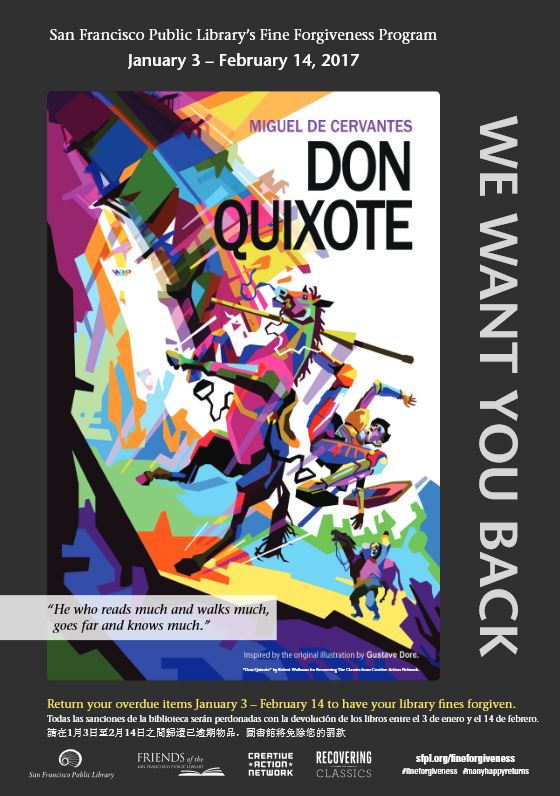
For over seven decades, the specter of Orson Welles’ unfinished adaptation of Miguel de Cervantes’ Don Quixote has haunted the annals of film history. Often cited as the ultimate "lost" masterpiece of the 20th century, the project—which began in 1957—is finally moving toward completion. A consortium of European film archivists, led by prominent Welles authority Esteve Riambau, has officially launched a mission to assemble a coherent, watchable film from 30 hours of scattered, multi-format footage.
The restoration project has received the full blessing of Oja Kodar, Welles’ longtime partner and collaborator. The effort involves a transnational collaboration between archives in France, Spain, and Italy, along with the Munich Film Museum.
Chronology of a Passion Project
- 1957: Orson Welles initiates production, initially conceived as a television project with financial backing from Frank Sinatra. The deal ultimately collapses.
- 1957–1985: Welles continues filming sporadically across Mexico, Italy, and Spain, working on the project whenever he could secure independent funding.
- 1985: Welles dies, leaving the footage in a state of fragmentation.
- 2026: A coalition of international archivists announces a definitive attempt to reconstruct the film into a cohesive narrative.
Supporting Data: The Logistics of Reconstruction
The scope of the archival challenge is staggering. The team is currently contending with:
- Rome (Cineteca Nazionale): Houses 50,000 meters of film negative that must be digitized and printed before the content can even be assessed.
- Spain: Holds an additional 50,000 meters of 16mm and 35mm film.
- France: Contains approximately 80 minutes of existing 35mm footage.
Esteve Riambau, the former head of the Catalan film archive, admits that while a complete, final shooting script does not exist, the sheer volume of material provides enough narrative connective tissue to piece together a representative version of Welles’ vision.
Implications: The Ethics of Posthumous Completion
The project raises significant questions regarding artistic intent. Can a film directed by a perfectionist like Welles be "completed" by third parties? While Kodar’s endorsement provides a moral mandate, cinephiles remain divided on whether a reconstructed Don Quixote will be viewed as a Welles film or a scholarly approximation. Regardless, the effort marks a landmark achievement in film preservation, ensuring that one of cinema’s most legendary "what-ifs" will finally reach the screen.
II. Memory Lane: Re-evaluating Willy Wonka & the Chocolate Factory
The 1971 Classic Through a Modern Lens
Fifty-five years after its initial release, Mel Stuart’s Willy Wonka & the Chocolate Factory continues to occupy a unique space in the cultural consciousness. While often marketed as a children’s film, its enduring appeal—and its unsettling undercurrents—suggest it functions more effectively as a work of surrealist fantasy.
For many viewers, the film’s reception is inextricably linked to the specific era of its television broadcast. Those who encountered it in the 1980s often viewed the film not through the wide-eyed innocence of childhood, but through the lens of emerging adolescence, where the film’s darker themes—poverty, greed, and the mercurial nature of Gene Wilder’s Wonka—became more apparent.
Character Analysis: Gene Wilder as the Faerie King
At the heart of the film’s success is Gene Wilder. Though Roald Dahl, the author of the source material, famously disavowed the adaptation, it is nearly impossible to imagine the film without Wilder’s performance.
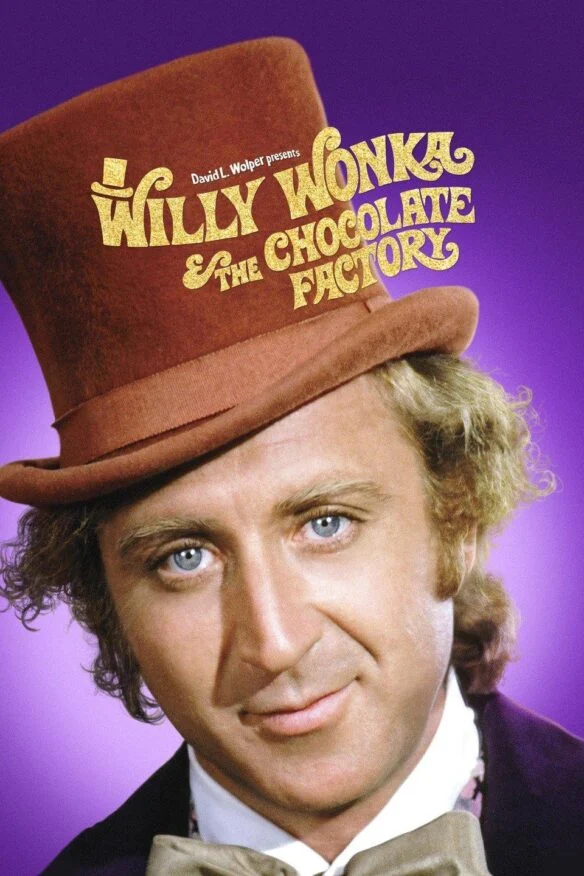
Wilder’s Wonka is not merely a candymaker; he is an agent of chaos. His performance bridges the gap between the Seelie and Unseelie courts of folklore. He is the architect of a world where space and time are fluid—a "Faerie" domain hidden within the mundane world. This performance has left a lasting impact on fantasy literature and role-playing games alike, influencing how creators conceptualize characters who exist outside the boundaries of societal norms.
The Phantasmagoria of the Factory
The production design of the factory remains a masterclass in 1970s practical effects. Comparing the 1971 original to modern, CGI-heavy remakes highlights a stark difference in intent. Where modern iterations often lean into polished digital spectacle, the original film embraced a "phantasmagorical" aesthetic. The danger, the absurdity, and the sensory overload of the chocolate room were not just visual choices; they were manifestations of the chaos inherent in Wonka’s own psyche.
III. Literary Culture: The Algonquin Round Table
Beyond the world of film, literary history continues to demand our attention. The New York Times recently published an interactive assessment of the Algonquin Round Table, the legendary group of writers, editors, and critics who dominated the New York literary scene in the 1920s.
Historical Context
The Round Table was more than just a lunch gathering; it was a cultural engine. Figures such as Dorothy Parker, Robert Benchley, and Alexander Woollcott used their wit and influence to shape American letters. The quiz serves as a reminder of the importance of intellectual communities and the power of sharp, uncompromising criticism.
For modern readers, the legacy of the Round Table provides a roadmap for how creative groups can influence broader societal discourse. As we look back on these figures, we see a template for the modern "influencer"—though one built on the bedrock of literary craft rather than digital metrics.
IV. Closing Reflections and Acknowledgments
As we conclude this digest, we must acknowledge the collaborative nature of this work. The gathering of these stories is made possible by the dedicated reporting of individuals including Mark Roth-Whitworth, Kathy Sullivan, Steven French, Mike Kennedy, Andrew Porter, John King Tarpinian, Cat Eldridge, Jonathan Cowie, and Chris Barkley. Special recognition goes to contributing editor Soon Lee for the title credits.
In a world that often feels as chaotic as Wonka’s factory or as sprawling as Welles’ unedited footage, there is comfort in the act of preservation—whether it is the archiving of film, the appreciation of classic cinema, or the celebration of literary history.
As I step away to attend my mother’s interment, I am reminded that our stories are the most important things we leave behind. Whether on celluloid or in the memories of those who loved us, the goal is always the same: to create something that endures. We thank you for your readership and your understanding during this time of reflection.
For more updates on film history, literary trivia, and cultural commentary, subscribe to our newsletter to receive the latest posts directly to your inbox.










